

What are the essentials for a diaper bag for stress-free outings?
The most useful diaper bag essentials are diapers, wipes, a travel diaper changing mat, disposable or sealable bags, spare clothes, feeding supplies, and a few health and weather items. The right diaper bag checklist depends on your baby’s age, how long you’ll be away, and whether you’re heading to daycare, running errands, or traveling.
⏱ 8 min read
Essentials for a Diaper Bag: Complete Checklist for Stress-Free Days Out
Knowing what to pack in a diaper bag makes leaving home much easier. Instead of filling every pocket with “just in case” items, build a practical diaper bag checklist around four needs: diaper changes, feeding, clothing and comfort, and basic safety. This guide covers newborn diaper bag essentials, age-based packing, travel situations, and a simple organization system so you can find what you need quickly.
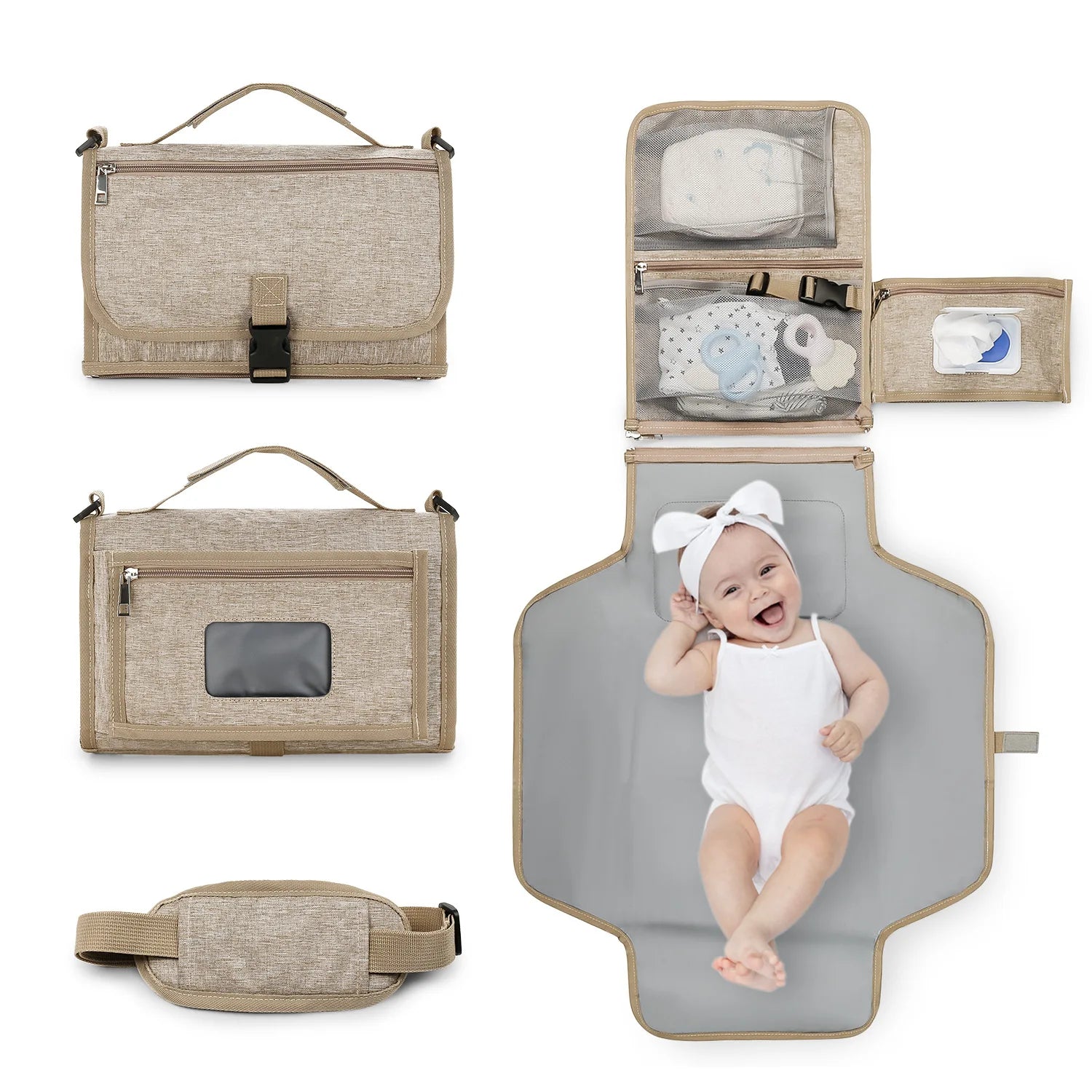
Diaper bag essentials and organized baby travel gear for easier outings.
What to Pack in a Diaper Bag: Complete Essentials Checklist
When parents ask what to pack in a diaper bag , the best answer is not “everything.” A well-planned bag should cover the situations you are most likely to encounter without becoming so heavy that it is difficult to carry.
Quick printable diaper bag checklist
- Diapers: Pack enough for the planned outing plus 2 extras.
- Wipes: Carry a travel-size pack and refill it before longer outings.
- Travel diaper changing mat: A washable, foldable surface makes diaper changes easier away from home.
- Disposable or sealable bags: Useful for used diapers, wet clothing, or other messy items.
- Spare clothes: Pack at least one complete outfit, including socks when appropriate.
- Small blanket or comfort item: Useful for warmth, shade, feeding, or unexpected messes.
- Feeding supplies: Bring bottles, formula or expressed milk, snacks, a bib, and burp cloths as appropriate for your baby.
- Hand sanitizer: Useful when soap and water are not immediately available.
- Small towel or burp cloth: Helpful for spills, spit-up, and quick cleanups.
- Basic health and safety items: Consider bandages, antiseptic wipes, and other age-appropriate essentials your family routinely uses.
- Weather protection: Pack a hat, sun protection, or a light layer according to the weather and your baby's age.
Must-have vs optional items
For a short outing, prioritize the items that solve immediate needs. Diapers, wipes, a changing surface, a spare outfit, feeding supplies when needed, and a bag for waste or wet clothing are the core diaper bag must haves .
Optional items depend on your baby and destination. A blanket, extra toy, larger first-aid kit, additional clothing, or backup feeding supplies can be worthwhile for longer outings but may add unnecessary bulk to a quick-errand bag.
Newborn diaper bag essentials
Newborn diaper bag essentials generally require more frequent diaper changes and feeding support than an older baby's bag. Depending on your baby's routine, prioritize extra diapers, wipes, spare clothing, burp cloths, feeding supplies, a changing mat, and a light blanket. Keep the setup flexible because newborn needs can change quickly during an outing.
How to Pack a Diaper Bag for Easy Access
The best diaper bag packing tips focus on accessibility rather than simply fitting in more items. Divide the bag into practical zones so you can reach frequently used supplies without emptying the main compartment.
Step-by-step diaper bag organization method
- Start with your expected outing: Decide how long you will be away and whether feeding, naps, or multiple diaper changes are likely.
- Lay out the essentials: Separate changing, feeding, clothing, comfort, and safety items before putting anything into the bag.
- Create item zones: Keep diaper-changing supplies together, feeding supplies together, and clothing in its own pouch.
- Use small pouches: Clear or labeled pouches make small items easier to locate and restock.
- Put high-use items within reach: Store diapers, wipes, and the changing mat in an outer or top compartment.
- Protect clean items: Keep spare clothes and clean feeding supplies away from used or wet items.
- Reserve one emergency pocket: Keep backup diapers, an extra outfit, and other emergency supplies in one predictable location.
- Leave some empty space: A little spare capacity makes it easier to add a jacket, snack, or newly soiled clothing during the day.
How to organize items by category
- Changing zone: Diapers, wipes, changing mat, diaper bags, and hand sanitizer.
- Feeding zone: Bottle, feeding supplies, bib, burp cloth, and age-appropriate snacks.
- Clothing zone: Spare outfit, socks, bibs, and a small blanket.
- Health and safety zone: Basic first-aid supplies and other essentials appropriate for your baby.
- Parent zone: Phone, keys, wallet, and other personal items.
Newborn Diaper Bag Essentials by Baby Age
A baby diaper bag items list should change as your baby grows. Newborns often need more frequent diaper changes and feeding supplies, while older babies may need more snacks, toys, and weather-specific gear instead.
0–3 month essentials
- Extra diapers for frequent changes, plus backup diapers
- Gentle wipes and a travel diaper changing mat
- At least one complete spare outfit
- Several burp cloths or small towels
- Breastfeeding or bottle-feeding supplies as appropriate
- Small blanket or weather-appropriate layer
- Pacifier or other familiar comfort item if your baby uses one
- Disposable or sealable bags for wet or soiled clothing
For newborns, avoid filling the bag with toys or large accessories that are unlikely to be useful. Focus on feeding, changing, clothing, hygiene, and comfort.
Older baby and toddler additions
- Age-appropriate snacks and a drink or feeding supplies
- Bib and reusable or disposable food-cleanup supplies
- Small toy, teether, or comfort item
- Extra clothes for spills and active play
- Sun or weather protection appropriate for the child and destination
- More cleanup supplies when meals or outdoor activities are involved
As your child becomes more mobile, the bag can shift from primarily newborn-care supplies toward snacks, clothing, entertainment, and cleanup items. Remove supplies your child no longer needs instead of continuously adding to the bag.
Diaper Bag Essentials for Different Situations
The ideal packing list changes with the length and purpose of the outing. A useful approach is to start with your everyday diaper bag essentials and add only what the situation requires.
Short outings
For a quick walk, coffee stop, or short errand, keep the bag lightweight:
- 2–3 diapers
- Travel wipes
- Compact travel diaper changing mat
- One spare outfit or top layer
- Small bag for waste or wet clothing
- Feeding supplies if the outing overlaps with feeding time
Daycare and babysitter bags
Daycare and babysitter packing requires more supplies because your baby may be away from you for several hours. Label items when required and follow the caregiver's instructions for feeding, clothing, hygiene, and medication-related supplies.
- Enough diapers and wipes for the care period, plus reasonable backup
- Multiple spare outfits
- Feeding supplies prepared according to the caregiver's instructions
- Comfort item if needed
- Weather-appropriate clothing
- Clearly separated bags for clean and used clothing
Travel and airplane trips
Travel diaper bag essentials should be easy to access because you may need to change, feed, or comfort your baby in unfamiliar places. For longer trips, pack additional diapers, wipes, spare clothes, feeding supplies, changing supplies, and comfort items. Keep the supplies you are most likely to need during transit in a smaller accessible pouch rather than at the bottom of the main bag.
For airplane trips, prepare for delays rather than packing only for the scheduled travel time. The related guide How to Change a Diaper on a Plane Without Stress provides additional guidance for changing a diaper during air travel.
Hospital diaper bag essentials
If you are preparing for a birth or hospital stay, check the hospital's own recommendations first. Hospital supplies and policies vary, so your personal bag may only need items that support the baby and parent during the stay and the trip home. Useful categories can include newborn-sized clothing, feeding supplies if needed, a going-home outfit, diapers and wipes if the hospital asks you to provide them, and a car-seat-ready setup for discharge.
Changing Supplies Every Parent Should Carry
A reliable portable changing setup is one of the most important parts of your diaper bag essentials . Keeping all changing supplies together reduces the chance that you will have to search through the bag while your baby needs a diaper change.
Diaper changing station on the go
Create a compact changing station with four components: diapers, wipes, a clean changing surface, and a bag for waste or soiled clothing. Keeping these items together in one pouch or compartment lets you move quickly from finding a suitable surface to cleaning up afterward.
Travel diaper changing mat essentials
A travel diaper changing mat provides a dedicated surface between your baby and the changing area. Look for a design that folds compactly, is easy to wipe clean, and fits the dimensions of your diaper bag. A waterproof or water-resistant surface can also make cleanup easier after minor spills.
For short outings, disposable on the go changing pads can be convenient when you want a single-use option. A reusable travel mat is generally more practical for regular use because it can be cleaned and packed again. Some parents may carry both: a reusable mat for everyday changes and disposable pads as backup for situations where cleanup is inconvenient.
How many diapers and wipes should you pack?
A practical starting point is one diaper for each hour you expect to be away, plus two extras . This is a planning guideline rather than a strict rule because babies vary in how frequently they need changes. For a three-hour outing, for example, five diapers provide a reasonable starting point. Pack more when traveling for longer periods or when your baby typically needs frequent changes.
For wipes, a travel pack is enough for many short outings. Longer trips call for a fuller pack or refill pouch. Always consider the possibility of spills, dirty hands, and other cleanup needs when deciding how many wipes to carry.
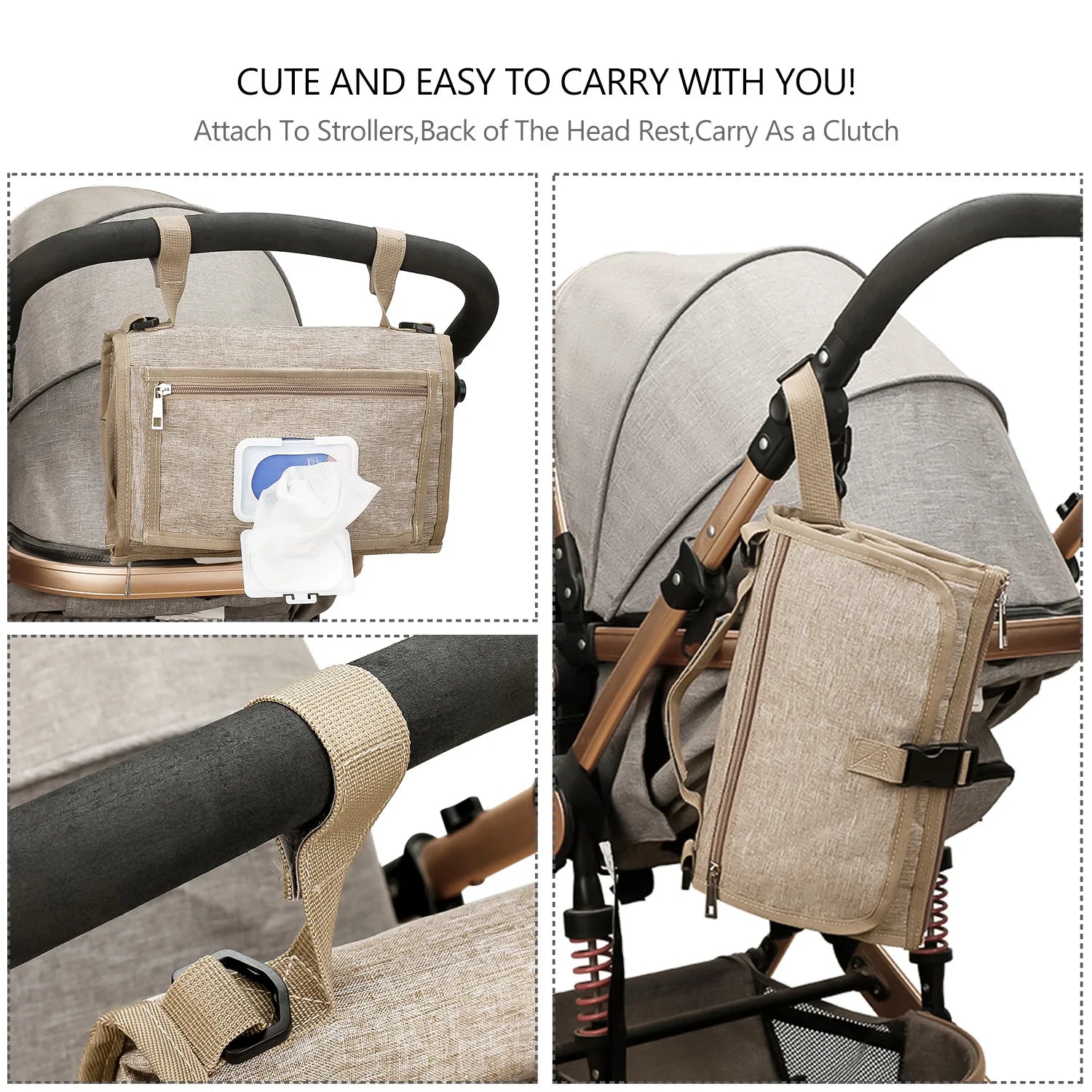
Organizing diaper bag supplies with on the go changing pads for easier changes.
Helpful Baby Gear and Organization Tools
The best baby travel essentials are the ones that solve a specific problem without adding unnecessary bulk. A few well-chosen organization tools can make an everyday diaper bag easier to use.
| Item | Best use | What to look for |
|---|---|---|
| Travel diaper changing mat | Everyday diaper changes away from home | Foldable, wipe-clean, compact, waterproof or water-resistant surface |
| On the go changing pads | Quick or backup changes | Lightweight, convenient, appropriately sized for your changing setup |
| Small zippered pouches | Separating diapers, feeding supplies, clothing, and small items | Easy-to-clean material and a size that fits your bag |
| Sealable bags | Used diapers, wet clothes, and messy items | Secure closure and suitable capacity |
| Multi-pocket diaper bag | Organizing frequently used supplies | Accessible compartments, comfortable carrying options, and practical capacity |
Related baby care collections
For additional baby care supplies, browse Baby Care Essentials and Mom Essentials . For health and safety-related items, see Health & Safety .
A compact changing option for organized outings
If you prefer an all-in-one changing setup, the 3-in-1 baby diaper pad can be included as part of your portable changing routine. Keep the changing pad in an outer or flat compartment so it is accessible without unpacking the rest of the diaper bag.
Quick Packing Hacks for Stress-Free Outings
Good diaper bag packing tips are less about carrying more and more about making the bag predictable. Use a repeatable restocking routine so you do not have to rebuild the bag from scratch every time you leave home.
- Restock after every outing: Replace used diapers, wipes, clothing, snacks, and other supplies as soon as you get home.
- Use a weekly reset: Once a week, empty crumbs and trash, check expiration-sensitive items, and confirm that clothing still fits.
- Adjust for the season: Add layers, sun protection, or weather-appropriate accessories based on the forecast rather than carrying every option year-round.
- Keep emergency items separate: Store two backup diapers, an extra outfit, and cleanup bags in a predictable emergency compartment.
- Pack by frequency: Put diapers, wipes, and the changing mat near the top; reserve deeper compartments for less frequently used items.
- Keep a backup kit: If your family frequently travels by car, a separate emergency kit can reduce the pressure to overload the everyday diaper bag.
- Remove what you no longer use: Review the bag as your baby grows so newborn-only items do not take up space needed for current essentials.
Frequently Asked Questions About Diaper Bag Essentials
-
What are the most important diaper bag essentials for a newborn?
The most important newborn diaper bag essentials are diapers, wipes, a clean changing surface such as a travel diaper changing mat, spare clothing, feeding supplies appropriate for your baby, burp cloths, a small blanket or comfort item, and bags for used diapers or wet clothing. The exact quantity depends on how long you will be away.
-
How many diapers should I pack in a diaper bag?
A useful starting point is one diaper for each hour you expect to be away plus two extras. For a three-hour outing, that means five diapers. Adjust the amount for your baby's normal changing frequency, the length of the trip, and whether you will have access to additional supplies.
-
What should I pack in a diaper bag for a day out?
For a day out, pack enough diapers and wipes for the full period plus backup, a travel diaper changing mat, spare clothes, feeding supplies, cleanup bags, hand sanitizer, a comfort item, and weather-appropriate protection. Longer outings may also require additional feeding and clothing supplies.
-
Do I need a separate hospital diaper bag?
Not necessarily. A separate hospital bag can make organization easier, but it is optional. Check your hospital's current recommendations first, then pack the newborn clothing, feeding supplies, diapers or wipes if requested, and other items needed for the stay and trip home.
-
How can I organize a diaper bag efficiently?
Use category-based zones for changing, feeding, clothing, and health or safety items. Place frequently used supplies in outer or top compartments, use small pouches for loose items, and keep emergency backups in one predictable location. Restock the bag after each outing.
-
Are disposable changing pads better than a reusable travel diaper changing mat?
Neither is universally better. A reusable travel diaper changing mat is practical for frequent use because it can be cleaned and reused, while disposable on the go changing pads are convenient when you want a single-use option or cannot clean a reusable mat. Some families carry both for different situations.
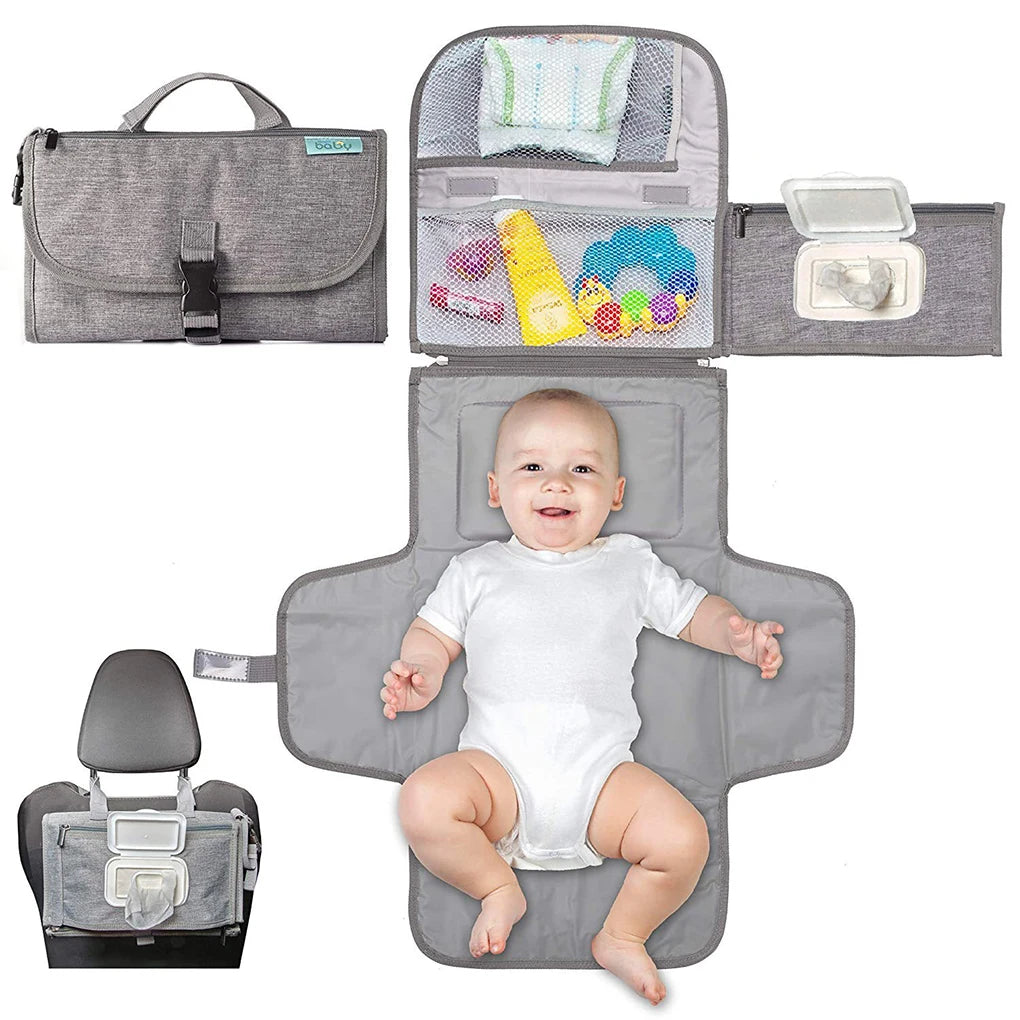
Travel diaper changing mat and organized diaper bag essentials for on-the-go changes.
Final Diaper Bag Checklist Before Leaving Home
- Changing: Diapers, wipes, travel diaper changing mat, and waste or wet-item bags.
- Clothing: At least one spare outfit appropriate for the weather.
- Feeding: Bottle, feeding supplies, snacks, and bib as appropriate for your baby's age and routine.
- Comfort: Blanket, burp cloth, or familiar comfort item if needed.
- Safety: Basic health and safety supplies appropriate for your family.
- Weather: Hat, sun protection, or an extra layer according to conditions.
- Organization: Emergency diapers and backup supplies are easy to reach.
Before leaving, check the bag against your diaper bag checklist , then confirm that frequently used items are in accessible compartments. A simple daily refill routine is usually more effective than carrying a large collection of rarely used items.
Related Reads & Where to Browse
For additional diapering and baby-care guidance, explore Baby Care Essentials , Feeding & Nursing , and Health & Safety .
- What are the essentials for a diaper bag? Diapers, wipes, a travel diaper changing mat, spare clothing, feeding supplies, cleanup bags, and age- and weather-appropriate extras form the core checklist.
- How do I keep my diaper bag organized? Use separate zones or pouches for changing, feeding, clothing, and safety items, and keep frequently used supplies near an outer or top compartment.
- Is a travel diaper changing mat necessary? It is not mandatory, but a compact changing mat provides a dedicated, easy-to-clean surface for diaper changes away from home.
The best diaper bag is not the one filled with the most items. It is the one organized around your baby's real needs, easy to access, and restocked after every outing. Pack the essentials, leave some room, and head out with confidence.
Pillar Article: How to Change a Diaper on a Plane Without Stress
Other Related Articles:
- How to Change Baby Outdoors Safely and Comfortably
- Waterproof Pad for Diaper Changes: How to Use It for Cleaner Outings
- Compact Foldable Diaper Pad Reviews for Easy On-the-Go Changes
Explore More:





