

Simple Physics Experiments for Students With Easy Explanations
15 Simple Physics Experiments for Students (Fun & Easy Science)
Physics is everywhere—from the motion of moving objects and the force of gravity to the electricity that powers everyday technology. The most effective way for students to understand physics concepts is through hands-on learning. Simple experiments allow learners to observe scientific principles in action instead of only reading about them in textbooks.
This guide features 15 simple physics experiments for students that explore important topics including force, motion, electricity, magnetism, light, energy, and density. Each activity uses accessible materials and helps students develop curiosity, observation skills, and scientific thinking.
These physics activities are suitable for classrooms, science fairs, homeschooling, STEM lessons, and at-home learning. Students can make predictions, test ideas, record observations, and connect each experiment to real-world applications.
What Are Simple Physics Experiments and Why Do They Matter?
Simple physics experiments are hands-on demonstrations that help students explore how the physical world works. Instead of memorizing formulas or definitions, learners can directly observe concepts such as motion, gravity, force, electricity, magnetism, light behavior, and energy transfer.
These physics experiments are designed to use simple materials and clear procedures so students can focus on understanding the science behind each result. A balloon rocket, for example, demonstrates Newton’s laws of motion, while a mirror experiment reveals how light reflects from surfaces.
Hands-on physics activities are valuable because they encourage students to ask questions, make predictions, test explanations, and analyze results. These skills support STEM learning and help students build confidence when exploring scientific concepts.
Why Hands-On Experiments Help Students Learn Physics
Physics can feel challenging when concepts are presented only through equations or written explanations. Experiments make abstract ideas easier to understand by allowing students to see cause-and-effect relationships in real time.
- Students observe real-world scientific principles instead of only reading about them.
- Concepts become easier to remember through visual and physical demonstrations.
- Experiments strengthen problem-solving and critical thinking skills.
- Students practice the scientific method by predicting, testing, and evaluating results.
- Learning becomes more interactive, creative, and engaging.
Physics Topics Covered in These Experiments
The activities in this guide introduce students to several major areas of physics:
- Force and motion: Newton’s laws, inertia, friction, acceleration, and air resistance.
- Energy: Potential energy, kinetic energy, and energy transformation.
- Electricity: Circuits, electric current, static charge, and electrochemical energy.
- Magnetism: Magnetic fields, attraction, and electromagnetic forces.
- Light and sound: Reflection, refraction, vibration, and wave behavior.
- Density and pressure: How materials interact based on physical properties.
Materials Commonly Used in Easy Physics Experiments
Many easy physics experiments can be completed with common household or classroom supplies. Typical materials include:
- Balloons
- String or thread
- Straws
- Coins and index cards
- Magnets
- Batteries
- Small light bulbs or LEDs
- Lemons
- Salt and water
- Rubber bands
- Paper clips
- Mirrors
- Flashlights
How to Choose the Right Physics Experiment
Choosing the best physics experiment depends on the student’s age, learning goals, available materials, and the amount of preparation time required. The right activity should be challenging enough to encourage discovery while remaining safe and understandable.
By Age or Grade Level
Younger students often benefit from visual experiments with simple cause-and-effect relationships, such as balloon rockets, floating objects, and light demonstrations. Older students can explore more advanced concepts involving circuits, energy transfer, and electromagnetic forces.
- Elementary students: Choose short activities with easy-to-see results and minimal setup.
- Middle school students: Use experiments that introduce measurement, variables, and scientific explanations.
- High school students: Select activities that connect to formulas, engineering concepts, and deeper physics principles.
By Difficulty
The best physics experiment ideas match the available time and skill level. Simple demonstrations are ideal for quick classroom activities, while multi-step projects work well for science fairs or extended STEM lessons.
- Beginner: Uses basic materials and takes less than 15 minutes.
- Intermediate: Requires additional setup, measurements, or observations.
- Advanced: Includes testing variables, recording data, or designing improvements.
By Physics Topic
Teachers and parents can also select experiments based on the concept they want students to learn:
- Use motion experiments to explain forces, speed, and acceleration.
- Use electricity activities to introduce circuits and current flow.
- Use magnetism experiments to explore invisible forces.
- Use light experiments to demonstrate reflection and refraction.
- Use energy experiments to show how stored energy becomes movement.
15 Simple Physics Experiments for Students
Motion & Force Experiments
1. Balloon Rocket (Demonstrating Newton's Third Law)
Difficulty: Easy
Materials:
- Balloon
- String
- Straw
- Tape
Steps:
- Thread the string through the straw.
- Tie the string tightly between two fixed points, such as chairs.
- Tape an inflated balloon securely to the straw.
- Release the balloon and observe its movement.
Expected Result: The balloon travels quickly along the string.
Why It Works: When air escapes from the balloon, it pushes backward. According to Newton’s Third Law of Motion, every action creates an equal and opposite reaction, causing the balloon to move forward.
Learning Objective: Students learn how forces create motion and how propulsion systems work in real life, including rockets and jets.
2. Paper Helicopter (Gravity and Air Resistance)
Materials: Paper, scissors, and a paper clip.
Steps:
- Cut a paper strip and fold the top section into helicopter blades.
- Add a paper clip to the bottom for weight.
- Drop the helicopter from a height.
- Observe how the blades affect the fall.
Expected Result: The paper helicopter spins while falling slowly.
Why It Works: Gravity pulls the helicopter downward, while air resistance pushes against the spinning blades. This slows the fall and creates rotation.
Learning Objective: Students explore how forces interact and how shape affects movement through air.
3. Ramp and Rolling Objects (Speed and Friction)
Materials: Books, cardboard ramp, toy cars, or balls.
Steps:
- Create a ramp using books and cardboard.
- Release different objects from the same starting point.
- Compare which object reaches the bottom first.
Expected Result: Different objects move at different speeds depending on their shape, weight, and surface contact.
Why It Works: Gravity pulls objects down the ramp, while friction and air resistance affect their movement.
Learning Objective: Students observe how forces influence speed and motion.
4. Coin and Card Trick (Inertia)
Materials: Glass, index card, and coin.
Steps:
- Place the index card over the top of the glass.
- Put the coin in the center of the card.
- Quickly flick the card sideways.
Expected Result: The coin falls directly into the glass.
Why It Works: The coin resists changes in motion because of inertia. When the card moves quickly, the coin remains almost stationary before gravity pulls it downward.
Learning Objective: Students understand Newton’s First Law and how objects respond to changes in motion.
Safety Tips for Student Physics Experiments
Safe preparation is an important part of successful physics activities. Whether students are completing experiments in a classroom, science club, or at home, proper supervision and organization help ensure that learning remains fun and productive.
- Provide adult supervision: Younger students should complete experiments with guidance from a teacher, parent, or another responsible adult.
- Prepare materials before starting: Check that supplies are in good condition and remove damaged items before the activity begins.
- Use protective equipment when needed: Safety glasses or other protective gear may be helpful for experiments involving moving objects, liquids, or electrical components.
- Handle batteries and electronics carefully: Avoid using leaking, damaged, or overheated batteries, and disconnect circuits when the experiment is complete.
- Keep electrical materials dry: Water and electricity should always be kept separate to prevent accidents.
- Create a clear workspace: Use a stable surface with enough room for students to observe results and organize materials.
- Follow classroom safety rules: Encourage students to treat experiments like real scientific investigations by following instructions carefully.
Printable Materials List for All 15 Experiments
Many simple physics experiments for students use affordable materials that are easy to find at home, in classrooms, or through science supply stores. Preparing these items in advance makes it easier to organize STEM lessons and hands-on learning activities.
- Balloons
- String or thread
- Straws
- Magnets
- Batteries
- Wires
- LED bulbs
- Small light bulbs
- Paper clips
- Coins
- Index cards
- Salt
- Lemons
- Rubber bands
- Mirrors
- Flashlight
- Paper
- Scissors
- Glass containers
Teachers or parents who regularly organize STEM activities may find it more convenient to use a prepared science kit instead of collecting dozens of separate materials. A structured kit can help students explore multiple physics concepts while keeping experiments organized and classroom-ready.
Complete Physics Experiment Kit for Students
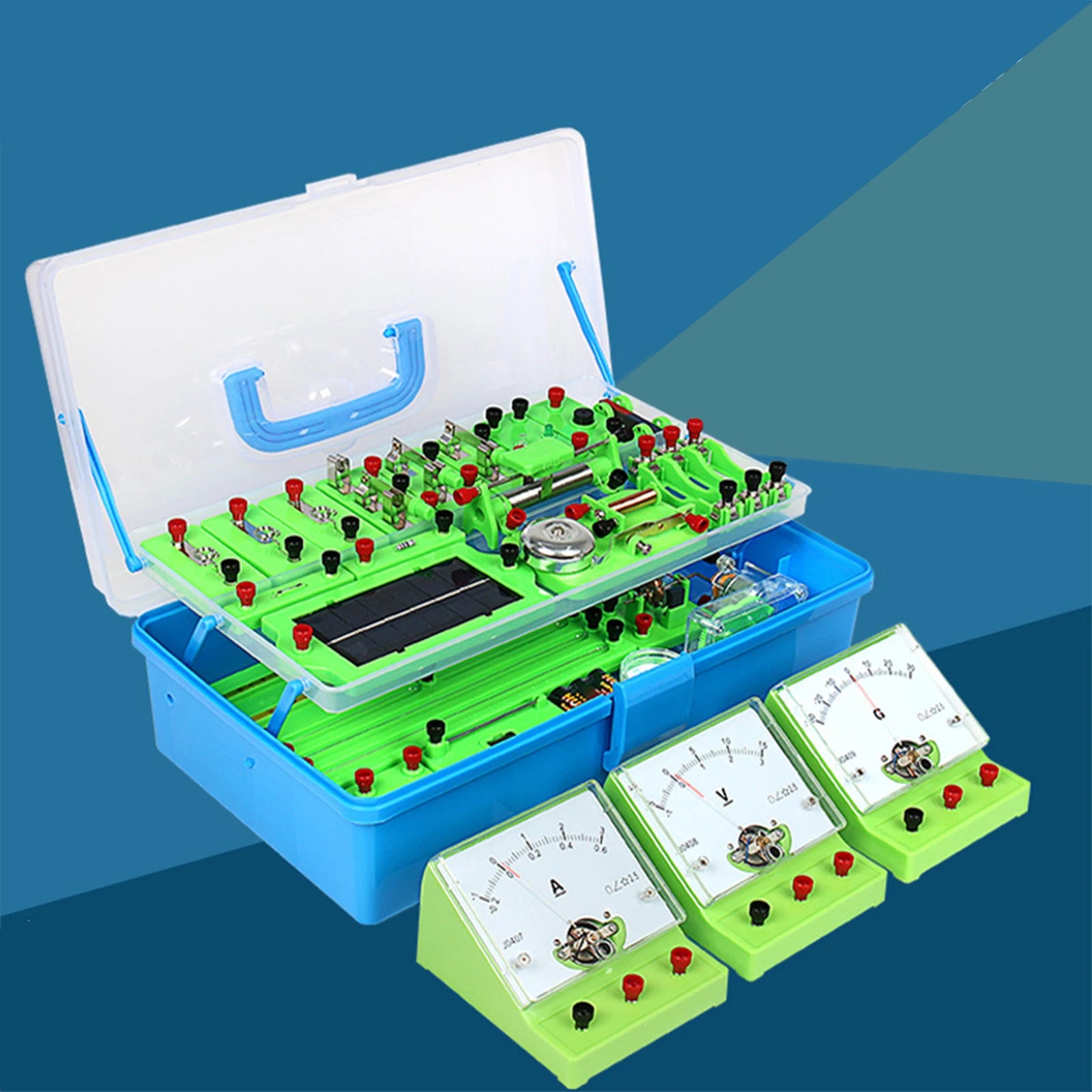
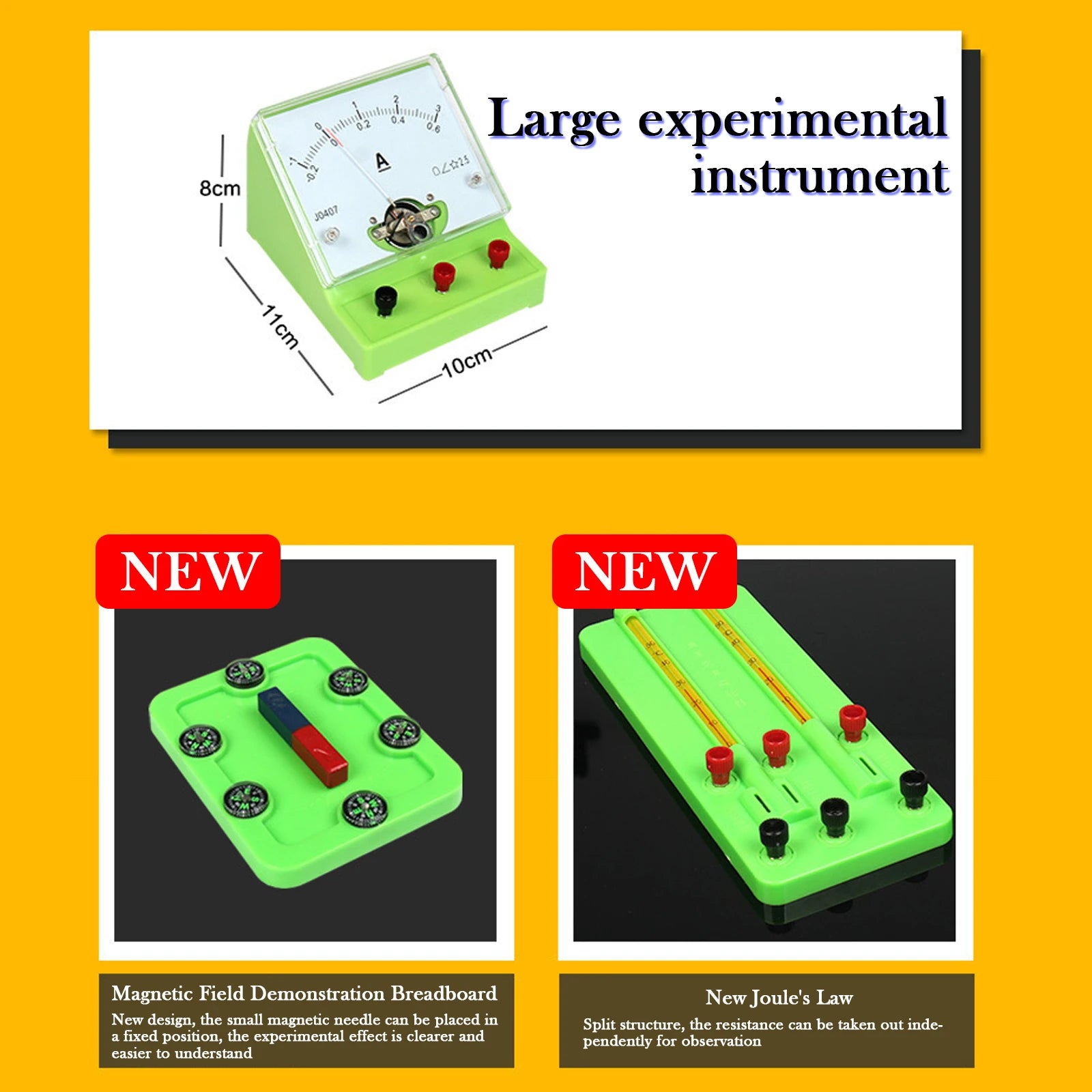
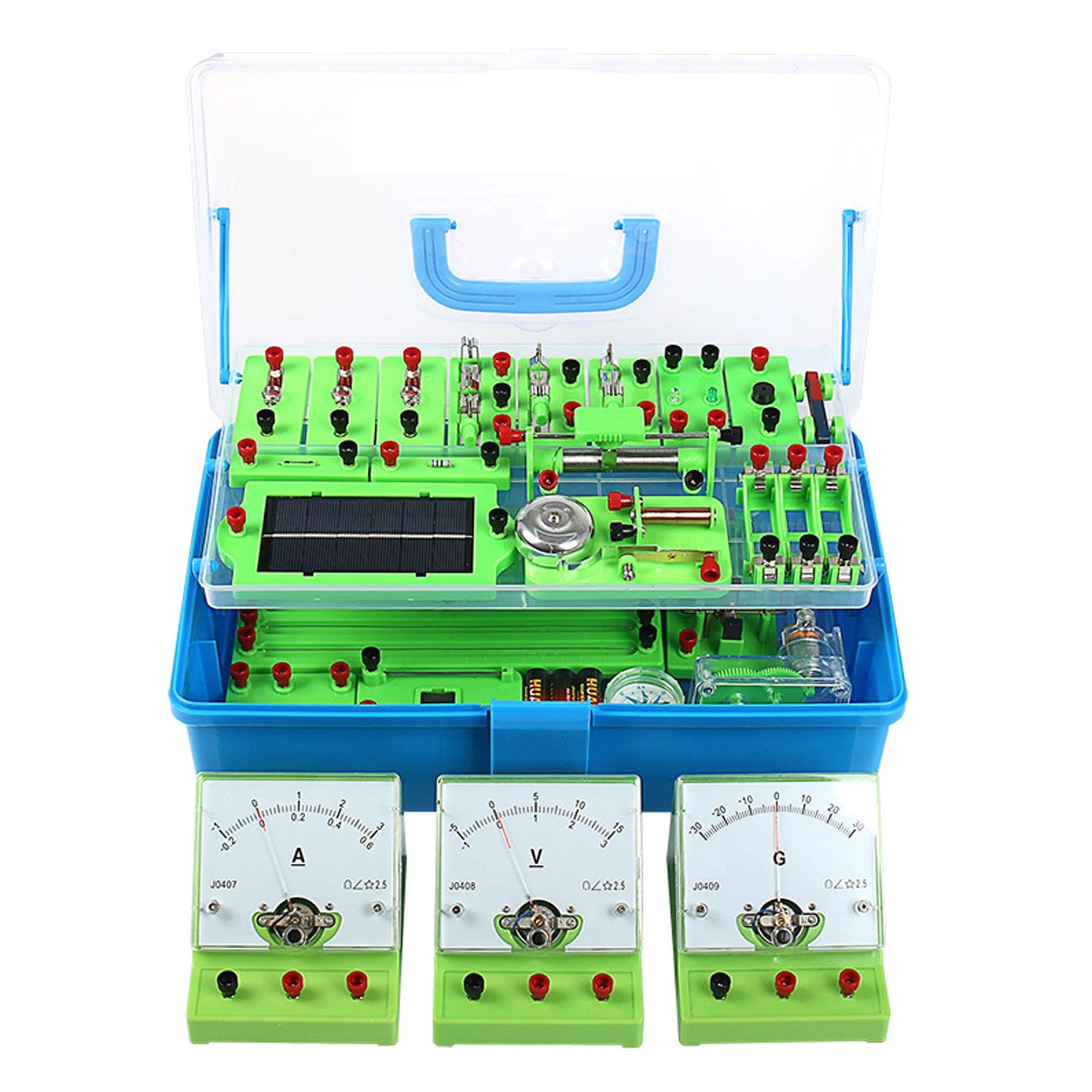
For students who want to explore more advanced concepts beyond individual household activities, the Electromagnetism Experiment Kit for Students – 40+ Lab Tools provides a structured way to investigate electricity, magnetism, circuits, and energy through hands-on learning.
This classroom-friendly physics kit includes more than 40 components designed for demonstrations and experiments, including voltmeters, ammeters, coils, magnets, motors, and solar panels. The larger instruments make measurements easier for students to observe during group lessons and science demonstrations.
The kit helps students explore important physics concepts such as:
- Electric circuits: Understand current flow, connections, and how electrical components work together.
- Magnetic fields: Observe how magnets interact and how electromagnetic forces affect objects.
- Energy conversion: Explore how electrical energy can transform into motion, light, or other forms of energy.
- Resistance laws: Learn how electrical resistance affects current in a circuit.
- Electromagnetic forces: Discover the relationship between electricity and magnetism.
A dedicated experiment kit can also help teachers create more organized physics experiments for school by reducing preparation time and giving students consistent materials for investigation, measurement, and observation.
For more STEM learning tools and educational resources, you can also explore the Baby Growth & Learning collection and browse practical parenting and learning advice in the Baby Growth & Learning Tips blog.
Comparison Table: Choose the Best Experiment for Your Students
Different simple physics experiments are suitable for different ages, lesson goals, and classroom settings. This comparison table helps teachers, parents, and students quickly choose activities based on difficulty, materials, and the physics concept being explored.
| Experiment | Category | Difficulty | Estimated Time | Main Physics Concept |
| Balloon Rocket | Force & Motion | Easy | 10–15 minutes | Newton's Third Law |
| Paper Helicopter | Force & Motion | Easy | 10 minutes | Gravity and Air Resistance |
| Simple Circuit | Electricity | Easy | 15–20 minutes | Electric Current |
| Lemon Battery | Electricity | Medium | 20–30 minutes | Electrochemical Energy |
| Magnetic Field Experiment | Magnetism | Easy | 10–15 minutes | Magnetic Field Lines |
| Pencil in Water | Light | Easy | 5–10 minutes | Refraction |
| Floating Egg | Density | Easy | 10 minutes | Density and Buoyancy |
Conclusion
Physics becomes much easier to understand when students can see scientific principles happening in front of them. These simple physics experiments for students show that important ideas such as force, motion, electricity, magnetism, light, sound, energy, and density can be explored with practical activities and everyday materials.
Hands-on learning helps students develop curiosity, problem-solving ability, and scientific reasoning. Whether used by teachers in the classroom or parents during home learning, these physics activities encourage students to ask questions, make predictions, test ideas, and connect science concepts to the real world.
For educators or families who want to expand beyond individual activities, a complete learning tool such as the Electromagnetism Experiment Kit can make it easier to explore circuits, magnetism, and energy experiments with organized materials.
Frequently Asked Questions
What are the best simple physics experiments for students?
The best simple physics experiments for students are activities that clearly demonstrate a scientific concept while using safe, easy-to-find materials. Popular beginner options include balloon rockets for motion, static electricity balloons, simple circuits, floating egg experiments, and light reflection activities.
Which physics experiments use common household materials?
Many simple physics experiments at home can be completed with everyday items such as balloons, paper, coins, glasses, water, magnets, rubber bands, lemons, and flashlights. These materials allow students to explore concepts like gravity, energy, electricity, and light without specialized equipment.
How long do easy physics experiments usually take?
Most beginner-friendly physics experiments take between 5 and 30 minutes depending on preparation, materials, and the depth of discussion. Short demonstrations are useful for classroom introductions, while longer activities can include measurements, observation notes, and student explanations.
Can these physics experiments be used in the classroom?
Yes. These experiments are suitable for classrooms, STEM clubs, science fairs, and homeschooling environments. Teachers can adapt activities by adding prediction questions, worksheets, group discussions, and connections to real-world examples.
What age are simple physics experiments suitable for?
Simple physics experiments can be adapted for different age groups. Younger students can focus on observing results and identifying patterns, while older students can analyze variables, record data, and explore the mathematical principles behind each activity.
How do you explain the science behind each experiment to students?
The most effective approach is to connect the experiment result with the physics concept being demonstrated. Encourage students to first predict what will happen, observe the outcome, and then explain why the result occurred using scientific terms such as force, energy, current, friction, or magnetic fields.
Pillar Article: Beginner Physics Experiment Kit Electricity: Best STEM Kits for Easy Circuits





