

Toys That Foster Fine Motor Skills for Stronger Little Hands
What Are the Best Toys That Promote Fine Motor Skills?
Toys that promote fine motor skills help children strengthen the small muscles in their hands and fingers while improving coordination, precision, and control through hands-on play. The best options encourage actions such as grasping, pinching, twisting, threading, stacking, and squeezing—movements that support everyday tasks like writing, dressing, cutting with scissors, and feeding independently. Popular choices include building blocks, lacing sets, peg boards, modeling dough, and other dexterity toys that match a child's developmental stage.
7 Toys That Promote Fine Motor Skills Ranked
The best fine motor skills toys for preschoolers do far more than entertain. They build grip strength, hand-eye coordination, finger dexterity, and bilateral coordination while keeping children engaged through play. Whether your child is learning to hold a pencil, button a shirt, or complete simple crafts, choosing toys that promote fine motor skills can make daily practice enjoyable and developmentally appropriate. In this guide, you'll discover seven highly effective toy categories, what skills they develop, and which ages benefit most from each.
⏱ 8 min read
If your child struggles with holding crayons, fastening clothing, or using child-safe scissors, they're not alone. Fine motor skills develop gradually throughout the toddler and preschool years, and consistent play-based practice is one of the most effective ways to build confidence without making learning feel like work.
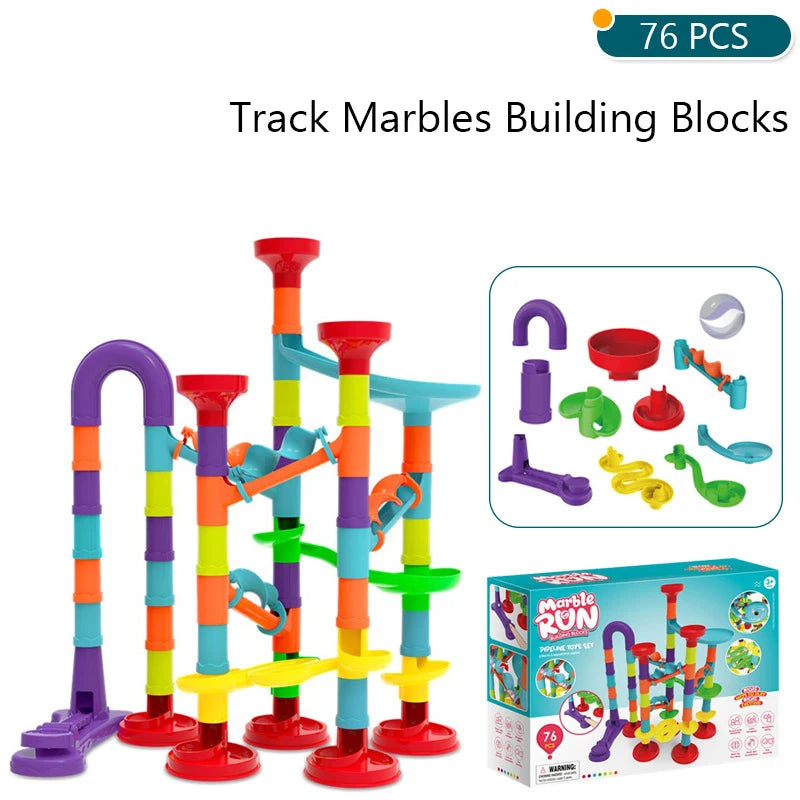
Fine motor skills toys for preschoolers build coordination through play. See them in action.
How Strong Hand Skills Make School & Self-Care Easier
Fine motor development plays an important role in school readiness and everyday independence. Strong hand and finger muscles help children control pencils, manipulate scissors, manage clothing fasteners, and complete daily routines with greater confidence. Toys to improve fine motor skills provide repeated opportunities to practice these movements in an engaging, low-pressure way.
- Develops a more stable pencil grasp for drawing and handwriting.
- Improves buttoning, zipping, snapping, and other dressing skills.
- Supports safer, more controlled use of child-safe scissors during crafts.
- Encourages independent feeding with utensils and small food items.
- Builds hand endurance for longer classroom activities and creative play.
- Strengthens hand-eye coordination needed for puzzles, construction toys, and sports.
Children typically build these skills gradually through everyday play rather than formal practice alone. Combining age-appropriate fine motor activities with regular opportunities to explore, build, sort, and create helps strengthen coordination while keeping learning enjoyable.
Pairing these toys with resources from Baby Growth & Learning helps create a balanced skill-building routine at home.
Side-by-Side Comparison of Top Fine Motor Skills Toys
| Toy | Best For | Key Skill | Age Range |
|---|---|---|---|
| Marble Run Blocks | Building + problem solving | Grip strength, bilateral coordination | 3–7 yrs |
| Threading Sets | Precision practice | Pincer grasp & hand-eye coordination | 3–5 yrs |
| Peg Boards | Pattern building | Finger isolation & dexterity | 3–6 yrs |
| Modeling Dough | Sensory strengthening | Grip power & finger strength | 2–6 yrs |
| Toddler Tongs | Sorting activities | Pinching control & pre-writing skills | 3–6 yrs |
| Knob Puzzles | Early learners | Wrist rotation & object manipulation | 2–4 yrs |
| Busy Boards | Practical life skills | Buttoning, zipping & buckling | 2–5 yrs |
1. Marble Run Building Blocks Set
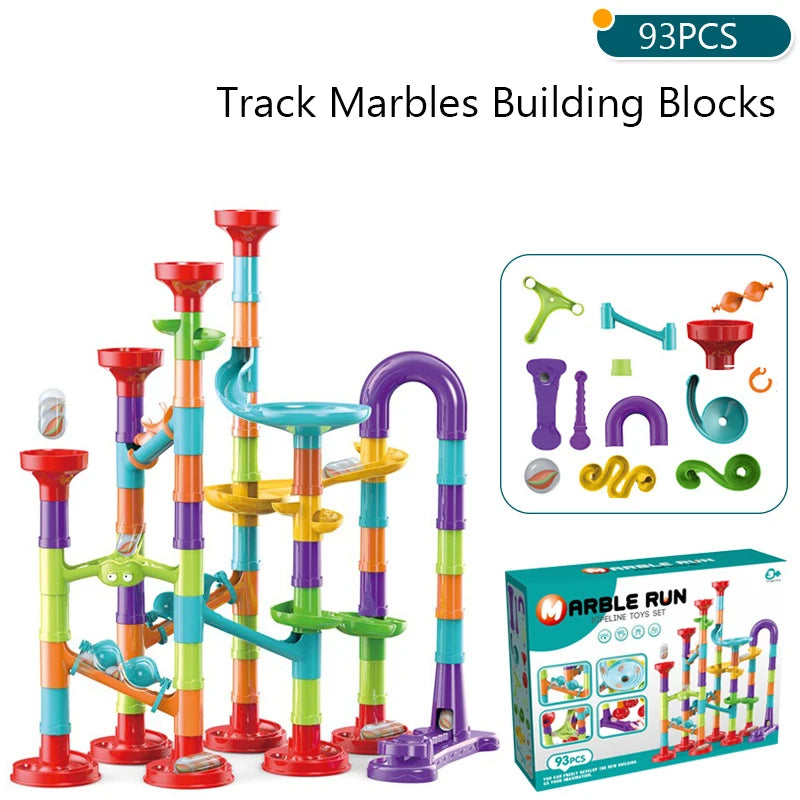
The Marble Run Building Blocks Set is one of the best toys that promote fine motor skills because every build requires children to grasp, align, press, and connect individual pieces with precision. These repeated movements strengthen hand muscles while encouraging bilateral coordination, visual tracking, and problem-solving as children experiment with different track designs.
Best age
Recommended for ages 3–7. Preschoolers can begin with simple towers and short tracks, while older children enjoy creating more complex structures that require greater planning and dexterity.
Skills developed
- Grip strength through repeated connecting and separating of blocks.
- Bilateral coordination by using both hands together during construction.
- Hand-eye coordination while aligning pieces accurately.
- Spatial reasoning and early engineering concepts through open-ended building.
- Problem-solving as children test, adjust, and improve each marble run.
Unlike single-purpose activities, marble runs grow alongside a child's abilities. Simple builds help younger children practice controlled hand movements, while increasingly challenging designs continue to develop precision, patience, and creativity over time.
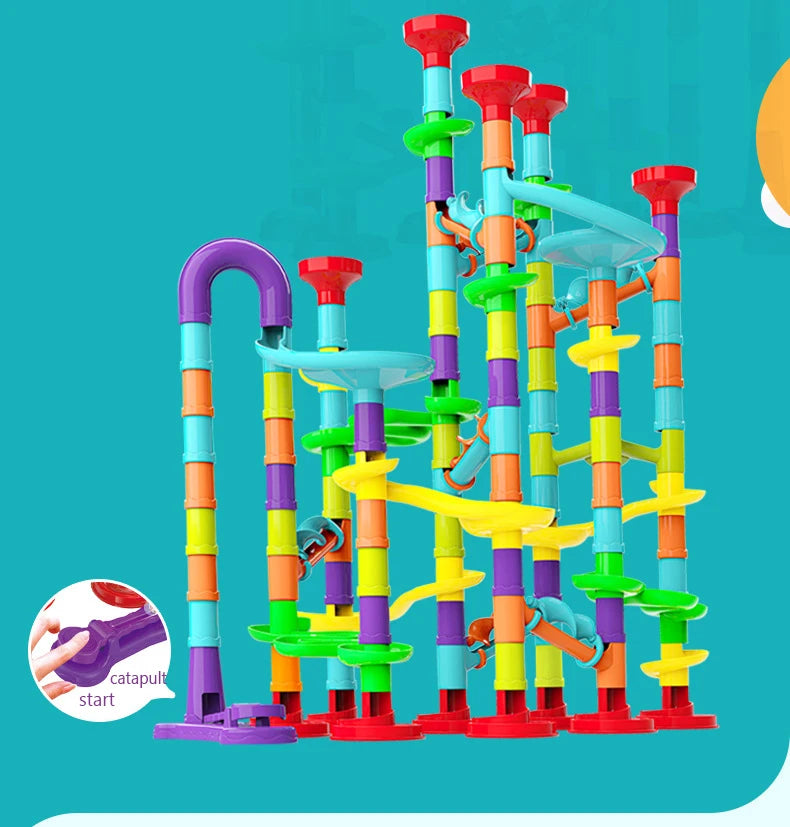
Dexterity toys like marble runs strengthen grip, coordination, and problem-solving through hands-on play. See it in action.
2. Lacing & Threading Sets
Lacing toys are classic fine motor skills toys because they require children to guide a lace through small openings using careful, controlled movements. Repeating this action strengthens the pincer grasp, improves hand-eye coordination, and develops the finger control needed for writing, buttoning clothing, and manipulating small objects.
Best age
Recommended for ages 3–5. Beginners can start with large lacing cards, while older preschoolers can progress to threading beads in patterns or sequences.
Skills developed
- Pincer grasp and fingertip strength.
- Hand-eye coordination.
- Precision and finger control.
- Visual tracking and concentration.
- Pattern recognition and sequencing.
Because lacing sets are lightweight and portable, they're ideal for quiet play at home, in classrooms, or while traveling. Increasing the complexity of threading patterns helps children continue building dexterity as their skills improve.
3. Peg Boards
Peg boards challenge children to grasp, position, and press pegs into small holes with accuracy. This repetitive movement strengthens the muscles responsible for controlled finger movements while improving dexterity and helping children learn to manipulate objects with greater precision.
Best age
Recommended for ages 3–6. Younger children can freely place pegs, while older preschoolers can copy patterns, colors, and simple designs to add a cognitive challenge.
Skills developed
- Finger isolation and dexterity.
- Grip control and hand strength.
- Pattern recognition and visual discrimination.
- Hand-eye coordination.
- Preparation for handwriting and craft activities.
Peg boards pair especially well with sensory play because they combine tactile feedback with precise finger movements. They are also a useful progression after simpler grasping activities for children ready to refine control and accuracy.
They're especially helpful when paired with sensory play options from Sensory Toys .
4. Modeling Dough
Modeling dough is one of the most effective toys to improve fine motor skills because it engages nearly every small muscle in the hands. Rolling, squeezing, flattening, pinching, and cutting dough build strength while encouraging children to experiment with shapes, letters, and imaginative creations. The soft resistance also provides valuable sensory feedback that supports controlled hand movements.
Best age
Recommended for ages 2–6. Toddlers can begin with simple squeezing and rolling activities, while preschoolers can use dough tools to create more detailed designs that require greater precision.
Skills developed
- Hand and finger strength.
- Bilateral coordination.
- Finger isolation through pinching and shaping.
- Creative thinking and imaginative play.
- Sensory awareness that supports motor development.
Adding safe tools such as rolling pins, plastic scissors, cookie cutters, or stamps increases the variety of movements children practice while keeping play engaging.
5. Toddler Tongs & Sorting Games
Toddler tongs strengthen the pincer grasp by encouraging children to pick up and transfer small objects with control. Activities such as moving pom-poms, cotton balls, wooden cubes, or large beads into sorting trays closely mimic the finger movements used for holding pencils, crayons, and eating utensils.
Best age
Recommended for ages 3–6. Start with large lightweight objects before progressing to smaller items that require greater accuracy and control.
Skills developed
- Pincer grasp development.
- Pre-writing hand control.
- Hand-eye coordination.
- Sorting and categorization skills.
- Finger endurance through repeated transfer activities.
Occupational therapists frequently incorporate tong activities into fine motor practice because they strengthen the thumb, index finger, and middle finger—the same three fingers responsible for an efficient tripod pencil grasp.
6. Knob Puzzles
Knob puzzles introduce young children to controlled grasping, lifting, rotating, and placing movements. The large knobs are easy for small hands to hold, making these puzzles an excellent choice for toddlers who are just beginning to refine wrist control and object manipulation.
Best age
Recommended for ages 2–4. Simple puzzles with large wooden pieces help toddlers practice matching while gradually improving coordination.
Skills developed
- Wrist rotation and stability.
- Object manipulation.
- Visual matching and problem-solving.
- Hand-eye coordination.
- Early dexterity needed for everyday self-care tasks.
As children become more confident, they can progress to puzzles with smaller pieces and more detailed images, providing an age-appropriate way to continue strengthening fine motor control while expanding cognitive skills.
7. Busy Boards
Busy boards help children practice practical life skills by incorporating zippers, buckles, snaps, buttons, laces, and switches into one engaging activity. These hands-on tasks strengthen finger coordination while helping toddlers and preschoolers become more confident with everyday routines such as dressing themselves.
Best age
Recommended for ages 2–5. Younger toddlers can explore simple fasteners, while older preschoolers can work through increasingly challenging closures that require greater finger control and coordination.
Skills developed
- Buttoning, zipping, buckling, and snapping.
- Finger dexterity and grip control.
- Bilateral coordination using both hands together.
- Hand strength for daily self-care activities.
- Independence and confidence during dressing routines.
Busy boards are especially valuable because they allow children to practice real-world movements repeatedly in a safe, playful environment before applying those skills to clothing and other everyday tasks.
For more independence-building tools, explore Mobility & Training .
Busy boards help children build confidence, coordination, and practical life skills through everyday play.
How to Choose the Right Fine Motor Toy for Your Child
The best toys for working on fine motor skills are those that match your child's current developmental stage while providing just enough challenge to encourage steady progress. Consider how the toy supports skill development, safety, durability, and long-term engagement before making a purchase.
Choose by age
- Ages 2–3: Look for large, easy-to-grasp toys such as modeling dough, knob puzzles, and simple busy boards.
- Ages 3–5: Introduce lacing sets, peg boards, marble runs, and tong activities that require greater precision.
- Ages 5+: Choose more complex construction toys and multi-step activities that combine planning with fine motor control.
Choose by skill level
- Select toys that are slightly more challenging than your child's current ability without causing frustration.
- Prioritize open-ended toys that can be used in multiple ways as coordination improves.
- Rotate activities regularly to encourage different hand movements, including grasping, pinching, twisting, threading, and stacking.
Safety considerations
- Choose age-appropriate toys with durable, non-toxic materials.
- Avoid small pieces for children who still mouth objects.
- Check for smooth edges and secure construction.
- Supervise play whenever toys contain small detachable components.
If your child enjoys open-ended building activities that continue to challenge developing skills, the Marble Run Building Blocks Set offers excellent long-term value by combining creativity, problem-solving, and fine motor practice in a single toy.
Pros and Cons of Fine Motor Skills Toys
- ✅ Strengthen hand muscles, grip, and finger coordination.
- ✅ Encourage screen-free, hands-on learning.
- ✅ Support handwriting readiness and everyday independence.
- ✅ Many open-ended toys continue to challenge children as they grow.
- ❌ Some activities require adult supervision because of small parts.
- ❌ Individual toys often target specific skills, so a varied collection provides the most balanced development.
Frequently Asked Questions
What age should kids start using toys that promote fine motor skills?
Most children can begin using age-appropriate fine motor toys around 18–24 months with large, easy-to-grasp pieces and close adult supervision. As children enter the preschool years (ages 3–5), they are typically ready for more challenging activities such as lacing sets, peg boards, marble runs, and sorting games that require greater precision and coordination.
How long before I see improvement?
Progress varies depending on a child's age, developmental stage, and how often they practice. Short daily play sessions of 10–15 minutes can help strengthen grip, coordination, and finger control over several weeks. Consistent practice across a variety of activities generally produces the best long-term results.
Are building toys better than worksheets?
For developing fine motor skills, hands-on building activities are often more engaging than worksheets because they encourage children to grasp, pinch, connect, stack, and manipulate objects in three-dimensional space. Worksheets can reinforce pencil control later, but active play typically provides a stronger foundation for developing hand strength and coordination.
What toys help with fine motor skills the most?
The most effective toys that promote fine motor skills encourage a variety of hand movements. Marble runs, lacing toys, peg boards, modeling dough, toddler tongs, knob puzzles, and busy boards all develop different aspects of dexterity, making a combination of these toys more beneficial than relying on a single activity.
Which toys are best for developing a pincer grasp?
Toys for pincer grasp include lacing sets, toddler tongs, peg boards, large tweezers, bead-threading activities, and games that involve picking up small objects. These activities strengthen the thumb and index finger while preparing children for writing, self-feeding, and dressing independently.
Are fine motor skills toys for preschoolers different from toddler toys?
Yes. Toddler toys focus on simple grasping, squeezing, matching, and large-piece manipulation, while fine motor skills toys for preschoolers introduce more precise movements such as threading, buttoning, building, sorting, and pattern creation. Selecting toys that match your child's developmental stage helps maintain motivation while supporting steady progress.
Related Guide: Marble Run Kits Compared: Which One Wins?





