

Basketball Hoop for Small Spaces That Fits Your Home
Do Basketball Mini Hoops Really Fit Small Spaces?
Yes, basketball mini hoops can fit surprisingly well in small spaces when you choose the right style for your room layout. A small indoor basketball hoop is designed for apartments, bedrooms, playrooms, and compact home areas where traditional basketball equipment would be impractical.
The best basketball mini hoops work in spaces with limited floor area because many models use doors, walls, or lightweight portable bases instead of requiring a full court setup. They are especially useful for families who want to encourage active play, improve hand-eye coordination, and create an indoor activity zone without adding bulky equipment.
Before buying a mini basketball hoop, consider your available room size, ceiling height, noise tolerance, and whether the hoop will be used indoors only or moved between indoor and outdoor spaces. The right option can transform a corner of a bedroom, apartment, garage, or play area into a fun shooting zone without overwhelming the room.
Who Benefits Most From Basketball Mini Hoops?
Basketball mini hoops are a practical choice for families, kids, and casual players who need an activity solution that fits smaller homes. They are especially suitable for:
- Apartment families: Over-the-door and compact wall-mounted designs provide basketball fun without taking up valuable floor space.
- Parents with young children: Smaller rims and soft balls create an easy way for kids to practice coordination and movement indoors.
- Shared homes: Foldable and portable designs can be stored away when the space is needed for other activities.
- Beginner players: Mini hoops offer a low-pressure way to learn basic shooting skills before moving to larger basketball systems.
How Much Space Does a Mini Basketball Hoop Room Need?
A mini basketball hoop room does not need to be large, but it should have enough clearance for safe movement. Over-the-door models can work in very small bedrooms or offices because they use almost no floor space. Portable and freestanding options need more open area so players can step back, shoot, and retrieve the ball comfortably.
For most small indoor setups, check these areas before installation:
- Wall or door space: Make sure the mounting area is wide enough for the backboard and secure attachment.
- Ceiling height: Avoid locations where shots or rebounds may hit lights, fans, or low ceilings.
- Floor clearance: Leave enough room around the hoop for safe movement, especially for active children.
- Storage area: Portable models should have a convenient place to move when not in use.
Indoor vs Outdoor Use: Where Do Mini Hoops Work Best?
Most basketball mini hoops are designed primarily for indoor play, especially models with lightweight backboards, foam padding, and soft balls. Indoor setups are ideal for bedrooms, apartments, playrooms, and garages where weather conditions are not a concern.
Some portable mini basketball hoops can be used outdoors temporarily, but exposure to rain, humidity, and direct sunlight may reduce durability over time. If you plan to move your hoop outside regularly, look for weather-resistant materials and a stable design made for flexible use.
Types of Basketball Mini Hoops Compared
Types of Basketball Hoops for Small Spaces
Basketball mini hoops are available in several designs, and the best choice depends on your available space, installation preferences, and how often the hoop will be used. Comparing each style helps families choose a small indoor basketball hoop that fits their home instead of becoming unused clutter.
Best Over-the-Door Mini Basketball Hoops
Over-the-door mini basketball hoops are one of the most space-efficient options for apartments, bedrooms, and shared living areas. They attach directly to the top of a door frame, allowing kids to enjoy basketball practice without giving up valuable floor space.
This style is especially useful for renters or families who want a quick setup without drilling holes into walls. Most models include features such as:
- Foam-padded brackets to help protect doors from scratches
- Compact backboards designed for tight spaces
- Soft or lightweight balls for quieter indoor play
- Simple removal and storage when not in use
The main limitation is that over-the-door hoops usually have fixed height placement, making them better suited for younger children and casual shooting rather than advanced practice. Parents can combine indoor play setups with guidance from Health & Safety resources to encourage safer activity habits.
Portable Mini Basketball Hoops
A portable mini basketball hoop provides more flexibility than fixed designs because it can move between rooms or locations. These hoops work well for families who want a play area in the living room during the day and a clear space when guests arrive.
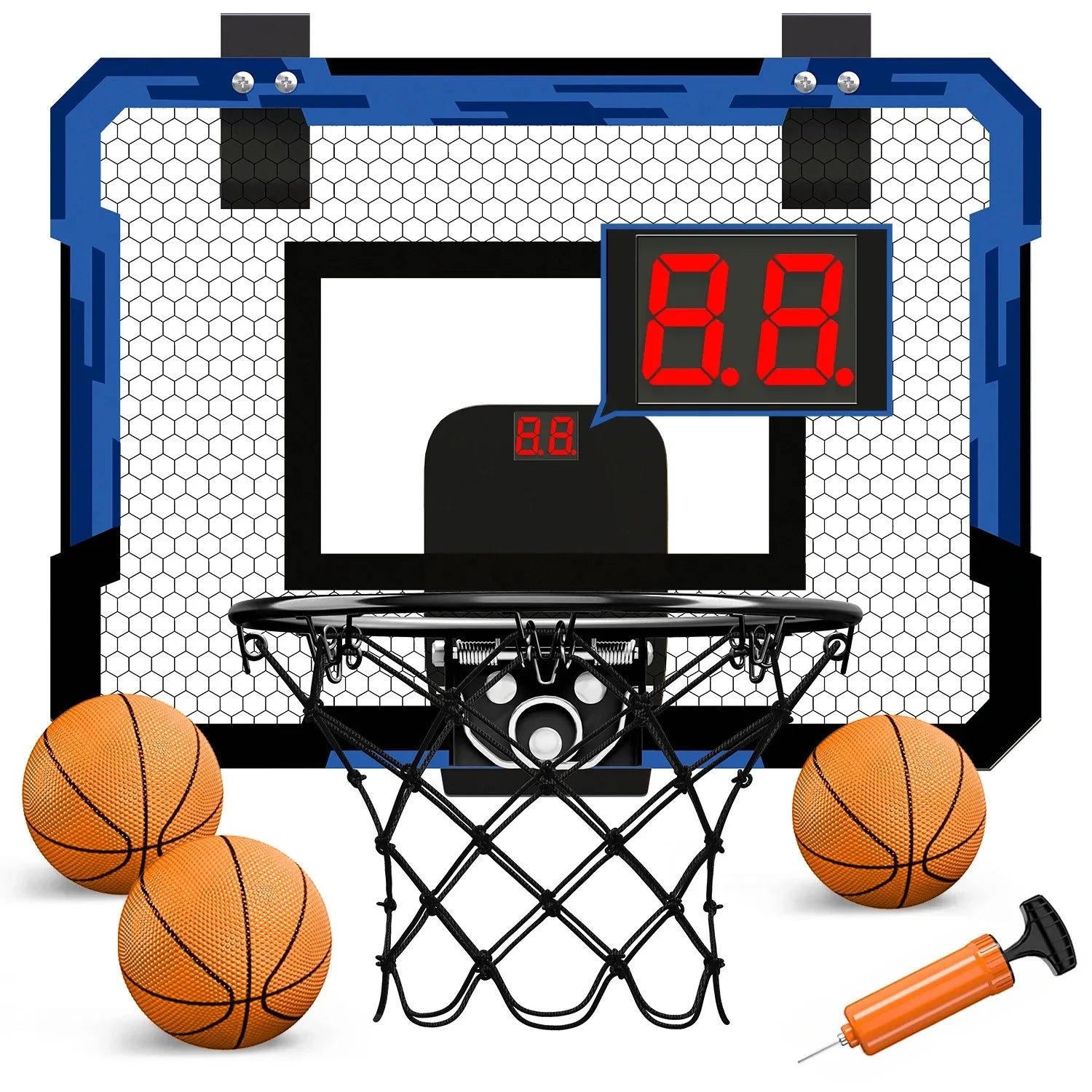
Portable mini basketball hoop setups for apartments and playrooms. See it in action
Portable designs are a strong choice for families who need adaptable indoor equipment. They often feature lightweight construction, movable bases, and easy storage options. These hoops can also support physical development by encouraging movement, balance, and hand-eye coordination alongside activities found in Mobility & Training resources.
Best for: Families who need a flexible basketball setup that can be moved, stored, or shared between different rooms.
Freestanding Adjustable Hoops
Freestanding mini hoops are designed for families who want more realistic basketball practice and adjustable height options. Unlike door-mounted models, these systems stand independently and can grow with children as their skills improve.
Although they require more floor space, slim-base designs can still work well in garages, playrooms, or room corners. Key advantages include:
- Adjustable rim heights for different ages and skill levels
- More stable positioning during active play
- Better shooting practice compared with fixed indoor hoops
- Suitable for siblings with different abilities
The trade-off is that freestanding options need dedicated storage or play space, making them less suitable for very small bedrooms or crowded apartments.
Wall-Mounted Folding Hoops
Wall-mounted folding hoops are a practical solution for families who want a permanent basketball area without taking up floor space. These systems attach securely to a wall and can often fold away when the area is needed for other activities.
They are commonly used in garages, playrooms, and larger indoor spaces where families want a more stable setup. However, installation requires careful measurement and secure mounting to ensure the hoop remains safe during use.
Best for: Homeowners who want a dedicated basketball practice area and have enough wall space for installation.
How to Choose the Right Mini Hoop
Choosing the right mini basketball hoop for indoor use requires more than checking the size. The best option should match your child’s age, available space, play habits, and how long you want the equipment to last. Consider height adjustment, materials, stability, portability, and durability before buying.
- Choose the right height adjustment: When deciding how do I choose the right height for a mini basketball hoop, consider the player’s age and skill level. Lower rims are better for younger children because they build confidence, while adjustable hoops allow the setup to grow as kids improve.
- Check backboard materials: A durable backboard provides better bounce and a more realistic basketball experience. Acrylic or reinforced plastic options are often stronger choices for frequent indoor play, while lightweight foam designs work well for casual shooting.
- Evaluate base stability: Freestanding mini hoops should have a stable base that prevents tipping during active play. A wider base or weighted design can improve safety, especially when multiple children use the hoop.
- Consider portability: Families in apartments or shared homes should look for lightweight designs that can be moved or stored easily. Portable mini basketball hoops are ideal when play areas need to serve multiple purposes.
- Look for durable construction: Strong rims, reinforced connections, and quality materials help a mini hoop handle repeated use. For indoor setups, padded edges and quieter components can also improve the overall experience.
Families should also consider how the hoop fits into daily routines. Choosing equipment that is easy to store and simple to use increases the chance that children will continue playing regularly. Families balancing active play with quiet activities may also explore Sensory Toys to create a more balanced home environment.
Safety and Noise Considerations
Indoor basketball should be fun without creating unnecessary risks or disruption. Small indoor basketball hoop designs often include features such as soft balls, padded mounting areas, and flexible rims to help reduce impact and noise during play.
- Use foam or soft rubber basketballs indoors to reduce sound and protect walls and furniture
- Secure door hooks, wall mounts, and bases before allowing children to play
- Create clear play boundaries away from fragile items, windows, and walkways
- Supervise younger children, especially when using freestanding or adjustable hoops
- Check hardware regularly to make sure connections remain tight and stable
For additional guidance on creating safer indoor activities, families can use recommendations from Health & Safety Tips to establish appropriate play rules.
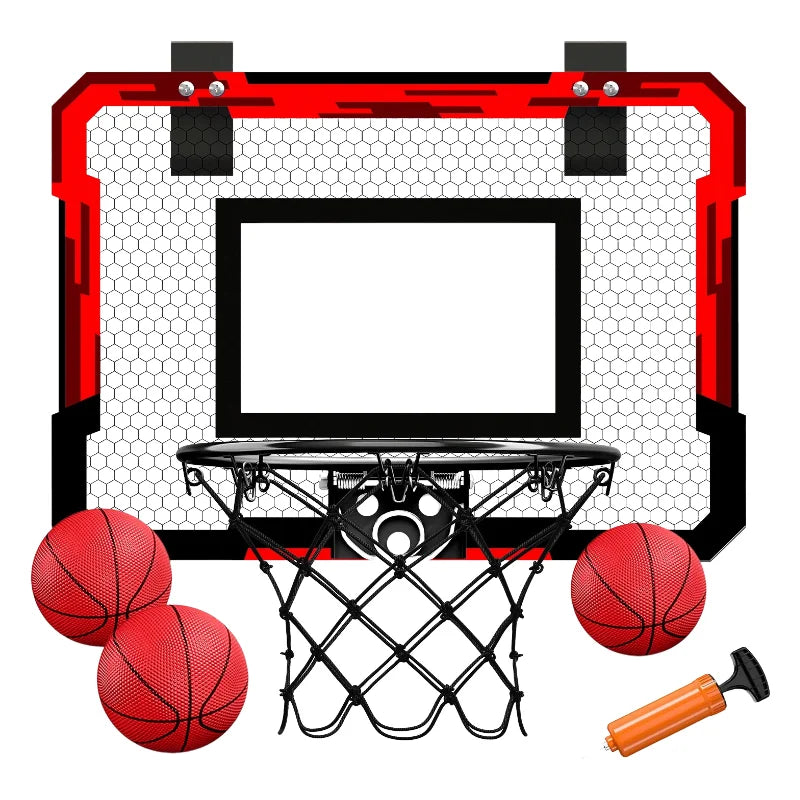
Indoor mini hoops that fit small rooms and keep play active. See it in action
How to Measure Your Space Before Buying
Before choosing a mini room basketball hoop, measure your available area to make sure the setup feels comfortable and safe. A small indoor basketball hoop should fit your room layout without blocking walkways, damaging walls, or creating unnecessary clutter.
- Check floor clearance: Measure the open area in front of the hoop where players will stand, shoot, and move. Portable and freestanding hoops need more floor space than over-the-door models.
- Measure ceiling height: Low ceilings can affect shooting angles and may limit where a hoop can be installed. Avoid placing hoops near ceiling fans, lights, or fragile fixtures.
- Review wall and door space: For mounted options, check door width, wall strength, and surrounding clearance before installation.
- Plan storage space: If your home has multiple uses for the same area, choose a foldable or portable design that can be moved away after playtime.
Taking a few minutes to measure your room helps prevent choosing a basketball hoop for small spaces that feels too large or difficult to use. A properly sized setup makes indoor play more enjoyable and easier to maintain.
Frequently Asked Questions
What features should I look for in a mini basketball hoop for indoor use?
Look for features that match your space and play style, including a durable backboard, secure mounting system, soft indoor ball, stable construction, and easy storage options. Adjustable height and padded edges are especially useful for growing children.
How do I choose the right height for a mini basketball hoop?
The right height depends on the player’s age, size, and skill level. Younger children usually benefit from lower rims that make shooting easier, while adjustable hoops provide flexibility as children develop their basketball skills.
What age group is best suited for mini basketball hoops?
Many mini basketball hoops are suitable for children ages 3 and up. Over-the-door models are often ideal for beginners, while adjustable freestanding hoops can support older kids who want more realistic practice.
Can mini basketball hoops be used outdoors?
Some portable basketball hoops can be used outdoors temporarily, but many indoor mini hoops are not designed for long-term exposure to rain, moisture, or direct sunlight. Check the materials and manufacturer recommendations before outdoor use.
Are portable basketball hoops suitable for both indoor and outdoor use?
Portable basketball hoops can be a flexible option for families who want indoor and outdoor play. Models with durable materials and stable bases are better suited for occasional movement between locations.
How much space do I need for a basketball hoop in a small room?
The required space depends on the hoop style. Over-the-door hoops need minimal floor clearance, while portable and freestanding designs require additional room for movement and shooting. Always measure your available area before purchasing.
Are over-the-door basketball hoops safe for apartments?
Over-the-door basketball hoops can work well in apartments when installed correctly. Choose models with protective padding, avoid excessive force during play, and ensure the door frame can support the attachment.
Which basketball hoop is best for garages with low ceilings?
For garages with low ceilings, compact wall-mounted, over-the-door, or adjustable mini hoops are usually better choices. These designs allow basketball practice without requiring the height and space of a full-size system.
Final Recommendations by User Type
The best basketball hoop for small spaces depends on how you plan to use it, who will play, and how much room you have available.
- Best overall: A versatile adjustable mini hoop that balances durability, play quality, and space efficiency is the best choice for most families.
- Best value: Over-the-door mini basketball hoops provide affordable indoor entertainment while using almost no floor space.
- Best for families: Portable or adjustable hoops are ideal for households with children of different ages because they can adapt as skills improve.
- Best for limited spaces: Compact door-mounted or folding designs are the most practical options for apartments, bedrooms, and shared rooms.
Looking for a practical option? The kids basketball hoop is designed to fit small rooms while keeping play safe and fun.
Related Guide: Mini Indoor Basketball Goal: Top Options Compared for Home Play





