

Does bath play really help toddlers build coordination?
Yes—when done right, you can boost motor skills in bath time by turning splashing into guided play. Simple pouring, squeezing, and connecting activities strengthen hand muscles, improve balance, and sharpen problem-solving. Short, safe routines (10–15 minutes) deliver measurable gains in grip control, bilateral coordination, and confidence.
Boost Motor Skills in Bath: Simple Activities for Toddlers
⏱ 7 min read · Bath time doesn’t have to be rushed or messy to be meaningful. With the right setup, everyday water play becomes a calm, screen-free routine that builds coordination, focus, and confidence. Wondering how to keep little hands busy while supporting real skills—without overwhelming yourself? Let’s make bath time work smarter.
Quick question: Which bath activity fits your toddler’s attention span tonight—pouring, squeezing, or building? Read on to choose in minutes.
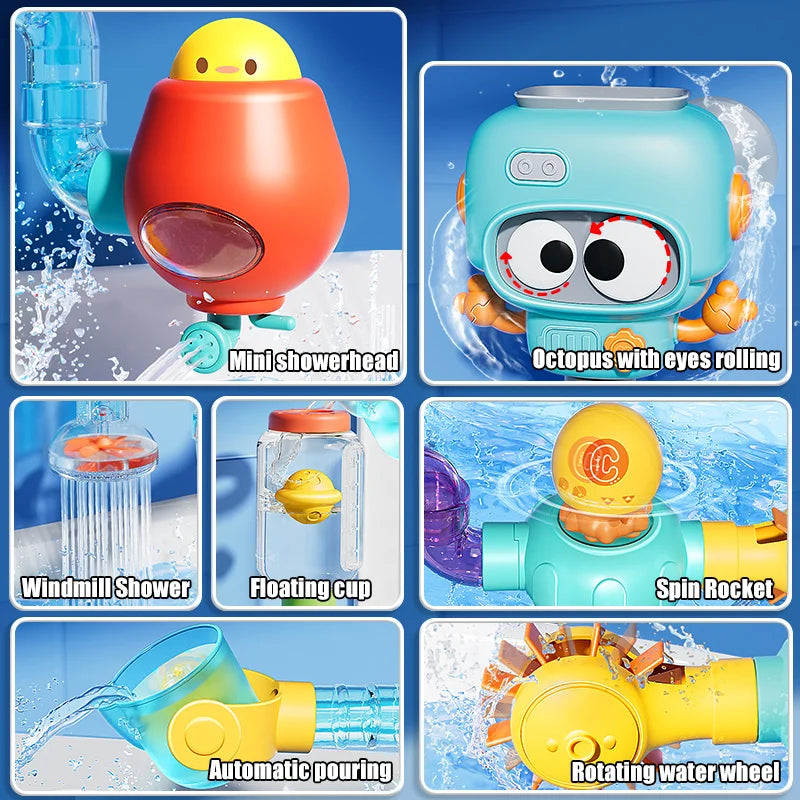
Early water play activities for preschoolers spark coordination—💡 See it in action
Explore a hands-on setup parents love: DIY Water Pipe Bath Toys make it easy to guide play without screens.
Why Bath Time Builds Skills Fast (Even on Busy Nights)
Warm water relaxes muscles and reduces resistance, making practice feel like play. The tub also limits space, helping toddlers focus on one task at a time—perfect for repetition without boredom.
- Water adds gentle resistance for muscle strengthening
- Small movements create big feedback, boosting confidence
- Predictable routines support calmer transitions to bedtime
- Mess stays contained, easing cleanup stress
Which Motor Skills Improve in the Tub?
Boost motor skills in bath routines target both fine and gross abilities through playful challenges that feel effortless.
- Fine motor: squeezing, pinching, twisting, connecting
- Gross motor: reaching, shifting balance, coordinated arm use
- Visual-motor: aiming pours, tracking floating pieces
- Problem-solving: cause-and-effect with water flow
Motor skills development examples you’ll notice
- Stronger grip when holding cups or crayons
- Better two-hand coordination when dressing
- Longer focus during table activities
- More confident movement on steps and stools
Step-by-Step Bath Activities That Build Control
These short routines fit into a 10–15 minute bath and scale with age.
How does pouring water build coordination?
Boost motor skills in bath time by practicing controlled pours. Toddlers learn wrist rotation, grip strength, and visual aiming as they move water between containers.
- Offer two cups (one with a spout)
- Mark a target line on the tub wall
- Encourage slow pours to the line
- Switch hands to balance strength
Why squeezing toys improves hand strength
Boost motor skills in bath routines with squeeze-and-release play to strengthen palms and fingers while teaching cause-and-effect.
- Use soft squeeze toys or bulbs
- Fill, squeeze, and watch water spray
- Count sprays to extend focus
- Alternate fast and slow squeezes
Connecting pipes for problem-solving
Boost motor skills in bath learning by letting toddlers connect pieces to guide water flow, supporting planning and persistence.
- Attach suction pieces at eye level
- Ask, “Where should the water go?”
- Test, adjust, and retry
- Celebrate successful paths
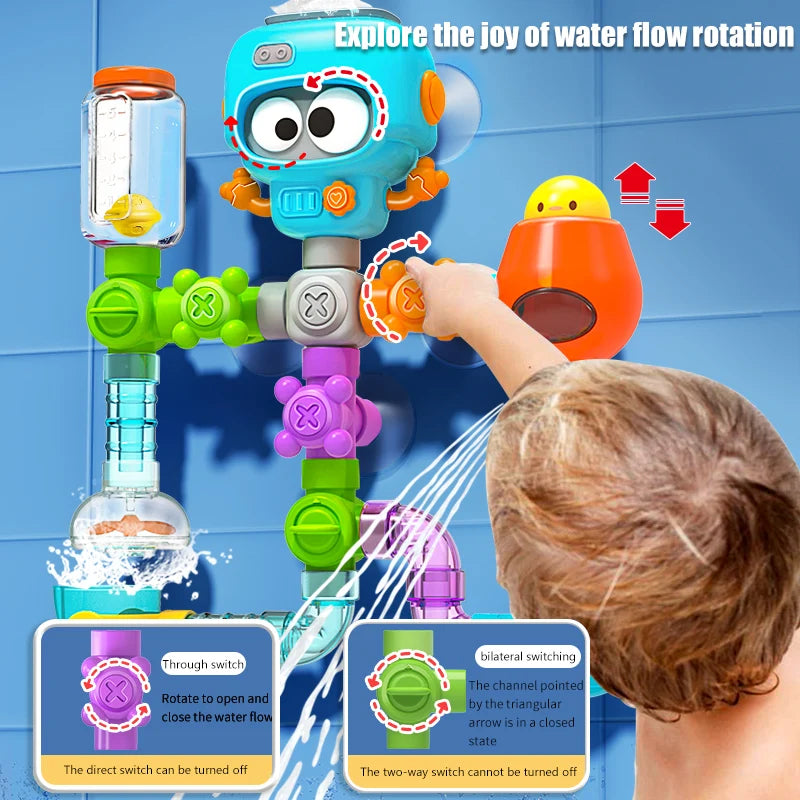
Toy motor skills meet water stem projects—💡 See it in action
Want a simple all-in-one option? The DIY Water Pipe Bath Toys set keeps activities organized and repeatable.
Toys That Support Learning (Without Clutter)
Choose items that invite repeated actions rather than one-time novelty.
| Type | Why It Helps | Best Age |
|---|---|---|
| Pouring cups | Wrist control, aim | 18–36 months |
| Squeeze toys | Grip strength | 12–36 months |
| Pipe builders | Planning, persistence | 24–48 months |
For a curated selection that grows with your child, browse Baby Growth & Learning and Sensory Toys.
Safety & Calm: Setups That Reduce Chaos
- Keep water depth shallow and supervised
- Stick to 2–3 toys to avoid overwhelm
- Use non-slip mats and stable seating
- End with a rinse routine for predictability
Helpful add-ons live in Baby Bath Accessories and Health & Safety.
Real Parent Results & Tips
“After two weeks of guided pouring, our toddler grips crayons longer and focuses better at meals.” — Parent of a 2.5-year-old
“The pipe setup turned bath time from chaos into calm problem-solving.” — Parent of twins
- Short, daily play beats long, occasional sessions
- Model once, then step back
- Praise effort, not perfection
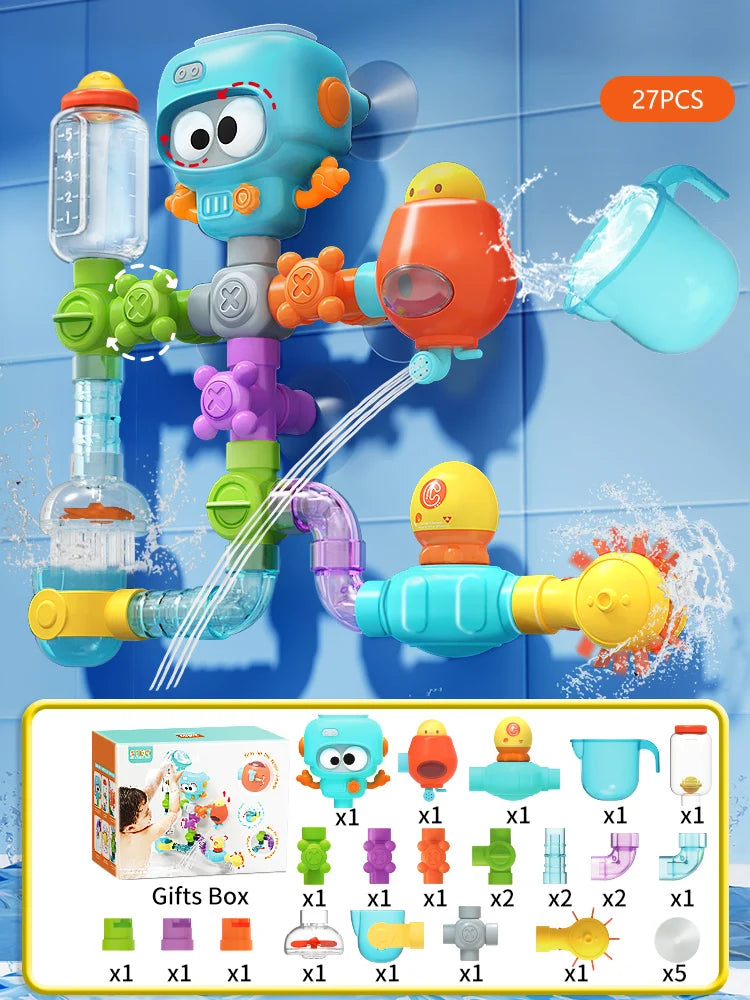
Motor skill development toys that last—💡 See it in action
Ready to simplify tonight? Try the DIY Water Pipe Bath Toys to guide play with less mess.
Quick Answers Parents Ask
How long should bath skill play last?
Ten to fifteen minutes is ideal. Stop while your toddler is still engaged to build anticipation for tomorrow.
What age is best to start?
From around 12 months with simple pouring and squeezing, scaling complexity as coordination grows.
Can this replace other activities?
It complements daily play by reinforcing skills learned elsewhere, especially fine motor control.
Related Guide: Safe Bath Toys for Toddlers: How to Choose and Use Them





