

Best Healthiest Baby Walker for Safe First Steps
What is the safest way of choosing a safe baby walker?
Choosing safe baby walker options means prioritizing stability, controlled movement, age suitability, and child-friendly materials. The safest choices typically include sturdy push walkers or activity-based designs with features such as wide bases, adjustable resistance, smooth wheels, and non-toxic finishes. These features help support early mobility while reducing unnecessary falls and encouraging confident first steps under adult supervision.
Choosing Safe Baby Walker: Best Options Compared
Choosing safe baby walker solutions is an important decision during your child’s early mobility stage. The right walker should do more than entertain—it should support balance, coordination, and independent movement while fitting your baby’s developmental needs. This updated guide compares the safest baby walker styles, explains key safety features, and helps parents understand which options may work best for different homes and learning stages.
⏱ 12 min read
Which baby walker truly supports safe first steps? Many parents discover that not all walkers are designed with the same level of stability, comfort, and developmental support. The best baby walker choice depends on your child’s age, walking ability, home environment, and the safety features that matter most.
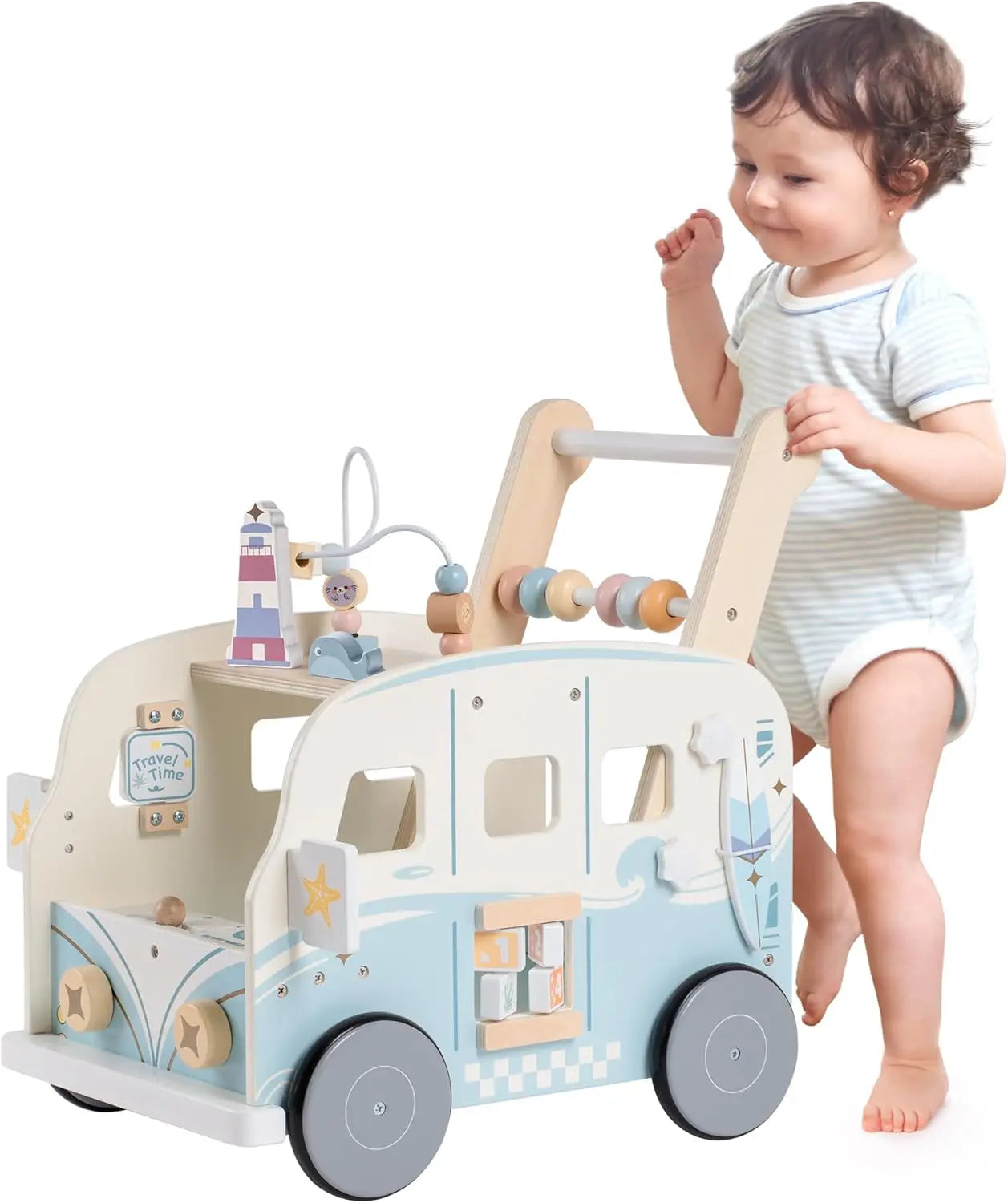
Choosing safe baby walker support with a wooden push walker design See it in action
Best Healthiest Baby Walkers (2026): Top Safe Picks Compared
The best healthiest baby walker options combine stability, safe materials, and developmental benefits rather than focusing only on entertainment. When comparing baby walkers recommended by parents, look for designs that encourage natural movement, provide controlled support, and match your baby’s stage of learning.
Quick Comparison Table
| Walker Type | Best For | Key Safety Features | Main Benefits |
|---|---|---|---|
| Wooden Push Walker | Babies learning first steps | Wide base, sturdy frame, adjustable resistance | Supports balance and controlled movement |
| Activity Center Walker | Babies who enjoy interactive learning | Stable design, sensory activities, supervised play | Combines movement with exploration |
| Convertible Walker | Families wanting long-term use | Adjustable settings and multiple functions | Adapts as mobility skills improve |
| Budget Push Toy | Occasional supervised play | Lightweight construction and simple design | Affordable introduction to walking practice |
Best Overall
A sturdy wooden push walker is often considered one of the best baby walker choices for early walkers because its weight and resistance encourage slower, more intentional steps. A stable frame can help babies practice balance while reducing the sudden rolling movement found in some lightweight designs.
Best Push Walker
For parents focused on baby push walker development, a push walker with adjustable wheel tension can provide better control as confidence grows. The ability to adjust resistance allows families to create a safer learning experience for beginners and more independent walkers.
Best Activity Center
An activity center walker can be a good choice for babies who enjoy sensory play. These models combine standing practice with interactive features that encourage curiosity while keeping play sessions engaging.
Best Budget Option
A simple walker push toy may suit families looking for an affordable mobility aid. However, parents should prioritize sturdy construction, reliable wheels, and supervised use instead of choosing only based on price.
Best Non-Toxic Option
The best non toxic baby walker options use child-safe finishes, durable materials, and easy-to-clean surfaces. Wooden designs with verified material safety information are popular among parents who prefer fewer synthetic materials in their baby’s play environment.
How We Chose the Best Safest Baby Walkers
To identify the safest baby walkers, we focused on features that influence everyday use, comfort, and child development. A quality walker should support movement without encouraging unsafe speed or replacing essential floor-based learning activities.
Testing Criteria
- Wheel stability and braking: We looked for walkers that provide controlled movement instead of sudden rolling.
- Construction quality: Strong frames, balanced bases, and durable materials help improve stability during use.
- Ease of cleaning: Baby products should have surfaces that can be wiped down easily after daily play.
- Parent usability: Adjustable features and simple assembly make walkers easier for families to use safely.
Safety Standards
The best safest baby walker options should follow recognized safety guidance, including appropriate manufacturing standards such as ASTM and CPSC requirements where applicable. Parents should check product details for stable construction, secure components, and child-safe materials before purchase.
Development Considerations
A safe baby walker should support natural movement rather than force a child into a walking pattern before they are ready. Features such as adjustable resistance, a stable base, and age-appropriate design can help create a more supportive learning environment.
Why Baby Walker Safety Matters for Healthy Development
Early walking is an exciting milestone, but babies are still developing muscle strength, balance, and coordination. Choosing safe baby walker designs can help create a more controlled practice environment by reducing sudden movement, improving stability, and encouraging careful exploration.
The best baby walker for development should complement activities such as crawling, standing practice, and floor play. Push-style walkers often encourage babies to use their own strength and balance while moving forward at a natural pace.
What Pediatric Experts Recommend
Many child development experts emphasize that supervised play and active floor movement remain important during early mobility stages. A walker should be viewed as a supportive tool rather than a replacement for crawling, standing, and independent exploration.
Parents exploring mobility tools often pair walkers with other developmental aids from Baby Growth & Learning collections to create a safer, more engaging environment at home.
When Walkers May Not Be Appropriate
Not every baby is ready for a walker at the same age. Parents should avoid using a walker before their child can sit, stand with support, and show interest in movement. Supervision is essential to help prevent falls, collisions, or unsafe use around stairs and uneven surfaces.
Understanding Different Baby Walker Types
Choosing between different baby walker styles depends on your child’s mobility stage, developmental needs, and home environment. The safest baby walkers and activity centers are designed to support supervised movement while allowing babies to practice balance, coordination, and confidence at their own pace.
Push Walker
A push walker allows babies to stand behind the walker and move forward by pushing it with their own strength. Compared with traditional seated designs, push walkers encourage natural weight shifting, balance practice, and independent movement.
When comparing push walker vs stationary walker options, push walkers are often preferred for babies who are already pulling up and preparing for first steps. A stable frame, adjustable wheel resistance, and wide base can help reduce sudden rolling and improve control.
Seated Walker
A seated walker places the baby inside a supported seat with wheels underneath, allowing movement without requiring the child to balance independently. While these designs may seem convenient, they should only be used with careful supervision and according to current safety guidance.
The main difference between a push toy vs walker is that push toys encourage babies to control their own movement, while seated walkers provide a supported sitting position that may not promote the same balance skills. Parents should consider developmental readiness and safety features before choosing this style.
Activity Center Walker
An activity center walker combines standing support with sensory play features such as buttons, gears, sounds, and textures. These designs can keep babies engaged while they practice standing and moving around a safe play area.
The best activity center options focus on stable construction, age-appropriate activities, and supervised use. They can be useful for curious babies who enjoy interactive learning alongside mobility practice.
Convertible Walker
A convertible walker offers multiple functions that adapt as a child grows. Some models transform from activity centers into push walkers, helping families use the product across different stages of early mobility.
Convertible designs may provide better long-term value, but parents should still check stability, material safety, wheel control, and whether each configuration supports healthy movement patterns.
Push Walker vs Stationary Walker: Which Is Safer?
The choice between a push walker and a stationary walker depends on how your baby learns movement. Understanding the differences can help parents select a walker that supports balance while matching their child’s current abilities.
Development Benefits
Push walkers encourage babies to use their legs, core muscles, and balance reactions as they move forward. This active participation can support confidence during the transition from standing with support to independent walking.
Stationary walkers and activity centers can still provide value by offering a safe place for standing practice and sensory exploration. However, they are generally designed more for supported play than practicing forward walking skills.
Safety Pros and Cons
| Feature | Push Walker | Stationary Walker / Activity Center |
|---|---|---|
| Movement Control | Baby controls movement through pushing and balance | Provides a fixed play position with limited movement |
| Balance Practice | Encourages natural weight shifting and coordination | Supports standing practice but less walking practice |
| Best For | Babies preparing for independent steps | Babies who enjoy interactive standing play |
| Safety Focus | Requires stable wheels and controlled resistance | Requires secure construction and supervised use |
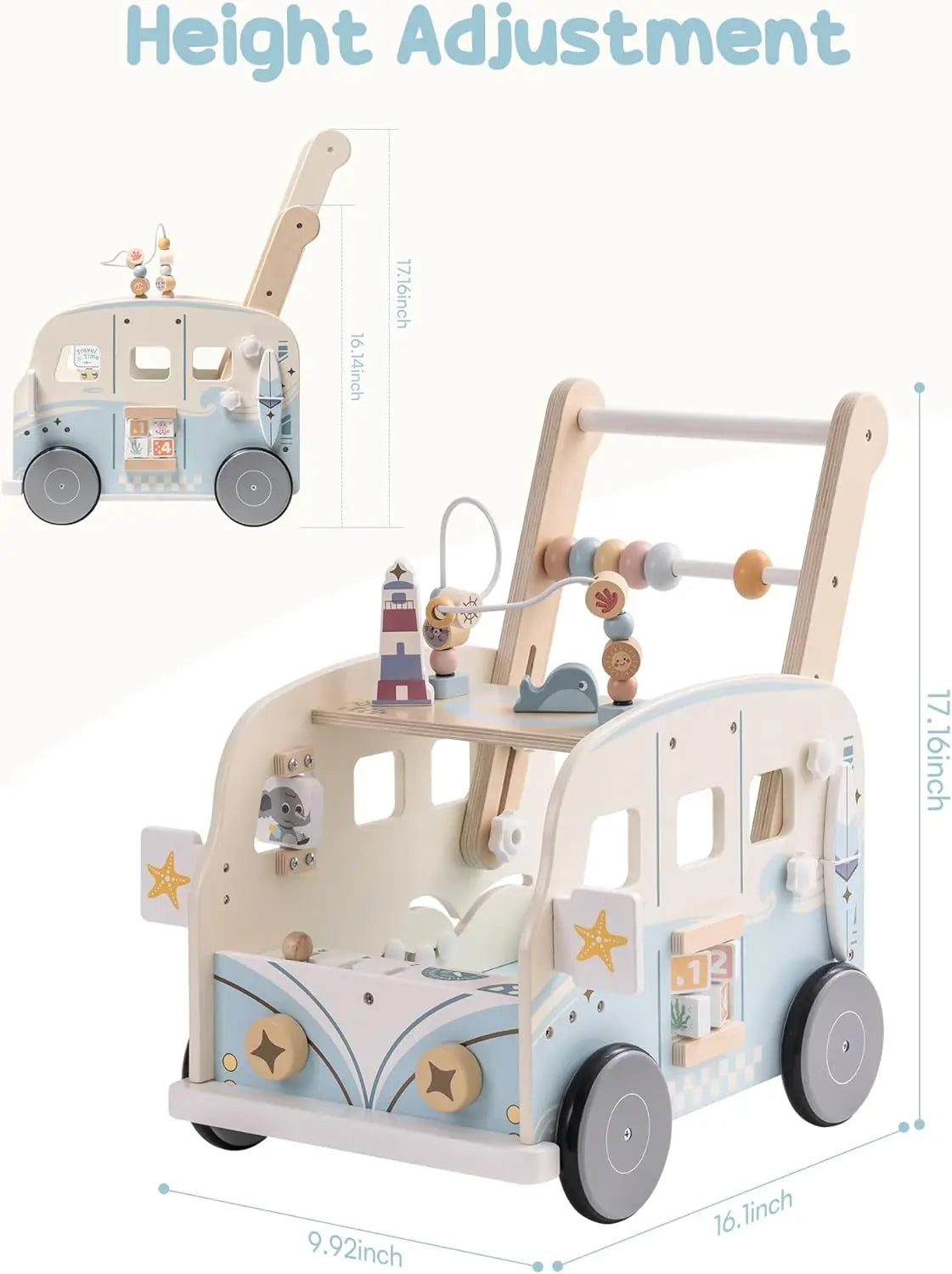
Wooden push walker stability for toddler first steps See it in action
Choosing Safe Baby Walker: Side-by-Side Comparison
Comparing baby walker features side by side makes it easier to understand which design fits your child’s developmental stage. The best baby walker choice depends on stability, movement control, engagement level, and how much support your baby needs while learning.
| Feature | Wooden Push Walker | Activity Center Walker | Walker Push Toy |
|---|---|---|---|
| Stability | High due to heavier frame and wider base | Medium–High with stable play structure | Medium depending on design quality |
| Speed Control | Natural resistance supports slower movement | Controlled standing and supervised play | May require additional supervision if wheels move quickly |
| Development Support | Encourages balance, posture, and walking practice | Supports standing, coordination, and sensory learning | Provides simple movement practice for confident babies |
| Engagement | Moderate with optional toys or activities | High with interactive features | Low–Moderate depending on added activities |
| Best For | Early walkers developing first steps | Babies who enjoy interactive exploration | Children already comfortable standing and moving |
For many families, a stable wooden push walker remains a popular choice because it combines mobility practice with natural resistance. Activity-based options can also be useful when parents want to encourage exploration, provided the walker is used safely and under supervision.
How to Choose the Right Baby Walker
Knowing how to choose a baby walker starts with matching the design to your child’s development, your home setup, and the safety features that provide the most support. A good walker should encourage movement while offering stability, comfort, and controlled use.
Age Recommendations
The safest walker for baby use should match your child’s physical readiness rather than a specific age alone. Many babies begin exploring push walkers around 9 to 12 months when they can sit independently, pull up, and stand with support.
Parents should look for signs that their baby is ready, including interest in moving, stronger leg control, and the ability to maintain balance while holding onto furniture. Always supervise walker use and avoid using any walker before your child has developed the necessary strength and coordination.
Safety Features to Look For
When deciding which baby walker is safest , focus on construction details that improve stability and reduce unexpected movement.
- Wide stable base: A broader frame helps prevent tipping and provides better support during early steps.
- Adjustable resistance: Wheel tension allows parents to control movement speed as confidence develops.
- Brake pads or wheel control: Features that limit sudden rolling can create a safer learning environment.
- Secure construction: Strong joints and durable materials help the walker remain stable during everyday use.
- Adjustable height: A properly fitted walker helps babies maintain a more comfortable posture while standing and pushing.
Material Safety
A quality walker should use baby-safe materials that are durable, easy to clean, and free from unsafe finishes. Parents searching for a best non toxic baby walker should consider options with non-toxic coatings, smooth edges, and strong construction designed for frequent handling.
Wooden designs are popular because they often provide a sturdy feel and long-lasting durability. One option parents review is available here: Wooden Baby Walker , often praised for adjustable wheel tension and solid construction.
Home Compatibility
The best walker for your baby should also work well in your living space. Consider your flooring type, available play area, and potential hazards before choosing a design.
- Hardwood floors: Look for wheels with smooth movement and adjustable control to prevent sliding.
- Carpeted areas: Choose a walker with wheels designed to move effectively across softer surfaces.
- Small spaces: Compact designs may be easier to maneuver while still providing stability.
- Open areas: Larger play zones allow babies to practice movement more comfortably under supervision.
Safety-conscious households often explore complementary products from Health & Safety to reduce everyday risks during active play.

Activity center walker vs wooden push walker comparison See it in action
Our Top Recommendations by Family Needs
The best baby walker depends on your child’s mobility stage, your home layout, and the features that matter most to your family. These baby walkers recommended categories help simplify the decision by matching common household needs with the right walker style.
Best for Small Spaces
For apartments, smaller play areas, or homes with limited floor space, a compact push walker with a stable frame can provide mobility support without taking up too much room. Look for lightweight designs that still include a wide base and controlled wheels for safer movement.
Best for Hardwood Floors
Families with hardwood or smooth flooring should prioritize walkers with adjustable wheel resistance and wheels that move smoothly without excessive sliding. A sturdy wooden baby walker can be a practical choice because its added weight often helps create more controlled movement.
Best for Active Babies
Active babies who enjoy exploring may benefit from walkers that combine movement with learning features. Activity-based designs can encourage curiosity through interactive elements while allowing babies to practice standing and coordination with adult supervision.
Best Value
For parents looking for long-term value, a durable walker with adjustable features can provide more flexibility as a child develops new skills. Choosing quality construction over the lowest price can help ensure better stability, comfort, and everyday usability.
Frequently Asked Questions
Which baby walker is safest?
The safest baby walker is one that matches your child’s developmental stage and includes stability-focused features such as a wide base, controlled wheels, durable construction, and safe materials. Many parents prefer sturdy push walkers because they encourage babies to practice balance while controlling their own movement.
What is a good walker for baby?
A good walker for baby should provide support without replacing natural movement practice. Look for features such as adjustable resistance, comfortable height, non-toxic finishes, and a design that encourages supervised standing and walking development.
Are non-toxic baby walkers worth it?
Yes. Non-toxic baby walkers can be a worthwhile choice for families who want safer materials in products their children touch frequently. Parents should look for smooth surfaces, child-safe finishes, and durable materials that are easy to clean.
Push walker vs stationary walker: which is better?
The choice between a push walker vs stationary walker depends on your child’s needs. Push walkers are often better for practicing forward movement and balance, while stationary walkers or activity centers may be useful for supported standing and interactive play.
At what age should babies use a walker?
Many babies begin using a push walker around 9 to 12 months when they can sit independently, pull up, and stand with support. However, readiness varies between children, so parents should focus on developmental signs rather than age alone.
Do baby walkers delay walking?
When used appropriately and as part of a balanced routine, a baby walker should not replace essential activities such as crawling, floor play, and independent exploration. Supervised use alongside natural movement practice helps support healthy development.
What is the healthiest baby walker?
The healthiest baby walker is one that supports natural movement, uses safe materials, and encourages active participation from the child. A stable push walker with adjustable features is often considered a supportive option for babies learning early walking skills.
What should I look for in a non-toxic baby walker?
When choosing a non-toxic baby walker, check for child-safe finishes, smooth edges, sturdy construction, and materials designed for regular handling. Easy-to-clean surfaces are also important for maintaining a hygienic play environment.
Can baby walkers affect development?
Baby walkers should be used as a supervised mobility aid rather than a replacement for crawling, standing practice, or floor activities. Combining walker time with age-appropriate movement activities supports a more balanced approach to early development.
Are activity center walkers safer than traditional walkers?
Activity center walkers and traditional walkers serve different purposes. Activity centers can provide stable standing practice and sensory engagement, while push walkers may better support controlled movement and balance development. The safest option depends on the child’s abilities and how the product is used.
How do I choose the best baby walker for my home?
To choose the best baby walker for your home, consider your child’s age, walking readiness, floor type, available space, and safety features. A stable design with appropriate resistance, safe materials, and supervised use is usually the best fit for most families.





