

How Long Does a Wooden Play Kitchen Usually Last?
How Long Does a Wooden Play Kitchen Usually Last?
A quality wooden play kitchen usually lasts 5–10 years with proper care, while premium models can remain usable through multiple children. The exact wooden play kitchen lifespan depends on materials, construction quality, frequency of use, and maintenance. Budget sets may show wear within a few years, while a long-lasting wooden play kitchen can become a family keepsake.
Average Lifespan by Quality Level
Not all wooden play kitchens are built the same. The expected lifespan often depends on the level of construction and materials used:
| Quality Level | Expected Lifespan | Typical Features |
|---|---|---|
| Budget Wooden Play Kitchen | 2–5 years | Thinner panels, lighter hardware, basic finishes |
| Mid-Range Wooden Play Kitchen | 5–8 years | Stronger joints, better coatings, improved stability |
| Premium Wooden Play Kitchen | 8+ years | Solid construction, durable hardware, repairable components |
For many families, the value comes from years of imaginative play rather than the initial purchase price. A well-maintained kitchen can support pretend cooking, role-playing, and skill-building from toddler years into early childhood.
Can a Wooden Play Kitchen Last Through Multiple Children?
Yes. A durable wooden play kitchen can often be passed from one child to another when it is made with sturdy materials and cared for properly. Unlike toys that rely on fragile plastic parts, quality wooden playset kitchen designs can handle repeated use, storage, and changing play styles.
Families who plan to have multiple children should prioritize reinforced construction, replaceable hardware, easy-to-clean surfaces, and timeless designs that remain appealing over several years.
Durable Wooden Play Kitchen Showdown: Value vs Longevity
⏱ 7 min read
Choosing a play kitchen can feel deceptively simple—until you’re comparing appearance, price, and long-term value. Parents want a wooden toy kitchen that fits small spaces, encourages creativity, and survives years of energetic play. The biggest question is whether a higher-quality kitchen delivers enough durability to justify the investment.
Quick thought: The best play kitchen is not always the cheapest option. The right choice balances durability, safety, space, and years of meaningful play.
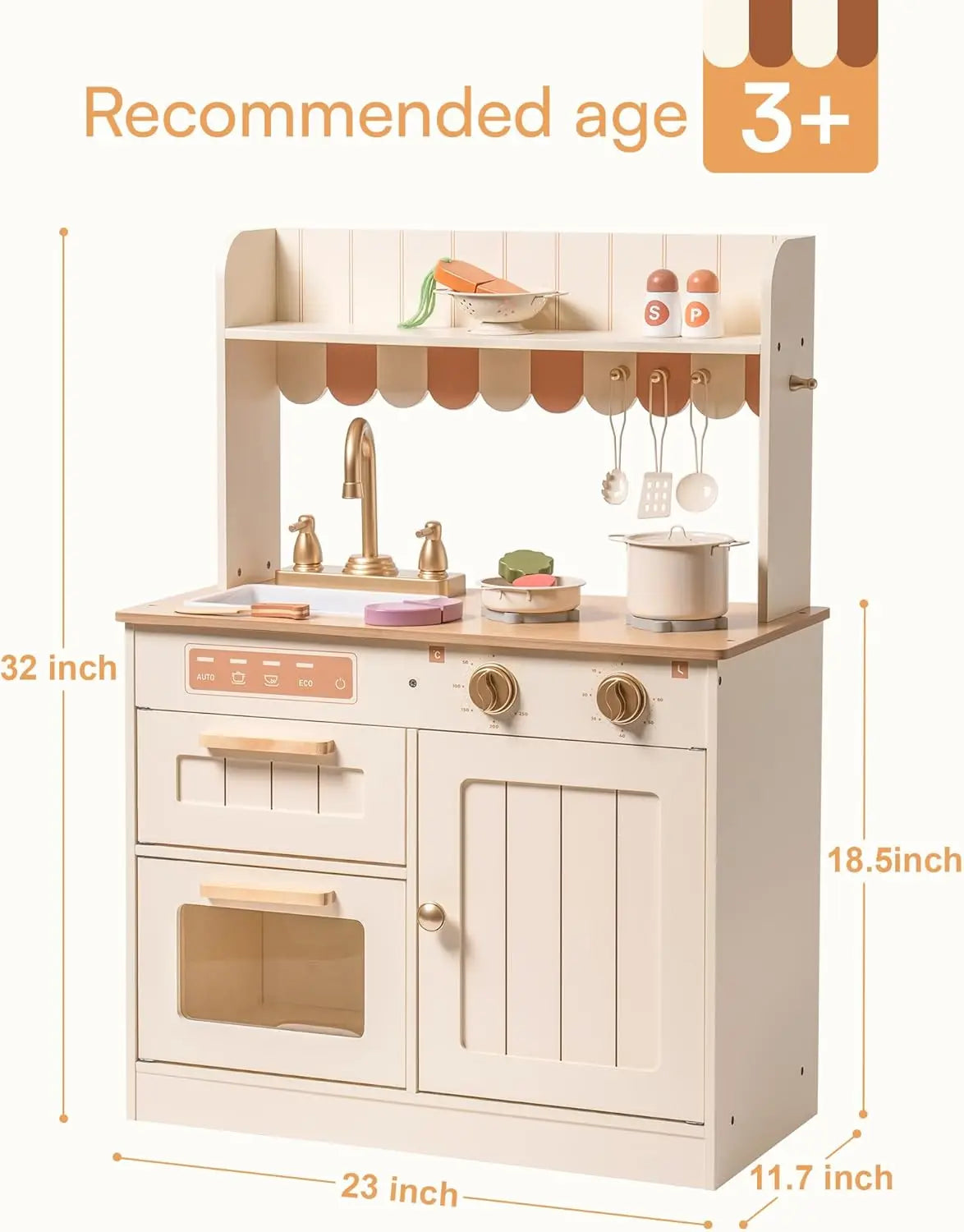
A durable wooden play kitchen designed for long-lasting imaginative play See it in action
What Makes a Durable Wooden Play Kitchen Last Longer?
A durable wooden play kitchen lasts because of more than its appearance. Material quality, construction methods, and safety-focused finishes all affect how well the toy handles daily use.
Solid Wood vs MDF and Composite Materials
The materials inside a play kitchen determine how it responds to years of play. Solid wood components generally provide stronger support and better resistance to repeated handling. MDF and composite materials can still create attractive designs, but thinner versions may be more vulnerable to moisture, dents, and edge damage.
A long-lasting wooden play kitchen typically uses stronger panels, reinforced areas around doors and shelves, and finishes designed for frequent cleaning.
Construction Quality and Hardware
Small details often decide whether a kitchen lasts. Strong hinges, secure screws, reinforced joints, and a balanced base help prevent wobbling and loosening over time.
- Stable legs and frames reduce tipping during active play
- Quality hardware helps doors and drawers function longer
- Secure assembly points reduce repeated repairs
- Strong shelves support accessories without bending
Finish Durability and Child Safety
A durable finish protects wooden surfaces from scratches, spills, and everyday wear. Child-safe coatings also matter because young children frequently touch, lean on, and interact closely with their toys.
Parents looking for safer play environments often consider these details alongside Health & Safety essentials around the home.
What Parents Should Compare Before Buying a Wooden Play Kitchen
When deciding are play kitchens worth it , look beyond the price tag. The best value comes from a kitchen that remains useful, safe, and engaging for years.
Upfront Cost vs Years of Use
A lower-priced kitchen may seem attractive initially, but frequent replacement costs can make it less economical. A stronger wooden model may require a larger upfront investment while providing more years of play.
Design That Grows With Kids
The most valuable kitchens support different stages of childhood. Younger children may focus on opening doors and copying daily routines, while older children create complex pretend scenarios with friends and siblings.
Classic colors, realistic details, and flexible layouts usually remain appealing longer than trend-based designs.
Maintenance and Repair Potential
Repairable parts can significantly extend a kitchen’s lifespan. Before buying, consider whether handles, hinges, screws, and accessories can be replaced instead of requiring a complete replacement.
Families interested in creating thoughtful play spaces can also explore Baby Growth & Learning resources for additional development-focused ideas.
How to Maintain a Wooden Play Kitchen for Longer Use
Proper care can add years to a wooden play kitchen lifespan. Simple maintenance prevents common problems like swelling, loose parts, and surface damage.
Cleaning and Moisture Protection
- Wipe surfaces with a lightly damp cloth instead of soaking the wood
- Dry spills quickly to prevent swelling or warping
- Avoid harsh cleaners that may damage protective finishes
- Keep the kitchen away from excessive humidity when possible
Fixing Common Wear and Damage
Small repairs can prevent larger problems. Tightening loose screws, replacing worn hardware, and repairing minor scratches can keep a kitchen safe and functional.
Storage Tips Between Children
If saving a play kitchen for younger siblings, store it in a dry area, remove accessories, and cover surfaces to prevent dust buildup. Checking hardware before reuse helps ensure safe play after storage.
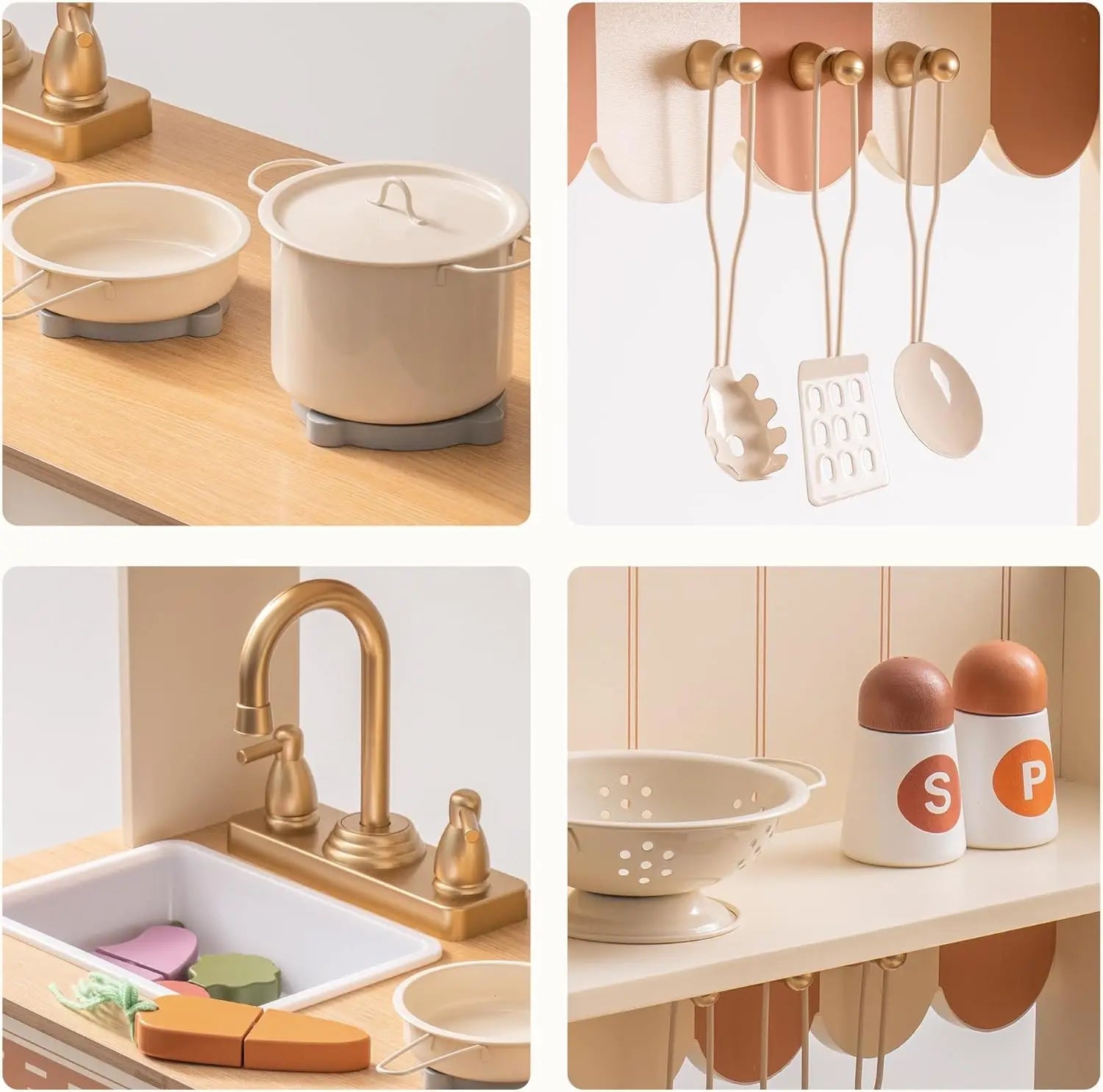
Wooden playset kitchen details that invite longer, richer pretend play See it in action
Wooden Play Kitchen vs Plastic Kitchen: Which Lasts Longer?
Both wooden and plastic kitchens can provide fun, but their durability depends on design and quality. A well-made plastic kitchen may work well for families wanting lightweight storage, while a quality wooden kitchen often offers stronger structure and longer reuse potential.
Durability and Structural Strength
| Factor | Wooden Play Kitchen | Plastic Kitchen |
|---|---|---|
| Strength | Often heavier and more stable | Usually lighter and easier to move |
| Repairs | Many parts can be repaired or replaced | Cracked parts may require replacement |
| Lifespan | Can last many years with care | Often shorter depending on plastic quality |
Appearance and Resale Value
Modern wooden play kitchens and vintage kitchen designs often maintain their appearance longer because they age naturally. Their timeless look can also make them easier to pass along or resell.
Environmental Considerations
Choosing a reusable toy reduces the need for frequent replacements. A durable kitchen that serves multiple children may create less waste compared with replacing lower-quality toys more often.
Signs a Wooden Play Kitchen Needs Replacement
Even the strongest wooden play kitchen eventually reaches the end of its useful life. Knowing when to repair or replace helps protect children during play.
Structural Damage
- Cracked panels affecting stability
- Loose joints that cannot be tightened
- Severely damaged shelves or doors
Safety Concerns
Replace a kitchen if damaged areas create sharp edges, unstable sections, or parts that could detach during play.
When Repairs Are No Longer Worthwhile
Minor scratches and cosmetic wear are normal. Replacement becomes more practical when repairs cost more than the toy’s remaining value or when structural safety is compromised.
Which Wooden Play Kitchen Is Right for Your Family?
Best Choice for Frequent Everyday Play
Families with children who play daily should choose a stable, well-built kitchen with durable surfaces and strong hardware.
Best Choice for Multiple Children
A larger wooden playset kitchen with reinforced construction is usually the better choice for siblings who will share the toy over several years.
Best Choice for Small Spaces
Compact designs with vertical storage provide the benefits of a durable wooden play kitchen without overwhelming smaller homes or apartments.
Parents building organized play areas may also find helpful ideas through Sensory Toys that encourage focused exploration.
Frequently Asked Questions
How long do wooden play kitchens last?
Most quality wooden play kitchens last around 5–10 years with proper care. Premium models can last even longer and may be passed down to siblings.
Are wooden play kitchens worth the investment?
Yes, for many families. A durable wooden play kitchen can provide years of pretend play, better stability, and greater reuse value compared with replacing cheaper toys frequently.
What makes a wooden play kitchen more durable?
Strong materials, reinforced joints, reliable hardware, child-safe finishes, and proper maintenance all contribute to a longer lifespan.
Can a wooden play kitchen be passed down to siblings?
Yes. A well-maintained wooden play kitchen can often support multiple children, especially when stored properly between uses.
How can parents extend the life of a wooden play kitchen?
Regular cleaning, moisture protection, tightening loose parts, and repairing minor damage early can help maximize the wooden play kitchen lifespan.
Related Guide: Best Wooden Kitchen Playset: 2025 Side-by-Side Reviews





