

Educational Toys for Role Play Features That Spark Learning
Does educational toys for role play really spark learning?
Educational toys for role play help children practice real-life skills through guided imagination. By encouraging social pretend play, kids build language, empathy, and early problem-solving while exploring concepts like counting, sharing, and decision-making. The right role-play sets turn everyday playtime into meaningful learning moments that grow confidence fast.
Educational Toys for Role Play Features That Spark Learning
⏱ 7 min read
Pretend play social development often surprises parents with how quickly it shows up—one day it’s silly make-believe, the next your child is negotiating roles, counting money, and explaining feelings. Educational toys for role play make that shift possible by turning imagination into structured learning that feels fun, natural, and pressure-free.
Have you ever wondered why some toys keep kids engaged for weeks while others are forgotten by Friday? The difference often comes down to how well a toy supports social pretend play and real-world learning.

Educational toys for role play encourage social pretend play and learning math through play — 💡 See it in action
👉 Discover toys that turn playtime into real learning moments.
Why Role Play Matters for Early Learning
Role play isn’t just fun—it’s one of the most effective ways children understand the world. When kids pretend to run a shop, cook a meal, or help a customer, they practice communication, self-control, and cooperation.
- They learn to wait their turn and listen
- They experiment with language and tone
- They explore emotions in a safe setting
- They build confidence by “being in charge”
That’s why parents browsing Baby Growth & Learning often gravitate toward educational role playing games that combine imagination with structure.
Key Features That Make Role-Play Toys Educational
Educational toys for role play stand out because they guide play without limiting creativity. Instead of flashing lights or one-button actions, they invite kids to think, talk, and decide.
Realistic Props That Encourage Storytelling
Items like play money, buttons, scanners, or menus help children create believable scenarios. These props support social pretend play by giving kids a shared “language” for interaction.
Open-Ended Design for Growing Skills
The best toys grow with your child. A simple cashier game might start with pressing buttons, then evolve into counting change, solving problems, and explaining rules to others.
Built-In Opportunities for Learning Math Through Play
Counting items, matching prices, and handling pretend payments naturally introduce numbers. Learning math through play feels effortless when it’s part of a story.
👉 Learn how to choose toys that match your child’s learning stage.
How Cashier Role Play Builds Math and Social Skills
Educational toys for role play like a simulation cashier set combine multiple learning paths in one activity. Children practice communication, early math, and emotional regulation all at once.
Educational toys for role play work best when they mirror everyday experiences. A cashier toy lets kids copy what they see adults do—scan items, count totals, and interact politely.
Parents comparing options often choose a simulation cashier toy because it delivers:
- Hands-on number recognition
- Turn-taking and polite conversation
- Problem-solving when “mistakes” happen
- Confidence from leading the game
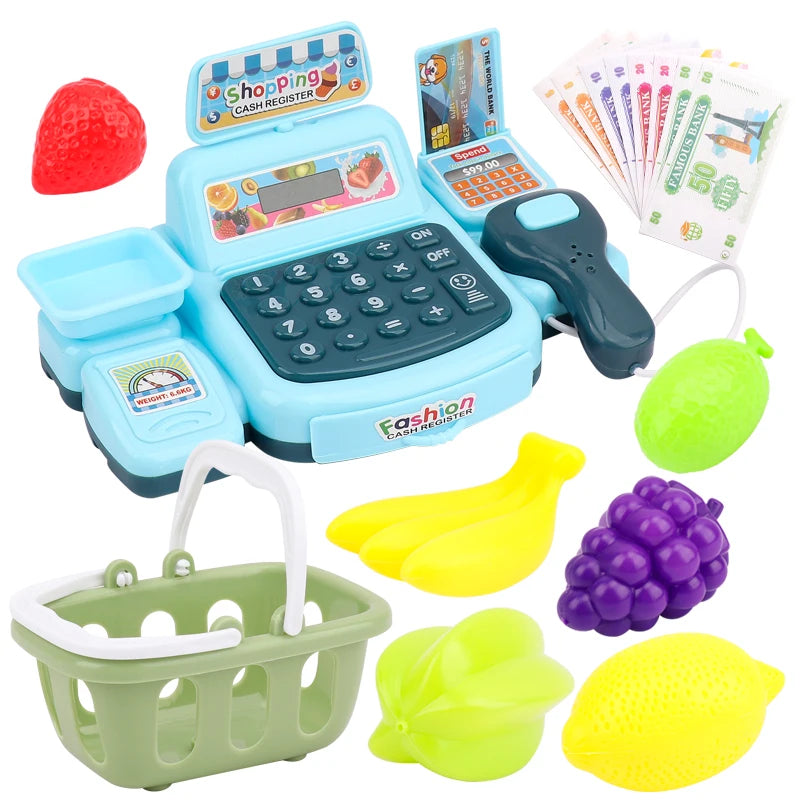
Educational role playing games support learning math through play — 💡 See it in action
Many families pair role-play sets with items from Sensory Toys to keep kids engaged longer and support different learning styles.
Role Play vs. Passive Toys: What Works Better?
| Feature | Role-Play Toys | Passive Toys |
|---|---|---|
| Language Development | High – conversation-driven | Low – limited interaction |
| Social Skills | Strong – sharing and cooperation | Minimal |
| Learning Math Through Play | Natural and repeated | Rare |
| Long-Term Engagement | Grows with child | Often short-lived |
This comparison helps explain why educational role playing games are often recommended by early learning specialists.
How to Choose the Right Role-Play Toy
When choosing educational toys for role play, focus on outcomes rather than hype. Ask yourself what skills you want your child to practice this year.
- For shy children: look for cooperative play
- For active learners: choose hands-on components
- For early counters: include number-based actions
- For siblings: pick sets that allow shared roles
Collections like Baby Care Essentials and Mobility & Training often complement role-play toys by supporting daily routines and independence.
👉 See how one role-play set can support multiple skills.
What Parents Notice at Home
Families using a simulation cashier toy often report changes within weeks:
- Kids initiate conversations more confidently
- Playtime lasts longer without adult direction
- Counting and sorting appear during daily tasks
- Siblings cooperate more during shared play
One parent shared, “My child started correcting my math during grocery play—without any prompting.” These small moments show how learning math through play sticks.

Educational toys for role play boost confidence and social pretend play — 💡 See it in action
👉 Get yours now and turn everyday play into meaningful learning.
Quick FAQ
What age is best for educational toys for role play?
Most children benefit from role play starting around age 3, when language and imagination expand. Well-designed sets continue to support learning through early elementary years.
Do role-play toys really help with math?
Yes. Learning math through play works because children practice counting, matching, and problem-solving in context, which improves retention.
Are role-play toys better for solo or group play?
They support both. Solo play builds independence, while group play strengthens social pretend play and cooperation.
Related Guide: Durable Plastic Kids Toys Built to Last Daily Play





