

Electricity and Magnetism Experiment Kit for Every Age
Best Electricity and Magnetism Experiment Kit Guide for Students
For many students, physics becomes truly engaging when abstract concepts turn into something they can build, test, and observe. A battery powering a light bulb, a copper coil creating a magnetic field, or a simple motor converting electricity into motion can make classroom lessons feel practical and memorable. This is why an electricity and magnetism experiment kit is such a valuable tool for hands-on science learning.
Instead of only memorizing formulas and definitions, students can explore how electric current works, how magnetic fields are created, and how energy moves between electrical and mechanical systems. A well-designed electricity and magnetism kit gives learners the opportunity to build circuits, experiment with electromagnets, test motors, and investigate real-world principles behind modern technology.
This guide explains what these STEM learning kits include, how they support physics education, which electricity and magnetism experiments students can perform, and why hands-on exploration helps develop stronger scientific understanding.
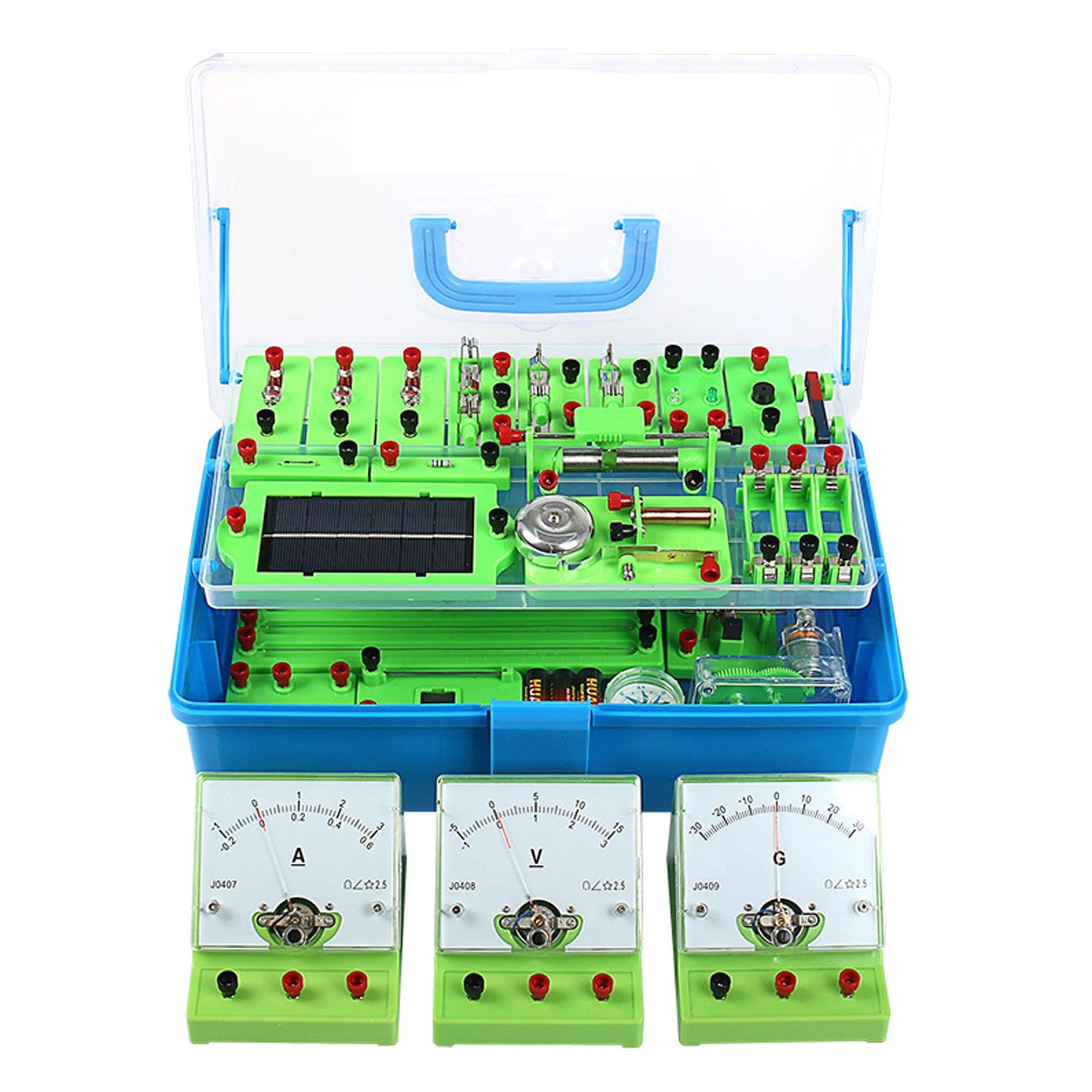
What Is an Electricity and Magnetism Experiment Kit?
An electricity and magnetism experiment kit is a hands-on STEM learning set designed to help students explore fundamental physics principles through practical activities. These kits combine electrical components, magnets, coils, motors, and measuring tools so learners can build working systems instead of only studying diagrams or textbook explanations.
A quality electricity and magnetism kit allows students to investigate how electricity flows, how magnetic forces are produced, and how electrical energy can be transformed into movement or other forms of energy. These experiments make difficult physics concepts easier to understand because students can directly see cause-and-effect relationships.
For younger learners, electricity and magnetism for kids activities introduce basic ideas such as circuits, switches, and magnetic attraction. For older students, advanced kits can support physics lessons involving resistance, electromagnetic force, motors, generators, and energy conversion.
How Hands-On Experiment Kits Support STEM Education
Hands-on experiment kits support STEM learning by allowing students to follow the same process used by scientists and engineers: building, testing, observing results, and improving designs. Rather than receiving information passively, learners actively investigate why a circuit works, why a motor spins, or why a magnet produces a force.
This type of experiential learning helps connect classroom theory with real-world applications. Students can better understand concepts from physics courses because they have already seen those principles demonstrated through their own experiments.
Electricity and magnetism experiment kits are especially useful for middle school and high school students because they reinforce topics commonly included in science curricula. Teachers and parents can use these kits to create engaging lessons involving problem-solving, measurement, and engineering design.
Key Physics Concepts Students Learn
Most electricity and magnetism kits introduce students to several important physics concepts that form the foundation of electrical engineering and modern technology:
- Electric circuits and current flow
- Voltage, resistance, and basic electrical relationships
- Series and parallel circuit behavior
- Magnetic fields and permanent magnets
- Electromagnets created by current-carrying coils
- Energy conversion between electrical and mechanical systems
- Electromagnetic induction and generator principles
By experimenting with these concepts directly, students develop a clearer understanding of how everyday technologies work, including motors, generators, appliances, and electronic devices.
What Experiments Can Students Do With an Electricity and Magnetism Kit?
The best electricity and magnetism experiment kits offer a progression of activities that move from simple discoveries to more advanced electromagnetism experiments. This allows students to build confidence gradually while exploring increasingly complex physics concepts.
From basic circuits to magnetic field demonstrations, these hands-on activities help learners understand the connection between electricity and magnetism through real observations. Common experiments with electricity and magnetism include circuit construction, electromagnet creation, motor building, and electromagnetic energy demonstrations.
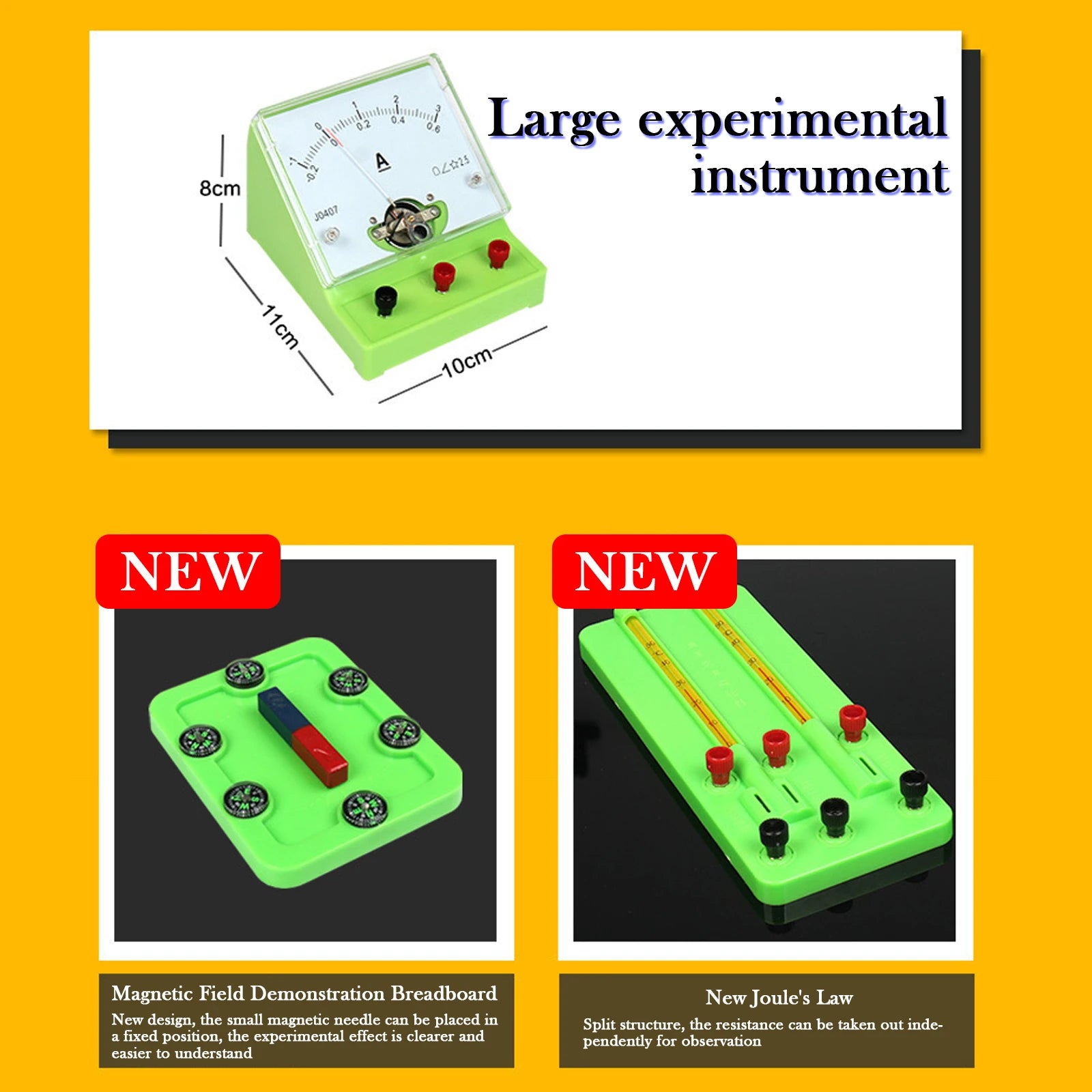
Building a Simple Electric Circuit
One of the first science experiments about electricity students perform is building a basic circuit using a battery holder, wires, switch, and light source. This activity demonstrates that electrical current requires a complete pathway to flow.
Students quickly learn that closing a switch completes the circuit and allows electricity to move, while opening the switch interrupts the path. This simple experiment introduces essential ideas such as conductors, circuit connections, and electrical energy transfer.
Because students can immediately observe the result, basic circuit activities provide an effective foundation before moving into more advanced experiments with electricity and magnetism.
Exploring Series and Parallel Circuits
After learning the basics of circuit construction, students can compare different circuit designs and observe how electrical behavior changes.
In a series circuit, components share a single pathway for current. In a parallel circuit, electricity can travel through multiple branches. By testing these configurations, students can observe differences in brightness, current distribution, and component performance.
These activities help learners visualize electrical systems that are often difficult to understand from diagrams alone. They also introduce the type of circuit analysis used in more advanced physics and engineering studies.
Creating an Electromagnet
One of the most popular electromagnetic science experiments involves creating an electromagnet using a copper wire coil and an iron core.
Students wrap insulated copper wire around an iron nail or metal core and connect the coil to a power source. When current passes through the wire, it creates a magnetic field that allows the coil to attract magnetic materials.
This experiment clearly demonstrates the relationship between electricity and magnetism and shows how electrical energy can create a temporary magnetic force.
Building a Simple DC Motor
More advanced kits allow students to build a basic direct current motor and observe how electrical energy becomes mechanical motion.
A DC motor works because current flowing through a wire coil interacts with a magnetic field, creating a force that produces rotation. This principle explains how many everyday devices operate, including fans, pumps, robotics systems, and electric vehicles.
Electromagnetic Induction and Generator Experiments
Some electricity and magnetism experiments demonstrate how motion can be converted into electrical energy through electromagnetic induction.
When a magnet moves near a wire coil, the changing magnetic field can generate an electrical current. This principle is used in generators that produce electricity for homes, schools, and industries.
Generator experiments help students understand one of the most important applications of electromagnetism and show how physics principles connect to real-world energy systems.
Conductivity and Magnetic Field Experiments
Many advanced kits also include activities that explore material conductivity and magnetic field behavior.
Students can test which materials allow electrical current to pass through, compare magnetic attraction between objects, and observe how changing the position of magnets affects magnetic forces.
These additional experiments expand learning beyond basic circuits and help students develop a broader understanding of materials, forces, and electromagnetic interactions.
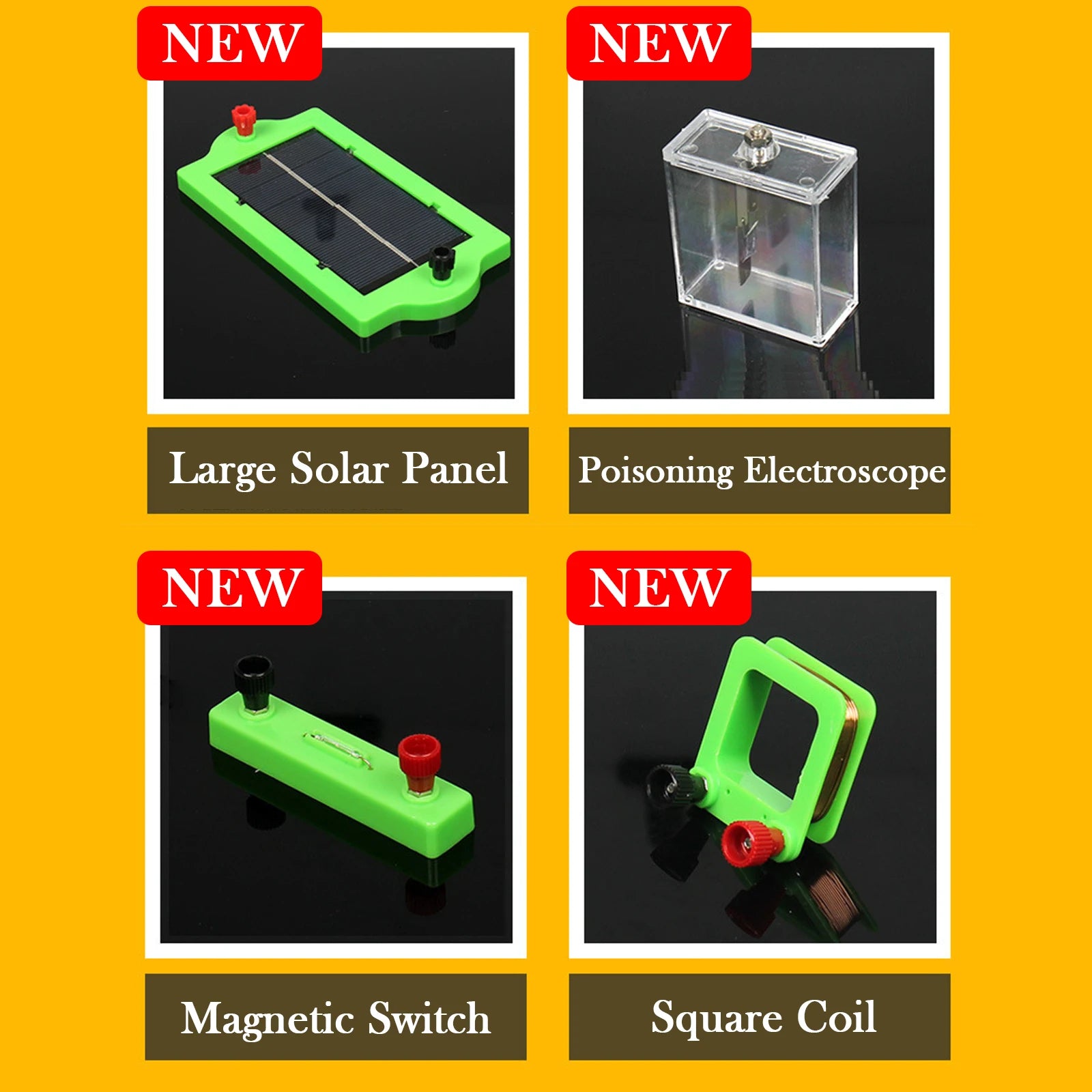
What's Included in a Typical Electricity and Magnetism Kit
The components included in an electricity and magnetism kit determine how many experiments students can complete and how deeply they can explore physics concepts. A well-designed kit should include reusable parts that support both beginner activities and more advanced electromagnetic projects.
Circuit Components
Most electricity and magnetism experiment kits include essential circuit-building parts that allow students to create and test different electrical systems:
- Battery holders and power connectors
- Connecting wires and jumper cables
- Switches and control components
- LEDs or small light bulbs
- Resistors for testing electrical behavior
- Conductive connectors and circuit boards
These components help students explore how electricity moves through different pathways, how circuits can be modified, and how individual parts affect overall system performance. Reusable circuit pieces also allow learners to design multiple projects instead of completing only one demonstration.
Magnets and Electromagnet Parts
To study the relationship between electricity and magnetism, kits typically include components that demonstrate magnetic fields and electromagnetic force:
- Copper wire coils
- Permanent magnets
- Iron cores or metal nails
- Magnetic field demonstration materials
These parts allow students to build electromagnets, compare magnetic strength, and observe how electrical current can create a temporary magnetic field. These activities form the foundation of many electromagnetism experiments used in physics education.
Motors, Generators and Sensors
More advanced electricity and magnetism kits often include motion and measurement components that demonstrate how electrical systems interact with mechanical devices:
- Small DC motors
- Generator components
- Propellers or gears
- Sensors and measurement tools
- Mechanical motion parts
These components help students investigate energy conversion by showing how electricity can create movement and how motion can produce electrical energy. They also connect classroom physics concepts with real technologies such as robotics, transportation systems, and renewable energy devices.
Power Sources, Manuals and Safety Items
A complete kit should include reliable power options, clear instructions, and safety-focused features that make experiments easier to complete successfully.
- Battery holders or low-voltage power supplies
- Experiment guides with step-by-step instructions
- Component storage containers
- Safety recommendations and usage instructions
Clear manuals are especially helpful for beginners because they explain how components connect, what results students should expect, and how to troubleshoot common mistakes. Organized storage also helps protect reusable parts and keeps future experiments ready for use.
Experiment Coverage Matrix
Different electricity and magnetism experiment kits support different learning levels. Comparing experiment coverage helps parents, teachers, and students choose a kit that matches their goals, from beginner activities to advanced physics projects.
| Experiment Area | Beginner Kit Support | Advanced Kit Support | Learning Focus |
| Circuits | Basic circuits, switches, LEDs, and battery connections | Series circuits, parallel circuits, resistance testing, measurements | Understanding current flow and electrical systems |
| Electromagnets | Simple copper coil and magnet demonstrations | Adjusting coil strength and testing magnetic force | Learning how electricity creates magnetism |
| Motors and Generators | Basic motor demonstrations | Motor construction and electromagnetic induction projects | Exploring energy conversion and motion |
| Conductivity | Testing common conductive materials | Comparing electrical properties of different materials | Understanding material behavior in circuits |
| Magnetic Fields | Observing attraction and magnetic movement | Studying field strength and electromagnetic interactions | Visualizing invisible magnetic forces |
Kits with broader experiment coverage provide more opportunities for students to progress from simple discoveries to deeper electricity and magnetism projects. This makes them more suitable for classrooms, homeschool learning, and long-term STEM exploration.
How to Choose the Right Electricity and Magnetism Experiment Kit
Choosing the right electricity and magnetism experiment kit depends on the student's age, learning goals, available learning environment, and level of physics experience. The best kit should provide enough challenge to encourage discovery while remaining simple enough for students to complete experiments successfully.
Choose by Age
Age is one of the most important factors when selecting a kit. Younger students benefit from simple designs that focus on visual results, while older learners need more advanced components that support deeper physics exploration.
- Elementary students: Look for kits with large, easy-to-connect parts, simple circuits, magnets, lights, and guided activities. These introduce electricity and magnetism for kids through safe and engaging experiments.
- Middle school students: Choose kits that include electromagnets, motors, circuit variations, and measurement activities. These help students connect hands-on experiments with science lessons.
- High school students: Advanced learners benefit from kits with meters, coils, generators, and components that support electricity and magnetism experiments high school students can use for physics investigations.
Choose by Classroom or Homeschool
The learning environment also affects which kit provides the best value. Classroom users often need durable kits that support repeated demonstrations and group activities, while homeschool learners may prefer flexible kits that allow independent exploration.
For classrooms, consider kits with organized components, detailed experiment guides, and enough activities for multiple students. For homeschool science supplies, choose a kit that supports progressive learning so students can return to it as their skills improve.
Kits that include reusable parts can also support a wider range of STEM lessons, including circuit building, electromagnetic projects, and engineering activities.
Choose by Skill Level
A student's existing knowledge should guide the complexity of the kit. Beginner learners should start with basic circuit construction and simple magnetic demonstrations before moving into advanced experiments.
Intermediate and advanced students can benefit from kits that include measurement tools and allow them to test variables such as voltage, current, resistance, and magnetic strength.
For example, the Electromagnetism Experiment Kit for Students – 40+ Lab Tools includes voltmeters, ammeters, coils, magnets, and motors designed for broader physics exploration. With more than forty components, students can investigate electrical behavior, electromagnetic force, and energy transformation through hands-on experiments.
Choose by Budget
Price should be considered alongside educational value rather than component quantity alone. A lower-cost kit may be suitable for introductory activities, while a more complete kit can provide better long-term value through additional experiments and reusable parts.
When comparing options, consider:
- The number of experiments included
- Quality and durability of components
- Whether parts can be reused for future projects
- Availability of instructions and learning resources
- Potential for expansion into more advanced activities
Curriculum and NGSS Alignment
For teachers and parents who want structured science learning, curriculum alignment is an important consideration. A strong electricity and magnetism experiment kit should support core physics concepts commonly taught in STEM education, including circuits, energy transfer, forces, and electromagnetic interactions.
Kits that encourage investigation, measurement, and problem-solving can complement classroom lessons and help students develop the scientific practices emphasized in modern science standards such as NGSS.
Learning Outcomes: What Students Gain From These Experiment Kits
Electricity and magnetism experiment kits provide more than individual science activities. They help students develop a deeper understanding of physics while building practical STEM skills through observation, testing, and problem-solving.
Physics Concepts Mastered
By completing hands-on experiments, students gain a clearer understanding of concepts that are often challenging when taught only through textbooks.
- How electrical circuits control current flow
- How magnets create and interact with magnetic fields
- How electrical energy transforms into mechanical motion
- How electromagnetic systems power real-world devices
These experiences help learners connect classroom theory with real applications in electronics, engineering, robotics, and energy systems.
Engineering and Problem Solving
Experiment kits encourage students to think like engineers by testing ideas, identifying problems, and improving designs.
If a circuit fails to work, students must examine connections, test components, and determine what changes are needed. This process builds critical thinking and troubleshooting skills that are valuable across STEM fields.
Classroom and Career Readiness
Working with electricity and magnetism projects introduces students to the type of practical reasoning used in engineering and technology careers.
Through repeated experimentation, learners develop confidence with scientific tools, measurement techniques, and design thinking. These skills provide a strong foundation for future studies in physics, electronics, engineering, and related STEM disciplines.
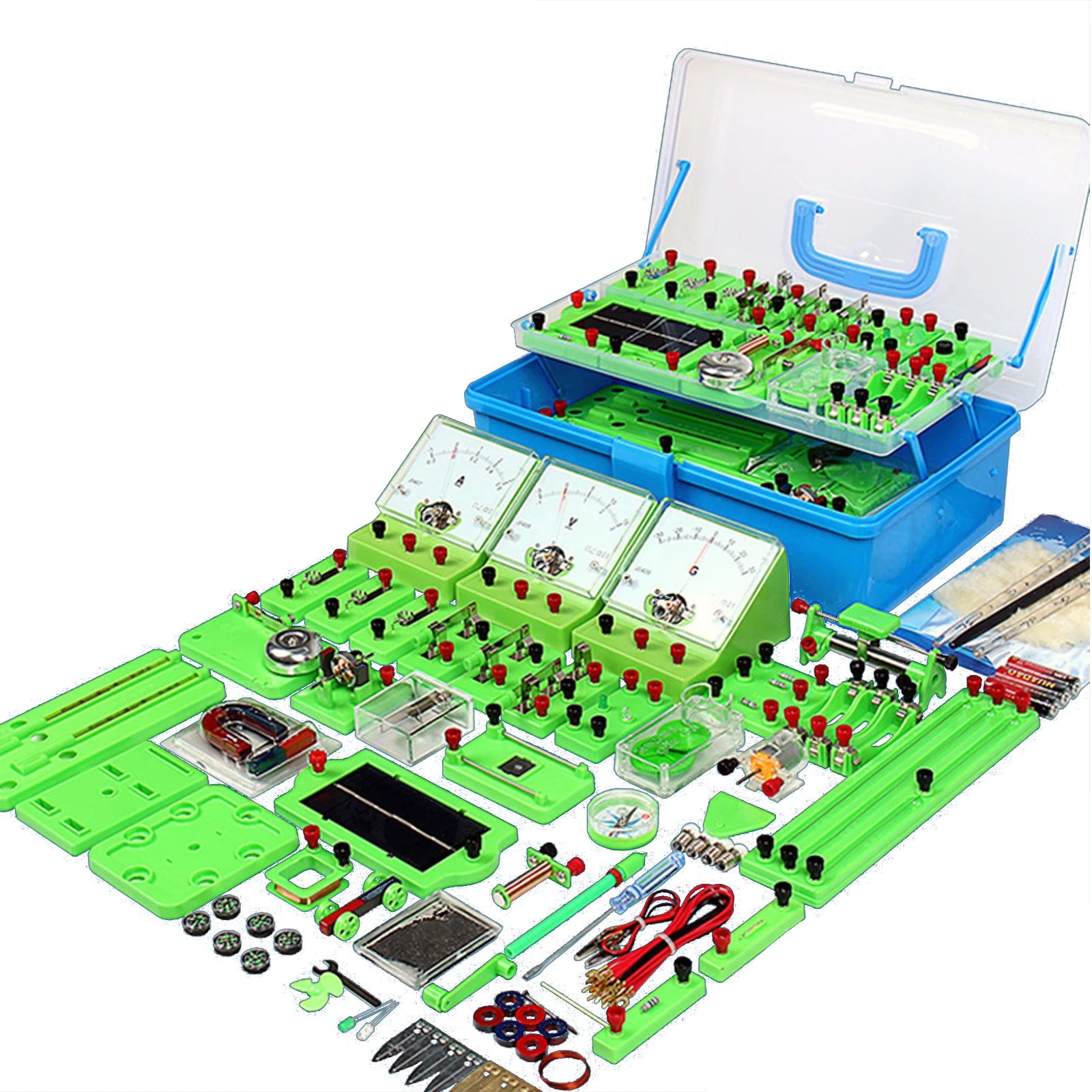
Buying Guide
When selecting an electricity and magnetism experiment kit, the best choice is not always the kit with the most parts. A high-quality kit should provide reliable components, room for future projects, and enough flexibility to support learning as students develop stronger physics skills.
Parents, teachers, and homeschool educators should consider long-term usability, experiment variety, component quality, and whether the kit can grow with the learner.
Reusable Components
Reusable parts are one of the most important factors when evaluating a science learning kit. A kit with durable circuit pieces, magnets, coils, motors, and measurement tools can support many different experiments instead of being limited to a single activity.
Look for components that allow students to rebuild circuits, modify designs, and create new electricity and magnetism projects over time. Reusable materials provide more opportunities for exploration and encourage independent problem-solving.
Expandability
A good electricity and magnetism experiment kit should offer opportunities for students to advance beyond beginner activities. Expandable kits allow learners to move from simple circuit building into more challenging experiments involving electromagnets, motors, generators, and electrical measurements.
Consider whether the kit can support different learning stages, from introductory electricity concepts to more advanced physics investigations. Expandability makes a kit more valuable for families, classrooms, and long-term STEM learning programs.
Replacement Parts
Frequent use can lead to lost wires, damaged connectors, or worn components. Before purchasing a kit, check whether replacement parts are available and whether common pieces can be easily replaced.
Reliable component availability helps maintain the kit over time and prevents students from losing learning opportunities because of a missing or damaged part.
Value for Money
The best value comes from a balance of quality, educational depth, and experiment variety. A kit that includes clear instructions, durable components, and multiple project possibilities can provide more learning opportunities than a cheaper option with limited activities.
Before buying, compare:
- Number and variety of included components
- Types of experiments students can complete
- Suitability for the learner's age and skill level
- Quality of instructions and learning support
- Potential for future STEM projects
Frequently Asked Questions
What age is an electricity and magnetism experiment kit suitable for?
Most electricity and magnetism experiment kits are suitable for students from elementary school through high school, depending on the kit design. Younger learners should use beginner-friendly kits with simple circuits and larger components, while older students can use advanced kits with measurement tools and electromagnetic experiments.
How many experiments can a typical electricity and magnetism kit perform?
The number of possible experiments depends on the components included. Basic kits may support several introductory activities, while advanced kits with coils, motors, meters, and multiple circuit parts can support dozens of different experiments.
Are batteries included with most electricity and magnetism kits?
Battery inclusion varies by kit. Some kits include power sources, while others require students to provide compatible batteries separately. Always check the product specifications before starting experiments.
Can these kits be used for homeschool and classroom science lessons?
Yes. Electricity and magnetism kits are commonly used for both homeschool learning and classroom science activities because they support demonstrations, independent projects, and hands-on physics lessons.
Which electricity and magnetism experiment kit is best for high school physics?
High school students benefit most from kits that include measurement tools, electromagnetic components, and advanced experiment options. The Electromagnetism Experiment Kit for Students – 40+ Lab Tools is designed for deeper exploration with components such as voltmeters, ammeters, coils, magnets, and motors.
Do students need adult supervision when using these kits?
Adult supervision is recommended, especially for younger students. While most educational kits use low-voltage power sources, adults can help ensure safe connections, proper handling of components, and effective learning.
Are the components reusable for future projects?
Many high-quality kits include reusable parts that can be used for multiple experiments. Durable components allow students to continue building new circuits and exploring additional physics concepts over time.
Do these kits align with NGSS or school science curricula?
Many electricity and magnetism experiment kits support concepts commonly taught in science curricula, including circuits, energy transfer, forces, and electromagnetic interactions. Teachers can use them to complement classroom instruction and hands-on STEM activities.
Pillar Article: Beginner Physics Experiment Kit Electricity: Best STEM Kits for Easy Circuits





