

Electricity and magnetism experiment kit Top 5 science kits
Best Electricity and Magnetism Experiment Kit Guide for Students
For many students, the moment physics becomes exciting is when theory turns into something they can actually build. A simple wire, battery, and bulb suddenly create a working circuit. A coil of copper wire wrapped around an iron nail becomes a magnet when electricity flows through it. These hands-on discoveries are exactly why an electricity and magnetism experiment kit can transform how students understand science.
Instead of memorizing abstract formulas, students can directly observe electric current, magnetic fields, and energy conversion through experiments. The right STEM kit allows learners to construct circuits, test electromagnets, build small motors, and even demonstrate electromagnetic induction.
This guide explains how electricity and magnetism experiment kits work, what experiments they enable, which components matter most, and how to choose the right kit for different ages and learning goals.
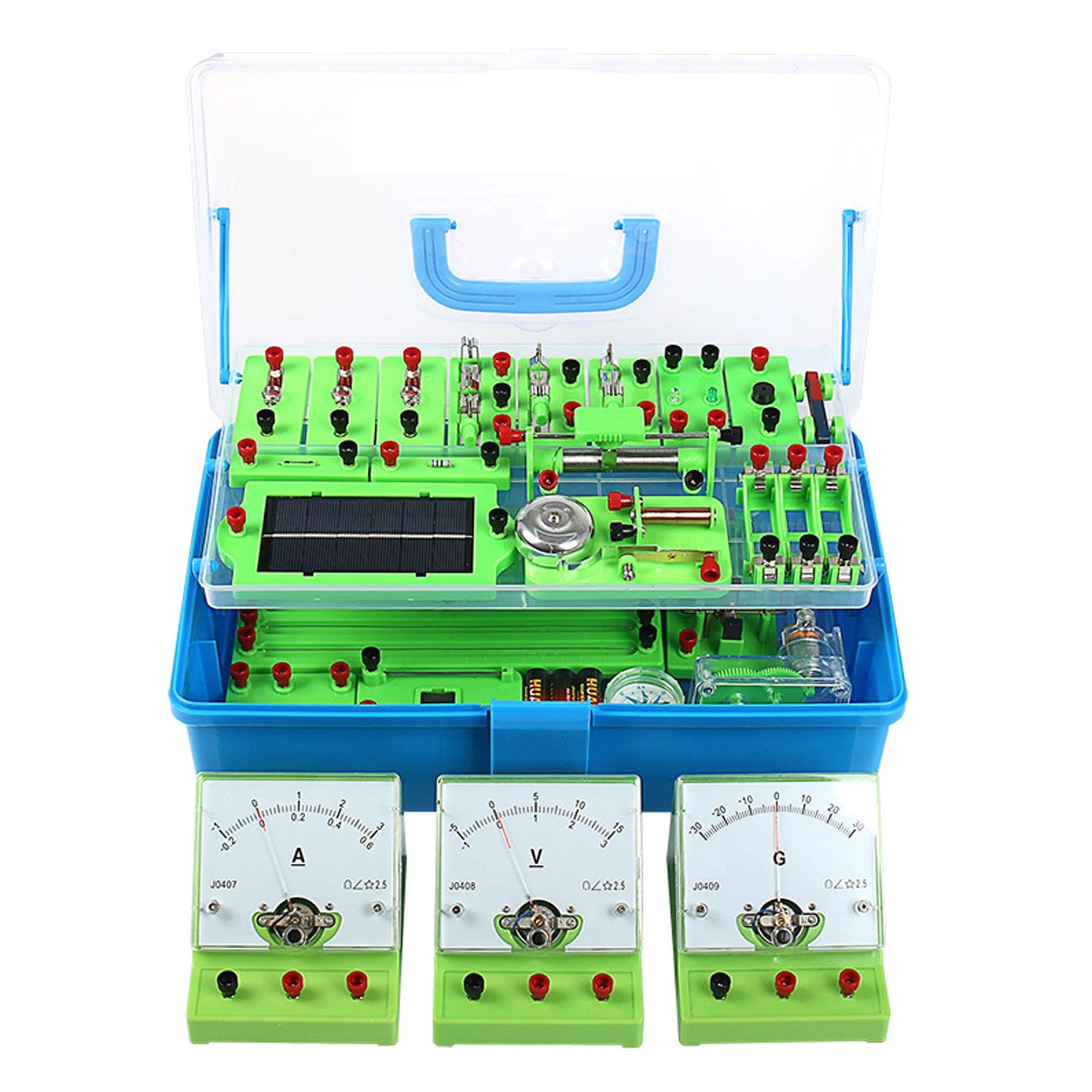
What Is an Electricity and Magnetism Experiment Kit?
An electricity and magnetism experiment kit is a hands-on STEM learning set designed to help students explore fundamental physics principles through real experiments. These kits typically include electrical components, magnets, coils, motors, and measuring instruments that allow learners to build and test working systems.
Rather than simply reading about electricity in a textbook, students use the kit to construct circuits, observe magnetic forces, and measure electrical behavior.
How Hands-On Experiment Kits Support STEM Education
Research in science education consistently shows that students understand physics concepts more effectively when they actively experiment. Hands-on kits encourage exploration, testing, and troubleshooting — the same process used by real engineers and physicists.
When students assemble circuits or build electromagnets themselves, they develop intuitive understanding of how electricity flows and how magnetic fields behave. This experiential learning approach is especially valuable for middle school and high school STEM education.
Key Physics Concepts Students Learn
Most electricity and magnetism kits introduce several core physics topics:
- Electric circuits and current flow
- Voltage, resistance, and Ohm’s law
- Magnetic fields and permanent magnets
- Electromagnets created by current-carrying coils
- Energy transformation between electrical and mechanical systems
- Electromagnetic induction and generators
These topics form the foundation of modern electrical engineering and physics education.
What Experiments Can Students Do With an Electricity and Magnetism Kit?
One of the most important factors when evaluating a kit is the range of experiments it enables. Good kits allow students to progress from basic circuit building to more advanced electromagnetic systems.
Building a Simple Electric Circuit
The first experiment most students perform is constructing a basic electric circuit using a battery holder, wires, switch, and light bulb. This experiment demonstrates how electrical current flows through a closed loop.
Students quickly discover that electricity only flows when the circuit is complete. Opening the switch breaks the path and stops current flow.
This simple activity introduces key concepts such as conductors, circuit paths, and electrical energy transfer.
Exploring Series and Parallel Circuits
Once students understand basic circuits, they can experiment with different circuit configurations.
In a series circuit, components share the same current path. In a parallel circuit, electricity flows through multiple branches. By comparing these setups, students observe how voltage distribution and brightness change across bulbs.
These experiments help learners visualize electrical behavior that is often difficult to understand through diagrams alone.
Creating an Electromagnet With a Copper Wire Coil
One of the most exciting experiments in many kits involves building an electromagnet.
Students wrap copper wire around an iron nail or core to form a coil. When electricity flows through the coil, it generates a magnetic field that can attract small metal objects.
This experiment demonstrates the relationship between electricity and magnetism — the foundation of electromagnetism.
Building a Simple DC Motor
More advanced kits allow students to assemble a basic direct current motor.
The motor works because electrical current flowing through a wire coil interacts with a magnetic field, producing rotational force. This demonstrates how electrical energy can be converted into mechanical motion.
DC motors are used in countless real-world devices, from fans to electric vehicles.
Demonstrating Electromagnetic Induction
Some kits include experiments that show how moving magnets can generate electricity.
When a magnet moves near a wire coil, it creates a changing magnetic field. This changing field induces electrical current in the coil — a principle called electromagnetic induction.
This is the same principle used in generators that produce electricity in power plants.
Common Components Found in Electricity and Magnetism Experiment Kits
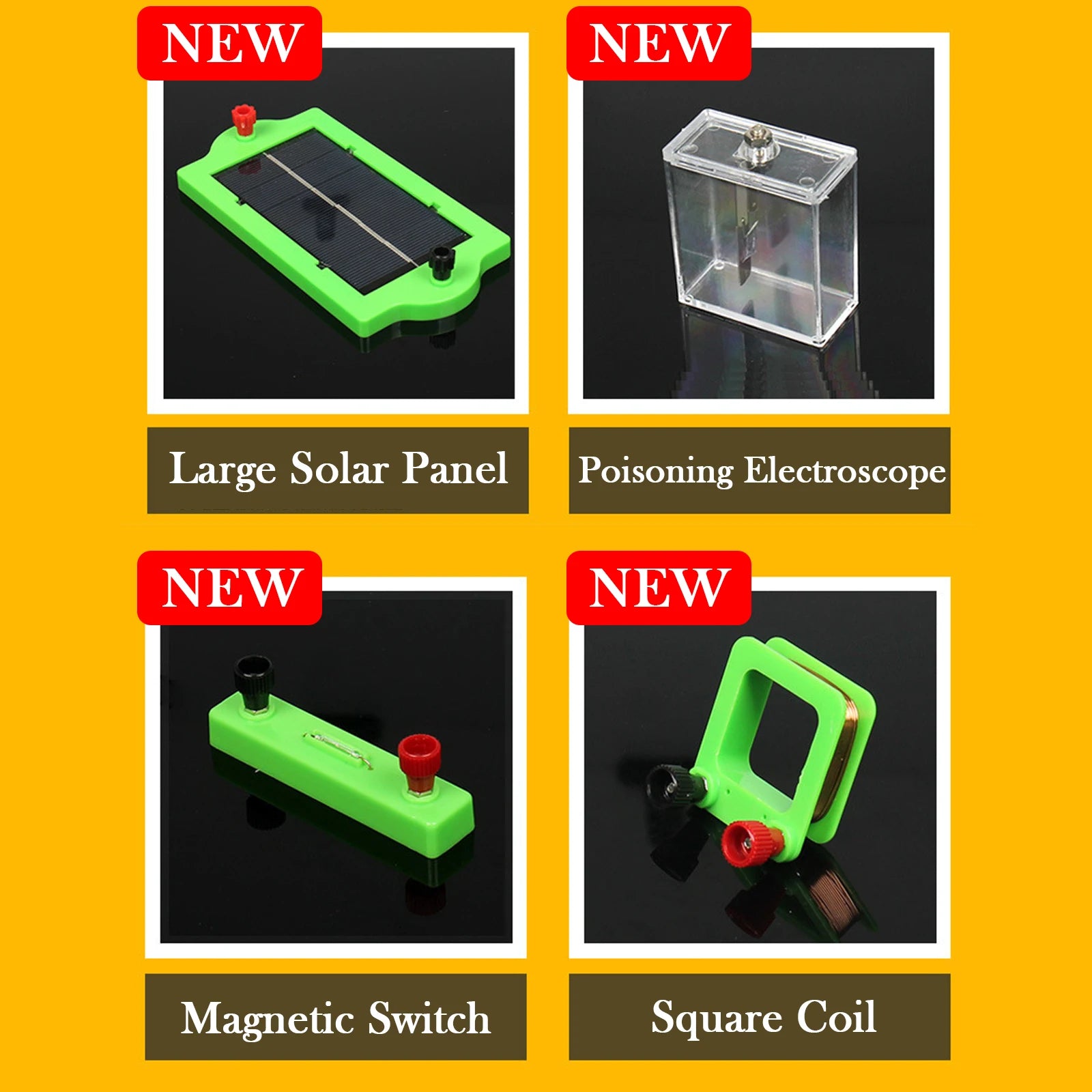
Understanding what components are included in a kit helps buyers evaluate its educational value and versatility.
Circuit Building Components
Most kits include the essential parts needed to construct working circuits:
- Battery holders
- Connecting wires
- Switches
- Light bulbs or LEDs
- Resistors
- Conductive connectors
These parts allow students to build many variations of circuits while experimenting with electrical flow.
Magnetism and Electromagnetism Components
Magnetic experiments require specialized materials such as:
- Copper wire coils
- Permanent magnets
- Iron cores or nails
- Magnetic field demonstrators
These components allow students to explore how electric current produces magnetic force.
Motion and Energy Components
To demonstrate energy conversion, some kits include:
- Small DC motors
- Propellers or gears
- Solar panels
- Mechanical motion parts
These systems help students see how electricity can power mechanical devices.
Experiment Boards and Safety Features
Many kits include snap circuit boards or breadboards that allow components to connect safely without soldering.
This design makes experiments easier for younger students and reduces the risk of incorrect wiring.
How Electricity and Magnetism Kits Teach Real Circuit Building
A common concern among parents and teachers is whether experiment kits provide meaningful learning rather than simple toy demonstrations.
High-quality kits are designed to replicate real laboratory learning in a simplified format.
Understanding Ohm’s Law Through Experiments
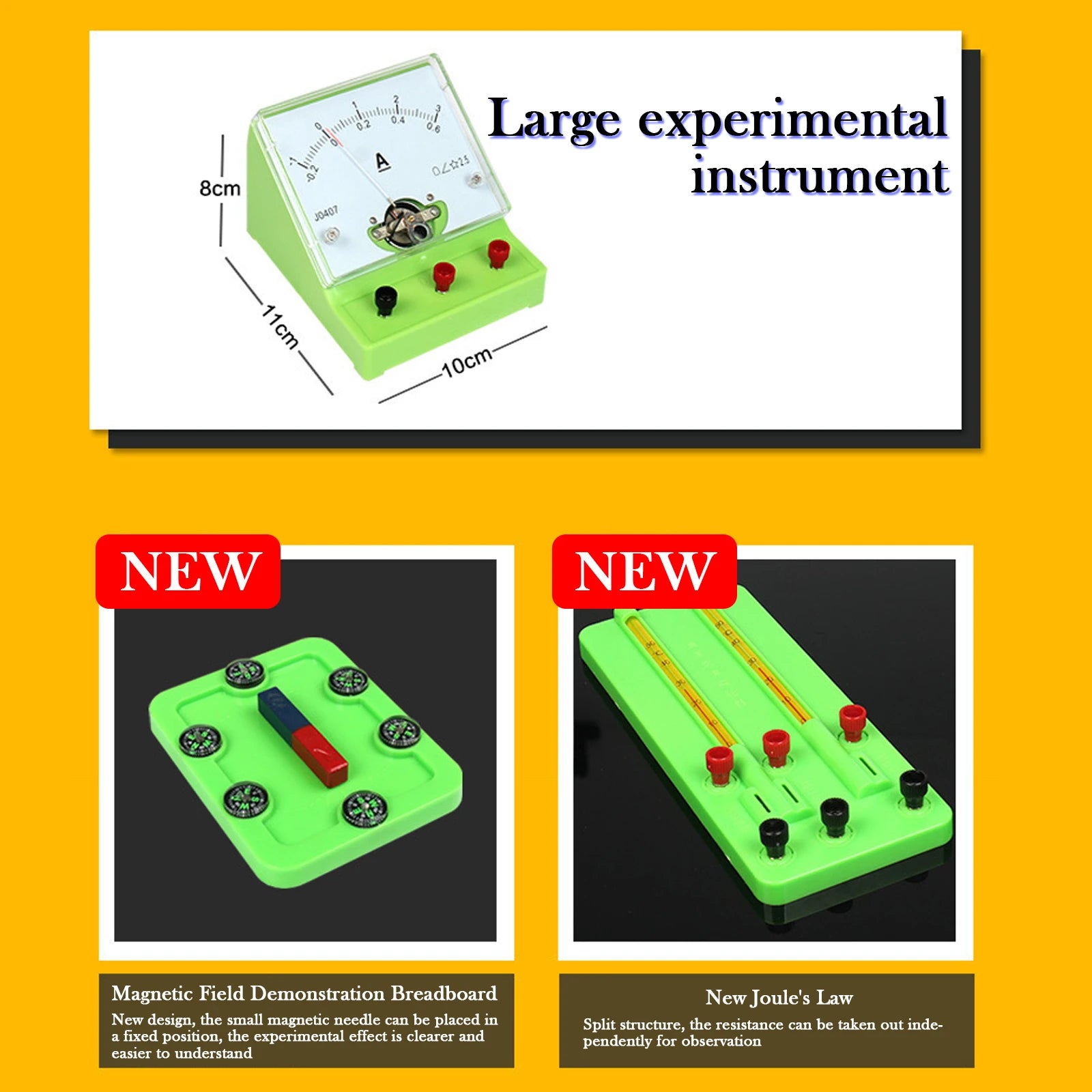
Students can measure voltage, current, and resistance using basic meters and test how changes in resistance affect current flow.
These experiments illustrate Ohm’s law in a practical way rather than presenting it only as a formula.
From Basic Circuits to Functional Devices
As students progress through experiments, they move from simple circuits to building functional systems such as:
- Buzzers
- Electromagnets
- Motors
- Energy converters
This gradual progression helps students understand how real electrical devices are engineered.
How to Choose the Right Electricity and Magnetism Experiment Kit
Not all STEM kits are designed for the same age or learning level. Choosing the right kit ensures students stay engaged without becoming overwhelmed.
Best Kits for Elementary Students
Younger learners benefit from kits that emphasize visual experimentation and simple connections. Snap circuits, large components, and clear instructions make early experiments easier.
These kits typically focus on basic circuits, magnets, and introductory electrical concepts.
Best Kits for Middle School Students
Middle school kits expand into more complex experiments such as electromagnets, motors, and circuit variations.
Students at this stage begin connecting experimental observations with physics concepts taught in school.
Best Kits for High School Physics Learning
Advanced kits designed for older students include measurement tools and larger component sets that allow deeper experimentation.
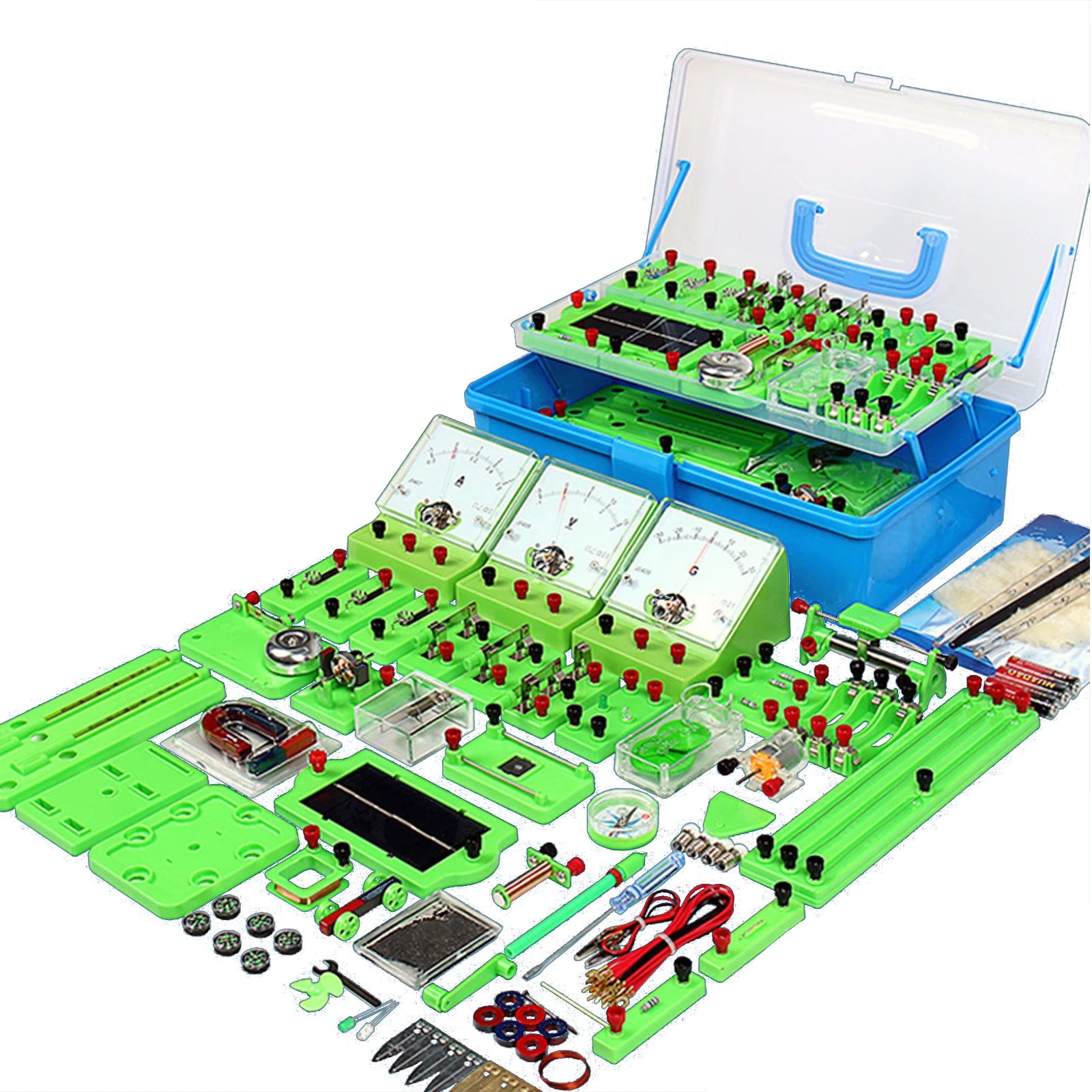
For example, the Electromagnetism Experiment Kit for Students – 40+ Lab Tools includes voltmeters, ammeters, coils, magnets, and motors that enable a wide range of classroom demonstrations and student experiments.
With more than forty components, students can explore circuit behavior, electromagnetic force, and energy transformation while observing results on clear demonstration meters.
Quick Comparison Matrix
| Learning Level | Typical Experiments | Key Components |
| Elementary | Basic circuits, magnetic attraction | Magnets, bulbs, wires |
| Middle School | Electromagnets, motors, circuit variations | Coils, switches, motors |
| High School | Ohm’s law testing, induction experiments | Voltmeters, ammeters, coils, generators |
If you are exploring more learning tools for children’s development, the Baby Growth & Learning collection also highlights educational products designed to encourage curiosity and discovery.
Learning Outcomes: What Students Gain From These Experiment Kits
Electricity and magnetism experiment kits provide more than just science activities. They develop practical thinking skills that extend beyond physics.
Building Intuition for Electricity and Magnetism
When students physically build circuits and observe magnetic effects, abstract ideas become intuitive. Concepts like current flow or magnetic fields are easier to understand because learners have directly observed them.
This deeper comprehension improves performance in physics classes and STEM education.
Developing Engineering and Problem-Solving Skills
Experiment kits also encourage troubleshooting and iterative learning.
If a circuit does not work, students must analyze connections, test components, and identify errors. This process mirrors real engineering problem-solving.
These skills are valuable not only in physics but also in future technology and engineering careers.
Conclusion
An electricity and magnetism experiment kit turns complex physics principles into engaging hands-on discoveries. By building circuits, testing electromagnets, and experimenting with motors, students gain a deeper understanding of how electrical systems actually work.
These kits bridge the gap between theory and real-world technology, helping learners visualize the forces that power modern devices.
Whether used at home or in the classroom, well-designed STEM kits allow students to explore physics through experimentation and curiosity. Tools like the Electromagnetism Experiment Kit for Students – 40+ Lab Tools provide the components needed for meaningful experiments while supporting long-term science learning.
Parents and educators looking to encourage hands-on discovery can also explore additional educational resources in the Baby Growth & Learning Tips section or browse learning products in the Sensory Toys collection.
Pillar Article: Beginner Physics Experiment Kit Electricity: Best STEM Kits for Easy Circuits





