

Hands On Electricity Experiments Guide: 7 Mistakes
The Ultimate Hands On Electricity Experiments Guide (Beginner to Advanced)
Learning electricity from textbooks alone can be difficult for many students. Concepts like electric current, circuits, and voltage often feel abstract until learners can see them in action. That’s why educators, homeschool parents, and STEM instructors rely on practical demonstrations and DIY experiments.
This hands on electricity experiments guide introduces a progressive set of STEM activities designed to help students visualize and understand how electricity works. From simple static electricity demonstrations to building circuits and electromagnets, these experiments turn complex physics concepts into engaging learning experiences.
The activities below are organized into three learning levels—beginner, intermediate, and advanced—so students can gradually build their understanding of electrical principles through experimentation.
What Students Learn From Hands-On Electricity Experiments
Hands-on STEM activities help students connect theory with real-world observation. Instead of memorizing formulas, learners can observe how electrical energy flows and powers devices.
Electric Current and Energy Flow
Electric current refers to the movement of electrons through a conductor such as copper wire. In most student experiments, this flow begins when a power source—like a battery—creates a potential difference that pushes electrons through a circuit.
When current flows through a component like an LED or motor, electrical energy converts into other forms such as light or motion.
Understanding Electric Circuits
An electric circuit is a closed loop that allows current to travel from a power source through components and back again. Basic circuits typically include:
- Power source (battery)
- Conductive wires
- Load (LED, bulb, or motor)
- Optional switch
If the circuit breaks anywhere along the loop, current stops flowing and the device stops working.
Voltage, Batteries, and Power Sources
Voltage represents the electrical pressure that pushes electrons through a circuit. In student experiments, batteries provide a safe and reliable voltage source. Small batteries—like AA or coin cells—are ideal for demonstrating circuits because they supply low voltage.
Conductors vs Insulators
Materials that allow electricity to flow easily are called conductors. Copper, aluminum, and iron are common examples. Materials that block electricity—such as rubber, plastic, and wood—are called insulators.
Many classroom experiments explore conductivity by testing different objects within a circuit.
Safety Rules for DIY Electricity Experiments
While most student experiments use low voltage, safety guidelines should always be followed to ensure a safe learning environment.
Safe Voltage Levels for Student Experiments
Only low-voltage sources should be used in beginner electricity experiments. Recommended options include:
- AA batteries
- 9-volt batteries
- Coin cell batteries
- Small solar panels
Students should never attempt experiments using household electrical outlets.
Basic Classroom and Home Lab Safety Tips
- Use insulated wires with intact coatings
- Keep liquids away from electrical components
- Disconnect batteries when experiments are finished
- Always supervise younger students
- Check circuits before turning on power
Following these guidelines ensures electricity experiments remain safe and educational.
Materials Needed for Basic Electricity Experiments
Many hands-on electricity experiments require only a few simple materials. These components are commonly used in STEM classrooms and DIY learning environments.
Common Components Used in DIY Electricity Projects
- Batteries (AA or 9-volt)
- Alligator clip wires
- LED lights or small bulbs
- Copper wire
- Switches or paper clips
- Small electric motors
- Magnets
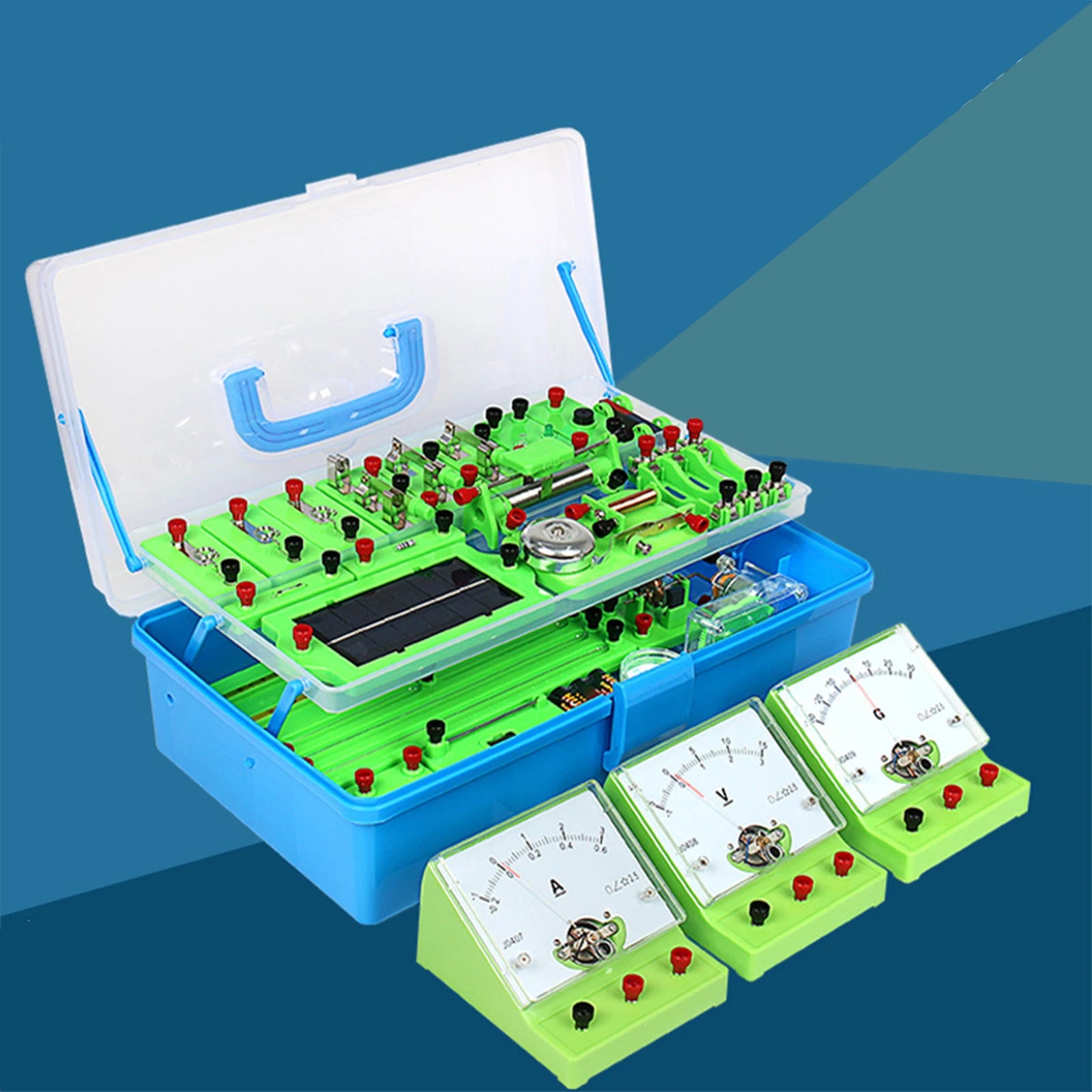
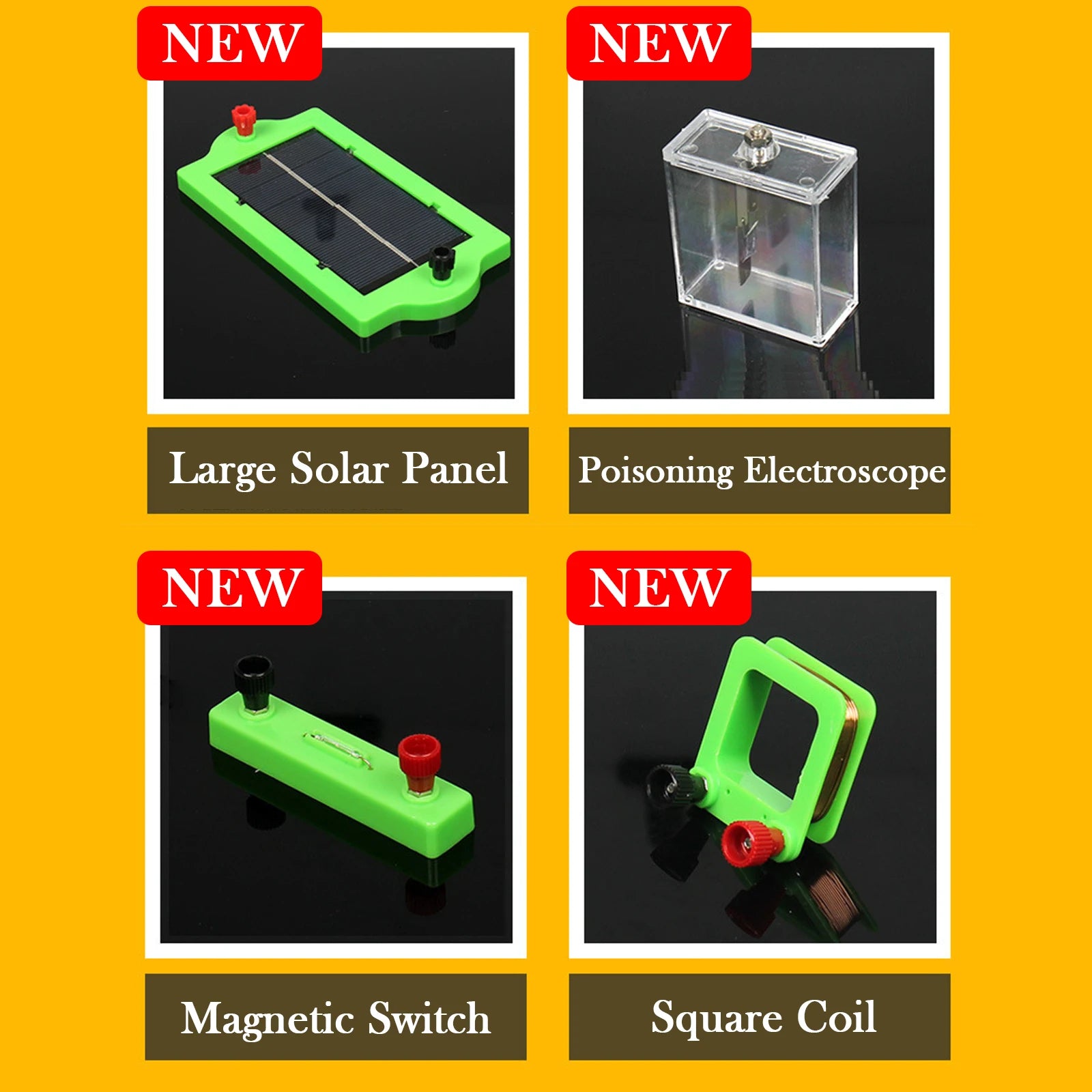
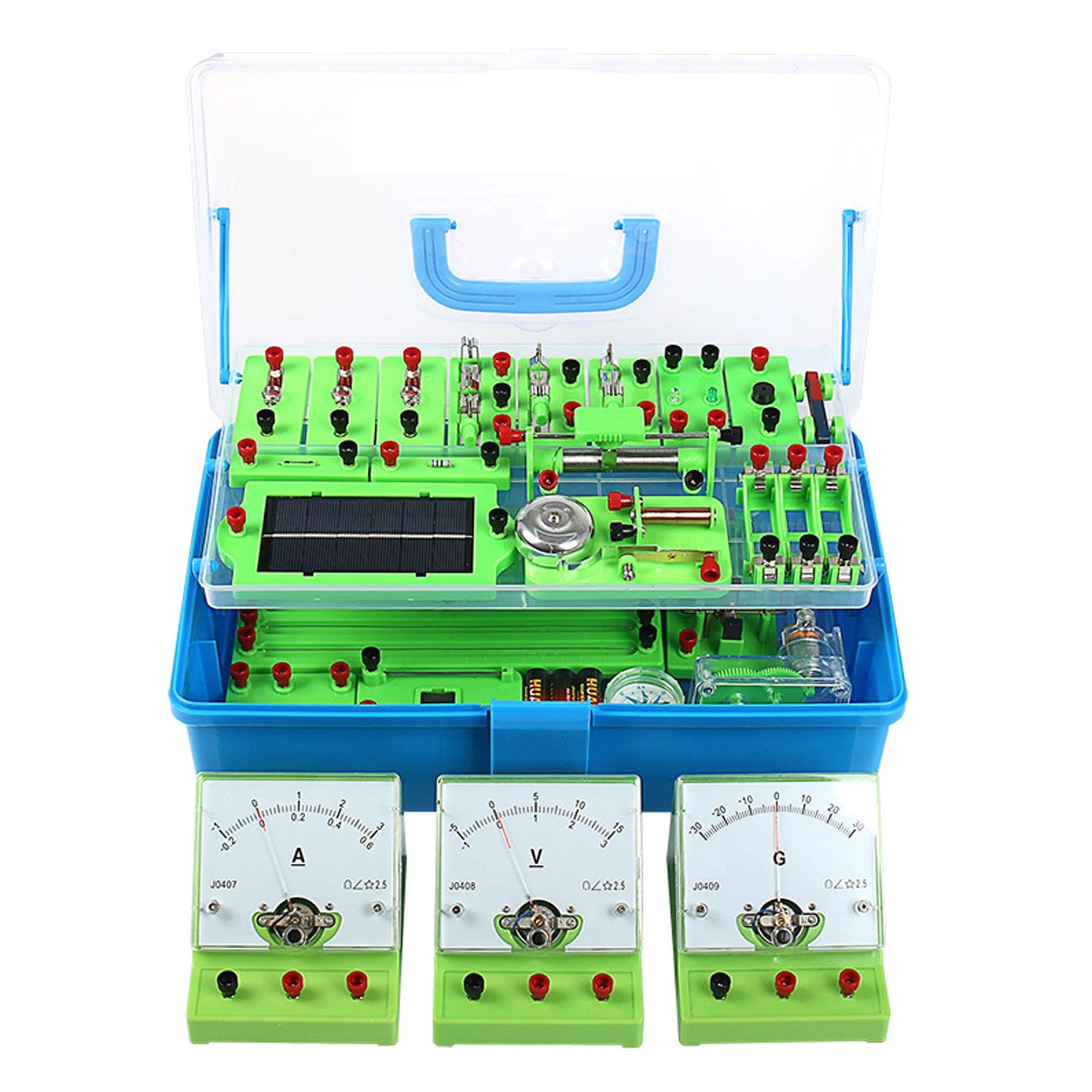
Teachers and parents who prefer a complete classroom solution may also use experiment kits designed for structured STEM activities. For example, the Electromagnetism Experiment Kit for Students – 40+ Lab Tools provides voltmeters, ammeters, coils, magnets, and motors so students can explore multiple electricity and magnetism experiments using the same equipment.
This approach simplifies preparation for classrooms and homeschool programs while allowing students to perform several physics demonstrations with one set of tools.
For more STEM learning ideas for young students, you can also explore the Baby Growth & Learning collection and related educational resources in the Baby Growth & Learning Tips section.
Beginner Electricity Experiments (Easy STEM Projects)
Experiment 1: Static Electricity Balloon Experiment
Difficulty: Beginner
Recommended Age: 6+
Materials:
- Balloon
- Small paper pieces
- Dry hair or wool cloth
Steps:
- Inflate the balloon.
- Rub it against hair or wool for 20 seconds.
- Bring the balloon close to small paper pieces.
- Observe how the paper jumps toward the balloon.
Scientific Explanation:
Rubbing the balloon transfers electrons, creating static electricity. The charged balloon attracts lightweight objects through electrostatic force.
Experiment 2: Building a Simple Electric Circuit
Difficulty: Beginner
Materials:
- Battery
- LED light
- Two wires
Steps:
- Connect one wire from the battery’s positive terminal to the LED.
- Connect another wire from the LED to the battery’s negative terminal.
- The LED lights when the circuit is complete.
This experiment demonstrates the fundamental concept of a closed electrical circuit.
Experiment 3: Testing Conductors and Insulators
Difficulty: Beginner
Materials:
- Battery
- LED
- Two wires
- Various objects (coin, plastic, wood, foil)
Steps:
- Create a simple circuit but leave a small gap.
- Place different materials into the gap.
- Observe which objects allow the LED to light.
This activity teaches students how different materials conduct electricity.
Intermediate Electricity Experiments
Experiment 4: Series Circuit vs Parallel Circuit
Difficulty: Intermediate
Materials:
- Battery pack
- Two LED bulbs
- Wires
Build one circuit where LEDs connect in series and another where they connect in parallel. Students observe that series circuits share voltage, while parallel circuits allow each component to operate independently.
Experiment 5: Making a Simple Switch
Difficulty: Intermediate
Use a paper clip attached to cardboard as a manual switch. When the paper clip touches a metal contact, the circuit closes and electricity flows.
This experiment shows how switches control current in real electrical systems.
Experiment 6: Lemon Battery Experiment
Difficulty: Intermediate
Materials:
- Lemon
- Copper coin
- Zinc nail
- Wires
The chemical reaction between zinc and copper produces a small electrical current. Students learn how chemical energy converts into electrical energy.
Advanced Electricity Experiments
Experiment 7: Building a Basic Electromagnet
Difficulty: Advanced
Materials:
- Iron nail
- Copper wire
- Battery
Wrap copper wire around the nail and connect the wire ends to a battery. When current flows, the nail becomes magnetized and can pick up small metal objects.
This experiment demonstrates the relationship between electricity and magnetism.
Experiment 8: Simple Electric Motor Demonstration
Difficulty: Advanced
Using a coil of wire, a magnet, and a battery, students can build a simple motor that spins due to electromagnetic forces. This experiment introduces the basic principles behind electric motors used in appliances and vehicles.
Electricity Experiment Comparison Matrix
| Experiment | Concept Demonstrated | Difficulty | Recommended Age |
| Static Balloon | Static Electricity | Beginner | 6+ |
| Simple Circuit | Electric Current | Beginner | 7+ |
| Conductors Test | Conductivity | Beginner | 7+ |
| Series vs Parallel | Circuit Design | Intermediate | 10+ |
| Lemon Battery | Chemical Electricity | Intermediate | 10+ |
| Electromagnet | Electricity & Magnetism | Advanced | 12+ |
Troubleshooting Common Electricity Experiment Problems
Why Your Circuit Is Not Working
- The circuit may not be fully closed.
- Wires may not be touching metal contacts.
- The battery may be weak or empty.
Carefully inspect each connection to ensure the electrical loop is complete.
Why the LED Does Not Light Up
LEDs only work in one direction. If the LED does not light, reverse its orientation so current flows through the correct polarity.
How Electricity Experiments Help Students Understand STEM Concepts
Visualizing Current and Energy Flow
When students build circuits and observe real electrical effects, they develop a clearer understanding of how energy flows through electrical systems.
Developing Problem Solving and Engineering Skills
Experimentation encourages critical thinking. Students must analyze problems, adjust circuits, and test new solutions—skills commonly used in engineering and scientific research.
Hands-on learning also complements early educational tools and sensory learning experiences available in the Sensory Toys and Smart Baby Gadgets collections that support early curiosity and exploration.
Conclusion
This hands on electricity experiments guide demonstrates how simple activities can transform complex physics concepts into engaging learning experiences. By starting with beginner experiments and gradually progressing toward advanced demonstrations, students develop a deeper understanding of circuits, current, and electromagnetism.
Whether used in classrooms, STEM clubs, or homeschool programs, hands-on experiments make science memorable and interactive. Structured experiment kits—such as the Electromagnetism Experiment Kit—can further simplify setup and allow students to explore a wider range of electrical demonstrations.
Through curiosity, experimentation, and observation, students discover that electricity is not just theory—it is a powerful force shaping the technology and energy systems around us.
Pillar Article: Beginner Physics Experiment Kit Electricity: Best STEM Kits for Easy Circuits





