

How Magnetic Fields Work: A Simple Visual Explanation
How Do Magnetic Fields Work? A Visual Beginner’s Guide
Why does a compass always point north? Why do two magnets attract or repel each other without touching? And how does electricity generate magnetism inside motors, generators, and wireless chargers?
The answer is magnetic fields —invisible regions of force surrounding magnets and moving electric charges. Although you cannot see them directly, magnetic fields influence how objects move, guide navigation, and make many everyday technologies possible.
If you've ever wondered how magnetic fields work , this beginner-friendly guide explains the concept step by step. You'll learn what magnetic fields are, what causes them, how scientists visualize them, and why they are essential to modern physics and engineering.
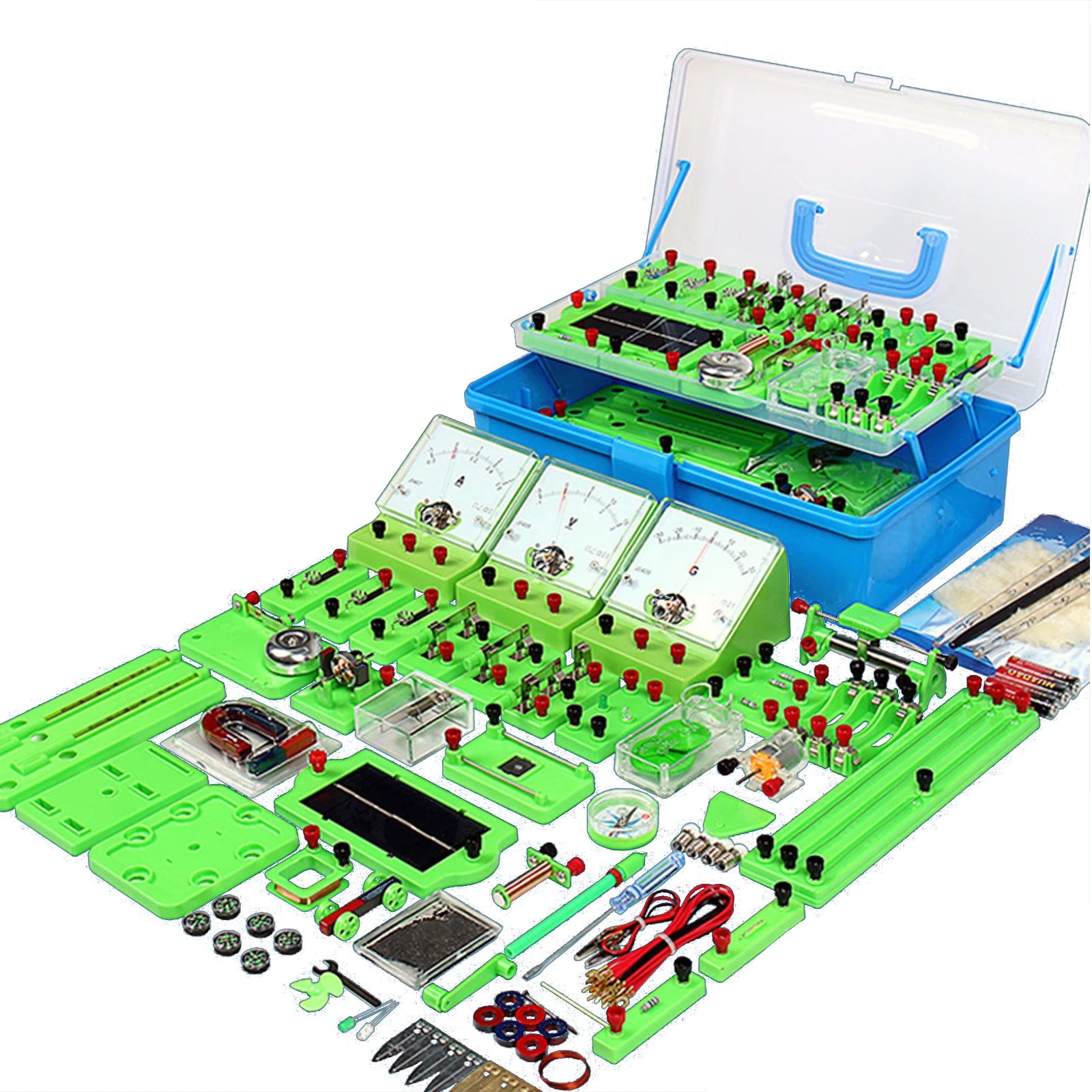
What Is a Magnetic Field?
Magnetic Fields Explained in Simple Terms
A magnetic field is an invisible region surrounding a magnet or a moving electric charge where magnetic forces can act on other magnets, magnetic materials, or moving charged particles. Although the field itself cannot be seen, its effects are easy to observe whenever magnets attract, repel, or change the motion of charged particles.
An easy way to think about a magnetic field is as an invisible map showing how magnetic forces behave in the space around an object. Instead of forces acting instantly across empty space, physicists describe the interaction as taking place through this field.
This field-based explanation helps answer one of the most common beginner questions about how do magnetic fields work . Objects do not need to touch because the magnetic field extends outward from its source and carries the magnetic influence through the surrounding space.
What Causes a Magnetic Field?
Understanding what causes a magnetic field starts with recognizing that magnetic fields are produced whenever certain materials or moving electric charges create organized magnetic effects.
At the atomic level, electrons possess a property called spin , which gives each electron a tiny magnetic effect. In most materials these effects point in random directions and cancel each other out. In magnetic materials such as iron, many of these tiny magnetic regions align in the same direction, creating a much stronger magnetic field that extends beyond the material.
Magnetic fields are also created whenever electric charges move. This close relationship between electricity and magnetism forms the foundation of electromagnetism, one of the four fundamental forces of nature.
What Creates Magnetic Fields Naturally and Artificially
Magnetic fields can be generated in several different ways, both in nature and through human-made devices.
- Permanent magnets create stable magnetic fields because many atomic magnetic regions remain permanently aligned.
- Moving electric charges generate magnetic fields whenever charged particles travel through space.
- Electric currents flowing through wires create circular magnetic fields that can be strengthened by wrapping the wire into coils.
These different sources explain what creates magnetic fields in everything from refrigerator magnets and compasses to power stations, electric motors, MRI scanners, and wireless charging systems.
Visualizing Magnetic Fields

What Are Magnetic Field Lines?
Because magnetic fields are invisible, scientists use magnetic field lines to represent their direction and relative strength. These lines are not physical objects—they are a visual model that helps us understand magnetic fields explained in textbooks, diagrams, and laboratory demonstrations.
Magnetic field lines follow several important rules:
- They leave the north pole of a magnet and enter the south pole outside the magnet.
- They continue through the magnet, forming continuous closed loops.
- They never begin or end in empty space.
- Lines that are closer together indicate a stronger magnetic field.
A classic classroom demonstration uses iron filings sprinkled around a bar magnet. The filings rotate and align with the local magnetic field, revealing the overall pattern of the otherwise invisible field.
Why Field Lines Never Cross
Magnetic field lines never cross because every point in space can have only one magnetic field direction at a given moment. If two field lines crossed, that location would have two different field directions simultaneously, which is physically impossible.
This simple rule helps students correctly interpret field diagrams and better understand how magnetic forces act around magnets, coils, and electrical devices.
What Magnetic Flux Represents
Magnetic flux measures how much magnetic field passes through a particular surface or area. While the mathematical definition involves equations, the basic concept is straightforward.
If more magnetic field lines pass through a surface, the magnetic flux is greater. If fewer lines pass through, the magnetic flux is lower. This concept helps scientists compare magnetic field strength in different situations and plays an important role in technologies such as electric generators, transformers, and electromagnetic induction.
How Are Magnetic Fields Created?
Moving Electric Charges
One of the most important principles in physics is that moving electric charges create magnetic fields . In everyday electrical circuits, these moving charges are usually electrons traveling through a metal wire.
Whenever an electric current flows, it generates a magnetic field that forms concentric circles around the conductor. This discovery, first demonstrated by physicist Hans Christian Ørsted in 1820, revealed the fundamental connection between electricity and magnetism and became the foundation of modern electromagnetism.
If you've ever wondered how does electricity create a magnetic field , the answer is surprisingly simple: the movement of electric charge naturally produces magnetic effects. The stronger the current, the stronger the surrounding magnetic field.
The direction of this field can be predicted using the right-hand rule :
- Point your right thumb in the direction of conventional electric current.
- Wrap your fingers around the wire.
- Your curled fingers indicate the direction of the magnetic field surrounding the conductor.
This simple rule helps engineers design electrical systems ranging from household wiring to industrial motors.
Electromagnets and Coils
A single straight wire produces a relatively weak magnetic field. However, wrapping the wire into a coil causes the individual magnetic fields to reinforce one another, creating a much stronger overall field.
If the coil is wrapped around an iron core, the magnetic field becomes significantly more powerful. This arrangement forms an electromagnet —a magnet whose strength depends on the electric current flowing through it.
Unlike permanent magnets, electromagnets offer several practical advantages:
- They can be switched on and off instantly.
- Their magnetic strength can be adjusted by changing the current.
- Their polarity can be reversed by reversing the direction of the current.
These characteristics make electromagnets essential components in electric motors, relays, cranes, MRI systems, speakers, and countless other technologies.
How Magnetic Fields Work
How Magnetic Fields Affect Magnets
A magnetic field exerts forces on other magnets and magnetic materials that enter the field. Opposite magnetic poles attract each other, while like poles repel. Rather than acting through direct contact, these interactions occur because each magnet responds to the magnetic field surrounding the other.
The strength of this interaction depends on factors such as the distance between the magnets, their orientation, and the strength of each magnetic field.
How They Affect Moving Charged Particles
Magnetic fields also influence moving charged particles such as electrons and ions. Instead of simply pulling particles forward or backward, magnetic fields typically change the direction of their motion, causing them to follow curved or circular paths.
This behavior is responsible for many important natural and technological phenomena, including particle accelerators, auroras near Earth's poles, electric motors, and plasma confinement in scientific research.
Why Magnetic Forces Depend on Motion
Unlike electric fields, magnetic fields primarily act on moving charged particles. A stationary electric charge experiences essentially no magnetic force from a static magnetic field. Motion is therefore a key requirement for magnetic interactions involving charged particles.
Physicists describe this behavior using the Lorentz force . The mathematical relationship is commonly written as:
F = q(v × B)
- F = magnetic force
- q = electric charge
- v = velocity of the charged particle
- B = magnetic field strength
Although the equation appears technical, its central idea is straightforward: faster-moving charged particles experience a greater magnetic effect, while stationary charges are unaffected by a static magnetic field.
Electricity and Magnetic Fields
Electromagnetism Explained
Electricity and magnetism are closely connected and together form the subject known as electromagnetism . Scientists now understand that they are not separate forces but different aspects of the same physical interaction.
The relationship can be summarized with three fundamental ideas:
- Moving electric charges generate magnetic fields.
- Changing magnetic fields can induce electric currents.
- Changing electric and magnetic fields together propagate as electromagnetic waves, including visible light, radio waves, microwaves, and X-rays.
This unified understanding explains how countless technologies operate, from power generation and communications to medical imaging and wireless electronics.
A Simple Look at Maxwell's Equations
James Clerk Maxwell developed four equations in the nineteenth century that describe how electric and magnetic fields interact. Although the mathematics is advanced, the physical ideas are surprisingly intuitive.
- Electric charges create electric fields.
- Magnetic field lines always form continuous closed loops.
- Changing magnetic fields generate electric fields.
- Changing electric fields generate magnetic fields.
Together, these principles explain electromagnetic induction, the propagation of light, and the operation of nearly every modern electrical system.
From Permanent Magnets to Electromagnets
Permanent magnets produce magnetic fields continuously because of the alignment of magnetic regions within the material. Electromagnets, by contrast, generate magnetic fields only while electric current flows through a coil.
This ability to control magnetism with electricity allows engineers to switch magnetic fields on and off, adjust their strength, and reverse their direction whenever needed. That flexibility is why electromagnets are widely used in electric motors, generators, transformers, magnetic locks, industrial lifting equipment, and many other electrical devices.
Everyday Examples of Magnetic Fields
Earth's Magnetic Field
Earth acts like a giant natural magnet because the movement of molten iron within its outer core generates a vast magnetic field known as the magnetosphere . This protective field extends thousands of kilometers into space, where it helps shield the planet from charged particles carried by the solar wind.
A compass works because its lightweight magnetic needle rotates until it aligns with Earth's magnetic field. Although the needle points toward magnetic north rather than geographic north, this principle has guided navigation for centuries and remains useful in hiking, surveying, aviation, and marine travel.
Motors and Generators
Electric motors and generators demonstrate how closely electricity and magnetism are connected.
An electric motor converts electrical energy into mechanical motion by allowing electric current to interact with magnetic fields. This magnetic force causes the motor's rotating components to spin, powering devices such as fans, washing machines, electric vehicles, and industrial equipment.
A generator performs the opposite process. Instead of using electricity to create movement, it uses mechanical motion inside a magnetic field to generate electrical current through electromagnetic induction.
Together, motors and generators form the foundation of modern power systems and are among the most practical examples of how magnetic fields work in everyday life.
MRI, Speakers, and Wireless Charging
Many technologies people use every day rely on magnetic fields, even if those fields remain invisible.
- MRI scanners use extremely powerful magnetic fields to align hydrogen atoms inside the body, allowing doctors to produce detailed medical images without surgery.
- Speakers and headphones convert electrical signals into sound by moving a coil within a magnetic field, causing a diaphragm to vibrate and produce audio.
- Wireless charging systems rely on magnetic induction . A changing magnetic field inside the charging pad induces an electric current in a compatible device, transferring energy without direct electrical contact.
These examples illustrate how magnetic fields support communication, healthcare, transportation, consumer electronics, and renewable energy technologies.
For students and curious learners, hands-on experiments often make these concepts much easier to understand than diagrams alone.
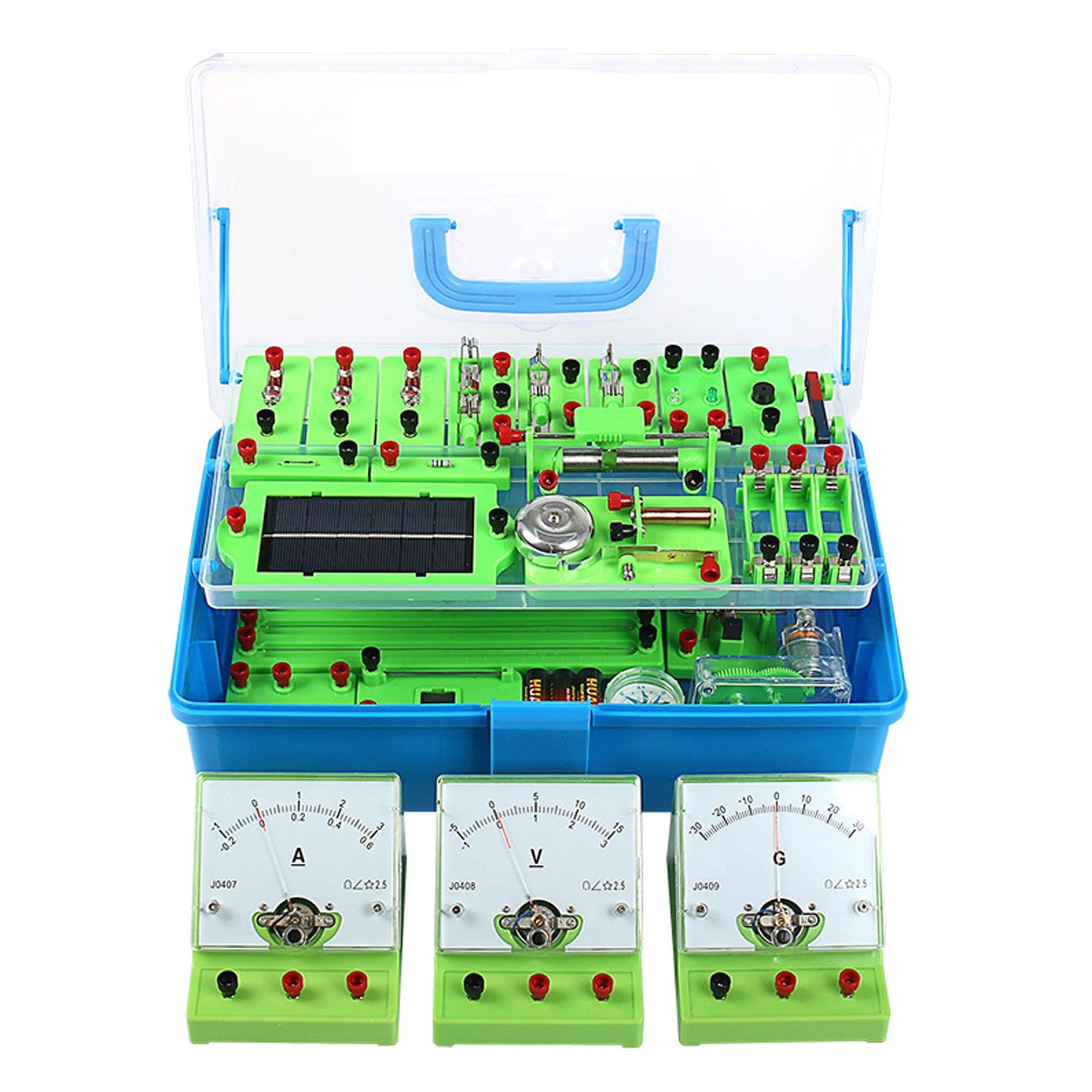
One practical example is the Electromagnetism Experiment Kit for Students – 40+ Lab Tools . This educational kit allows learners to build simple circuits, investigate electromagnets, observe magnetic field behavior, and perform guided STEM experiments that reinforce core physics concepts through direct observation.
Simple Experiments to See Magnetic Fields
Iron Filings Around a Magnet
One of the easiest ways to visualize an invisible magnetic field is with iron filings. Place a sheet of paper over a bar magnet and gently sprinkle iron filings across the surface. As the filings rotate and align themselves, they reveal the characteristic pattern of magnetic field lines extending between the magnet's poles.
This classic demonstration helps students understand that the field exists throughout the surrounding space rather than only at the magnet's surface.
Building a Simple Electromagnet
A simple electromagnet can be made by wrapping insulated wire around an iron nail and briefly connecting the wire to a low-voltage battery. Once electric current begins flowing, the nail behaves like a temporary magnet capable of attracting small steel objects such as paper clips.
Disconnecting the battery causes the magnetic field to disappear, demonstrating how electricity can create magnetism on demand. Adult supervision and appropriate low-voltage components should always be used during classroom or home experiments.
Using a Compass to Detect Fields
A compass can detect magnetic fields produced by both permanent magnets and current-carrying wires. Bringing a magnet close to the compass causes the needle to rotate and align with the stronger nearby field instead of Earth's magnetic field.
Similarly, placing a compass near a wire carrying electric current demonstrates that moving electric charges generate magnetic fields. This simple experiment reinforces one of the fundamental principles of electromagnetism.
Hands-on STEM tools, such as those found in the Baby Growth & Learning educational category, encourage learners to explore these concepts through safe, interactive activities that make abstract physics easier to understand.
Common Misconceptions About Magnetic Fields
Magnets Do Not Attract Everything
One common misconception is that magnets attract all metals. In reality, magnets strongly attract only certain ferromagnetic materials , such as iron, nickel, cobalt, and some of their alloys. Metals like aluminum, copper, gold, and silver are not strongly attracted by ordinary magnets.
Field Lines Are Models, Not Physical Objects
Magnetic field lines are useful visual tools rather than physical strands extending through space. Scientists use them to represent the direction and relative strength of a magnetic field. The closer the lines appear in a diagram, the stronger the magnetic field is in that region.
Magnetic Fields Are Different From Electric Fields
Although they are closely related, magnetic fields and electric fields are not the same. Electric fields are created by electric charges, while magnetic fields arise from moving electric charges, electric currents, or magnetic materials. Together they form the basis of electromagnetism and interact in ways that enable technologies such as motors, generators, transformers, and wireless charging.
Magnetism vs Electricity vs Electromagnetism
Key Differences
| Concept | What Creates It | Main Effect | Common Examples |
|---|---|---|---|
| Magnetism | Permanent magnets, magnetic materials, or moving electric charges | Produces magnetic forces and magnetic fields | Bar magnets, compasses, MRI magnets |
| Electricity | Electric charges and electric fields | Produces electric current and electrical forces | Batteries, power outlets, electronic circuits |
| Electromagnetism | The interaction of electric and magnetic fields | Converts electrical and magnetic energy into useful work | Electric motors, generators, transformers, wireless charging |
How They Work Together
Understanding the relationship between electricity and magnetic fields is one of the most important concepts in physics. Electricity can generate magnetic fields, while changing magnetic fields can generate electricity. This continuous interaction explains how power stations produce electricity, how electric motors operate, and how electromagnetic waves carry information across the world.
Rather than treating magnetism and electricity as separate topics, it is more accurate to view them as complementary parts of electromagnetism. Together they provide the scientific foundation for countless technologies used in homes, hospitals, transportation, communications, and industry.
Parents interested in encouraging early STEM curiosity can also explore learning resources within the Baby Growth & Learning Tips section, which highlights tools and activities that help children understand science through play.
Frequently Asked Questions
How do magnetic fields work?
Magnetic fields work by creating an invisible region around magnets or moving electric charges where magnetic forces can act. Objects entering this region experience forces without needing direct physical contact.
What causes a magnetic field?
Magnetic fields are caused by permanent magnets, moving electric charges, and electric currents. At the atomic level, the motion and alignment of electrons are responsible for the magnetic properties of materials.
How are magnetic fields created?
Magnetic fields are created naturally by magnetic materials and planets such as Earth, and artificially by electric currents flowing through wires and coils to produce electromagnets.
How does electricity create a magnetic field?
Whenever electric current flows through a conductor, the moving charges generate a magnetic field around the wire. Coiling the wire concentrates and strengthens that magnetic field.
What is the difference between a magnetic field and an electric field?
An electric field is produced by electric charges, while a magnetic field is produced by moving electric charges, electric currents, or magnetic materials. Together they interact to form electromagnetism.
Why do magnetic field lines never cross?
Magnetic field lines never cross because the magnetic field at any single point in space can have only one direction. Crossing lines would imply two different field directions at the same location, which is not physically possible.
Pillar Article: Beginner Physics Experiment Kit Electricity: Best STEM Kits for Easy Circuits





