

How Does Electromagnetism Work? A Simple Beginner-Friendly Explanation
How Does Electromagnetism Work? A Simple Beginner-Friendly Guide
Electric motors spin, wireless chargers power smartphones, and medical scanners create detailed images of the human body—all because of one fundamental principle in physics: electromagnetism. Understanding how electricity and magnetism interact explains many technologies we rely on every day.
Electromagnetism is the physical interaction between electric charges and magnetic fields. When electric charges move, they produce magnetic fields, and when magnetic fields change, they can generate electric currents. This two-way relationship forms the foundation of modern electrical technology, from generators to wireless energy transfer.
Electromagnetism Explained in 60 Seconds
Simple Definition of Electromagnetism
Electromagnetism is the branch of physics that studies how electric charges create magnetic fields and how changing magnetic fields can generate electricity. It shows that electricity and magnetism are two parts of the same fundamental force, known as the electromagnetic force.
The Core Idea: Moving Charges Create Magnetic Fields
The key idea behind electromagnetism is surprisingly simple. A stationary electric charge produces an electric field. But when that charge begins to move—such as electrons flowing through a wire—it creates a magnetic field around the path of motion.
This means electricity and magnetism are deeply connected. Whenever electric current flows through a conductor, a magnetic field forms around it.
The Basic Idea: Electric Fields and Magnetic Fields
What Is an Electric Field?
An electric field is an invisible region around a charged particle where other charges experience a force. Positive charges push other positive charges away and attract negative charges.
You can imagine an electric field as a kind of invisible force map surrounding a charged object. If another charge enters this field, it will experience a force that causes it to move.
What Is a Magnetic Field?
A magnetic field is a region around a magnet or moving electric charge where magnetic forces can be detected. Magnetic fields are often visualized using curved lines that emerge from the north pole of a magnet and loop back to the south pole.
Magnetic fields also form around wires carrying electric current. If you place a compass near such a wire, the needle will deflect because the current produces a circular magnetic field.
The Electromagnetic Field Concept
Physicists later discovered that electric fields and magnetic fields are not separate phenomena. Instead, they are part of a unified structure called the electromagnetic field. This concept explains how changes in electric fields can produce magnetic fields and vice versa.
Why Moving Electricity Creates a Magnetic Field
Electric Current as Moving Charge
An electric current is simply the movement of electric charges—usually electrons—through a conductor such as copper wire.
When these charges move, they generate a magnetic field around the wire. The faster the charges move or the stronger the current, the stronger the magnetic field becomes.
Magnetic Fields Around a Current-Carrying Wire
The magnetic field produced by a straight wire forms circular loops around the conductor. This pattern can be predicted using the right-hand rule:
- Point your thumb in the direction of current flow.
- Your curled fingers show the direction of the magnetic field lines.
This circular field pattern is a fundamental observation that led scientists to understand the connection between electricity and magnetism.
A Simple Formula That Describes the Effect
One simplified relationship used in electromagnetism is derived from Ampère's law. For a straight conductor, the magnetic field strength roughly depends on the current flowing through the wire.
Conceptually, the relationship can be summarized as:
Stronger current → stronger magnetic field.
This simple principle is what allows engineers to design electromagnets, motors, and transformers.
The Reverse Effect: How Magnetism Creates Electricity
Changing Magnetic Fields Create Electric Current
The connection between electricity and magnetism works in both directions. While moving charges produce magnetic fields, a changing magnetic field can also produce an electric current.
This phenomenon is called electromagnetic induction. When a magnet moves near a wire coil, the changing magnetic field induces a voltage that pushes electrons through the conductor.
Faraday's Law of Induction (Simplified)
Physicist Michael Faraday discovered that the amount of electricity generated depends on how quickly the magnetic field changes.
The simplified principle:
- Moving magnet → changing magnetic field
- Changing magnetic field → induced voltage
- Induced voltage → electric current
This is the core operating principle behind electric generators used in power plants worldwide.
Real-World Examples of Electromagnetism
Electric Motors
Electric motors convert electrical energy into motion. Inside a motor, electric current flows through coils of wire, creating magnetic fields. These fields interact with permanent magnets, producing rotational force that spins the motor.
Electric Generators
Generators work in the opposite direction. Instead of using electricity to create motion, they use motion to generate electricity. Rotating magnets inside wire coils create changing magnetic fields, which induce electric currents.
Wireless Charging
Wireless chargers rely on electromagnetic induction. A charging pad produces a rapidly changing magnetic field. When a compatible device is placed on the pad, a coil inside the device converts that magnetic field back into electrical energy.
MRI Medical Imaging
MRI scanners use extremely strong magnetic fields combined with radio waves to produce detailed images of the human body. These systems rely heavily on electromagnetic principles to detect signals from hydrogen atoms in tissues.
Comparison of Common Electromagnetism Applications
| Technology | Energy Conversion | Electromagnetic Principle | Example Use |
| Electric Motor | Electricity → Motion | Magnetic force on current-carrying wires | Fans, appliances, vehicles |
| Electric Generator | Motion → Electricity | Electromagnetic induction | Power plants |
| Wireless Charging | Magnetic Field → Electricity | Inductive coupling | Smartphone chargers |
| MRI Scanner | Magnetic Field + RF Waves | Magnetic resonance | Medical imaging |
For students learning physics, seeing these principles in action often makes the concepts easier to understand. Hands-on experiment tools can demonstrate magnetic fields, circuits, and electromagnetic induction in a clear visual way.
Hands-On Learning: Exploring Electromagnetism Experiments
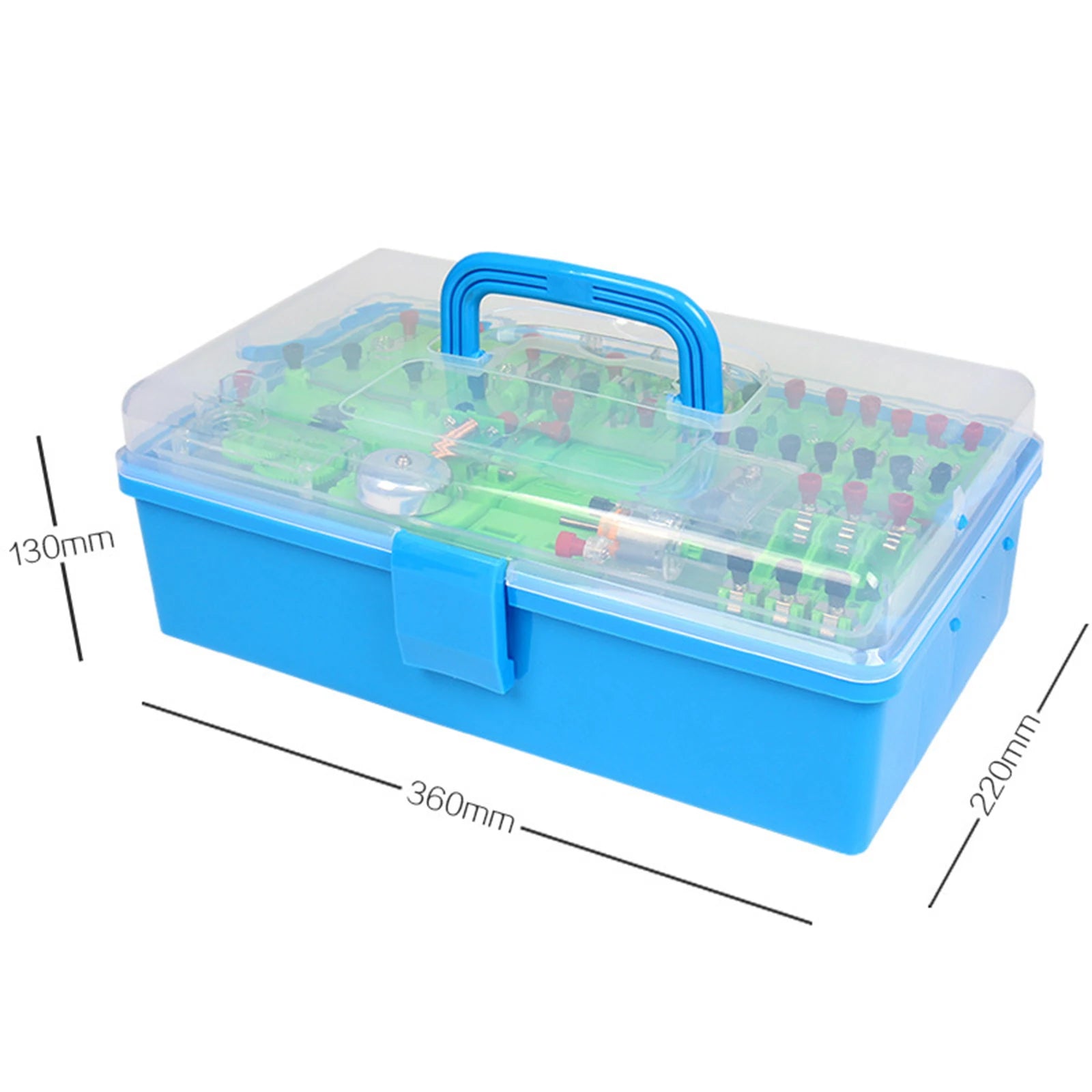
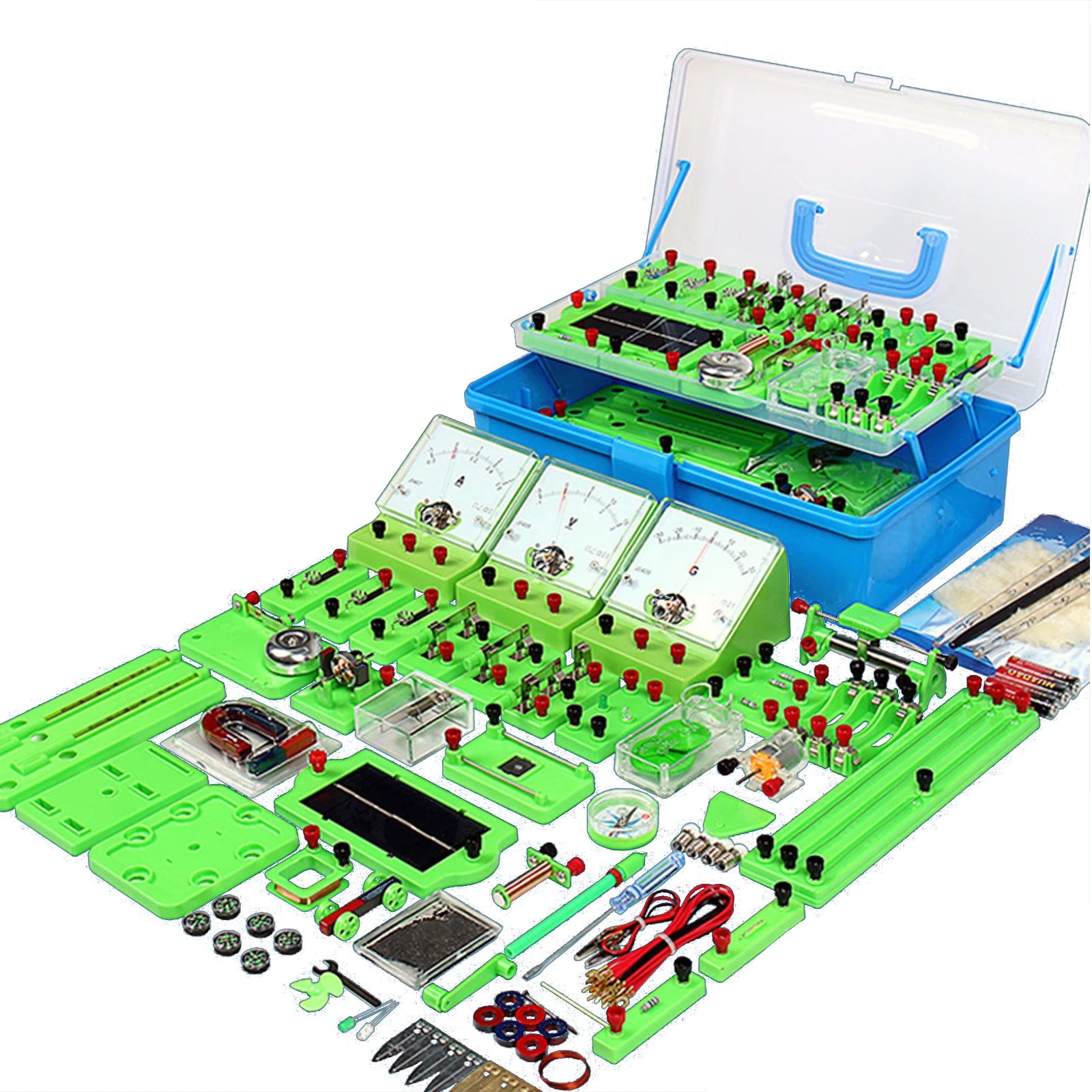
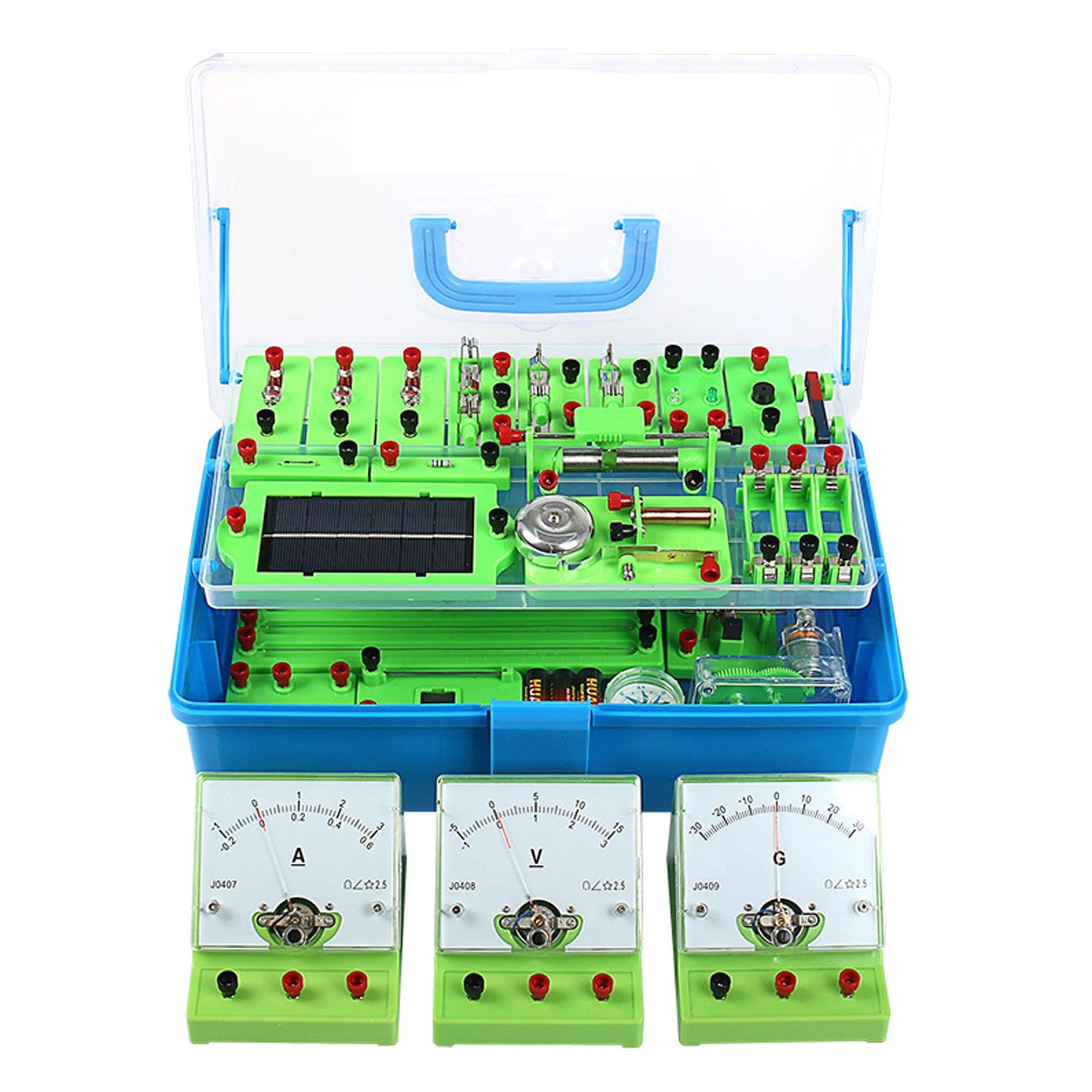
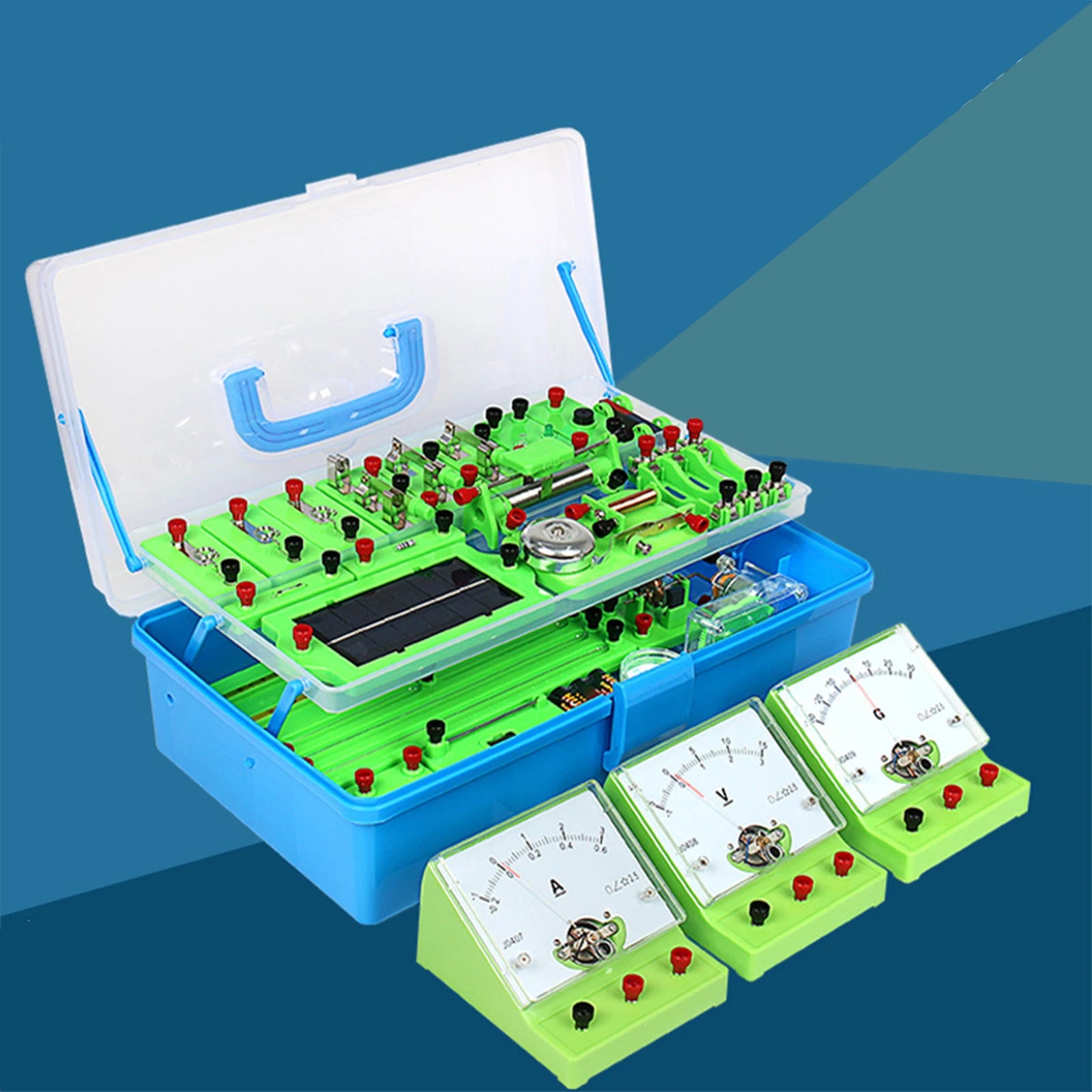
Textbooks explain electromagnetism, but experiments help students actually observe it. The Electromagnetism Experiment Kit for Students – 40+ Lab Tools provides components that allow learners to build circuits, observe magnetic interactions, and test energy conversion principles.
- Includes voltmeter, ammeter, coils, magnets, motors, and solar panel.
- Designed for classroom demonstrations and STEM learning.
- Large instruments make measurements easy to observe.
- Supports experiments involving Joule’s law and Ampère force.
For parents and educators exploring educational tools, the Baby Growth & Learning collection also includes learning resources designed to support curiosity and early science exploration.
A Short History of Electromagnetism Discoveries
Oersted's Discovery of Electricity Creating Magnetism
In 1820, Danish physicist Hans Christian Oersted discovered that an electric current could deflect a compass needle. This experiment revealed for the first time that electricity creates magnetic fields.
Faraday and Electromagnetic Induction
Michael Faraday expanded this discovery by showing that moving magnets could generate electric currents. His experiments led directly to the invention of electric generators.
Maxwell's Equations Unite Electricity and Magnetism
James Clerk Maxwell later developed mathematical equations describing how electric and magnetic fields interact. These equations showed that electricity and magnetism are part of a single unified electromagnetic field.
Maxwell's work also predicted the existence of electromagnetic waves—leading to the discovery of radio waves, microwaves, and visible light as part of the same physical phenomenon.
Why Electromagnetism Is One of the Four Fundamental Forces
The Electromagnetic Force in Physics
The electromagnetic force is one of the four fundamental forces of nature, alongside gravity, the strong nuclear force, and the weak nuclear force.
This force governs interactions between electrically charged particles and is responsible for many everyday phenomena—from chemical bonding to electricity transmission.
How Electromagnetism Shapes Modern Technology
Nearly every modern technology relies on electromagnetic principles:
- Electric power grids
- Computers and electronics
- Medical imaging systems
- Wireless communication
- Electric transportation
For students developing an interest in science and engineering, exploring these principles through experiments and educational tools—such as those found in the Sensory Toys collection or hands-on STEM kits—can help transform abstract concepts into real discoveries.
Conclusion
Electromagnetism explains the powerful relationship between electricity and magnetism. Moving electric charges create magnetic fields, while changing magnetic fields generate electricity. This simple yet profound connection powers electric motors, generators, wireless charging systems, and medical imaging technologies.
Understanding how electromagnetism works provides insight into one of the most important forces in nature. For students and curious learners, hands-on experiments and practical demonstrations can make these invisible forces much easier to visualize and understand.
If you're exploring science education tools for young learners, the Baby Growth & Learning resources and STEM experiment kits can provide a fun starting point for discovering the fascinating world of physics.
Pillar Article: Beginner Physics Experiment Kit Electricity: Best STEM Kits for Easy Circuits





