

How Magnetic Field Is Produced: 5 Simple Secrets
How Magnetic Field Is Produced: From Moving Charges to Magnets
Why do magnets attract metal? And how can a simple electric wire suddenly behave like a magnet when electricity flows through it? These questions reveal one of the most fascinating ideas in physics: magnetic fields are created by moving electric charges.
Understanding how magnetic fields are produced is a key step toward understanding electromagnetism—the physical principle behind motors, generators, medical imaging systems, and countless technologies used every day.
In this beginner-friendly guide, we’ll move step by step from the basic definition of a magnetic field to the physical mechanisms that create it. You’ll learn how moving charges generate magnetic fields, why electric currents create circular field patterns around wires, how coils amplify magnetism, and how permanent magnets work at the atomic level.

What Is a Magnetic Field? (Simple Definition)
A magnetic field is an invisible region of space where magnetic forces act on moving electric charges or magnetic materials. When a magnetic object or electric current is present, it creates a surrounding field that can exert forces on nearby particles.
Physicists describe magnetic fields using vectors, meaning each point in the field has both a direction and a strength. The direction tells us which way a magnetic force would push a moving charge, while the strength indicates how strong that force is.
Magnetic Field Lines and What They Represent
Magnetic field lines are visual tools used to represent magnetic fields. They show the direction and intensity of the magnetic field.
- The direction of field lines shows the direction of magnetic force.
- Closer lines indicate stronger magnetic fields.
- Field lines form closed loops around magnetic sources.
For example, around a bar magnet, magnetic field lines emerge from the north pole and loop back into the south pole.
The Connection Between Electricity and Magnetism
Electricity and magnetism were once considered separate forces. However, scientists discovered that moving electric charges create magnetic fields. This discovery led to the unified theory known as electromagnetism.
This connection explains why electric currents can generate magnetic fields and why changing magnetic fields can produce electric currents.
What Causes a Magnetic Field to Be Produced?
The fundamental cause of a magnetic field is moving electric charges. Whenever charged particles move, they create a magnetic field in the space around them.
This principle applies to several different physical systems:
- Single moving charged particles
- Electric currents in wires
- Coils of current called solenoids
- Permanent magnets with aligned atomic magnetic moments
Although these systems appear different, they all originate from the same fundamental phenomenon: the motion of electric charge.
Moving Electric Charges as the Fundamental Source
A charged particle at rest produces only an electric field. But when the particle begins moving, it also generates a magnetic field around its path.
The faster the charge moves, the stronger the magnetic field it produces. In physics, this relationship is described mathematically by equations derived from Maxwell’s laws of electromagnetism.
Magnetic Fields in Permanent Magnets
Permanent magnets appear to produce magnetic fields without electricity, but at the microscopic level the explanation still involves moving charges.
Inside atoms, electrons orbit the nucleus and also spin on their axes. These motions generate tiny magnetic fields. In most materials, these fields cancel each other out. However, in magnetic materials like iron, groups of atoms called magnetic domains align in the same direction.
When many domains align, their magnetic fields combine to produce a strong external magnetic field.
How Moving Electric Charges Create a Magnetic Field
When an electric charge moves through space, it disturbs the surrounding electromagnetic field. This disturbance forms circular magnetic field lines around the path of the moving charge.
Magnetic Fields Around a Moving Charge
If a single charged particle travels through space, the magnetic field it produces forms concentric circles around the direction of motion.
This pattern becomes clearer when large numbers of charges move together in an electric current. The individual magnetic fields combine to form a larger, observable magnetic field.
The Right-Hand Rule Explained
The direction of a magnetic field around a moving charge can be determined using the right-hand rule.
- Point your thumb in the direction of the moving positive charge or current.
- Curl your fingers around the direction of motion.
- Your curled fingers show the direction of the magnetic field lines.
This simple rule helps physicists predict how magnetic fields behave in wires and circuits.
Why Electric Current Produces a Magnetic Field
An electric current is simply a flow of electric charges through a conductor. Because moving charges produce magnetic fields, a current naturally generates a magnetic field around the wire carrying it.
Magnetic Field Around a Current-Carrying Wire
When electric current flows through a straight wire, the resulting magnetic field forms circular loops around the wire.
- The field strength increases with current.
- The field weakens with distance from the wire.
- The direction follows the right-hand rule.
This phenomenon was first demonstrated experimentally in the 19th century and proved that electricity and magnetism are fundamentally connected.
Ampere’s Law (Conceptual Explanation)
Ampere’s Law provides a mathematical way to calculate the magnetic field created by electric currents. In simple terms, the law states that the magnetic field around a current is proportional to the current flowing through the conductor.
This law explains why stronger electrical currents produce stronger magnetic fields.
How a Solenoid Produces a Strong Magnetic Field
A solenoid is a coil of wire through which electric current flows. Each loop of wire produces its own circular magnetic field, and when many loops are stacked together, these fields combine.
Why Coiled Wires Amplify Magnetic Fields
Inside the coil, magnetic field lines from each loop align in the same direction. Because of this alignment, the fields reinforce each other, creating a stronger and more uniform magnetic field inside the solenoid.
This structure behaves similarly to a bar magnet, with a north pole and a south pole.
Electromagnets and Controllable Magnetism
Solenoids are the foundation of electromagnets. By controlling the electric current flowing through the coil, we can turn magnetism on or off and adjust its strength.
Students often find electromagnetism difficult to visualize through textbooks alone. Hands-on learning tools can help demonstrate how current, coils, and magnetic fields interact.
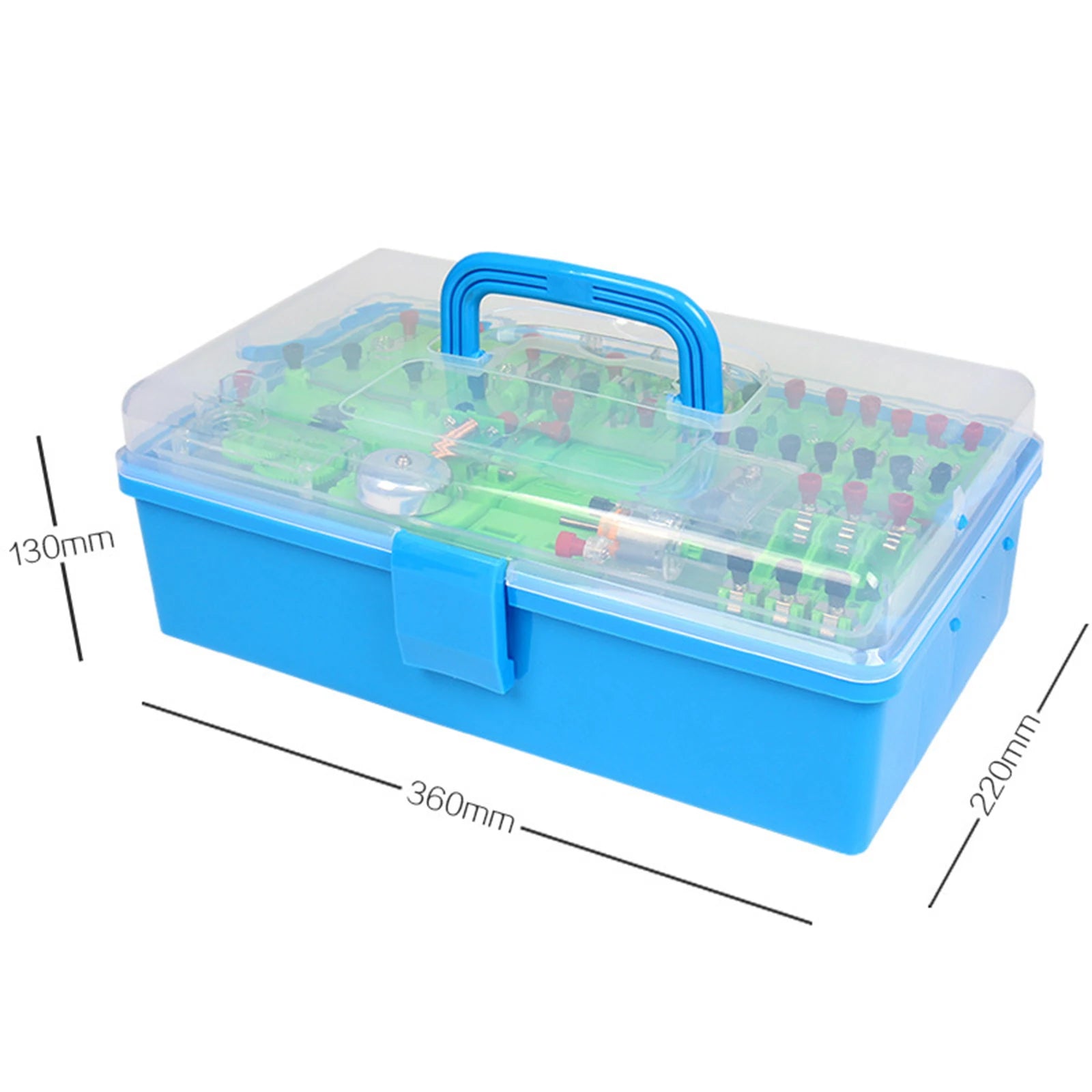
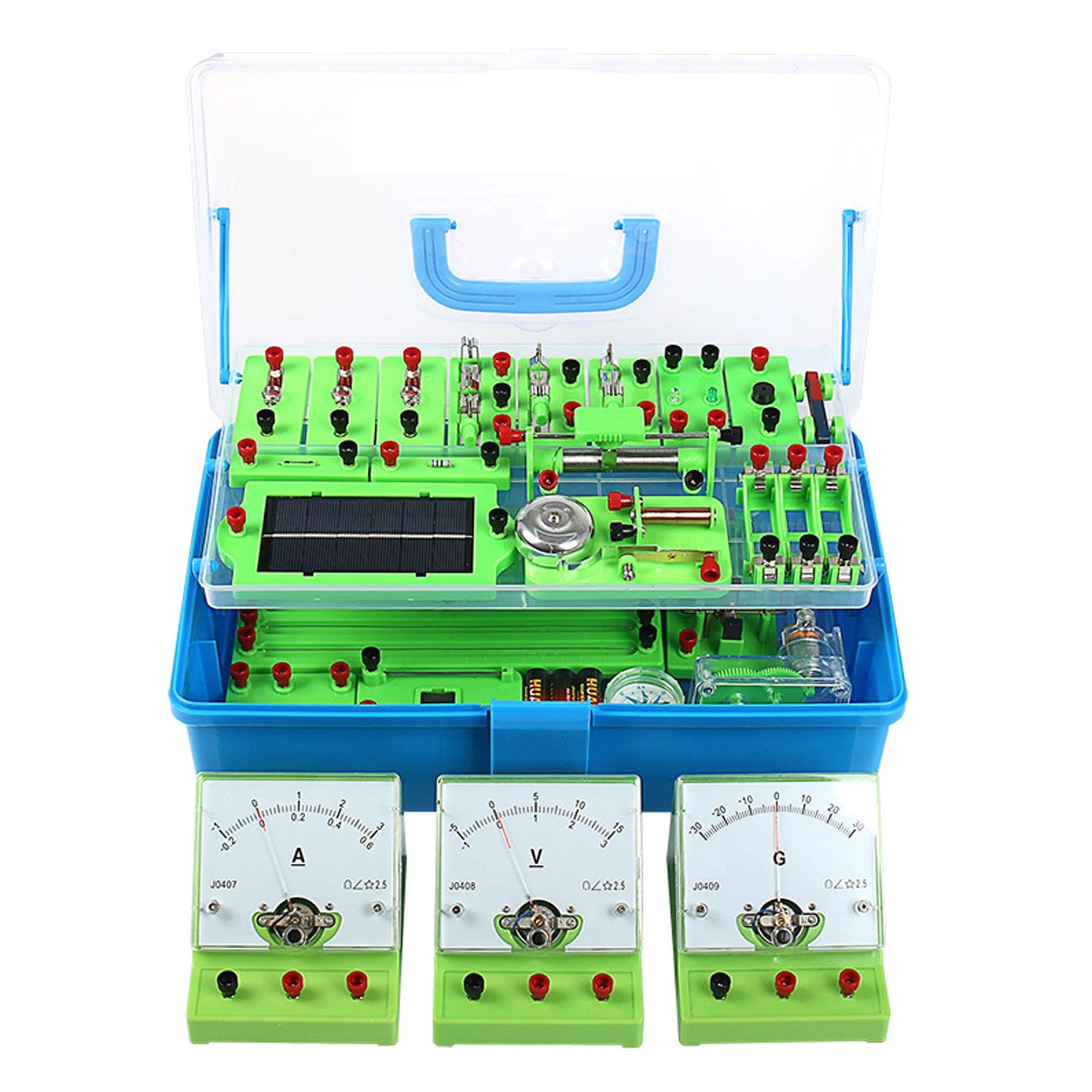
For example, the Electromagnetism Experiment Kit for Students – 40+ Lab Tools allows learners to build real circuits, test magnetic field behavior, and perform demonstrations involving coils, magnets, and electrical meters. These experiments help make concepts like Ampere’s force and magnetic field generation easier to understand.
Comparison: Different Sources of Magnetic Fields
Current-Carrying Wire vs Solenoid vs Permanent Magnet
| Magnetic Field Source | Structure | Field Shape | Typical Strength | Common Applications |
| Moving Electric Charge | Single charged particle | Circular field around motion | Very weak | Particle physics experiments |
| Current-Carrying Wire | Straight conductor with current | Concentric circles around wire | Moderate | Electrical circuits |
| Solenoid | Coiled wire carrying current | Uniform internal magnetic field | Strong | Electromagnets, relays, motors |
| Permanent Magnet | Magnetic material with aligned domains | Looping field lines from poles | Strong and constant | Speakers, sensors, motors |
Real-World Applications of Magnetic Field Generation
Magnetic field production is not just a theoretical concept—it powers many technologies used in everyday life.
Electric Motors and Generators
Electric motors convert electrical energy into mechanical motion using magnetic forces between coils and magnets. Generators work in the opposite direction, converting motion into electrical energy.
MRI Machines and Advanced Medical Imaging
Magnetic resonance imaging (MRI) systems use extremely strong magnetic fields to create detailed images of the human body. These systems rely on superconducting electromagnets to produce highly stable magnetic fields.
Electromagnetic Induction in Power Systems
When magnetic fields change over time, they can induce electric currents in nearby conductors. This process, known as electromagnetic induction, is the principle behind power generation in electrical grids.
Hands-on STEM learning tools, such as physics experiment kits and classroom demonstrations, allow students to observe these principles directly and connect theory with real-world physics.
You can also explore other educational tools and learning products in the Baby Growth & Learning collection or browse related guides in the Baby Growth & Learning Tips section.
Visual Summary: How Magnetic Fields Are Produced
The process of magnetic field creation can be summarized in a simple sequence:
- Electric charges begin to move.
- The motion of charges creates circular magnetic fields.
- Large numbers of moving charges form electric currents.
- Currents in wires generate magnetic fields around conductors.
- Coils combine magnetic fields to form strong electromagnets.
- Aligned electron motion in materials creates permanent magnets.
Together, these mechanisms form the foundation of electromagnetism—a fundamental force that drives modern technology.
Conclusion
Magnetic fields are produced whenever electric charges move. From individual charged particles to electric currents in wires and organized electron motion inside magnetic materials, the underlying cause of magnetism is the movement of electric charge.
This principle explains why wires carrying current produce magnetic fields, why coils can create powerful electromagnets, and why permanent magnets maintain stable magnetic fields through aligned atomic structures.
Understanding how magnetic fields are produced helps reveal the physics behind motors, power generation, medical imaging systems, and many other technologies that shape modern life.
For students and educators who want to explore these ideas through real experiments, practical learning tools like electromagnetism kits provide a powerful way to turn abstract physics concepts into observable demonstrations.
Pillar Article: Beginner Physics Experiment Kit Electricity: Best STEM Kits for Easy Circuits





