

How Pretend Kitchens Help Kids Learn Through Play
How do pretend kitchens help kids learn?
How pretend kitchens help kids is by turning everyday role-play into real learning. Through a toy cooking set and shared kitchen routines, children build language, social skills, coordination, and problem-solving. A wooden toy kitchen and accessories encourage hands-on exploration, while a wooden playset kitchen supports independence and confidence through self-led play.
How Pretend Kitchens Help Kids Learn Through Play
⏱ 7 min read
How pretend kitchens help kids goes far beyond cute playtime moments. For many parents, daily challenges include keeping kids engaged, supporting early learning, and reducing screen time without stress. Pretend kitchen play offers a simple, joyful way to build real-life skills at home—through imagination, routine, and hands-on discovery.
Explore playful learning ideas that grow with your child.
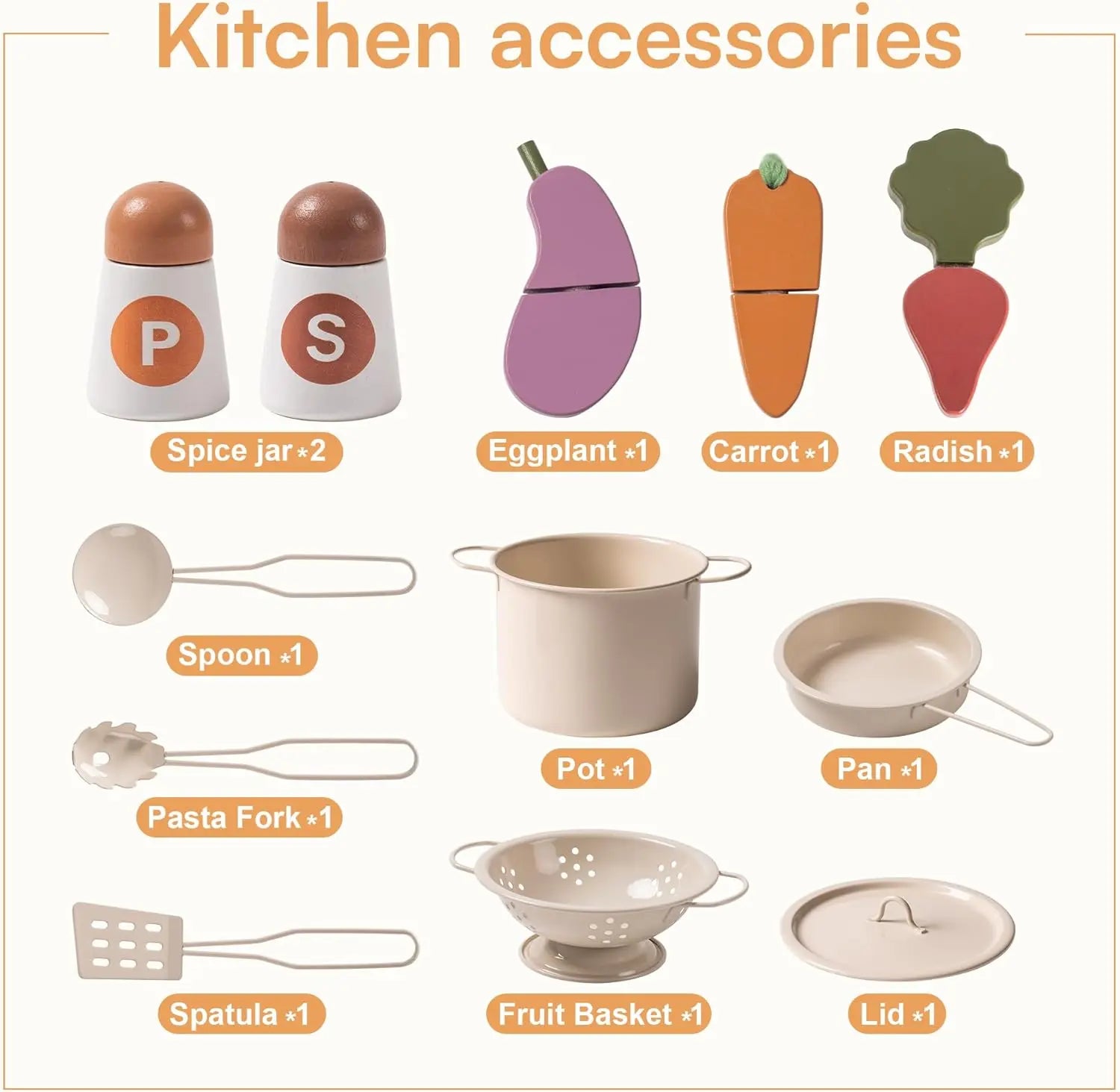
How pretend kitchens help kids learn with a toy cooking set — 💡 See it in action
Why Pretend Play Matters for Early Learning
How pretend kitchens help kids starts with imaginative play. When children copy everyday routines like cooking or cleaning, they practice understanding the world around them. This kind of play supports emotional growth while giving kids a safe space to experiment, make mistakes, and try again.
- Builds confidence through role-play
- Supports emotional expression
- Encourages independent thinking
- Reduces reliance on screens
Parents looking to support learning at home often explore Baby Growth & Learning resources that promote curiosity and hands-on engagement.
Build Strong Language Skills Through Kitchen Talk
How pretend kitchens help kids develop language is surprisingly powerful. Naming foods, describing actions, and pretending to take orders expands vocabulary naturally. A toy cooking set becomes a conversation starter that grows communication skills through repetition and fun.
Kids learn to:
- Name objects and colors
- Practice turn-taking in conversation
- Follow simple instructions
- Tell short stories through role-play
Parents often notice improved communication when pretend play is part of daily routines, especially alongside tools from Sensory Toys collections.
Teach Sharing and Cooperation Naturally
How pretend kitchens help kids socially is by creating shared experiences. Cooking together teaches patience, cooperation, and empathy. Kids learn to wait their turn, share utensils, and work toward a common goal.
These moments mirror real family routines, helping children feel included and capable. For families with siblings, a wooden playset kitchen becomes a space for teamwork rather than conflict.
Discover simple setups that encourage sharing and teamwork.
Improve Fine Motor Skills With Hands-On Play
How pretend kitchens help kids physically is through movement and coordination. Stirring, stacking, opening doors, and placing pretend food all strengthen fine motor control.
- Grasping utensils improves hand strength
- Turning knobs builds coordination
- Placing items boosts precision
- Cleaning up supports organization skills
Pairing kitchen play with tools from Mobility & Training can further support active development.
Encourage Problem-Solving and Independence
How pretend kitchens help kids think critically is through decision-making. What comes first—cooking or serving? Which pot fits best? These small choices build logic and independence.
Parents often see children gain confidence as they manage play tasks on their own, mirroring real-life routines in a low-pressure way.

Wooden toy kitchen and accessories spark problem-solving — 💡 See it in action
How to Choose the Right Pretend Kitchen
Choosing the right setup matters when considering how pretend kitchens help kids. Look for durable materials, realistic accessories, and age-appropriate design.
- Sturdy wooden construction
- Non-toxic finishes
- Simple, open-ended accessories
- Easy-to-clean surfaces
A thoughtfully designed wooden playset kitchen supports long-term learning and grows with your child.
Keep Play Safe and Stress-Free
Safety is a top concern for parents. How pretend kitchens help kids best is when play feels secure. Choose rounded edges, stable designs, and age-appropriate pieces.
Many families also explore guidance from Health & Safety to create a worry-free play environment.
Simple Ways to Use Kitchen Play Every Day
Integrating pretend play into daily life makes learning effortless.
- Set up a “family dinner” role-play
- Practice counting with ingredients
- Introduce new words during play
- Encourage cleanup as part of the routine
These small habits reinforce how pretend kitchens help kids apply skills beyond playtime.
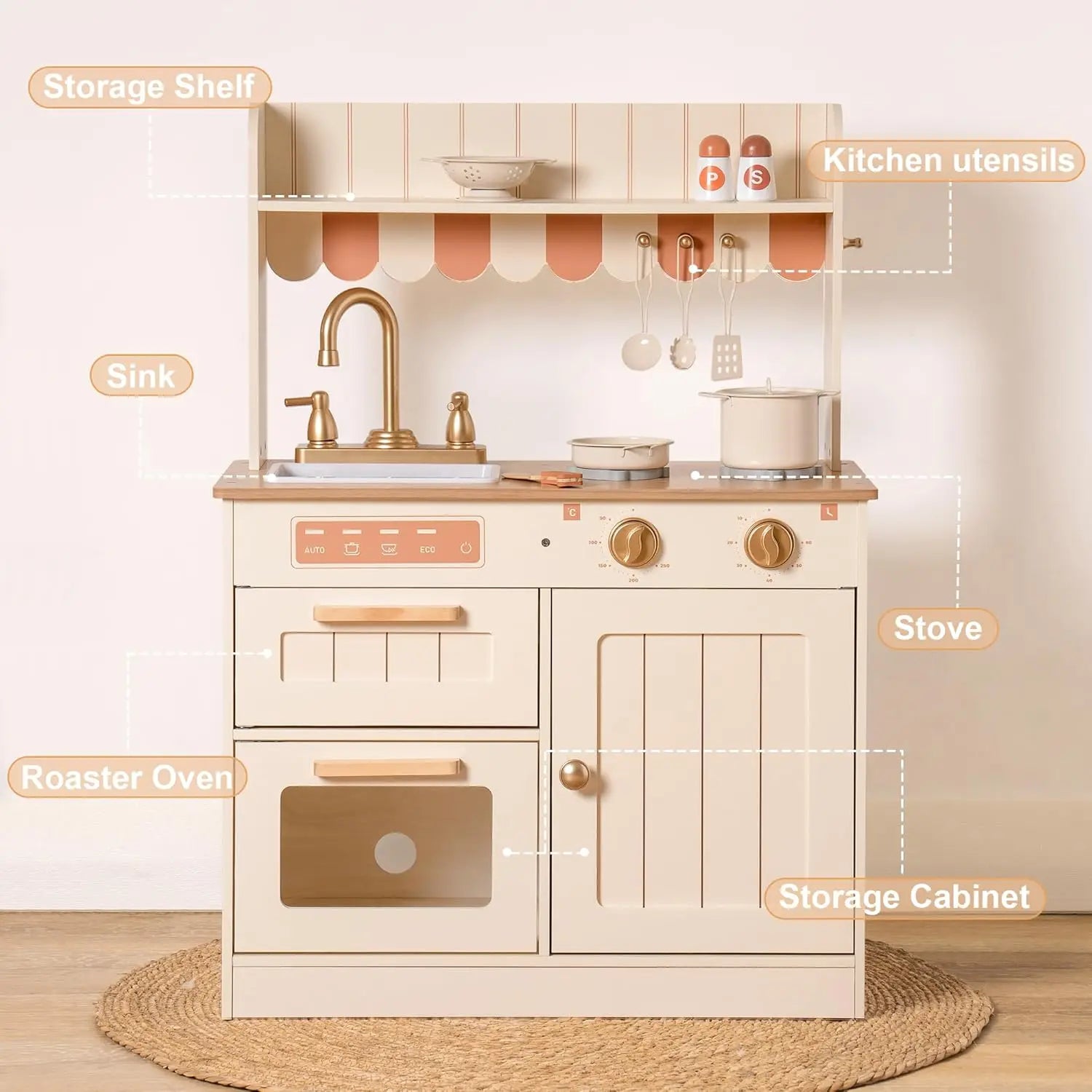
Wooden playset kitchen builds confidence through play — 💡 See it in action
Explore a wooden kitchen playset designed for growing minds.
Quick Questions Parents Ask
At what age can kids start using a pretend kitchen?
Most children enjoy pretend kitchens from around 2 years old, with benefits increasing as imagination and coordination develop.
Do wooden kitchens last longer?
Yes, wooden toy kitchen and accessories are known for durability and stability, making them ideal for long-term use.
Can pretend play really replace screen time?
Many parents find that engaging, hands-on play naturally reduces screen interest while supporting learning.
How pretend kitchens help kids beyond play?
Skills like communication, cooperation, and problem-solving often transfer into real-life routines faster than expected.





