

How to Create Safe Play Area for Babies at Home
Does durable baby playpen indoor use really matter for everyday safety?
Yes. Durable baby playpen indoor use helps create a safer play area by combining a stable structure, child-safe materials, and secure construction. When used correctly alongside active supervision, a quality playpen limits access to household hazards, supports independent exploration, and provides a defined space where babies can play more safely.
How to Create a Safe Play Area for Babies and Young Children
Creating a safe play area for babies starts with more than choosing the right playpen. A secure play space combines hazard assessment, baby-proofing, stable boundaries, and age-appropriate equipment so your child can crawl, pull to stand, and explore with reduced risk. Whether you're setting up a living room, nursery, or small apartment, thoughtful planning helps create a safer environment for everyday play.
⏱ 8 min read
Quick question: Are you constantly moving furniture, covering sharp corners, or worrying about what your baby might reach next? A well-planned play area can help reduce common household hazards while making supervised play more relaxed and organized.
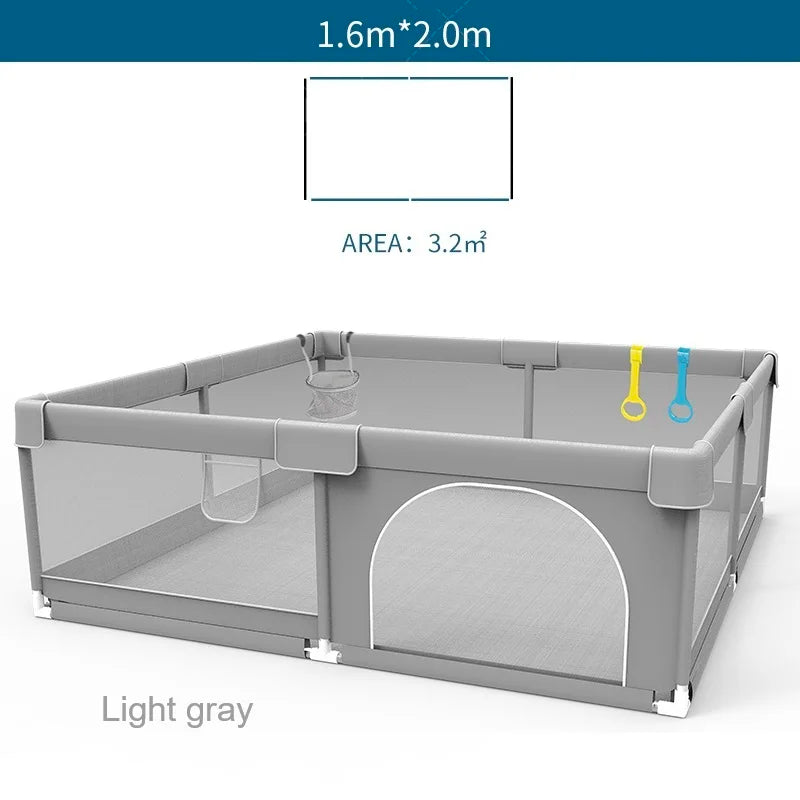
A well-designed indoor play area combines secure boundaries, supervision, and age-appropriate equipment for safer everyday play.
How to Create a Safe Play Area for Babies and Young Children
Direct answer: A safe play area is created by following four simple steps: assess the environment, secure potential hazards, organize the space for easy supervision, and maintain it as your child grows. A durable playpen can be one useful part of this setup, but it should support—not replace—caregiver supervision.
When planning a safe play area for babies, prioritize hazard prevention before adding toys or decorative items. Start by removing risks that could cause falls, entrapment, or access to unsafe objects, then build a space that encourages safe exploration.
Core elements of a safe play area
- A stable boundary that limits access to household hazards.
- Non-toxic, easy-to-clean materials suitable for everyday use.
- Adequate floor cushioning to reduce minor bumps and slips.
- Clear visibility so caregivers can supervise from nearby.
- Enough open space for crawling, standing, and early movement without overcrowding.
A durable playpen contributes to safety when it remains stable during normal use, uses secure locking mechanisms, and is appropriately sized for your child's developmental stage. However, the overall safety of the play area depends just as much on room setup, hazard removal, and regular inspection as it does on the enclosure itself.
How to Baby-Proof the Play Area and Remove Common Hazards
Direct answer: A safe play area for babies begins with eliminating preventable hazards before your child enters the space. Anchor furniture, secure electrical hazards, remove choking risks, and use playpen safety standards as one part of a broader baby-proofing strategy.
Secure furniture and eliminate tip-over risks
Furniture is one of the most common sources of preventable injuries in home play areas. Bookshelves, televisions, dressers, and storage cabinets should be anchored securely to the wall, even if they appear stable.
- Anchor tall furniture using manufacturer-approved hardware.
- Keep heavy objects on lower shelves whenever possible.
- Avoid placing furniture close to playpen panels where children may climb.
- Remove unstable decorative items from reachable surfaces.
Manage outlets, cords, windows, and blind cords
Electrical and window hazards should remain completely outside your child's play zone. Even a well-designed playpen should never be positioned close enough for children to reach cords or window coverings.
- Install outlet covers on unused electrical sockets.
- Bundle or conceal power cords behind furniture.
- Keep blind cords secured well above a child's reach.
- Place the play area away from windows, radiators, fireplaces, and stairways whenever possible.
Remove choking, sharp, toxic, and unstable items
Inspect the play area from your baby's eye level. Small objects, batteries, medications, cleaning supplies, pet items, and sharp household accessories should be removed before play begins.
- Choose toys appropriate for your child's age and developmental stage.
- Inspect toys regularly for loose parts or broken pieces.
- Store chemicals, medicines, and household cleaners in locked cabinets.
- Check flooring for loose rugs or objects that could cause trips or slips.
For families already investing in Health & Safety products, applying the same safety principles throughout the play area creates a more consistent environment for everyday exploration.
Choose Safe Flooring, Materials, and Play Equipment
The materials used throughout a play area influence comfort, stability, cleaning, and long-term safety. Rather than focusing only on durability, select surfaces and equipment that minimize fall risks and remain easy to maintain.
Select stable, easy-to-clean flooring
Flat, non-slip flooring provides a stable foundation for crawling, standing, and early walking. If additional cushioning is needed, use securely positioned play mats that do not slide during movement.
- Choose non-slip mats designed for children's play areas.
- Replace worn or damaged flooring that creates trip hazards.
- Keep the play surface clean and dry to reduce slipping.
- Avoid thick rugs that bunch or curl at the edges.
Choose age-appropriate toys and equipment
Play equipment should match your child's current developmental abilities instead of anticipated milestones. Regular inspections help ensure toys remain safe as they receive daily use.
- Select toys with no small detachable parts for younger babies.
- Replace cracked or damaged plastic items immediately.
- Ensure any playpen or barrier has secure locking mechanisms and stable construction.
- Rotate toys periodically to reduce clutter while encouraging safe exploration.
Pairing a safe play area with thoughtfully selected Baby Care Essentials helps create an environment that supports everyday routines while remaining organized and easy to maintain.
Step 2: Create a Safe Boundary for Movement and Play
Direct answer: A safe boundary helps keep babies within a protected area while limiting access to household hazards. Whether you use a playpen or another barrier, stability, secure locking mechanisms, and proper placement are more important than overall size.
When a playpen or barrier can help
A playpen is useful once babies become mobile and begin crawling, pulling to stand, or cruising along furniture. It creates a defined play space where caregivers can better control the environment while maintaining supervision.
- Keep babies away from kitchens, fireplaces, stairs, and electrical equipment.
- Create a consistent area for supervised independent play.
- Reduce access to furniture that could tip or be climbed.
- Help organize toys within a clearly defined play zone.
How to choose a stable, age-appropriate boundary
Not every barrier offers the same level of protection. A safe play boundary should remain stable during normal use and be appropriate for your child's age, height, and mobility.
- Choose models with secure locking systems.
- Ensure panels remain stable on hardwood, tile, carpet, or other indoor flooring.
- Avoid excessive gaps that could trap small arms, legs, or fingers.
- Inspect connectors regularly for signs of wear or loosening.
- Remember that a playpen supports supervision—it does not replace it.
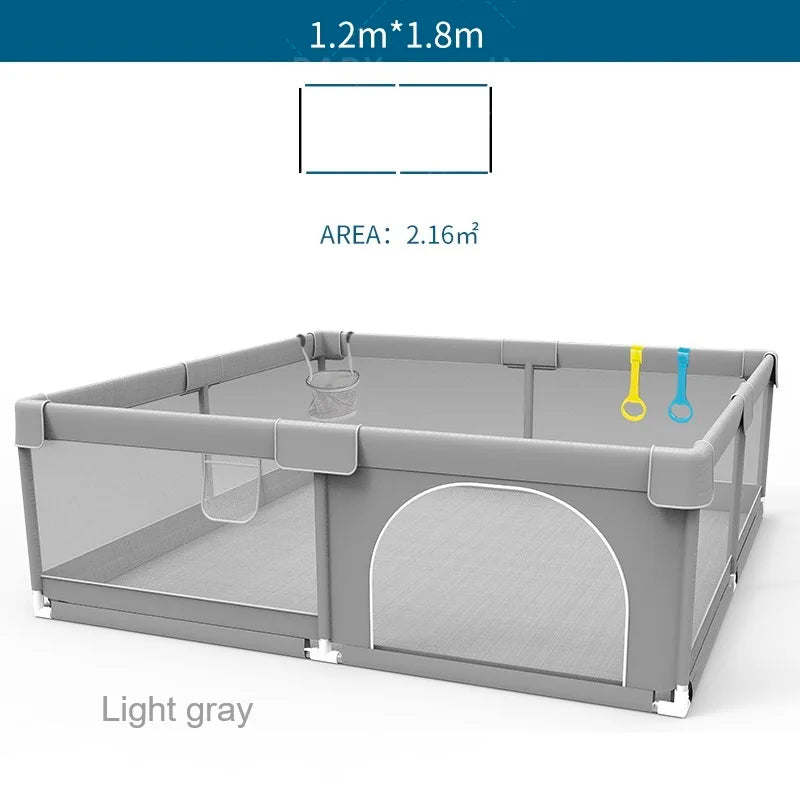
A stable play boundary helps babies explore safely while remaining within a supervised play area.
How to Create a Safe Indoor Play Area in Different Parts of the Home
Every room presents different safety challenges. Adapting your play area to the available space helps reduce risks while preserving clear visibility for caregivers.
Living room play area
Living rooms often contain televisions, furniture, electrical cords, and decorative items that require extra attention.
- Position the play area away from entertainment units and heavy furniture.
- Keep remote controls, batteries, and small decorative objects out of reach.
- Maintain clear walking paths for adults to reduce accidental trips.
Bedroom or nursery play area
Bedrooms provide quieter play environments but may include additional furniture and storage hazards.
- Anchor dressers and bookshelves securely.
- Keep changing supplies and medications stored safely.
- Maintain adequate lighting so caregivers can easily supervise.
Small-space indoor play area
Compact homes and apartments can still provide safe play opportunities with thoughtful organization.
- Choose a layout that preserves caregiver visibility from multiple angles.
- Avoid placing the play area directly beside doors or busy walkways.
- Leave enough open space for crawling, standing, and early walking.
- Store unused toys outside the play area to reduce clutter.
For families creating calm daily routines, products from Sleep & Comfort can complement a well-organized indoor environment while keeping play and rest areas appropriately separated.
Adapt the Safe Play Area to Your Child's Developmental Stage
Safe play areas for babies who are not yet mobile
Young infants benefit from a simple, uncluttered play space with a soft, supportive surface. Keep only a few age-appropriate toys within reach and avoid placing pillows, blankets, or unnecessary accessories inside the play area.
- Provide a firm, stable play mat.
- Allow plenty of space for tummy time and rolling.
- Remove dangling cords, loose fabrics, and decorative items.
- Keep supervision continuous, even before babies become mobile.
Crawling, standing, and early-walking safety
As babies begin crawling and pulling to stand, reassess the entire play area. Objects that were previously out of reach may quickly become accessible.
- Check barriers and locking mechanisms before each use.
- Move furniture away from playpen sides to discourage climbing.
- Remove small objects that could become choking hazards.
- Provide enough open space for crawling and supported standing.
Adjustments for active toddlers
Older children explore more confidently and often test boundaries. Review the play area regularly to ensure it continues meeting their developmental needs.
- Replace infant toys with age-appropriate activities.
- Inspect barriers for wear or damage.
- Increase attention to climbing and escape attempts.
- Update the environment whenever new skills emerge.
Step 3: Organize the Play Area for Visibility and Safe Exploration
Direct answer: An organized play area helps caregivers supervise more effectively while giving babies room to explore safely. Good visibility, thoughtful toy placement, and uncluttered flooring reduce unnecessary risks during everyday play.
Keep the space easy for caregivers to see
Arrange the play area where it remains visible from commonly used parts of the home whenever possible. Avoid blocking sight lines with large furniture or storage units.
- Position barriers where adults can monitor children easily.
- Maintain adequate lighting throughout the play area.
- Avoid placing tall furniture immediately beside the enclosure.
- Keep exits and walkways clear for quick access.
Organize toys for safe access and movement
Too many toys can create clutter that increases trip hazards and distracts from active play. Rotating a smaller selection keeps the space manageable and encourages engagement.
- Store only a limited number of toys inside the play area at one time.
- Use low storage bins that adults can access easily.
- Include age-appropriate toys from Sensory Toys .
- Remove broken, damaged, or recalled toys immediately.
- Keep the floor free from unnecessary objects that may interfere with crawling or walking.
A thoughtfully organized play space supports safe exploration while making daily supervision easier for caregivers.
Safe Play Area Checklist: What to Check Every Day and Every Month
Even a well-designed play area should be inspected regularly. As babies grow and develop new skills, hazards can appear quickly. A simple routine helps maintain a safer environment throughout each stage of development.
Daily safety checks
- Confirm barriers and playpen locks are fully secured.
- Check the floor for spills, loose rugs, or objects that could cause slips or trips.
- Remove any broken, damaged, or small objects that could become choking hazards.
- Ensure toys are clean, age-appropriate, and in good condition.
- Verify furniture near the play area remains stable and uncluttered.
Regular equipment and hazard checks
- Inspect barriers, connectors, and fasteners for signs of wear.
- Review manufacturer safety notices or recalls for toys and equipment.
- Reassess the play area's layout whenever your child reaches a new developmental milestone.
- Look for newly reachable cords, shelves, cabinets, or furniture as mobility increases.
- Replace worn mats, damaged toys, or unstable equipment promptly.
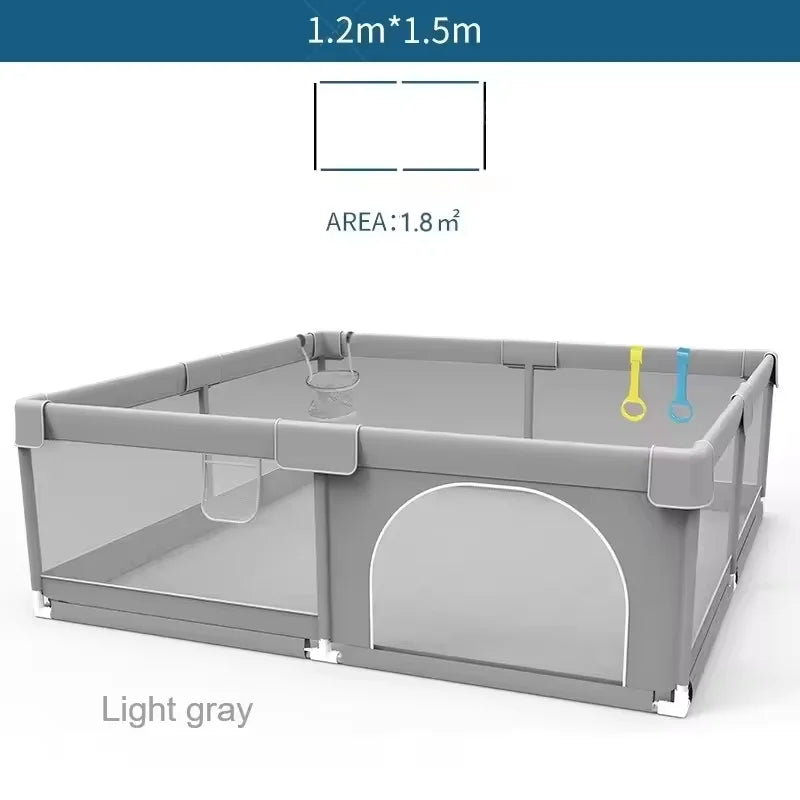
Routine inspections and thoughtful organization help maintain a safer indoor play area as children grow.
Frequently Asked Questions
How do I make a safe play area for a baby?
Start by identifying household hazards, securing furniture, covering electrical outlets, removing choking risks, and creating a defined play space with age-appropriate toys. Maintain clear visibility so your child can be actively supervised during play.
Is a playpen safer than baby-proofing an entire room?
A playpen provides a controlled boundary that limits access to hazards, but it should complement—not replace—baby-proofing the surrounding room. The safest approach combines a secure playpen with a thoroughly child-proofed environment and ongoing supervision.
What should not be inside a baby play area?
Avoid small objects, plastic bags, cords, pillows intended for adult use, damaged toys, unstable furniture, batteries, medications, cleaning products, and any item that could create choking, suffocation, or climbing hazards.
How often should I reassess a baby's play area?
Perform a quick visual inspection every day and a more detailed safety review at least once a month. Reevaluate the setup immediately whenever your child learns a new skill such as crawling, standing, climbing, or walking.
What are the most important playpen safety standards?
Look for a stable structure, secure locking mechanisms, appropriate spacing that reduces entrapment risks, smooth edges, non-toxic materials, and clear manufacturer instructions for assembly and use. Regular inspection remains important even when a playpen meets recognized safety standards.





