

Infant Activity Gym vs Play Mat: Which Fits Your Baby Best?
What Is an Infant Activity Gym and Why Parents Choose It
An infant activity gym is a dedicated play space designed to encourage early movement, exploration, and sensory learning from the newborn stage through the first year. Unlike a simple floor mat, a baby gym adds interactive elements such as overhead arches, hanging toys, mirrors, textures, and sounds that encourage babies to look, reach, kick, and move during supervised play.
What is a baby gym?
A baby gym is a padded play area with attached developmental toys positioned above or around the baby. These features create opportunities for babies to practice important early skills, including head control, hand-eye coordination, grasping, and body awareness.
Parents often choose a baby activity gym because it creates a more engaging environment for tummy time and floor play. Instead of relying only on parent interaction or separate toys, the gym provides built-in activities that encourage independent exploration while caregivers stay nearby.
Baby activity gym benefits
The biggest baby play gym benefits come from combining movement with sensory stimulation. During short, regular play sessions, babies can practice developmental skills naturally through curiosity and repetition.
- Supports motor development: Reaching for hanging toys, kicking the mat, and pushing up during tummy time help strengthen muscles needed for rolling, sitting, and crawling.
- Encourages sensory exploration: Different colors, textures, sounds, and reflective surfaces help babies develop visual tracking and sensory awareness.
- Improves coordination: Trying to touch or grab toys helps babies connect what they see with how they move their hands and arms.
- Creates engaging tummy time: Interactive features can make tummy time feel less frustrating by giving babies a reason to look up, turn their head, and stay active longer.
Many parents exploring Baby Growth & Learning products choose activity gyms because they combine multiple developmental activities in one safe, organized play area.
Baby activity gym safety
Choosing a safe setup is just as important as choosing engaging features. Good baby activity gym safety practices help ensure that play remains comfortable and age-appropriate.
- Place the gym on a flat, stable surface and always supervise your baby during play.
- Check that hanging toys and attachments are securely connected before each use.
- Choose materials that are soft, durable, and easy to clean.
- Remove loose accessories or small parts that could become unsafe as your baby grows.
An infant activity gym works best when used as a tool for guided exploration rather than a replacement for caregiver interaction. Regular play, talking, and responding to your baby’s movements help create a stronger learning experience during early development.
What Is a Baby Play Mat and When It Works Best
A baby play mat is a soft, supportive surface designed for safe floor play, tummy time, rolling practice, and early movement exploration. Unlike an activity gym with built-in hanging toys, a play mat provides a comfortable foundation where babies can move freely while parents add toys, books, or sensory activities based on their child’s development stage.
Play mats are especially popular among families who prefer simple, flexible setups or already use separate developmental toys from Baby Care Essentials. They are easy to move between rooms, making them practical for everyday play routines.
Infant play mat benefits
The main infant play mat benefits come from providing a safe and comfortable area for babies to practice natural movements. A quality mat supports daily floor play while protecting babies from hard surfaces.
- Creates a comfortable play surface: Soft padding helps protect babies during tummy time, rolling, and early crawling attempts.
- Supports independent movement: A larger open space allows babies to stretch, turn, push up, and explore at their own pace.
- Provides floor protection: Mats help reduce discomfort from cold, hard, or uneven floors.
- Works for everyday routines: Lightweight designs make it easy to create a consistent play area in different parts of the home.
Infant sensory play mat
An infant sensory play mat adds extra learning opportunities through features such as different textures, colors, patterns, crinkle fabrics, mirrors, or removable toys. These elements encourage babies to look, touch, and interact with their environment.
While a basic play mat focuses on comfort and movement, a sensory version can support early curiosity and engagement when combined with caregiver interaction. Parents can also add age-appropriate sensory toys to create a more customized play experience.
Best play mat for babies
The best play mat for babies depends on your space, routine, and how you plan to use it. For daily floor play, look for features that balance comfort, safety, and convenience.
- Soft but supportive padding for tummy time and movement practice
- Easy-to-clean materials for everyday messes
- A non-slip surface to keep the mat stable during active play
- A size that gives babies room to roll, stretch, and explore
A baby play mat works especially well for families who want a simple foundation for play or need a portable option for different rooms. Many parents combine a mat with an activity gym, using the mat as a comfortable base while adding interactive toys when extra stimulation is needed.
Infant Activity Gym vs Play Mat: Clear Side-by-Side Comparison
| Feature | Infant Activity Gym | Play Mat |
|---|---|---|
| Developmental Support | Multi-sensory, full-body engagement through reaching, kicking, and tracking | Supports free movement, positioning, and parent-led play |
| Tummy Time Motivation | High with attached toys, mirrors, textures, and sounds | Depends on added toys and caregiver interaction |
| Age Suitability | Often designed from newborn stages through sitting and early exploration | Useful from newborn floor play through crawling and beyond |
| Space and Portability | Requires more setup space but offers an all-in-one activity area | Simple to fold, move, and store in different spaces |
| Cleaning and Value | More features but may require cleaning multiple attachments | Usually easier to maintain and offers flexible everyday use |
Parents often combine both options, using an activity gym for interactive play and a mat for open floor movement, travel, or quick play sessions.
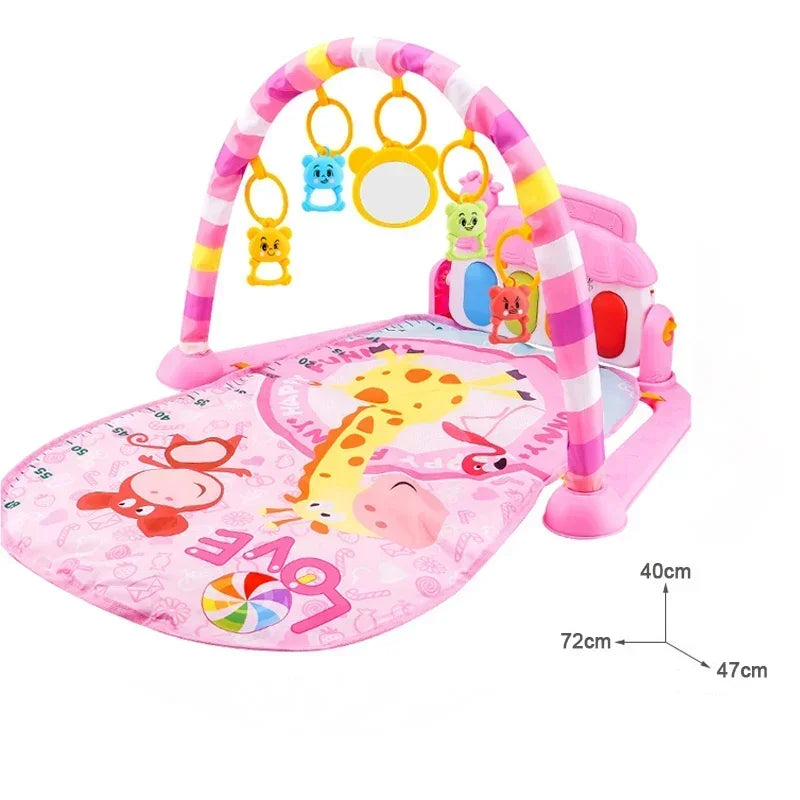
Early learning play made easier with an infant activity gym See it in action
How Each Option Supports Baby Development
Motor skills and strength
Both an infant activity gym and a play mat support early movement, but they encourage development in different ways. An activity gym naturally motivates babies to lift their head, push up, kick, reach, and grasp by placing interesting objects within view and reach. These repeated movements help strengthen muscles needed for important milestones such as rolling, sitting, and crawling.
A play mat provides the open space babies need to practice these same movements. While it may not include built-in toys, it gives babies room for unrestricted floor play where they can stretch, turn, and explore their body movements with caregiver support.
Sensory stimulation
One of the key baby play gym benefits is built-in sensory engagement. Many activity gyms include contrasting colors, mirrors, textures, sounds, and moving elements that encourage babies to follow objects visually, touch different surfaces, and respond to new experiences.
An infant play mat creates a flexible sensory environment that parents can customize with age-appropriate toys from Sensory Toys. This makes play mats a practical option for families who prefer choosing individual toys or changing activities as their baby grows.
Cognitive engagement
Early play is not only about physical movement. Babies also develop problem-solving skills, attention, and curiosity when they interact with their surroundings. Reaching for a hanging toy, tracking a moving object, or discovering a new texture helps babies understand cause and effect through hands-on exploration.
An activity gym provides these learning opportunities automatically, while a play mat allows parents to create different learning experiences by introducing new toys, sounds, and activities over time.
Activity gym vs play mat development
When comparing activity gym vs play mat development, neither option replaces caregiver interaction or supervised floor time. The biggest difference is how each product encourages engagement.
- Activity gyms: Better for babies who benefit from built-in stimulation, guided reaching, and longer interest during tummy time.
- Play mats: Better for open movement, independent exploration, and flexible play setups.
- Using both: Combining an activity gym with a comfortable play mat can provide both interactive learning and unrestricted movement practice.
Which One Is Right for Your Baby and Lifestyle?
The right choice depends on your baby’s age, play habits, available space, and how often you plan to use the product. Understanding your daily routine can help you choose between a more interactive activity gym and a simpler play mat.
Small spaces
For apartments or smaller rooms, a compact play mat may be easier to store and move when not in use. Families with limited space may prefer a foldable design that can quickly create a safe floor play area.
An activity gym can still work well in smaller homes if it becomes your baby’s primary play station. Look for designs that offer multiple activities without taking up unnecessary space.
Travel
If you frequently move between rooms, visit family, or travel, a lightweight play mat often provides more convenience. It can create a familiar play surface wherever your baby spends time.
Portable activity gyms are also available and can be useful for maintaining familiar sensory activities during trips, especially for younger babies who enjoy consistent routines.
Budget
For parents looking for a simple and affordable option, a quality play mat can provide a comfortable foundation for tummy time and floor play. Additional toys can be added gradually as your baby develops new interests.
An activity gym usually costs more because it combines multiple features in one product. However, families who want an all-in-one solution may find the added stimulation and convenience valuable.
Long-term value
When deciding which baby play gym is best or choosing the best play mat for babies, consider how the product will fit your child’s changing needs.
- Choose an activity gym if you want built-in developmental activities from the newborn stage.
- Choose a play mat if you value flexibility, easy storage, and open-ended play.
- Choose both if you want a complete play environment that supports different stages of development.
Families exploring Baby Care Tips & Advice often find that adapting the play environment to their baby’s current abilities creates more enjoyable and effective daily routines.
Common Parent Concerns About Tummy Time
“There’s been no tummy time at 3 months old.”
It’s never too late to introduce more floor play. Start with short, comfortable sessions and gradually increase the time as your baby becomes stronger and more comfortable. An engaging setup with an infant activity gym can encourage babies to lift their head, look around, and practice important early movements.
“My baby gets bored quickly.”
Babies naturally have short attention spans, especially during the early months. Rotating toys, changing positions, and adding different textures or visual elements can keep playtime interesting while supporting sensory exploration and movement practice.
“I’m worried about safety.”
Always use play equipment on a flat, stable surface and supervise your baby during every session. Following proper baby activity gym safety practices, such as checking attachments and keeping the play area clean, helps create a safer environment. Parents can also explore Health & Safety essentials for additional guidance.
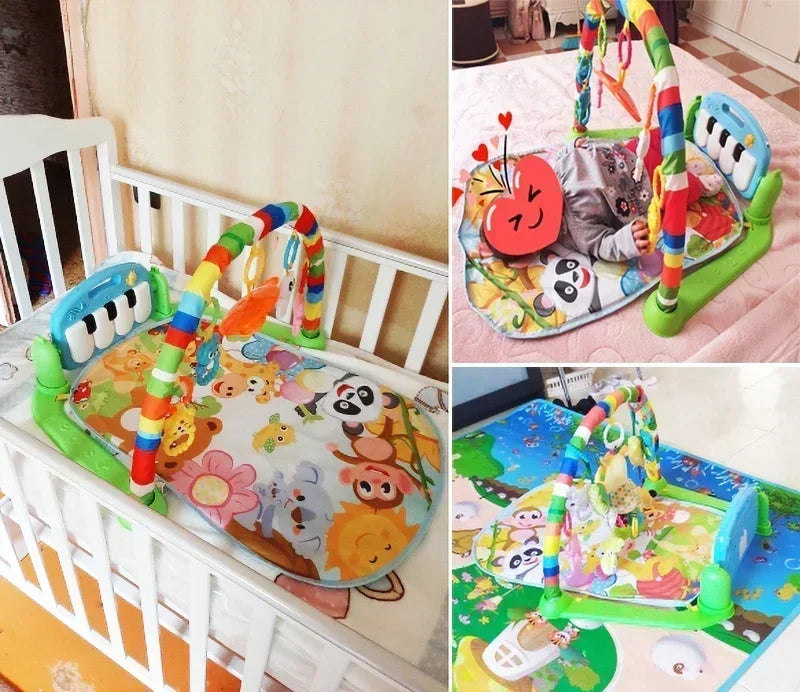
Infant activity gym supporting infant tummy time and sensory play See it in action
Safety Checklist Before Buying
Before choosing an activity gym or play mat, consider the features that support both comfort and safe everyday use. A well-designed play space should encourage exploration while giving parents confidence during supervised play.
- Material safety: Choose baby products made with soft, durable, and easy-to-clean materials that are suitable for frequent use.
- Non-slip base: A stable surface helps prevent unwanted movement while babies practice rolling, pushing up, and reaching.
- Toy attachment security: Check that hanging toys, arches, mirrors, and other accessories are firmly attached and appropriate for your baby’s age.
- Cleaning and maintenance: Select designs that are simple to wipe down or wash since play areas can collect everyday spills and messes.
Safe floor play is an important part of early development. Whether you choose an activity gym, play mat, or both, consistent supervised play helps babies build confidence while practicing new skills.
Frequently Asked Questions
Are play gyms good for babies?
Yes. Play gyms can be beneficial for babies because they encourage reaching, kicking, visual tracking, and sensory exploration. They are especially useful during supervised tummy time when babies are learning to control their head and body movements.
When should babies start using a play gym?
Most babies can begin using a play gym from birth during supervised awake time. Newborns may focus on looking at high-contrast toys and sounds, while older babies can use the gym for reaching, grasping, and active movement.
How many months is a play gym for a baby?
Many play gyms are designed for newborns through the first year, with some adapting as babies move from lying play to sitting and independent exploration. The ideal usage period depends on the design and your baby’s development stage.
What age do babies use play mats?
Babies can use play mats from the newborn stage for supervised floor play and tummy time. As they grow, mats continue to provide a comfortable surface for rolling, crawling, and active exploration.
Which baby play gym is best?
The best baby play gym depends on your priorities, including available space, features, materials, and how your baby responds to different types of stimulation. Look for a design that supports movement, sensory play, and easy cleaning.
Is a play mat enough for tummy time?
Yes. A play mat can provide a safe and comfortable surface for tummy time. However, some babies stay engaged longer with an activity gym because interactive toys encourage them to look, reach, and move.
Can I use both a play gym and a play mat?
Yes. Using both can provide more flexibility. A play gym adds interactive activities, while a play mat offers open space for free movement and floor play.
What is the difference between play gym and floor play?
A play gym adds structured activities such as hanging toys, mirrors, and sensory features, while floor play focuses on unrestricted movement and exploration. Both support development when combined with supervision and caregiver interaction.
Related Guide: Infant Gym Play Mat Comparison Guide for Smarter Tummy Time





