

Infant Restless at Night Solutions That Fit Your Baby
Why is my infant restless at night?
Infant restless at night often happens when sleep cues, timing, and comfort are out of sync. Small changes—like consistent routines, calming sounds, and gentle early childhood sleep aids—can help an infant hard to put to sleep settle faster and stay asleep longer, easing parents sleep deprivation baby after baby.
Infant Restless at Night Solutions That Fit Your Baby
⏱ 12 min read
Infant restless at night can turn evenings into a cycle of rocking, pacing, and quiet worry. If your infant hard to put to sleep fights bedtime, you’re not alone—and you’re not doing anything wrong. This guide shares gentle, science-backed ways to help your baby rest longer while easing parents sleep deprivation baby families know too well.
Quick check: Which part of bedtime feels hardest right now—settling, staying asleep, or early wake-ups? Read on to find the fix that fits your baby best.

Infant restless at night relief starts with calming cues for an infant hard to put to sleep 💡 See it in action
Understanding Why Babies Wake
What causes infant restless at night?
Infant restless at night usually stems from timing mismatches, overstimulation, hunger patterns, or an environment that doesn’t signal sleep. Babies rely on cues—sound, light, motion—to know it’s time to rest. When cues conflict, settling becomes harder.
- Timing: Overtired babies wake more.
- Stimulation: Bright lights or sudden noise disrupt sleep cycles.
- Comfort: Temperature and gentle motion matter.
- Development: Growth spurts and milestones cause temporary wake-ups.
Fast Relief Tonight
How can I calm my baby quickly at bedtime?
Infant restless at night can improve within days by aligning cues. Start with consistent timing, dim lighting, and one calming signal repeated nightly. Many families add soft music or slow movement to help an infant hard to put to sleep relax.
- Set a predictable bedtime window.
- Lower lights 30 minutes before sleep.
- Use the same calming sound nightly.
- Place baby down drowsy, not fully asleep.
Build a Bedtime Routine That Works
Why routines reduce night waking
Infant restless at night eases when routines tell the brain what comes next. A short, repeatable flow lowers stress hormones and helps babies transition smoothly into sleep.
- Warm bath or wipe-down
- Quiet cuddle
- Soft music or gentle visual focus
- Bedtime phrase said every night
Parents often pair routines with items from Sleep & Comfort to keep cues consistent.
Create a Calming Sleep Environment
What environment helps an infant sleep longer?
Infant restless at night improves when the sleep space is dark, cool, and predictable. Consistent sensory input—like steady music or slow movement—reduces startles that wake babies between cycles.
- Room temperature between 68–72°F
- Blackout curtains for early evenings
- One continuous sound source
- Minimal visual clutter
Many parents combine environmental tweaks with Monitoring Devices to check comfort without entering the room.
Helpful Sleep Tools That Soothe
Do gentle sleep tools actually help?
Infant restless at night can lessen with the right early childhood sleep aids. Tools that offer slow movement, soft light, or calming music support self-soothing without overstimulation.
One popular option: a musical crib mobile that provides steady visual focus and soothing sound. Families often choose the Musical Baby Crib Mobile to create a familiar sleep signal.
- Adjustable volume for newborn sensitivity
- Slow rotation to hold attention briefly
- Soft lighting that won’t wake baby
- Easy on/off for night use
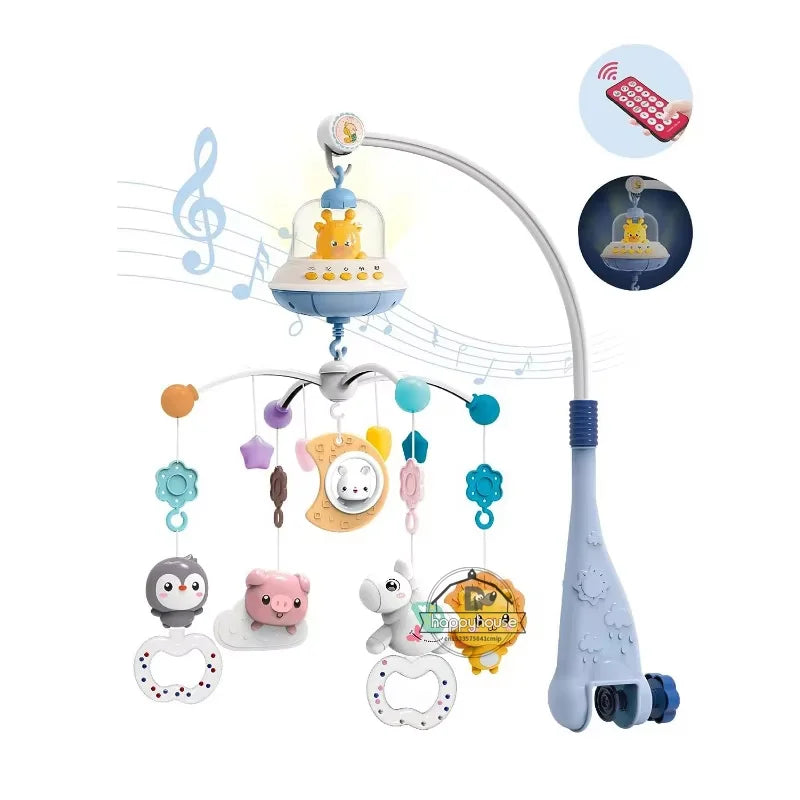
Early childhood sleep aids can calm an infant hard to put to sleep 💡 See it in action
Complement soothing tools with items from Sensory Toys during daytime to reduce evening overstimulation.
Night Feeding Without Full Wake-Ups
How can feeding reduce night restlessness?
Infant restless at night sometimes links to hunger cues. Keeping feeds calm and efficient helps babies return to sleep faster.
- Keep lights dim during feeds
- Avoid stimulating play
- Use consistent feeding positions
- Burp gently and briefly
Parents find night feeds easier with Feeding & Nursing and Bottle Warmers to minimize wake time.
Solutions by Age
Newborns (0–3 months)
Frequent waking is normal. Focus on comfort, warmth, and gentle cues. Keep routines short.
Infants (4–8 months)
Infant restless at night often peaks with development. Consistency matters most now.
Older babies (9–12 months)
Separation awareness can disrupt sleep. Reassuring cues without full engagement help.
Age-appropriate items from Baby Growth & Learning support daytime regulation for better nights.
Real Parent Stories
Maria, mom of 6-month-old: “We added one calming cue and stuck to the same routine. Within a week, our infant restless at night episodes dropped by half.”
James, dad of twins: “Using steady music helped our infant hard to put to sleep relax. Nights feel manageable again.”
Many families pair routines with gentle products from Massage & Relaxation for wind-down cuddles.

Reducing parents sleep deprivation baby nights start with the right cues 💡 See it in action
Mini FAQ
How long does it take to see improvement?
Many parents notice changes within 3–7 nights when cues stay consistent.
Is it normal for progress to fluctuate?
Yes. Growth spurts and milestones can temporarily increase infant restless at night.
Do I need multiple tools?
No. One or two reliable cues used consistently work best.
When should I seek professional advice?
If sleep issues persist despite routine and comfort changes, consult a pediatric professional.





