

Kids Role Play Kitchen for Every Age and Play Style
Do kids toys lacking realism actually limit learning?
Kids toys lacking realism often fail to hold attention because they don’t mirror real actions or consequences. When play feels disconnected from daily life, children disengage faster. A well-designed toy cooking set with a wooden toy kitchen and accessories supports longer focus, richer language use, and practical pretend play skills.
Kids Toys Lacking Realism vs Kitchens That Feel Like the Real Thing
Kids toys lacking realism often look charming at first glance, yet many parents notice interest fading within days. When buttons don’t turn, doors don’t open, or sounds feel random, play stalls. A toy cooking set that behaves like a real kitchen changes everything—inviting children to explore, repeat, and grow through everyday-style play.
⏱ 6 min read
Kids toys lacking realism vs a toy cooking set — 💡 See it in action
Why Realism Matters in Pretend Play
Pretend play works best when children can connect actions to real-world outcomes. Turning a knob, opening a cabinet, or placing food on a pan mirrors what they see adults do daily. These small details help children build confidence and understanding through repetition.
- Improves sequencing and memory
- Encourages expressive language
- Supports independence and problem-solving
- Extends attention span naturally
Parents exploring Baby Growth & Learning often notice that realistic toys lead to calmer, more focused play sessions.
Why Do Kids Toys Lacking Realism Lose Appeal?
Kids toys lacking realism often rely on bright colors or exaggerated sounds, but they skip functional detail. Without cause-and-effect play, children repeat actions less and abandon the toy sooner. Realistic design gives meaning to movement, sound, and texture—keeping play purposeful.
Common issues parents report include:
- Buttons that do nothing meaningful
- Plastic parts that feel flimsy
- No opportunity for role-based play
- Short engagement windows
What Makes a Toy Kitchen Feel Like the Real Thing?
A high-quality toy cooking set focuses on interaction, not noise. Features such as turning knobs, opening doors, and removable accessories invite children to slow down and explore. The experience becomes about process, not stimulation.
- Knobs that rotate with resistance
- Cabinet doors that open and close
- Utensils sized for small hands
- Neutral colors that resemble real kitchens
Families browsing Sensory Toys often pair them with realistic kitchens to balance imaginative and tactile learning.

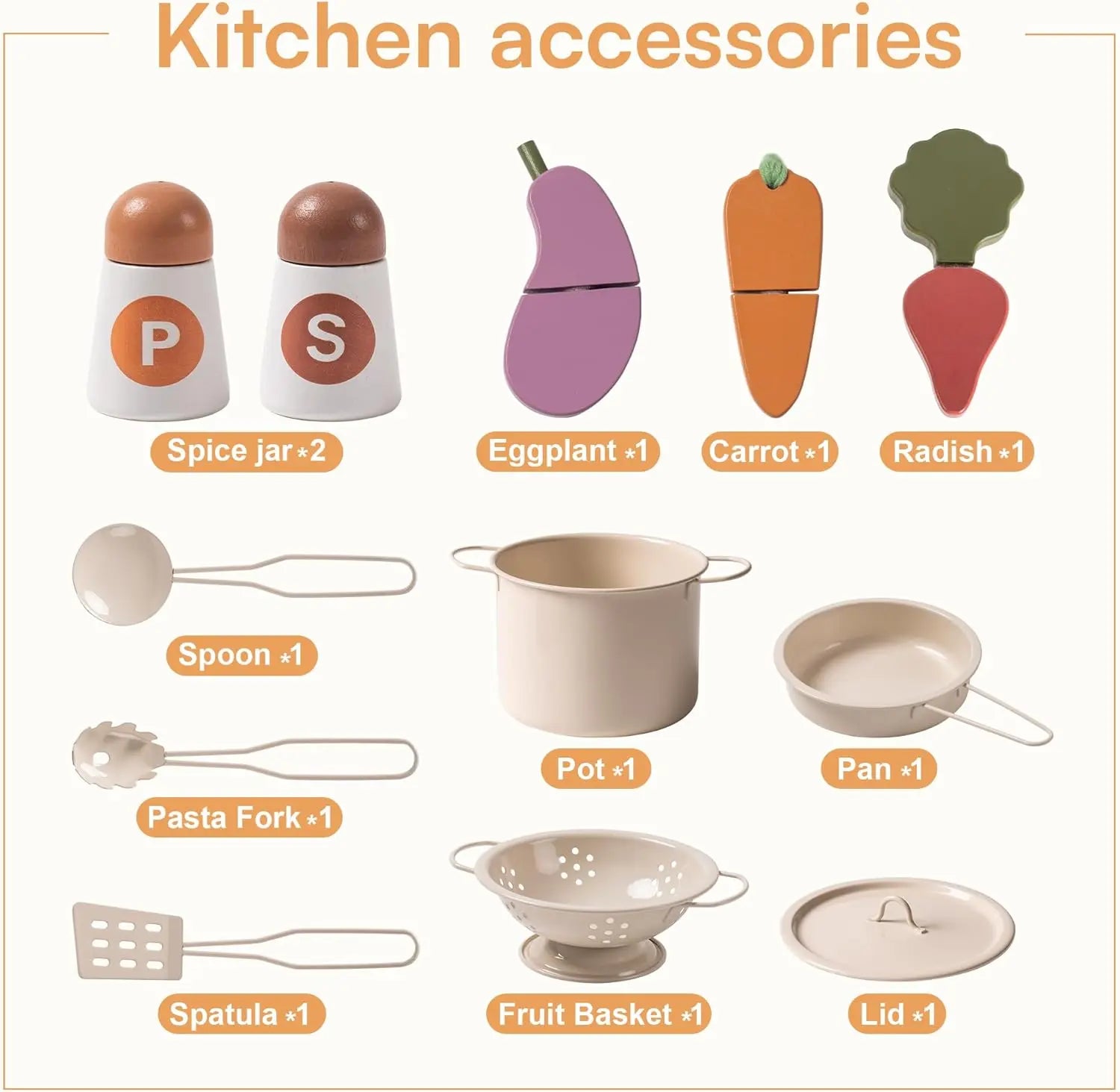
Wooden toy kitchen and accessories encourage realistic pretend play — 💡 See it in action
How Wooden Toy Kitchen and Accessories Support Real Skills
Wooden materials add weight and texture, making play feel grounded. Children instinctively treat heavier, quieter toys with more care, mirroring how they interact with real objects at home.
Key advantages include:
- Longer play sessions without overstimulation
- Improved fine motor coordination
- More cooperative play with siblings
- Better transition between play and real tasks
Parents focused on safety often explore Health & Safety collections alongside wooden toys due to their durable, low-noise design.
Realistic Kitchens vs Kids Toys Lacking Realism
| Feature | Realistic Toy Kitchen | Unrealistic Toy |
|---|---|---|
| Engagement Time | Extended, repeat play | Short-lived interest |
| Skill Development | Sequencing, language, independence | Limited cause-effect learning |
| Material Feel | Solid, textured wood | Light plastic |
| Imaginative Depth | Role-based scenarios | Surface-level play |
For families building routines around learning through play, realistic kitchens often outperform novelty toys in everyday use.
How Realistic Play Kitchens Improve Daily Life
Children who regularly play with a realistic toy cooking set begin to mirror household routines. Parents report smoother transitions into meal prep time and more curiosity about real cooking tasks.
Some families combine kitchen play with items from Feeding Tools to reinforce mealtime familiarity.
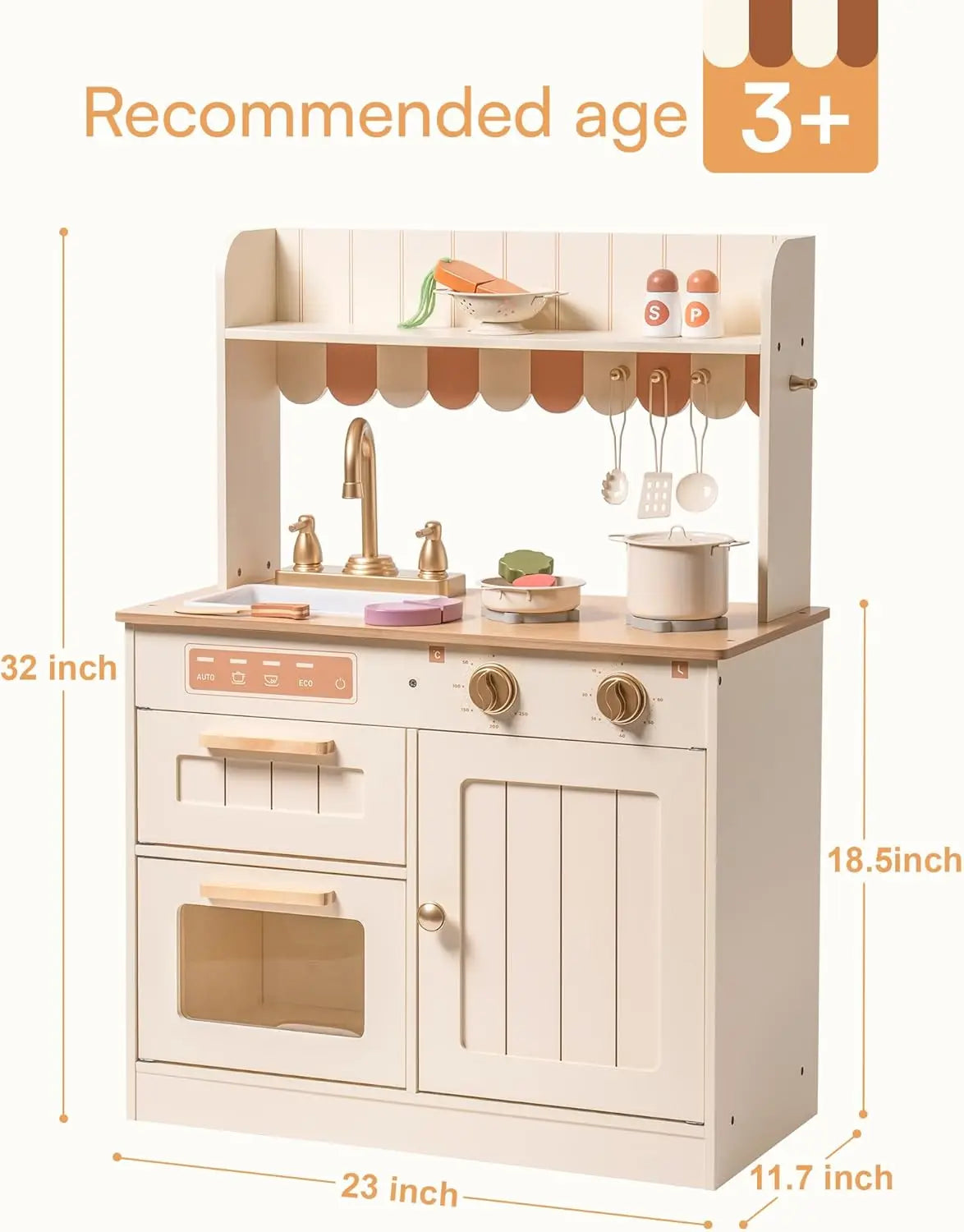
Toy cooking set that feels real supports pretend play skills — 💡 See it in action
Mini FAQ
Why do kids toys lacking realism fail to keep attention?
When toys don’t respond like real objects, children lose the sense of purpose in play. Realistic features create meaningful actions that encourage repetition and deeper engagement.
Is a wooden toy kitchen better than plastic?
Wooden toy kitchens offer weight, texture, and durability that support calmer, more focused pretend play compared to lightweight plastic options.
What age benefits most from a toy cooking set?
Most children between ages 2–6 gain the most, as this stage focuses on imitation, language growth, and everyday role play.





