

STEM Learning Magnetic Building Blocks Worth Buying
Why STEM learning magnetic building blocks are worth buying
STEM learning magnetic building blocks combine creative play with meaningful educational outcomes. Instead of simply stacking pieces, children experiment with engineering concepts, discover geometric relationships, and develop persistence by testing and improving their designs.
The biggest benefits of magnetic building toys include:
- Problem-solving: Children identify why structures fail and improve them through trial and error.
- Creativity: Open-ended building encourages original ideas instead of following fixed instructions.
- Spatial reasoning: Kids learn how shapes connect, rotate, and create stable 3D structures.
- Long-term educational value: Skills developed during play support later success in math, science, and engineering subjects.
Unlike many traditional toys, stem learning with magnetic tiles grows alongside children. Simple towers eventually become bridges, castles, vehicles, and complex architectural designs as their abilities improve.
Magnetic Building Blocks Ideas That Unlock STEM Learning
Magnetic building blocks ideas can transform playtime into powerful learning moments for curious kids. Discover how magnetic building blocks for STEM learning spark creativity, improve problem-solving, and strengthen spatial reasoning through engaging hands-on activities. You'll also learn how magnetic toys support child development while helping kids build confidence, focus, and engineering skills.
⏱ 7 min read
Struggling to keep your child engaged without screens? Wondering how to turn playtime into meaningful learning without making it feel like school?
The right magnetic building activities can teach valuable STEM skills while keeping children excited to explore and create.
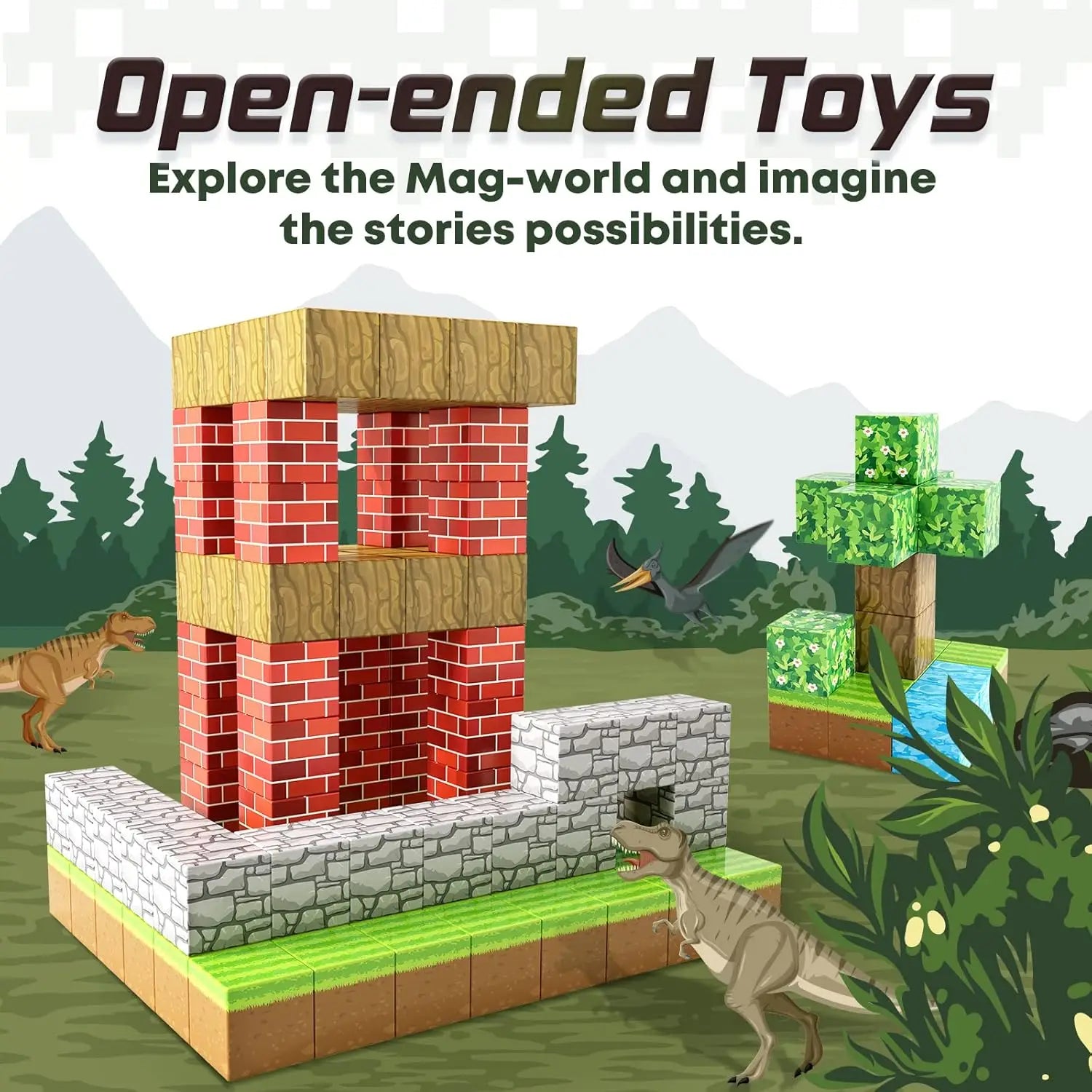
Magnetic building blocks for STEM learning in action
How magnetic building blocks support STEM learning by age
Toddlers (2–3 years)
Simple stacking and connecting activities help toddlers strengthen fine motor skills, hand-eye coordination, and early shape recognition. At this stage, magnetic building blocks activities for toddlers should focus on large, easy-to-handle pieces while encouraging supervised exploration.
Preschoolers (4–5 years)
Preschool children begin creating bridges, houses, animals, and geometric designs. These creative magnetic block ideas for preschoolers introduce counting, symmetry, balance, and basic engineering while encouraging imaginative storytelling.
Early elementary (6+ years)
Older children can tackle more advanced STEM challenges, including complex structures, moving designs, and simple engineering experiments. STEM learning with magnetic tiles at this age develops planning, persistence, and critical thinking while preparing children for classroom STEM concepts.
Best STEM learning magnetic building blocks
Best overall
Magnetic Blocks Toy 100pcs STEM Set offers an excellent balance of variety, durability, and creative building possibilities for families seeking long-term educational value.
Best for toddlers
Look for sets with larger magnetic tiles, rounded edges, and fewer small accessories to make early building safe and frustration-free.
Best for preschool STEM
Mid-sized sets containing squares, triangles, windows, and wheels provide enough variety for increasingly complex STEM challenges.
Best value
Sets containing 80–120 pieces often provide the best balance between affordability and creative flexibility for growing builders.
Best classroom set
Larger collections with 150+ compatible pieces allow multiple children to collaborate on engineering challenges and cooperative STEM projects.
Magnetic building blocks comparison table
| Type | Typical Pieces | Safety Features | Compatibility | Best For |
|---|---|---|---|---|
| Starter Sets | 30–60 | BPA-free ABS plastic | Usually brand-specific | Beginners |
| Family Sets | 80–120 | Reinforced magnets | Many compatible brands | Home STEM learning |
| Classroom Sets | 150+ | ASTM/CPSIA compliant | Wide compatibility | Schools & group activities |
Magnetic building blocks STEM activities to try at home
Magnetic building blocks STEM activities help children learn by designing, testing, rebuilding, and improving their ideas through play.
Engineering challenges
- Build the tallest tower possible.
- Create a bridge that supports small toy cars.
- Design a house with multiple rooms and a stable roof.
Early math activities
- Sort pieces by shape and color.
- Create repeating patterns.
- Count sides, corners, and compare different geometric shapes.
Creative storytelling builds
- Construct castles for imaginative adventures.
- Design zoos or cities using different structures.
- Build spaceships or fantasy worlds while inventing stories together.
How magnetic building toys build spatial reasoning and focus
One of the greatest educational benefits of magnetic building toys is how naturally they develop executive function and visual-spatial thinking.
- Visual-spatial development: Children learn how shapes fit together from multiple angles.
- Attention span: Longer building projects encourage sustained concentration.
- Patience: Rebuilding after mistakes teaches resilience and persistence.
- Planning: Kids begin visualizing finished structures before construction starts.
Parents frequently ask whether STEM building toys help develop focus and patience in kids . Because children receive immediate visual feedback while experimenting, they naturally practice planning, adapting, and completing increasingly challenging projects.
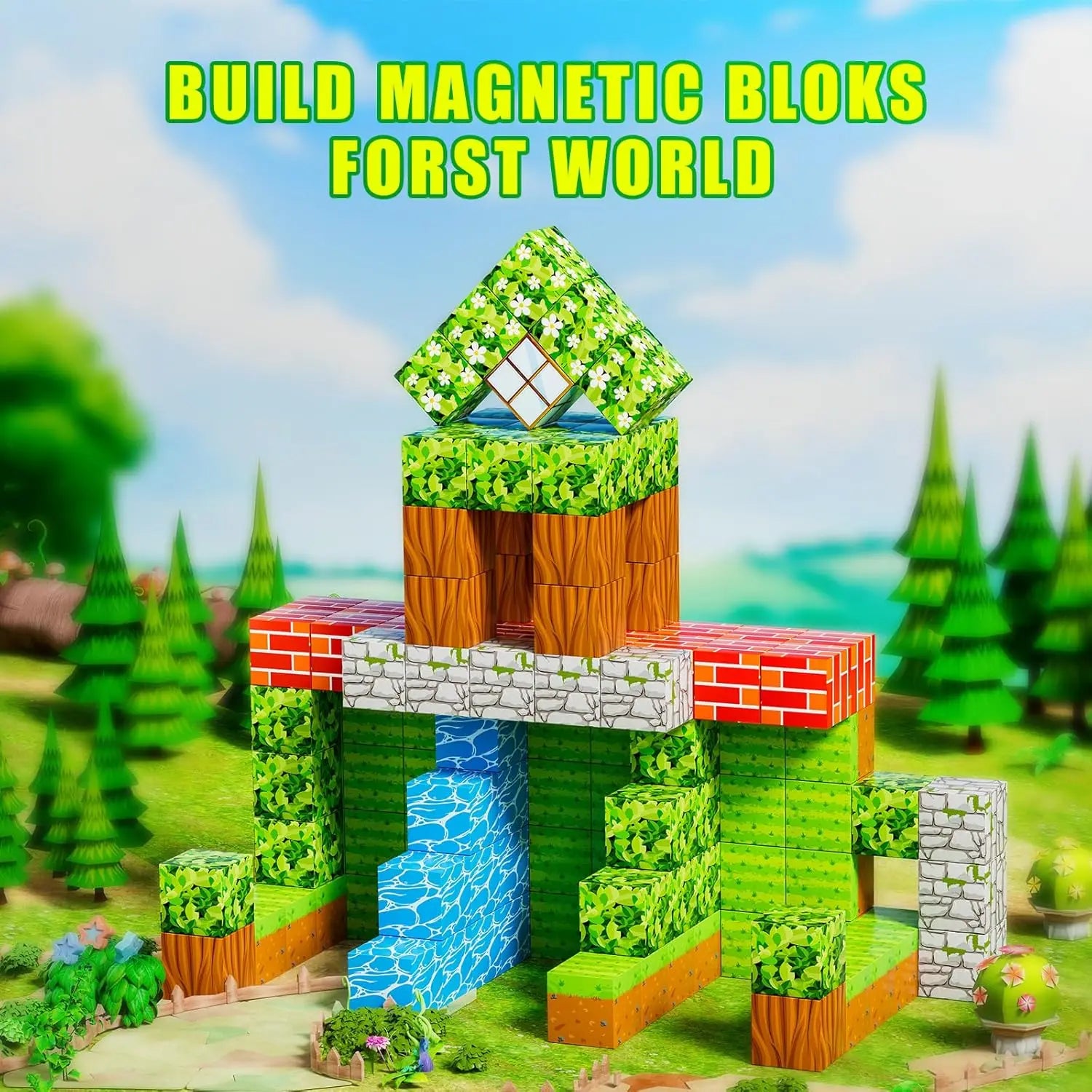
Magnetic building toys encourage focus, creativity, and spatial development
Magnetic building blocks vs traditional construction toys
| Feature | Magnetic Building Blocks | Traditional Construction Toys |
|---|---|---|
| STEM Learning | Excellent hands-on exploration | Varies by product |
| Ease of Building | Fast magnetic connections | May require greater hand strength |
| Creativity | Highly open-ended | Often follows instructions |
| Durability | Quality sets last for years | Depends on materials |
| Best Use | Daily STEM play and collaborative learning | Structured building projects |
Safety, materials, and buying guide
ABS plastic and BPA-free materials
Choose magnetic tiles made from durable ABS plastic that is BPA-free and designed to withstand repeated play.
Magnet safety
Quality manufacturers permanently seal magnets inside each tile to reduce the risk of magnets becoming exposed. Always inspect toys regularly for damage and supervise younger children.
ASTM and CPSIA compliance
Look for products that meet recognized toy safety standards such as ASTM and CPSIA compliance for additional peace of mind.
Choosing the right set
- Strong enclosed magnets for stable builds.
- Wide variety of shapes and accessories.
- Durable child-safe materials.
- Enough pieces to support increasingly advanced projects.
Explore the full set here: Magnetic Blocks Toy 100pcs STEM Set
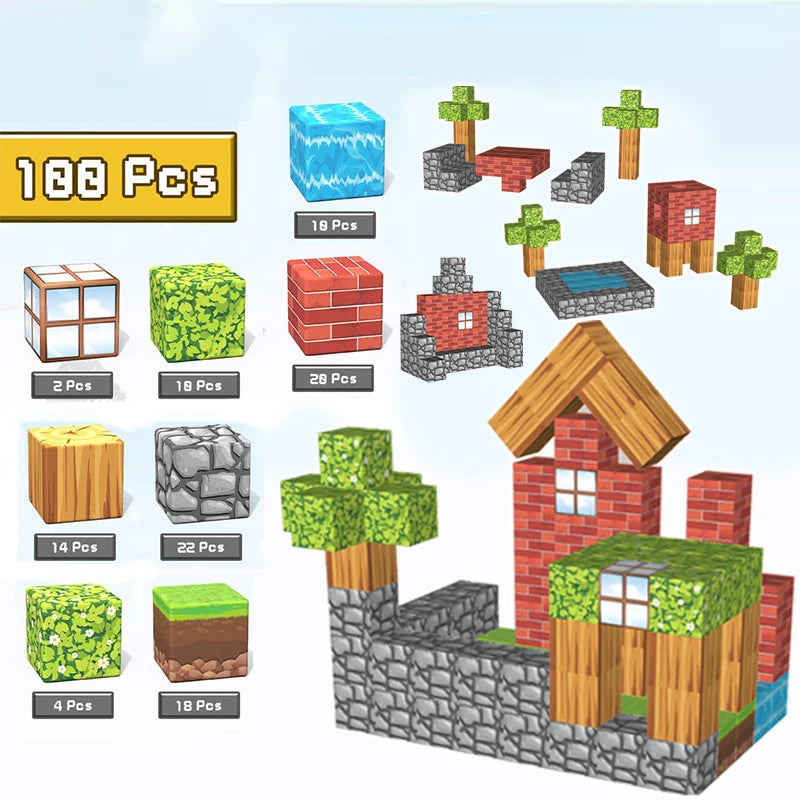
STEM magnetic building blocks inspire endless creative projects
Frequently Asked Questions
Are magnetic building blocks safe for kids?
Yes. Choose high-quality sets made from durable BPA-free materials with securely enclosed magnets. Adult supervision is recommended for younger children.
At what age can kids start using magnetic blocks?
Many manufacturers recommend magnetic building blocks for children aged 3 and older. Younger children should only play with age-appropriate sets under close supervision.
Can different magnetic tile brands work together?
Many leading brands are compatible because they use similar tile dimensions and magnet placement, although compatibility can vary by manufacturer.
How do magnetic building blocks support STEM learning?
They encourage experimentation with geometry, engineering, balance, measurement, and problem-solving through hands-on construction activities instead of passive learning.
How often should kids play with STEM toys?
Short daily sessions of 20 to 30 minutes provide consistent opportunities to develop creativity, focus, fine motor skills, and critical thinking over time.
Pillar Article: Best Educational Toys for Kindergarteners That Boost Skills
Other Related Articles:
Explore More:





