

Magnetic Cube Toys for Kids: What Makes Them Worth It?
Do Magnetic Cube Toys Really Help Kids Learn Faster?
Yes—when used as part of regular, hands-on play, magnetic cube toys can support faster skill development in areas such as visual-spatial reasoning, creative problem-solving, and fine motor coordination. Unlike passive activities, educational magnetic cube toys encourage children to experiment, test ideas, and learn from immediate feedback. Research on hands-on STEM learning suggests that active manipulation of objects helps children retain concepts more effectively than observation alone.
How magnetic play supports learning
Magnetic cube toys transform abstract ideas into tangible experiences. As children connect, rotate, and rebuild structures, they practice planning, predicting outcomes, and recognizing patterns. These playful challenges naturally strengthen concentration while encouraging persistence when a design does not work the first time.
Evidence from hands-on STEM play
Studies of hands-on STEM education consistently show that children learn more effectively when they actively construct and explore rather than simply watch demonstrations. Magnetic building activities promote visual learning, spatial awareness, engineering thinking, and creativity while keeping children engaged for longer periods. The benefits of magnetic cube toys are greatest when children are encouraged to experiment freely and discuss their ideas during play.
Magnetic Cube Toys for Visual Learners: Build Skills Faster
Magnetic cube toys help children develop essential learning skills by turning imaginative play into meaningful STEM exploration. If you're looking for an engaging way to build spatial reasoning, creativity, and confidence, a creative magnetic cube blocks toy set offers an enjoyable hands-on experience. From simple shapes to complex 3D structures, educational magnetic cube toys encourage visual learners to discover, experiment, and solve problems while having fun.
⏱ 7 min read
Many children lose interest when lessons rely only on reading or memorization. Hands-on building activities provide a different approach by allowing kids to see, touch, and test ideas as they learn, making new concepts easier to understand and remember.
The result: children stay engaged longer, develop stronger problem-solving habits, and gain confidence through creative exploration.
Discover the safest toys for your baby
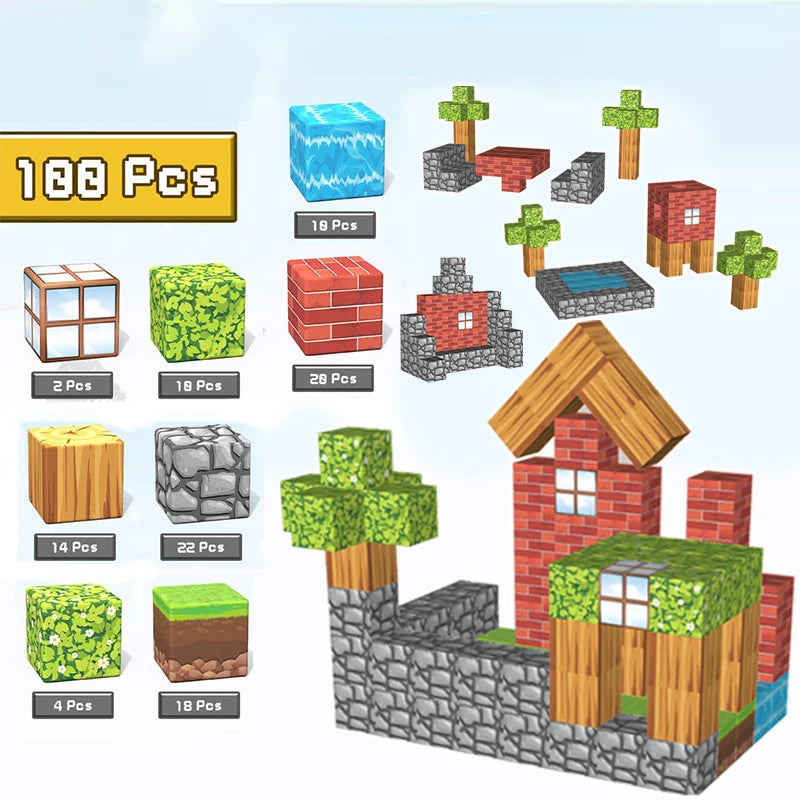
Magnetic cube toys helping kids build spatial skills fast — See it in action
Why Magnetic Cube Toys Work So Well for Visual Learners
Visual learners absorb information best when they can observe relationships, manipulate objects, and receive immediate feedback. Magnetic cube toys naturally support this learning style by allowing children to build, modify, and visualize ideas in three dimensions instead of imagining them from a page.
- Instant feedback: Magnetic pieces connect and separate easily, helping children understand cause and effect through experimentation.
- Visual reinforcement: Kids watch shapes and structures develop in real time, improving pattern recognition and spatial thinking.
- Creative freedom: Open-ended building encourages imagination because there is rarely just one correct solution.
- Focused play: Interactive construction keeps many children engaged longer than passive entertainment while supporting meaningful learning.
As children revisit familiar designs and invent new creations, they naturally strengthen memory, planning skills, and confidence without feeling pressured to achieve perfect results.
Explore more tools that support sensory learning in Sensory Toys .
How to Teach Spatial Skills to Kids Without Frustration
Spatial reasoning develops best through frequent, hands-on exploration rather than formal instruction. Magnetic cube toys give children the freedom to experiment, make mistakes, and discover solutions independently, helping them build confidence while strengthening visual thinking and problem-solving skills.
- Begin with simple flat shapes before introducing basic 3D structures.
- Challenge children to recreate familiar objects such as bridges, houses, animals, or vehicles.
- Encourage prediction by asking questions like, "What do you think will happen if we rotate this piece?"
- Increase the difficulty gradually by introducing taller, wider, or more detailed designs.
- Allow plenty of time for trial and error instead of correcting every mistake immediately, since experimentation is a valuable part of learning.
Open-ended building activities encourage children to visualize solutions, adapt their designs, and think creatively—skills that support future success in mathematics, engineering, and everyday problem-solving.
Learn step-by-step how to choose the right baby gear
Real-Life Benefits: How Magnetic Toys Help Child Development
Regular play with magnetic cube toys supports multiple areas of childhood development. While every child progresses at a different pace, many parents notice improvements in independent play, creative thinking, and persistence as children become more comfortable tackling increasingly complex building challenges.
| Development Area | Common Starting Point | Potential Progress Through Regular Play |
|---|---|---|
| Focus | Frequently changing activities | Longer periods of independent, purposeful play |
| Problem-solving | Giving up after setbacks | Greater persistence and willingness to try new solutions |
| Creativity | Repeating familiar designs | Inventing original structures and imaginative stories |
| Confidence | Hesitation with new challenges | Pride in completing increasingly complex creations |
Example: A child who initially builds simple towers may gradually begin designing bridges, vehicles, or imaginative cities after gaining confidence through repeated experimentation. This progression reflects growing spatial reasoning, planning, and creative thinking.
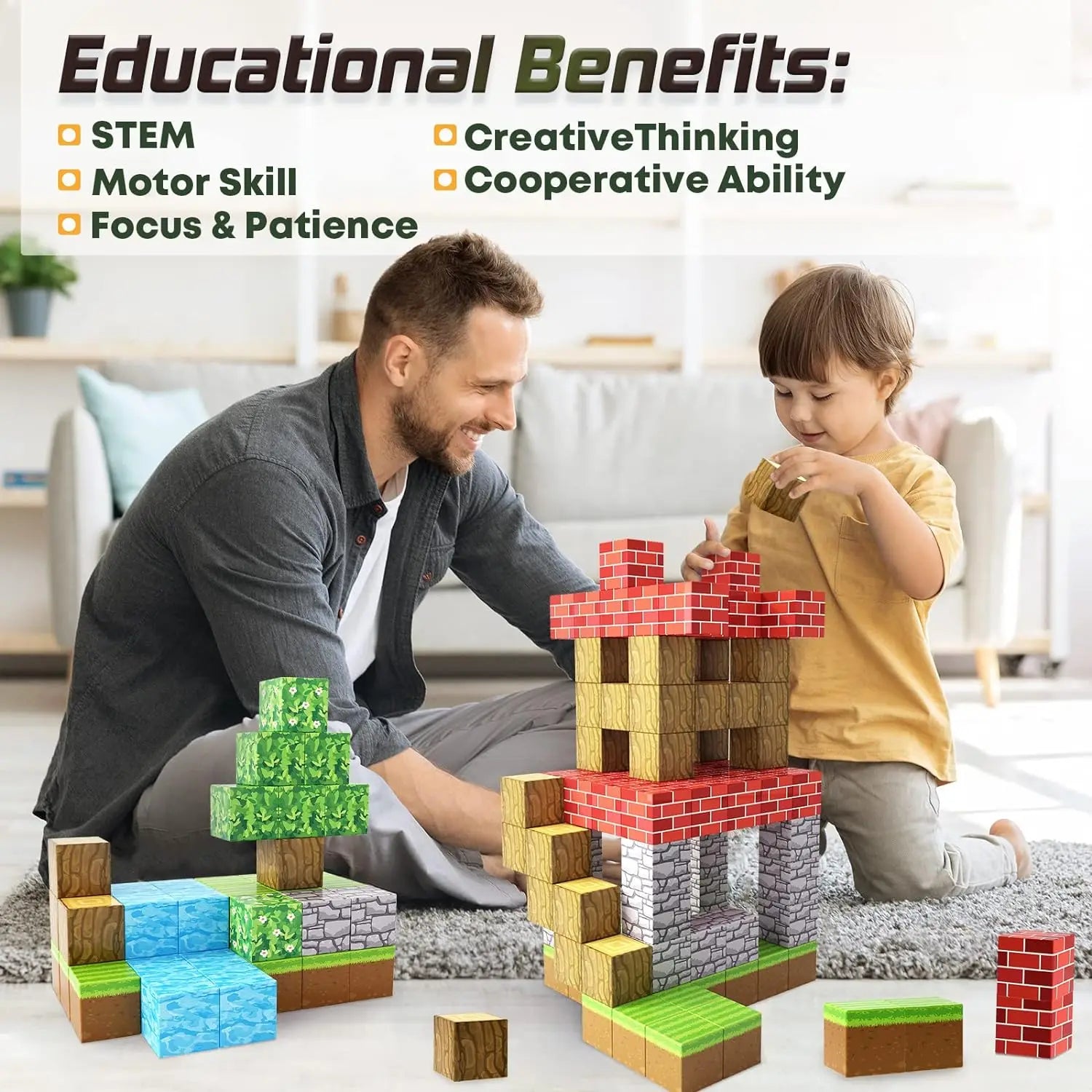
Creative magnetic cube blocks toy set boosting imagination and focus — See it in action
For more developmental tools, explore Baby Growth & Learning .
Who Benefits Most from Magnetic Cube Toys?
Because magnetic building sets offer open-ended play, they adapt well to different ages, learning styles, and ability levels. Children can begin with simple constructions and naturally progress toward more advanced designs as their skills develop.
- Preschoolers: Practice fine motor control, hand-eye coordination, and basic shape recognition.
- Visual learners: Understand abstract concepts more easily by building and manipulating three-dimensional models.
- Creative thinkers: Explore limitless building possibilities through imaginative, open-ended play.
- Children developing confidence: Experience frequent small successes that encourage persistence and independent learning.
Whether used during free play, homeschooling, classroom activities, or family building sessions, magnetic cube toys provide engaging learning opportunities that grow alongside a child's developing abilities.
How to Choose the Right Creative Magnetic Cube Blocks Toy Set
Selecting the right magnetic cube set helps ensure children remain challenged as their skills grow. A quality set should combine durability, safe construction, and enough building variety to encourage years of creative play instead of being quickly outgrown.
- Piece count: Smaller sets are suitable for beginners, while larger collections provide greater flexibility for advanced 3D builds and collaborative projects.
- Magnet strength: Strong, securely enclosed magnets create stable structures that are easier for children to assemble and less frustrating during play.
- Safety materials: Choose BPA-free, non-toxic materials with smooth edges that meet appropriate child safety standards.
- Versatility: Sets that support both flat designs and complex three-dimensional constructions offer greater long-term educational value.
A well-designed set like this magnetic cube toys set provides enough variety for beginners while continuing to support increasingly advanced STEM challenges as children develop stronger spatial reasoning and creative building skills.
Pair it with essentials from Smart Baby Gadgets for a more enriched learning environment.
Magnetic Cube Toys vs Traditional Toys
| Feature | Magnetic Cube Toys | Traditional Building Toys |
|---|---|---|
| Engagement | Interactive, open-ended building with countless design possibilities | Often guided by fixed pieces or predefined outcomes |
| Skill Development | Supports STEM learning, spatial reasoning, creativity, and problem-solving | Typically develops one or two primary skills |
| Long-Term Value | Scales with a child's growing abilities and imagination | May become less challenging as children get older |
| Learning Style | Hands-on exploration through experimentation and visual learning | Varies depending on toy design and intended use |
Traditional toys remain valuable for imaginative play and specific developmental goals, but magnetic cube toys stand out by combining creativity, engineering concepts, and open-ended exploration within a single activity. Their flexibility encourages children to continually invent new challenges instead of repeating the same play patterns.
Why Parents Are Choosing Magnetic Cube Toys for Everyday Learning
Parents are increasingly looking for toys that do more than entertain. Magnetic cube toys combine creative play with meaningful skill development, giving children opportunities to build, experiment, and solve problems independently while spending less time in front of screens.
- Encourage independent, self-directed play.
- Support critical thinking through trial and error.
- Promote creativity with open-ended building possibilities.
- Create enjoyable opportunities for family collaboration and shared learning.
Because there are no fixed instructions for every build, children are free to explore new ideas, revise designs, and celebrate their own accomplishments. This flexible style of play keeps activities fresh and engaging as their abilities continue to develop.
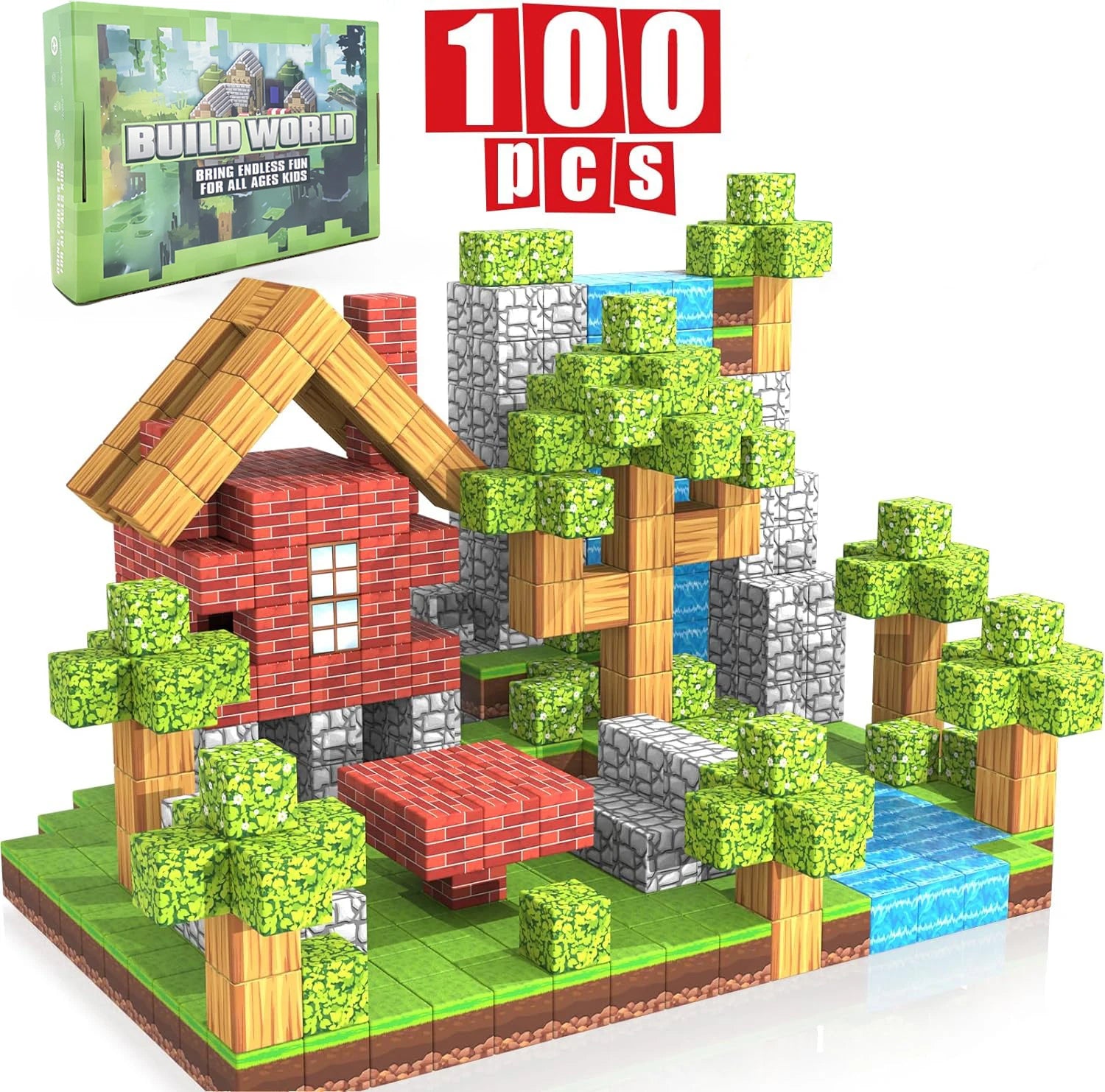
How to teach spatial skills to kids using magnetic cube toys — See it in action
Get yours now — limited stock!
FAQs
1. At what age can children start using magnetic cube toys?
Most magnetic cube sets are recommended for children aged 3 years and older. Always follow the manufacturer's age recommendations and supervise younger children during play.
2. Are magnetic cube toys safe for kids?
High-quality sets use durable, enclosed magnets and non-toxic materials that are designed for children's use. Choosing reputable manufacturers and age-appropriate products helps maximize safety.
3. How often should children play with magnetic cube toys?
Short, consistent play sessions of around 15 to 30 minutes several times each week provide plenty of opportunities to strengthen creativity, spatial reasoning, fine motor coordination, and problem-solving skills.
4. Can magnetic cube toys replace traditional learning tools?
No. Magnetic cube toys work best as a complement to books, classroom instruction, art activities, and other educational resources. They reinforce learning by allowing children to apply concepts through hands-on exploration.
5. Do magnetic cube toys improve spatial reasoning?
Yes. Building with magnetic cubes encourages children to visualize shapes, rotate objects mentally, recognize patterns, and understand how individual pieces fit together. These activities help strengthen spatial reasoning, an important foundation for future STEM learning.
6. Which magnetic cube set is best for STEM learning?
A versatile set with securely enclosed magnets, durable child-safe materials, and enough pieces for both beginner and advanced builds provides the greatest educational value. Larger sets also allow children to explore increasingly complex engineering and design challenges as their skills develop.
7. Can different magnetic cube brands be used together?
Many magnetic building toys are compatible with other brands that use similar cube sizes and magnetic connection systems. However, compatibility is not universal, so check the manufacturer's specifications before combining sets.
8. How many magnetic cubes should beginners start with?
For most families, a starter collection of around 50 to 100 pieces provides enough variety to build both simple and moderately complex structures without becoming overwhelming. Additional pieces can always be added as children become more experienced builders.
Pillar Article: Educational Toys for 3 Year Olds That Fit Every Learning Style
Other Related Articles:
Explore More:





