

Magnetic Field Demonstration: 3 Easy Experiments That Explain It
Magnetic Field Demonstration: 4 Simple Experiments for the Classroom
A magnetic field demonstration turns invisible magnetic forces into something students can observe, measure, and analyze. Although magnetic fields cannot be seen directly, classroom experiments using iron filings, compasses, ferrofluid, and electromagnets reveal how these forces behave around magnets and electric currents.
These hands-on magnetism demonstrations help students understand important physics concepts such as magnetic field lines, polarity, electromagnetism, and real-world applications. Teachers, homeschool educators, and STEM instructors can use simple materials to transform abstract lessons into engaging science activities.
In this guide, you will learn four classroom-friendly magnetic field experiments with materials lists, step-by-step instructions, observation questions, troubleshooting tips, and scientific explanations. These activities are designed to help students visualize magnetic fields and connect classroom physics with everyday technology.
What Is a Magnetic Field Demonstration?
A magnetic field demonstration is a classroom experiment that shows how magnetic forces exist and interact in space. Since magnetic fields are invisible, these demonstrations use materials that respond to magnetism—such as iron filings, compass needles, or magnetic liquids—to create visible patterns.
A magnetic field is the region around a magnet or electric current where magnetic forces can act on other magnetic materials. The strength and direction of this invisible field determine how objects respond when placed nearby.
These activities are often called a magnetism demonstration because they allow students to explore how magnets attract, repel, and influence surrounding materials through forces they cannot directly see.
What Are Magnetic Field Lines?
Magnetic field lines are visual representations scientists use to describe the direction and strength of a magnetic field. They are not physical objects, but they help explain how magnetic forces spread around magnets.
Magnetic field lines follow several important rules:
- They travel from the north pole to the south pole outside a magnet.
- They continue through the magnet from south to north, creating closed loops.
- They never cross because a magnetic field can only have one direction at a specific point.
- Areas where field lines appear closer together represent stronger magnetic fields.
Experiments such as iron filings and compass mapping make these invisible patterns easier for students to understand.
Why Magnetic Field Demonstrations Help Visualize Invisible Forces
Many physics concepts are difficult because students cannot directly observe them. A magnetic field visualization simple experiment bridges the gap between theory and observation by allowing learners to see evidence of magnetic forces through physical reactions.
When students move magnets, adjust distances, or change electric current, they can observe how magnetic field strength and direction change. This encourages inquiry-based learning and helps students develop scientific reasoning skills.
Common Misconceptions About Magnetic Fields
- Magnetic fields are not only found around permanent magnets. Electric currents can also create magnetic fields.
- Field lines are not actual particles. They are a visual model used to describe magnetic behavior.
- A larger magnet is not always stronger. Magnetic strength depends on material, shape, and field design.
- Magnets do not only attract. Similar poles repel each other while opposite poles attract.
Understanding these concepts prepares students for more advanced topics such as electromagnets, motors, and generators.
Materials Needed for Magnetic Field Experiments
Most classroom magnetic field experiments require affordable materials that are easy to prepare. Teachers can choose simple demonstrations for younger students or more advanced equipment for physics classrooms.
Essential Classroom Materials
- Bar magnets or horseshoe magnets
- Iron filings
- Small compasses
- White paper or transparent plastic sheets
- Battery packs and insulated wire for electromagnet experiments
- Notebook or worksheet for recording observations
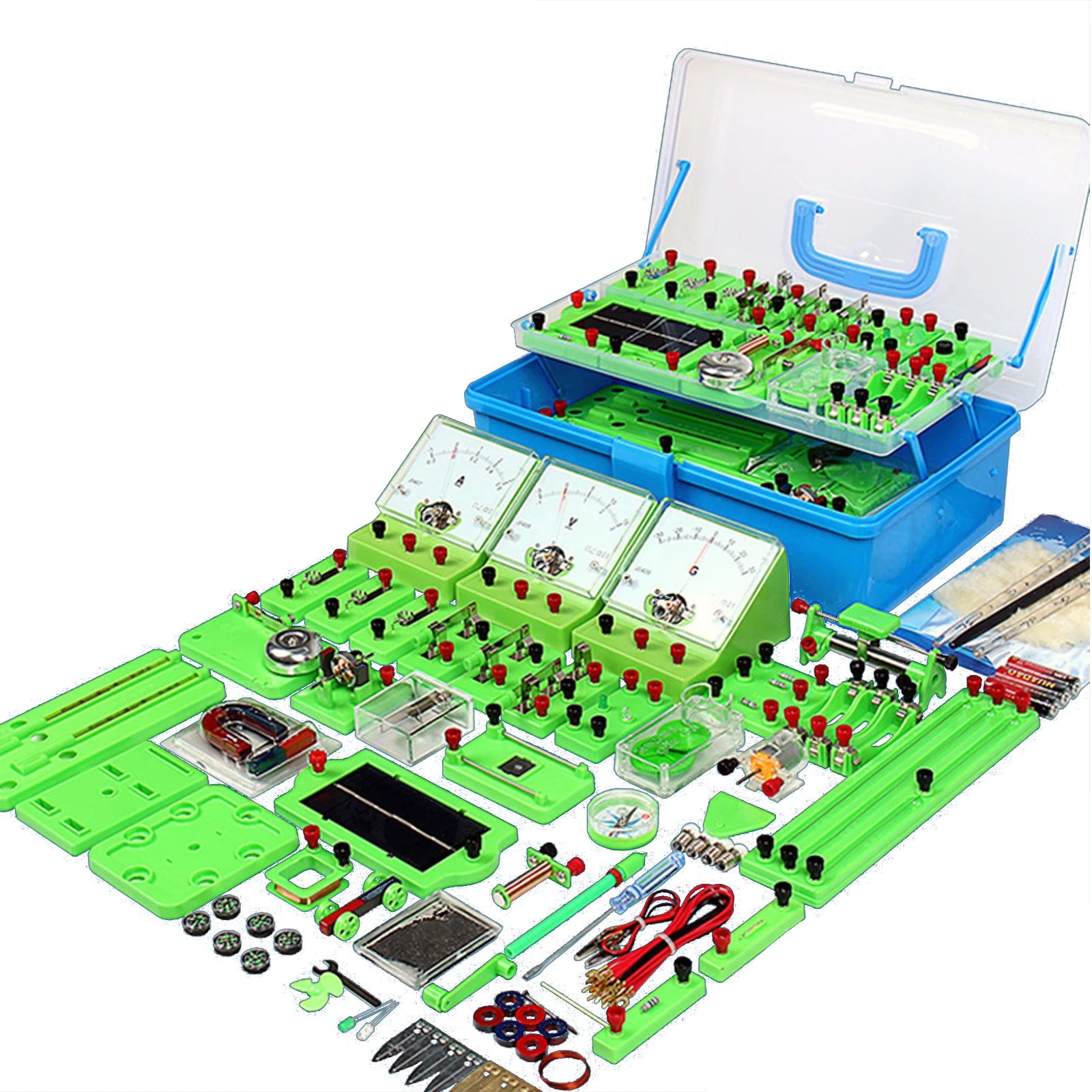
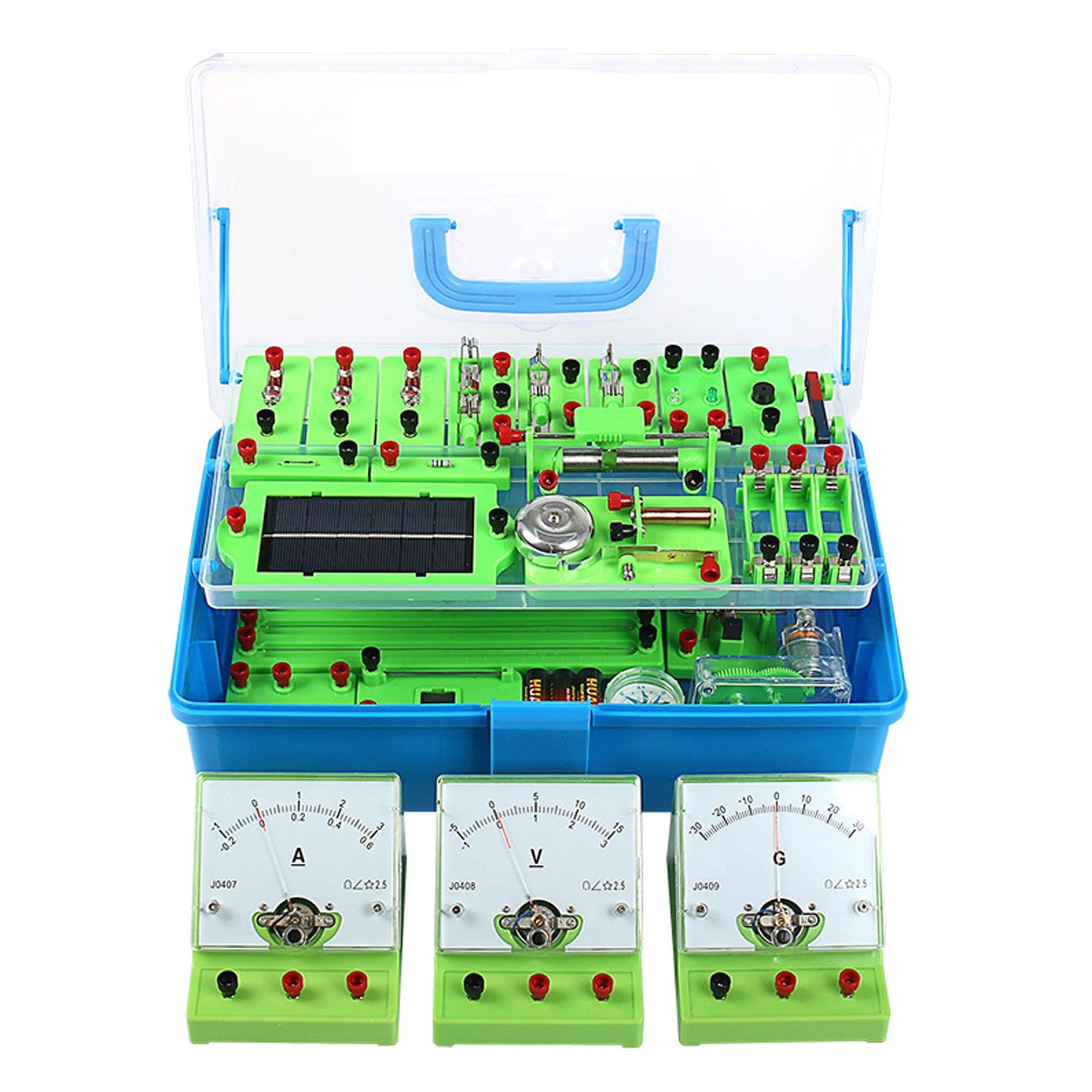
Teachers often use organized STEM equipment kits that include magnets, coils, meters, and electrical components. For example, the Electromagnetism Experiment Kit for Students includes over 40 physics components designed for classroom demonstrations and hands-on experiments.
The kit supports activities involving circuits, magnetic forces, Joule’s law, and magnetic field demonstrations, helping students explore multiple physics principles through practical learning.
Optional Visualization Tools
- Ferrofluid for advanced magnetic pattern visualization
- Transparent containers for liquid demonstrations
- Graph paper for mapping field directions
- Digital cameras or projectors for large classroom viewing
- Multimeters for measuring electrical activity
Choosing the Right Demonstration Method
The best magnetic field demonstration depends on student age, lesson goals, and available materials.
- Elementary students: Iron filings provide the easiest visual introduction.
- Middle school students: Compass mapping introduces direction and measurement.
- High school students: Electromagnet experiments connect electricity and magnetism.
- Advanced demonstrations: Ferrofluid reveals three-dimensional magnetic patterns.
Experiment 1: Magnetic Field Visualization with Iron Filings
This classic magnetic field visualization iron filings classroom experiment is one of the simplest ways to show students how magnetic field lines form around a magnet.
Materials
- Bar magnet
- Sheet of paper or transparent plastic
- Iron filings
- Tray or surface to catch filings
Step-by-Step Procedure
- Place the bar magnet on a flat surface.
- Cover the magnet with paper or a transparent sheet.
- Sprinkle iron filings evenly across the surface.
- Tap the paper gently so the filings can move freely.
- Observe the patterns created around the magnet.
Expected Observations
Students will notice that the iron filings arrange themselves into curved lines around the magnet. The filings become more concentrated near the poles, showing where the magnetic field is strongest.
The visible pattern represents the shape of the magnetic field surrounding the magnet.
Why Iron Filings Reveal Magnetic Field Lines
Iron is a ferromagnetic material, meaning it becomes temporarily magnetized when exposed to a magnetic field. Each tiny filing acts like a miniature magnet and rotates until it aligns with the surrounding field.
Thousands of aligned filings create a visible model of magnetic field lines.
Troubleshooting
- If the pattern is unclear, use fewer filings because thick layers can hide the field shape.
- Tap gently to avoid scattering the filings randomly.
- Use a stronger magnet if the pattern is too weak.
Experiment 2: Mapping Magnetic Fields with Compasses
Compass mapping is an excellent experiment magnetic field activity because it shows that magnetic fields have both direction and strength.
Materials
- Bar magnet
- 5–10 small compasses
- Large sheet of paper
- Pencil for recording directions
Step-by-Step Procedure
- Place the magnet in the center of the paper.
- Arrange multiple compasses around the magnet.
- Wait for each needle to stop moving.
- Mark the direction each compass points.
- Connect the markings to create a map of the magnetic field.
Recording Field Lines
Students can record compass directions at different distances from the magnet. Comparing these observations helps reveal how magnetic fields change across space.
Useful student questions include:
- How does the compass direction change near each pole?
- Where are the field directions most concentrated?
- How does distance affect the magnetic field?
Why Compasses Align with Magnetic Fields
A compass needle is a tiny magnet. When placed inside another magnetic field, it rotates until it aligns with the field direction.
This same principle allows navigation systems to use Earth's magnetic field to determine direction.
Experiment 3: Visualizing Magnetic Fields with Ferrofluid
Ferrofluid provides one of the most dramatic magnetic fields experiments because it creates visible three-dimensional patterns that follow magnetic forces.
Materials
- Ferrofluid
- Clear container
- Strong magnet
- Protective gloves
Step-by-Step Procedure
- Pour ferrofluid into a sealed transparent container.
- Place a magnet underneath or beside the container.
- Observe the ferrofluid pattern as it changes.
- Move the magnet slowly to see how the structure responds.
Safety Notes
- Do not allow students to touch ferrofluid directly.
- Keep ferrofluid containers sealed when possible.
- Clean spills immediately using proper safety procedures.
Why Ferrofluid Reveals Magnetic Patterns
Ferrofluid contains microscopic magnetic particles suspended in liquid. When exposed to a magnetic field, these particles align and form spikes that follow magnetic field directions.
This makes ferrofluid especially useful for showing differences in field strength and three-dimensional magnetic structures.
Experiment 4: Electromagnet and Coil Magnetic Field Demonstration
This experiment introduces students to the connection between electricity and magnetism. Unlike permanent magnets, electromagnets create magnetic fields using electric current flowing through a coil.
Building a Simple Electromagnet
Materials:
- Iron nail or metal core
- Insulated copper wire
- Battery pack
- Small magnetic objects for testing
- Wrap insulated wire around the iron core several times.
- Connect the wire ends to a battery.
- Test whether the coil attracts small magnetic objects.
- Disconnect the battery and compare the difference.
Visualizing the Field
Students can place compasses around the coil or use iron filings to observe the magnetic field produced by the electromagnet.
How Current Changes Field Strength
The strength of an electromagnet increases when the coil has more wire turns or when current increases. This demonstrates how electrical energy can create controllable magnetic forces.
Comparison of Magnetic Field Demonstration Methods
| Experiment | Best For | Cost | Difficulty | Learning Outcome |
| Iron Filings | Quick visual introduction | Low | Very Easy | Magnetic field shape |
| Compass Mapping | Direction and measurement | Low | Easy | Field orientation |
| Ferrofluid | Advanced visualization | Medium | Moderate | 3D magnetic patterns |
| Electromagnet | Electricity and magnetism lessons | Low-Medium | Moderate | Current-controlled magnetic fields |
Iron Filings vs Compasses vs Ferrofluid vs Electromagnets
Each method reveals a different aspect of magnetism. Iron filings show where magnetic fields exist, compasses show field direction, ferrofluid reveals detailed structures, and electromagnets demonstrate how electricity creates magnetic forces.
Why Magnetic Field Lines Form Closed Loops
Magnetic fields are created by moving electric charges and aligned magnetic domains inside materials. A bar magnet behaves like a magnetic dipole with two poles: north and south.
Magnetic Poles and Field Direction
Outside a magnet, magnetic field lines travel from north to south. Inside the magnet, they return from south to north, creating continuous loops.
Inside and Outside the Magnet
Unlike electric field lines that begin and end on charges, magnetic field lines never have a starting or ending point. They always form closed paths.
Earth's Magnetic Field
Earth acts like a giant magnet because electric currents in its liquid outer core generate a magnetic field. Compasses work because their needles align with Earth's magnetic field in the same way they align with classroom magnets.
Real-World Applications of Magnetic Fields
Electric Motors
Electric motors use interactions between magnetic fields and electric currents to produce movement. The same principles students observe in electromagnet experiments power many household devices.
MRI Machines
Magnetic resonance imaging (MRI) technology uses extremely strong magnetic fields to create detailed images of structures inside the human body.
Navigation and Compasses
Navigation systems rely on magnetic field detection to determine direction and location.
Generators
Generators use changing magnetic fields to produce electrical energy, demonstrating the relationship between magnetism and electricity.
Classroom Safety Tips for Magnetic Experiments
Magnetic classroom science experiments are generally safe, but teachers should follow proper handling procedures.
Handling Strong Magnets
- Keep powerful magnets away from fingers to prevent pinching injuries.
- Store magnets securely after use.
Protecting Electronic Devices
- Keep strong magnets away from computers, phones, and storage devices.
Safe Use of Iron Filings and Ferrofluid
- Avoid inhaling iron filings.
- Wash hands after handling materials.
- Use gloves when working with ferrofluid.
- Clean experiment areas carefully.
Additional classroom safety practices can be found in the Health & Safety Tips resource library.
Conclusion
A successful magnetic field demonstration makes invisible forces visible through simple, engaging experiments. Iron filings reveal field shapes, compasses show magnetic direction, ferrofluid creates advanced visual patterns, and electromagnets demonstrate the relationship between electricity and magnetism.
By combining these magnetic field experiments, educators can help students understand core physics concepts while encouraging curiosity, observation, and problem-solving skills. Hands-on STEM activities make magnetism easier to understand and connect classroom learning with real-world technology.
For classrooms seeking structured experiments, STEM kits containing magnets, coils, meters, and physics components can simplify lesson preparation while providing students with more opportunities to explore magnetic fields.
Pillar Article: Beginner Physics Experiment Kit Electricity: Best STEM Kits for Easy Circuits





