

Non Scratching Baby Walker Wheels That Protect Floors
Do non scratching baby walker wheels really protect floors?
Non scratching baby walker wheels are designed with soft rubber or rubber-trimmed edges that reduce friction and prevent scuffs on hardwood, tile, and laminate floors. By combining controlled grip with smooth rolling, they protect surfaces while helping babies practice balance and confident movement indoors.
Non Scratching Baby Walker Wheels That Protect Floors
⏱ 7 min read
Watching your baby take those first wobbly steps is magical—but the scratched floors, slipping wheels, and safety worries can quickly steal the joy. Many parents ask whether one small detail can really make a difference. The answer often lies in non scratching baby walker wheels designed to protect floors while supporting safer, steadier walking.

Non scratching baby walker wheels with rubber trimmed wheels safety for indoor baby walking toy use 💡 See it in action
Why Floor Protection Matters for Early Walkers
Babies practice walking dozens of times a day. Each push, stop, and turn puts pressure on floors. Traditional hard plastic wheels may roll fast, but they often leave marks or slide too easily. Over time, this creates visible scratches and increases fall risks.
Homes with hardwood or tile floors are especially vulnerable. Parents want a solution that balances smooth motion with surface protection—without adding bulky mats everywhere.
What Makes Baby Walker Wheels Non Scratching?
Non scratching baby walker wheels use softer outer materials that cushion contact with the floor. Instead of rigid plastic, they rely on rubberized trims or full rubber coatings to absorb impact.
These wheels are engineered to:
- Reduce friction marks on delicate flooring
- Provide controlled resistance to prevent sudden slips
- Roll quietly for calmer indoor play
- Maintain consistent traction on smooth surfaces
How Rubber Trimmed Wheels Improve Safety
Non scratching baby walker wheels with rubber trimmed wheels safety features offer a balance between grip and glide. The rubber edge creates gentle resistance, slowing down sudden movements while still allowing forward progress.
This design helps babies learn weight shifting and balance without the walker shooting ahead. Parents often notice fewer falls and more confident steps within days.
Comparing Wheel Types for Indoor Baby Walkers
| Wheel Type | Floor Protection | Traction | Noise Level |
|---|---|---|---|
| Hard Plastic | ❌ Low | ❌ Slippery | ❌ Loud |
| Foam Wheels | ✅ Moderate | ⚠️ Inconsistent | ✅ Quiet |
| Rubber Trimmed Wheels | ✅ High | ✅ Stable | ✅ Quiet |
This comparison shows why rubber-trimmed designs are often preferred for indoor baby walking toy use.
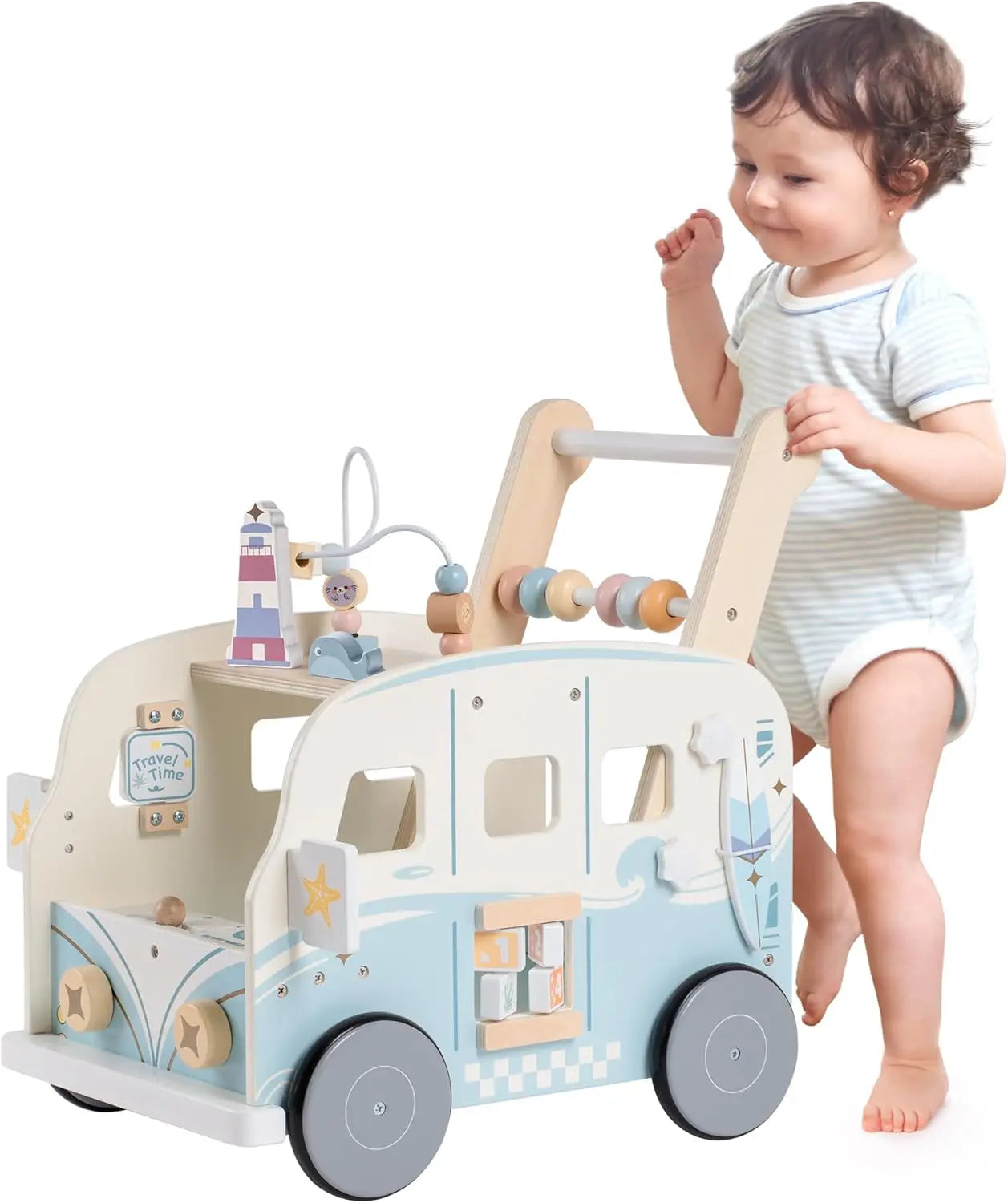
Rubber trimmed wheels safety meets wooden push walker design for indoor baby walking toy use 💡 See it in action
Why a Wooden Push Walker Works Better Indoors
A wooden push walker adds natural weight and stability, which pairs perfectly with non scratching baby walker wheels. The extra mass prevents tipping and supports smoother, more controlled steps.
Compared to lightweight plastic frames, wooden designs encourage upright posture and muscle engagement—key factors in early walking development.
Parents exploring options in Mobility & Training often prefer wooden walkers for their durability and indoor-friendly performance.
Real-Life Parenting Scenarios
Scenario 1: A toddler pushes a walker across hardwood floors. With hard wheels, the walker slides forward too fast. With rubber trimmed wheels, movement stays steady and predictable.
Scenario 2: Evening playtime. Quiet wheels mean less noise and fewer distractions, especially helpful for homes with siblings resting nearby.
Scenario 3: Long-term use. Floors stay clean and scratch-free even after months of daily practice.
How to Choose the Right Indoor Baby Walking Toy
- Look for non scratching baby walker wheels with rubber trims
- Choose a wooden push walker for added stability
- Ensure wheel resistance is adjustable or naturally controlled
- Match the walker height to your baby’s chest level
Browsing curated options in Baby Growth & Learning can simplify comparisons for overwhelmed parents.
Long-Term Value for Parents and Homes
Investing in a walker with floor-protective wheels saves money over time. Parents avoid repair costs, replacement toys, and unnecessary safety accessories.
Many families also appreciate how these walkers transition from early walking support to imaginative play, extending usefulness well into toddlerhood.
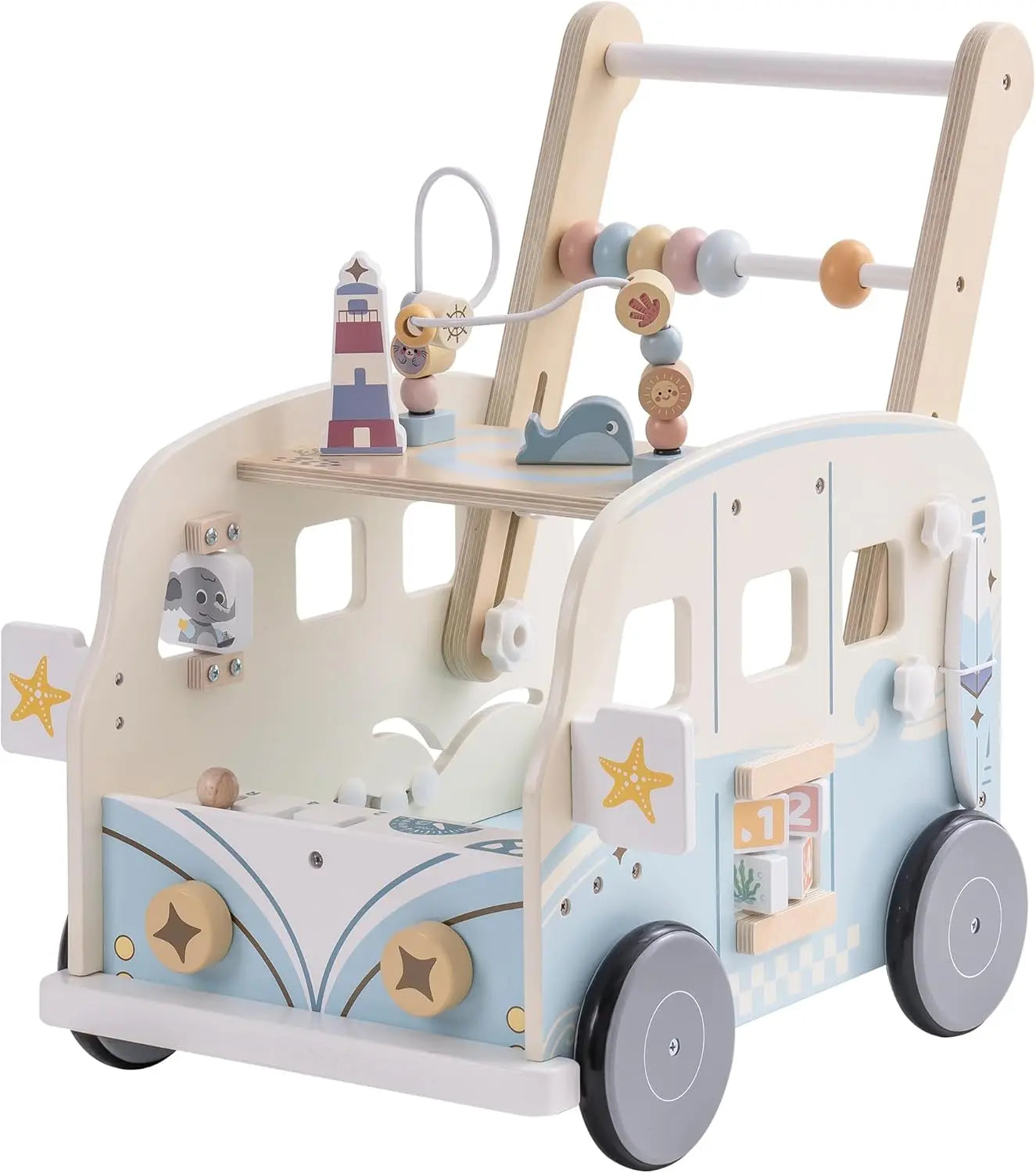
Non scratching baby walker wheels protect floors while supporting rubber trimmed wheels safety 💡 See it in action
Mini FAQ
Are non scratching baby walker wheels safe for hardwood floors?
Yes. Rubber-trimmed designs reduce friction marks and help prevent slips, making them suitable for hardwood, tile, and laminate surfaces.
Do rubber trimmed wheels slow down walking progress?
No. They provide controlled resistance that actually improves balance and confidence during early walking stages.
Is a wooden push walker better than plastic?
Many parents prefer wooden push walkers for their stability, durability, and compatibility with non scratching baby walker wheels.





