

Wooden Push Walker Review Toddler: Which One Is Worth It?
Does a Wooden Push Walker Really Help Toddlers Learn to Walk?
A push along toddler walker can be an excellent tool for supporting early walking when used at the right developmental stage. Unlike sit-in baby walkers that allow children to move before they're developmentally ready, a wooden push walker encourages toddlers to stand, shift their weight naturally, and practice coordinated steps while remaining in control of their movement.
Pediatric physical therapists generally recommend push walkers over seated walkers because they promote:
- Natural upright posture
- Balance and core muscle development
- Leg strength through self-propelled movement
- Confidence during independent walking practice
That said, a push walker works best alongside supervised floor play, cruising along furniture, and plenty of opportunities for independent exploration. Most toddlers benefit from using one between approximately 9 and 18 months, although readiness depends more on developmental milestones than age alone.
Push Along Toddler Walker Review Parents Trust Most
⏱ 8 min read
This wooden push walker review evaluates one of the most popular styles for first walkers based on stability, safety, durability, learning features, and long-term value. Whether you're looking for the best push walker for toddlers, a Montessori-inspired activity walker, or simply a safe first-steps companion, this guide helps you compare the options and choose confidently.

A trusted push along toddler walker that blends safety, play, and early learning. See it in action.
Our Testing Process
To create a useful wooden push walker review, we evaluated the features parents and child-development professionals consider most important. Rather than focusing only on appearance, we looked at how each walker performs during everyday use.
Stability and Tipping Resistance
We assessed base width, overall weight, wheel placement, and balance while toddlers pushed the walker across different surfaces. Heavier wooden frames with wide wheel spacing generally offered the greatest stability.
Wheel Resistance on Different Floor Types
Good wheel resistance prevents sudden acceleration on hardwood or tile while still allowing smooth movement on low-pile carpet. Adjustable resistance provides additional flexibility as children gain confidence.
Assembly, Durability, and Material Quality
We also considered ease of assembly, hardware quality, smooth wooden finishes, non-toxic coatings, and the durability of interactive activity panels after repeated daily use.
Best Wooden Push Walkers Reviewed
Best Overall
The Wooden Baby Walker stands out by combining excellent stability, adjustable wheel resistance, and a built-in activity center that remains engaging even after toddlers begin walking independently.
Pros
- Solid wooden construction for improved balance
- Interactive activity panel encourages fine motor development
- Adjustable wheel resistance adapts to growing confidence
- Neutral design complements modern homes
Cons
- Heavier than lightweight plastic alternatives
- Requires some assembly before first use
Best for First Walkers
Models featuring slower wheels, wider wheelbases, and lower handle heights tend to provide the greatest confidence for toddlers who are just beginning to cruise along furniture.
Best Premium Wooden Model
Premium push walkers often include higher-quality hardwood construction, smoother wheel bearings, and additional educational activities that extend play value well beyond the first walking stage.
Best Montessori-Inspired Walker
Minimalist wooden designs emphasize independent exploration with simple activities that encourage problem-solving rather than flashing lights or electronic sounds.
Best Budget Option
Budget-friendly wooden walkers can still offer excellent stability if they feature a solid frame, rubber-trimmed wheels, and child-safe finishes.
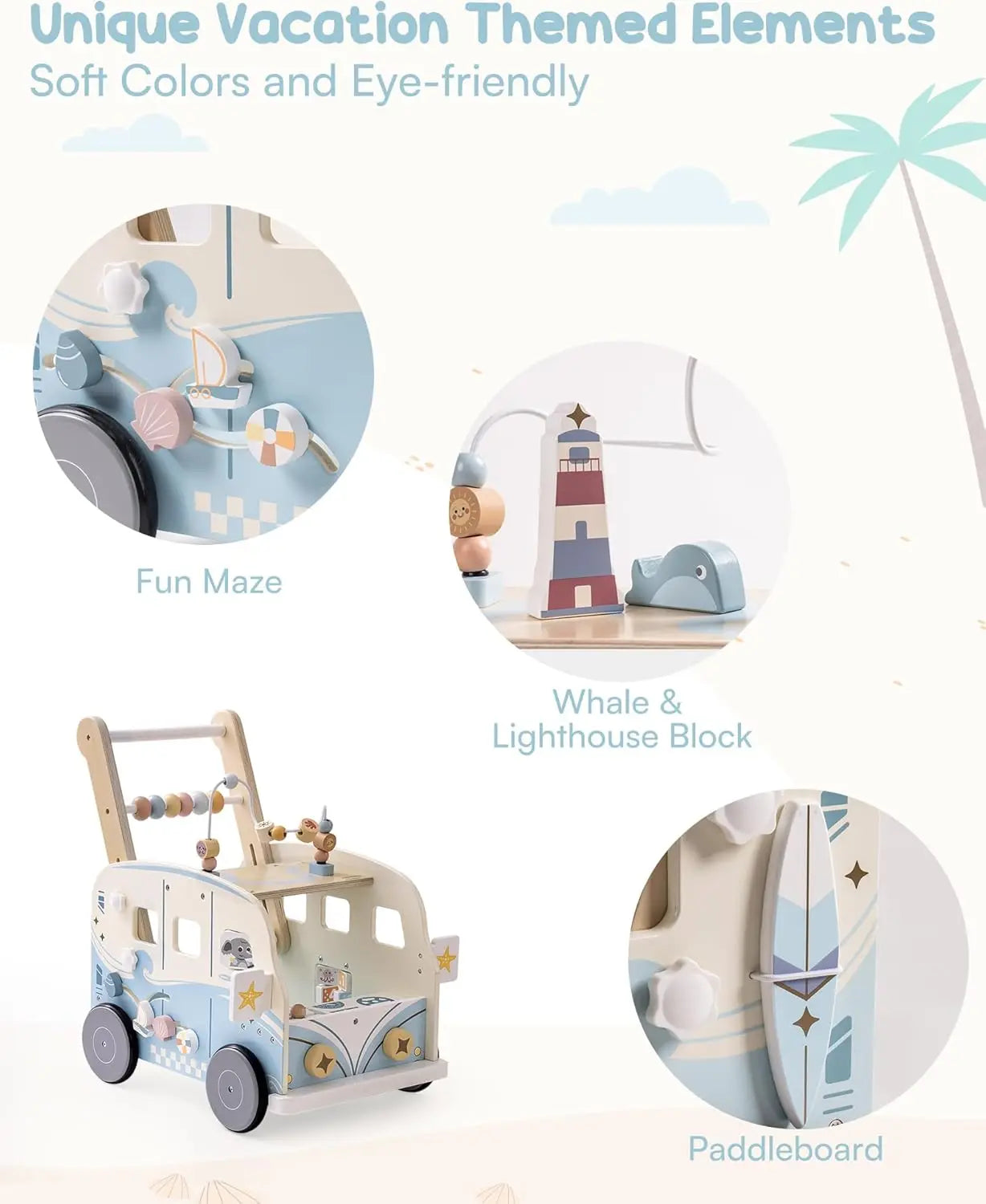
A wooden push walker that combines stable walking support with engaging developmental activities.
What Makes a Wooden Push Walker Worth Buying?
The best push walker for toddlers combines safety, thoughtful engineering, and long-term educational value. While colorful features may attract attention, construction quality matters far more for everyday use.
Safety Features That Matter
- Wide anti-tip base
- Rubber-coated wheels for improved traction
- Rounded edges and splinter-free surfaces
- Stable handle positioned at toddler height
Adjustable Wheels and Braking Systems
Wheel resistance is one of the most valuable features. Slower-moving walkers reduce the likelihood of sudden forward movement while allowing toddlers to develop balance at their own pace.
Material Quality and Certifications
Look for sustainably sourced wood, child-safe paints and finishes, secure hardware, and compliance with recognized toy safety standards. Products aligned with Health & Safety recommendations provide additional peace of mind.
Many families exploring options in Baby Growth & Learning also prioritize durable materials that can withstand years of everyday use.
Comparison Table: Top Wooden Push Walkers
| Feature | Wooden Baby Walker | Typical Plastic Push Walker |
|---|---|---|
| Recommended Age | 9–18 months | 9–18 months |
| Stability | Excellent weighted wooden frame | Moderate lightweight frame |
| Wheel Resistance | Adjustable | Often fixed |
| Learning Features | Integrated activity panel | Basic electronic toys |
| Durability | Long-lasting solid wood | May crack with heavy use |
| Overall Value | Excellent long-term investment | Lower upfront cost |
Who Should Buy Which Wooden Push Walker?
First-Time Walkers
Choose a heavier walker with adjustable wheel resistance to maximize stability during those first independent steps.
Petite Toddlers
Look for appropriately sized handles and lightweight maneuverability without sacrificing balance.
Active Toddlers
Children who move quickly benefit from durable construction and controlled wheels that help prevent sudden acceleration.
Montessori Homes
Natural wood designs with open-ended activities fit well into Montessori-inspired play spaces focused on independent learning.
Families browsing Mobility & Training often prefer wooden walkers because they combine movement, learning, and long-lasting durability.
Wooden vs Plastic Push Walkers
Both styles can help toddlers learn to walk, but they differ in several important ways.
- Stability: Wooden walkers are typically heavier and less likely to slide forward unexpectedly.
- Durability: Solid wood generally withstands years of play better than lightweight plastic.
- Maintenance: Plastic wipes clean easily, while wood benefits from occasional inspection and gentle cleaning.
- Value: Wooden walkers often last long enough to be reused by younger siblings.
Safety Checklist Before Your Toddler's First Walk
- Inspect wheels before each use.
- Confirm all screws remain securely tightened.
- Adjust wheel resistance if available.
- Remove loose rugs and floor hazards.
- Use only on flat indoor surfaces.
- Always supervise walking practice.
Real Parent Feedback After Daily Use
Long-Term Durability
Parents frequently report that quality wooden walkers remain sturdy after months of daily pushing, climbing, and imaginative play.
Favorite Features
- Stable construction inspires confidence.
- Activity panels continue entertaining toddlers after walking improves.
- Quiet wheels are appreciated on hardwood flooring.
Common Complaints
- Heavier wooden designs are less portable.
- Assembly may take longer than plastic alternatives.
- Premium models typically cost more upfront.
Many parents also pair their walker with developmental products from Sensory Toys to encourage longer periods of focused play.
Maintenance, Durability, and Warranty
Proper care helps extend the life of any wooden push walker.
- Clean using a slightly damp cloth and mild soap.
- Avoid prolonged exposure to moisture.
- Inspect wheels and fasteners regularly.
- Store indoors away from direct sunlight.
- Review the manufacturer's warranty and replacement parts policy before purchase.
Families exploring Baby Care Essentials often appreciate products designed for years of dependable use.
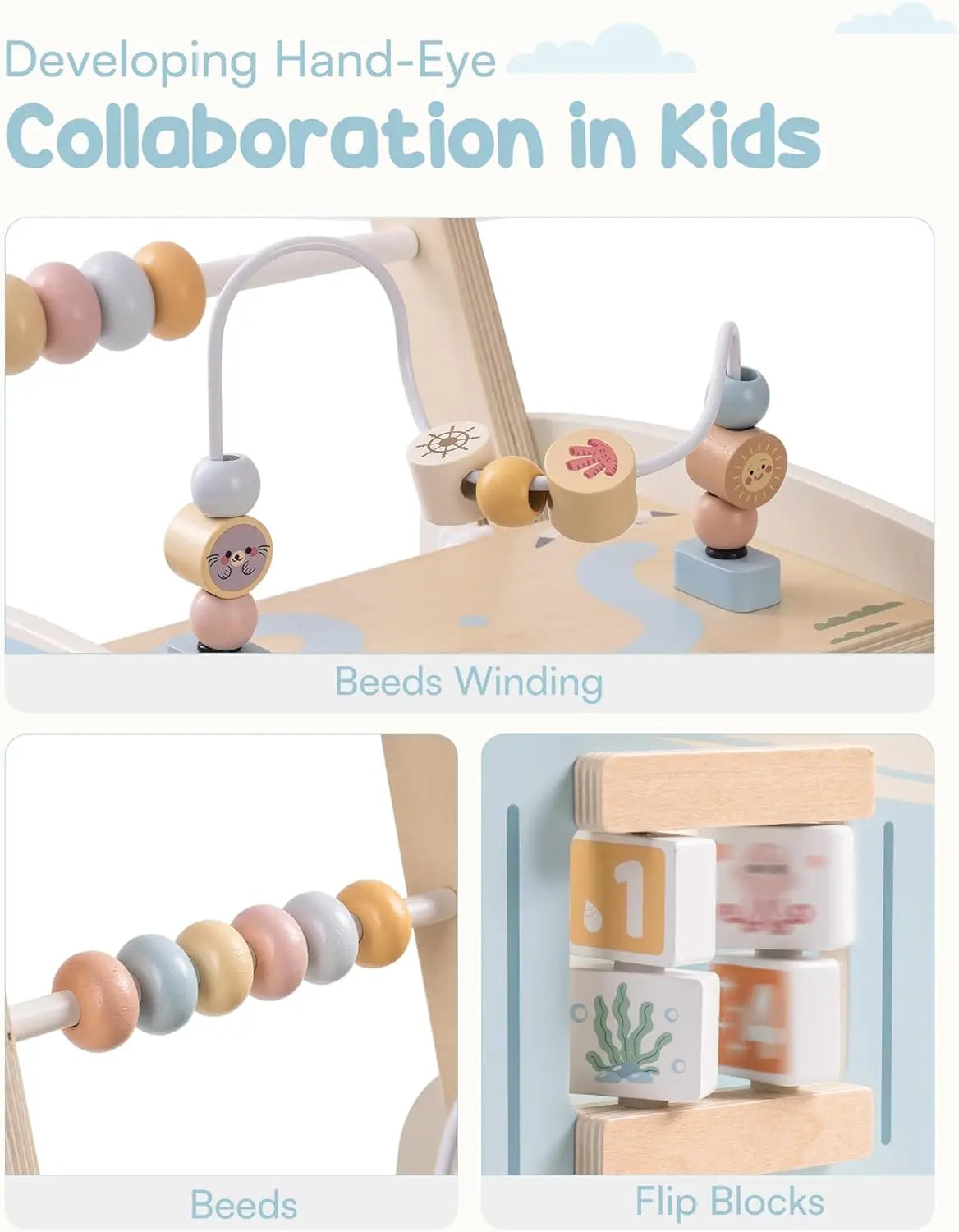
An activity walker wood design that supports balance, play, and growing independence.
Frequently Asked Questions
What is the best wooden push walker for toddlers?
The best model offers a stable wooden frame, adjustable wheel resistance, child-safe materials, and engaging activities that continue supporting development after walking becomes easier.
Are wooden push walkers safe for first-time walkers?
Yes. When used under adult supervision, quality wooden push walkers with wide bases and controlled wheels are considered safer than traditional seated walkers because they encourage natural movement.
How do I choose the right wheel resistance?
New walkers benefit from slower wheel movement for additional stability. As your toddler gains confidence, resistance can be reduced if the model allows adjustment.
What certifications should a wooden push walker have?
Look for child-safe finishes, non-toxic materials, and compliance with recognized toy safety standards appropriate for your region.
Is a heavier wooden walker more stable?
Generally, yes. Additional weight helps reduce sudden forward movement, although the walker should still be easy enough for your toddler to push comfortably.
How long do toddlers typically use a push walker?
Many children actively use a push walker for several months during early walking and continue enjoying the activity features long after they can walk independently.
Can wooden push walkers be used on hardwood floors?
Yes. Models with rubber-trimmed wheels perform well on hardwood, tile, and laminate while helping reduce slipping and protecting flooring.
Is the Woodlyra wooden push walker worth buying?
Many Woodlyra wooden push walker reviews are positive, particularly regarding stability and build quality. However, compare wheel resistance, activity features, materials, and overall value against other well-built wooden push walkers before making your final decision.





