

Reusable Drawing Board for Kids: Less Mess, More Fun
Do reusable drawing boards really work for kids?
Yes, reusable drawing boards can work well for kids when the board matches their age, interests, and how they play. A reusable art board for children gives them a low-mess surface for doodling, tracing, practicing letters, and drawing repeatedly without using a fresh sheet of paper each time. The main benefits are convenience and repeat use, but parents should still consider erase quality, durability, battery needs, screen visibility, and whether the board offers enough variety to hold a child's interest.
Best Reusable Drawing Boards for Kids (2026)
⏱ 8 min read
The best reusable drawing board for kids makes creative play easier to repeat, pack, and clean up. Whether you need a slim LCD writing tablet for car rides, a magnetic erasable drawing board for toddlers, or a more feature-rich light-up board for tracing and learning, the right choice depends on age and daily use. We compare the main types, explain where each works best, and highlight the features that matter before buying.
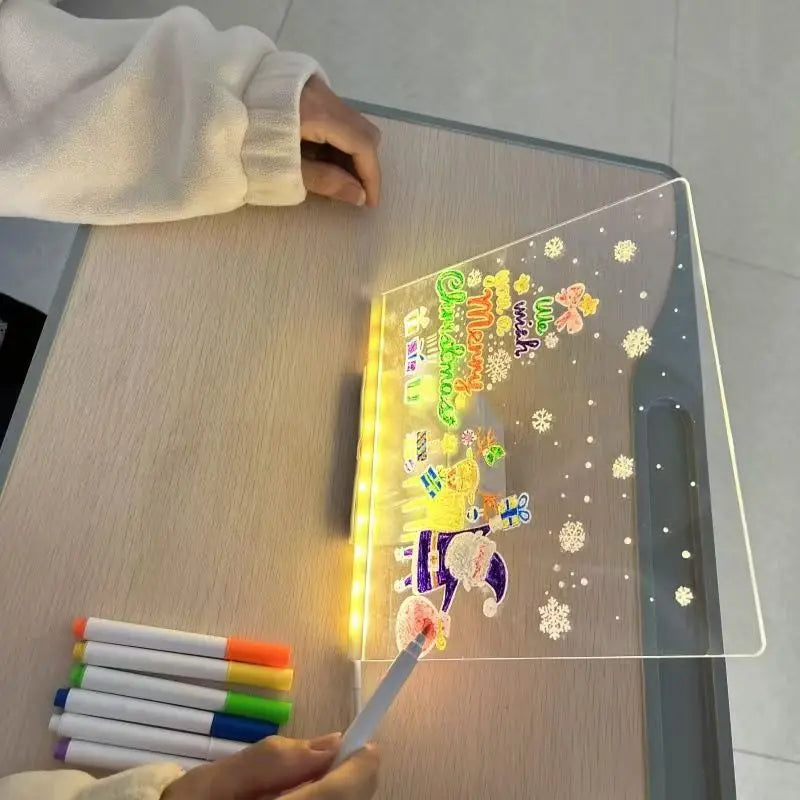
Reusable drawing boards provide mess-free creative play at home, in the car, or while traveling.
Best Reusable Drawing Boards for Kids (2026)
There is no single best reusable drawing tablet for kids because the ideal design changes with age and use. Toddlers often benefit from simple, sturdy controls, while preschoolers may enjoy tracing and learning features. Older children may prefer a larger drawing area or a lightweight LCD board they can carry independently.
For everyday use, magnetic boards are practical and durable. For travel, an LCD writing tablet is usually the easiest option to pack. Water drawing boards are useful when parents want an especially low-mess activity, while light-up and multifunction boards can add more visual engagement for tracing, messages, and early learning.
- Best for everyday home play: Magnetic erasable drawing boards with a durable surface and simple erase mechanism.
- Best for travel: Lightweight LCD writing tablets that fit easily into backpacks, car organizers, or carry-on bags.
- Best for water-based mess-free play: Water drawing boards that use refillable pens and reusable mats.
- Best for tracing and learning: Multifunction boards with templates, letters, numbers, or illuminated surfaces.
- Best for a versatile illuminated option: The LED Acrylic Message Board can be used for reusable drawings, messages, and simple creative activities.
Quick Comparison Table: Top Reusable Drawing Boards
| Board Type | Typical Age Fit | Power | Portability | Durability | Best Use |
|---|---|---|---|---|---|
| Magnetic Erasable Board | 1–5+ | None | Good | High | Everyday drawing and home play |
| LCD Writing Tablet | 3–5+ | Usually battery-powered | Excellent | Good with careful handling | Travel, quiet drawing, writing practice |
| Water Drawing Board | 1–5+ | None | Good | Good, but fabric can wear | Mess-free sensory and creative play |
| Light-Up or Multifunction Board | 3–8+ | Battery or USB power | Moderate | Depends on construction | Tracing, messages, creative learning |
A reusable writing pad for kids is most useful when its limitations fit the intended activity. LCD tablets are excellent for quick sketches but may offer limited color or require a replacement battery. Magnetic boards are easy to reuse and do not need charging, but they can be bulkier. Water boards are exceptionally low-mess but may not provide the crisp writing experience older children want.
Do reusable drawing boards really work for kids?
Reusable drawing boards work best as repeat-use creative and early-learning tools rather than complete replacements for traditional art supplies. Children can practice drawing shapes, scribbling, tracing, writing letters, or making quick illustrations without needing paper every time. That makes a mess free drawing board particularly useful for families managing limited table space, frequent travel, or a child who wants to draw repeatedly throughout the day.
The biggest practical advantage is convenience. A child can draw, erase, and start again in seconds, while parents avoid piles of discarded paper and many of the cleanup issues associated with markers and paints. An eco friendly drawing board can also reduce the amount of disposable paper used for casual doodling, although the environmental benefit depends on the board's materials, battery requirements, and eventual disposal.
There are limitations. Some LCD boards have monochrome displays, magnetic boards may have smaller drawing areas, and water boards can be less convenient when the mat needs time to dry. Light-up models may require a power source, and electronic boards can be more vulnerable to drops or screen damage. The best results come from choosing the format that matches how and where your child actually draws.
Types of Reusable Drawing Boards Explained
Reusable drawing boards use different technologies to create a repeatable drawing experience. The differences affect cleanup, portability, durability, age suitability, and the kinds of activities children can do.
Magnetic erasable drawing boards
A magnetic erasable drawing board for kids uses a drawing surface and a magnetic stylus to create marks that can be cleared with a slider or similar mechanism. These boards are often a strong choice for toddlers because they do not require wet materials, ink, or loose crayons.
- Pros: Simple to use, reusable, generally durable, and battery-free.
- Cons: Drawing lines may be less detailed than on paper, and the erase mechanism can wear with heavy use.
- Best age fit: Toddlers through early elementary years, depending on size and design.
LCD writing tablets for kids
An LCD writing tablet for kids uses a pressure-sensitive display to show marks made with a stylus or similar tool. Most are thin and lightweight, making them a practical reusable sketch pad for kids who draw in cars, restaurants, waiting rooms, or airplanes.
- Pros: Very portable, lightweight, quiet, and typically produces no paper or marker mess.
- Cons: Many models have limited color, rely on a battery for the erase function, and require more care than a thick magnetic board.
- Best age fit: Preschoolers and older children who can handle a thin electronic-style device responsibly.
Water drawing boards
Water drawing boards use a refillable water pen and a special mat or fabric surface. The marks appear temporarily and fade as the water dries, allowing children to reuse the same surface repeatedly.
- Pros: No ink, low cleanup, battery-free, and engaging for younger children.
- Cons: Marks are temporary, the surface may need drying time, and the fabric can show wear after repeated use.
- Best age fit: Toddlers and preschoolers, particularly for supervised creative play.
Light-up and multifunction boards
Light-up and multifunction boards add features beyond basic doodling. Depending on the design, children may use them for tracing, practicing letters and numbers, creating reusable messages, or experimenting with illuminated drawings.
- Pros: Visually engaging, useful for tracing and learning activities, and often more versatile than basic boards.
- Cons: Usually more expensive, may require batteries or USB power, and can have more components that need careful handling.
- Best age fit: Preschoolers and older children, depending on the specific features and recommended age.
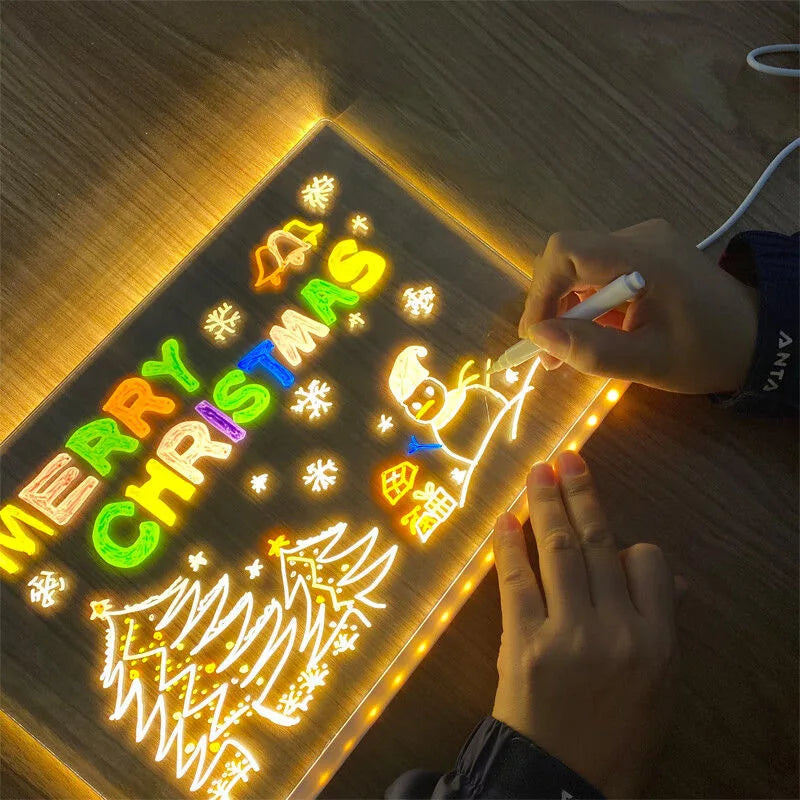
Different reusable drawing board formats offer different advantages for travel, learning, and everyday creative play.
Best Reusable Drawing Boards by Age Group
Age is one of the most important factors when choosing a reusable drawing tablet for kids. The right board should be easy to grip and operate while matching the child's developing motor skills and attention span.
Best for toddlers (1–3 years)
For toddlers, prioritize simple controls, rounded edges, a sturdy construction, and a large enough drawing surface for early scribbling. A magnetic board or water drawing board is often easier to understand than a more complicated electronic model. Avoid designs with accessible small detachable parts and always follow the manufacturer's age recommendation.
At this stage, drawing boards can support early hand control and cause-and-effect learning. Parents should supervise use, particularly if the stylus or accessories are separate from the main board.
Best for preschoolers (3–5 years)
Preschoolers can usually handle more drawing formats and may benefit from an LCD doodle board for toddlers that offers a larger writing surface as their skills develop. This is also a good age for tracing templates, practicing shapes, and beginning letters and numbers.
Look for an easy erase function, clear visibility, durable construction, and a stylus that is comfortable for smaller hands. If the board will travel, lightweight construction and a secure storage solution for the stylus are especially useful.
Best for older kids (5+ years)
Older children often need more room for detailed drawings and writing practice. An LCD writing tablet, larger magnetic board, or multifunction illuminated board may provide a better experience than a basic toddler-focused design.
At this age, consider screen clarity, writing responsiveness, drawing area, portability, and whether the board supports the child's actual interests. A reusable board is most likely to remain useful when it can handle both casual doodling and structured activities such as spelling, math practice, or tracing.
Best Options for Travel vs Home Use
The best reusable writing pad for kids at home is not necessarily the best option for a road trip or airplane. Travel use puts more emphasis on weight, battery life, durability, and how quickly the board can be packed away.
- For car travel: Choose a slim LCD tablet or compact magnetic board that can be used on a child's lap and stored without loose pieces.
- For airplanes: Prioritize lightweight construction, quiet operation, and a long-lasting battery if the model requires one. A device that can be used without an internet connection is especially convenient.
- For restaurants and waiting rooms: A small mess free drawing board is ideal because it produces no marker stains or paper scraps and can be put away quickly.
- For home learning: A larger magnetic, LCD, or multifunction board may be preferable because children have more space for writing, tracing, and repeated practice.
- For shared family use: Look for sturdy construction and an easy-to-clean surface that can withstand frequent handling.
For families that move between home and travel regularly, portability should be balanced against durability. A board that is extremely thin but easy to crack may not deliver better value than a slightly heavier model that survives daily use.
How We Tested and Ranked These Drawing Boards
To compare reusable drawing boards fairly, we focused on the factors that affect real-world use rather than judging them only by appearance or the number of advertised features.
- Durability testing: We considered how well each board type handles repeated drawing, erasing, packing, and everyday handling. For electronic-style boards, screen protection and construction quality are especially important.
- Ease of use for kids: We looked at whether children can start drawing quickly, erase without adult assistance, and understand the controls without a lengthy setup.
- Screen clarity and responsiveness: For LCD and illuminated boards, visibility and responsiveness matter because faint lines or delayed input can quickly frustrate younger users.
- Portability: We considered weight, profile, storage requirements, and whether the board is practical for cars, airplanes, restaurants, and day trips.
- Value for money: We compared the expected usefulness, durability, required accessories, and power needs against the purchase price. A lower-cost board is not necessarily a better value if it needs frequent replacement.
Because children's needs vary, our ranking approach favors matching each board type to the right use case. A basic magnetic board may outperform a more advanced model for a toddler, while an older child may get more value from an LCD tablet or multifunction drawing surface.
Key Features to Look for Before Buying
Before buying a reusable art board for children, focus on the features that affect safety, daily convenience, and long-term use. Extra functions are helpful only when they support how your child actually plays.
- Material safety: Check the manufacturer's age rating and material information. Look for sturdy construction, smooth edges, and designs appropriate for the intended age group.
- Erase mechanism: A reliable erase button, slider, or magnetic clearing system should work consistently without requiring excessive force.
- Battery requirements: Determine whether the board needs disposable batteries, rechargeable power, or no power at all. Check whether the erase function depends on battery power.
- Build quality: Look for a frame that can withstand normal drops and repeated packing. Electronic boards should have adequate protection around the display.
- Drawing area: A larger surface is useful for writing and detailed drawings, while a smaller board may be easier for travel.
- Stylus storage: If the board includes a separate pen, a tether or built-in storage area can reduce the chance of losing it.
- Visibility: Children should be able to see their marks clearly in the environments where the board will be used.
- Cleaning and care: Choose a surface that can be maintained according to the manufacturer's instructions without harsh chemicals that could damage it.
If sustainability is important, consider the complete lifecycle rather than simply choosing an eco friendly drawing board label. A durable reusable board that lasts for years may create less waste than a cheaper product that needs frequent replacement, while battery-powered models introduce additional considerations for battery disposal and charging.
Maintenance, Safety, and Longevity Tips
Proper care can help a reusable drawing board remain functional for longer. The maintenance routine depends on whether the board is magnetic, electronic, water-based, or illuminated.
- Clean according to the material: Use only the cleaning method recommended by the manufacturer. Avoid soaking electronic or LCD boards.
- Protect the screen: Do not press excessively hard on LCD or illuminated surfaces, and avoid sharp objects that could scratch or damage the display.
- Manage batteries carefully: Remove disposable batteries if the board will be stored for an extended period, following the manufacturer's instructions. Replace batteries when the erase function becomes unreliable.
- Store accessories together: Keep styluses, water pens, templates, and cables in a designated container or storage pocket to prevent loss.
- Keep water boards dry between uses: Allow water-based mats and pens to dry as directed to reduce the risk of unpleasant odors or premature fabric wear.
- Store flat when appropriate: Follow the manufacturer's storage guidance, especially for boards with flexible surfaces or displays that could be damaged by bending.
- Inspect regularly: Stop using a board if it develops sharp edges, cracked components, damaged cables, or other hazards.
- Supervise younger children: Always follow the stated age range and supervise toddlers when a board includes detachable accessories or electronic components.
Frequently Asked Questions About Reusable Drawing Boards
What is the best reusable drawing board for kids?
The best reusable drawing board for kids depends on age and use. Magnetic boards are a strong all-around choice for simple home drawing, LCD writing tablets are excellent for lightweight travel, and water boards suit younger children who enjoy temporary, low-mess marks. Older children may prefer a larger LCD or multifunction illuminated board for writing, tracing, and more detailed drawings.
Are LCD writing tablets safe for children?
Most LCD writing tablets are designed for children, but parents should check the manufacturer's recommended age, construction, and safety information before buying. Choose a model with a durable frame, avoid sharp or damaged accessories, and supervise younger children when necessary. LCD writing tablets are also not the same as conventional tablets because they are generally designed for writing and drawing rather than internet access or app use.
What age is suitable for reusable drawing boards?
Reusable drawing boards are available for different age groups, but the appropriate choice depends on the design. Simple magnetic and water boards can suit many toddlers, while LCD and multifunction boards may be better for preschoolers and older children. Always check the specific product's age recommendation and supervise young children when accessories are involved.
Do reusable drawing boards require batteries?
Not always. Magnetic erasable boards and water drawing boards typically work without batteries. Many LCD writing tablets use a small battery for the erase function, while light-up and multifunction boards may use disposable batteries, rechargeable power, or USB power. Check the power requirements before purchasing, especially if you plan to use the board while traveling.
Which is better: magnetic or LCD drawing board?
Magnetic boards are generally better for younger children and everyday home use when durability and battery-free operation matter most. LCD boards are often better for travel because they are thin, lightweight, and quiet. If you want a simple, sturdy board for frequent toddler play, choose magnetic; if portability is the priority, an LCD writing tablet for kids may be the better fit.
Are reusable drawing boards environmentally friendly?
Reusable boards can reduce the need for disposable paper during everyday doodling, but their environmental impact varies by material, durability, battery use, and disposal. A long-lasting board that is used regularly may offer more practical waste reduction than a short-lived product that needs frequent replacement.
How long do reusable drawing boards last?
Longevity depends on the board type, construction quality, and frequency of use. A well-made magnetic board can remain useful for years, while LCD and illuminated boards may last longer when protected from drops, pressure, moisture, and scratches. Replacing batteries and storing accessories properly can also help extend the useful life of the product.
Related Guide: Best Light Up Message Board Compared for Kids





