

Soccer Tabletop Game Benefits That Build Skills Through Play
Does a soccer tabletop game really improve hand eye coordination?
A soccer tabletop game can improve hand-eye coordination by combining fast visual tracking, precise hand movements, and quick decision-making during play. Regular practice encourages better reaction time, fine motor control, focus, and bilateral coordination while providing an engaging, screen-free activity for children and adults. Although results depend on age and consistency, even short sessions can help strengthen everyday coordination skills.
Soccer Tabletop Game Benefits for Skill Growth
A soccer tabletop game offers far more than entertainment. As a fast-paced tabletop sports game and compact mini soccer table, it encourages physical movement, strategic thinking, and social interaction while supporting activities that improve hand eye coordination for kids and adults. Whether used at home, in classrooms, or during family game nights, regular play helps develop practical skills that transfer into sports, learning, and everyday life.
⏱ 7 min read
Looking for a screen-free activity that keeps children engaged while helping them build coordination, concentration, and confidence? A tabletop soccer game may be one of the simplest ways to combine active play with meaningful skill development.
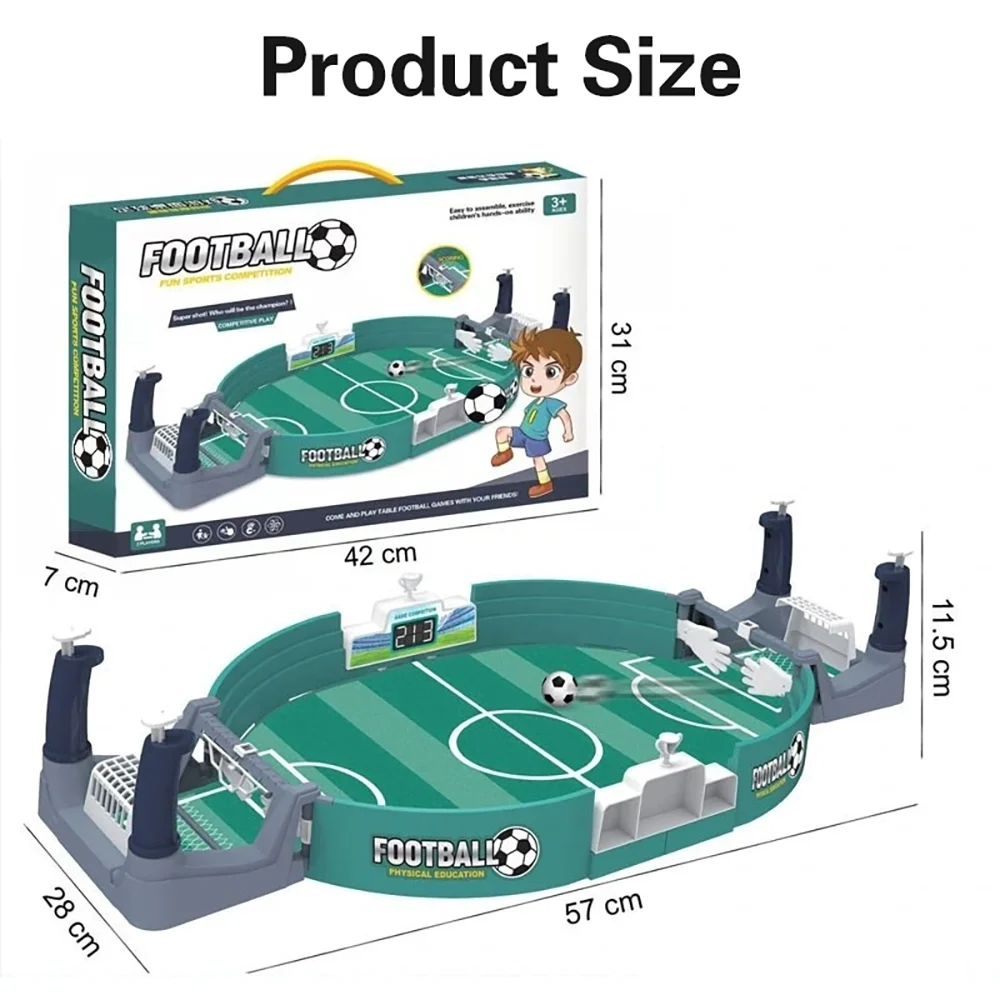
Soccer tabletop game fun as a tabletop sports game for family nights. See it in action.
What Are the Benefits of a Soccer Tabletop Game?
Soccer tabletop game benefits extend well beyond recreation. The combination of movement, competition, and problem-solving helps children and adults strengthen important developmental skills while enjoying a fun indoor activity.
Physical and motor skill benefits
Controlling the rods requires coordinated wrist, finger, and arm movements. Repeated practice develops fine motor control, reaction speed, grip coordination, and body awareness that can support other sports and everyday activities.
Cognitive and learning benefits
Players constantly predict ball movement, adjust strategies, and make split-second decisions. These mental challenges encourage concentration, spatial awareness, planning, and flexible thinking during every match.
Social and emotional development
Friendly competition teaches patience, turn-taking, communication, and emotional regulation. Winning and losing respectfully also helps children develop resilience and confidence.
Family and educational value
Because games are quick to set up and easy to replay, families can enjoy regular practice sessions together. Teachers and after-school programs may also use tabletop soccer to encourage teamwork and cooperative learning.
How Does a Soccer Tabletop Game Support Child Development?
A tabletop sports game for skill development encourages children to learn through repetition, immediate feedback, and enjoyable challenges.
How coordinated rod movements build skills
Operating multiple player rods strengthens bilateral coordination because both hands must work together while tracking the ball. These coordinated movements support developing motor patterns that children use during writing, catching, and other daily tasks.
Why fast reactions strengthen learning
Players must quickly recognize changes in play and respond with accurate movements. This repeated cycle of seeing, processing, and reacting helps reinforce neural pathways involved in visual processing and motor planning.
How repetition improves confidence
As children experience successful passes, saves, and goals, they gradually build confidence in their abilities. Small improvements over time encourage persistence and make continued practice enjoyable.
For parents exploring Baby Growth & Learning, interactive games like tabletop soccer provide another engaging way to encourage active development through play.
Does a Soccer Tabletop Game Really Improve Hand-Eye Coordination?
Yes—regular play can help improve hand-eye coordination because players must continuously connect what they see with accurate physical movements. Like many improve hand eye coordination games, tabletop soccer rewards timing, precision, and repeated practice.
Reaction time
Fast-moving gameplay encourages quicker responses to unexpected changes, helping players improve reaction speed while maintaining control.
Following the ball across the playing surface strengthens visual tracking, a skill important for reading, sports, and many classroom activities.
Bilateral coordination
Using both hands simultaneously while controlling different rods encourages coordinated movement patterns that contribute to smoother physical performance.
Short sessions of 10 to 15 minutes, repeated several times each week, often provide enough practice to support gradual improvement in hand eye coordination activities for kids.
Top Physical, Cognitive, Social, and Emotional Benefits
Fine motor skills
Rotating rods with precision develops finger control, wrist stability, and dexterity, making tabletop soccer one of many enjoyable fine motor skills games for children.
Strategic thinking and problem solving
Players quickly learn how to anticipate opponents, position defenders, and create scoring opportunities through observation and planning.
Focus, patience, and self-control
Competitive play rewards sustained attention while encouraging players to remain calm under pressure and recover from mistakes.
Teamwork and communication
Playing doubles encourages communication, cooperation, and shared problem-solving as teammates coordinate offensive and defensive strategies.
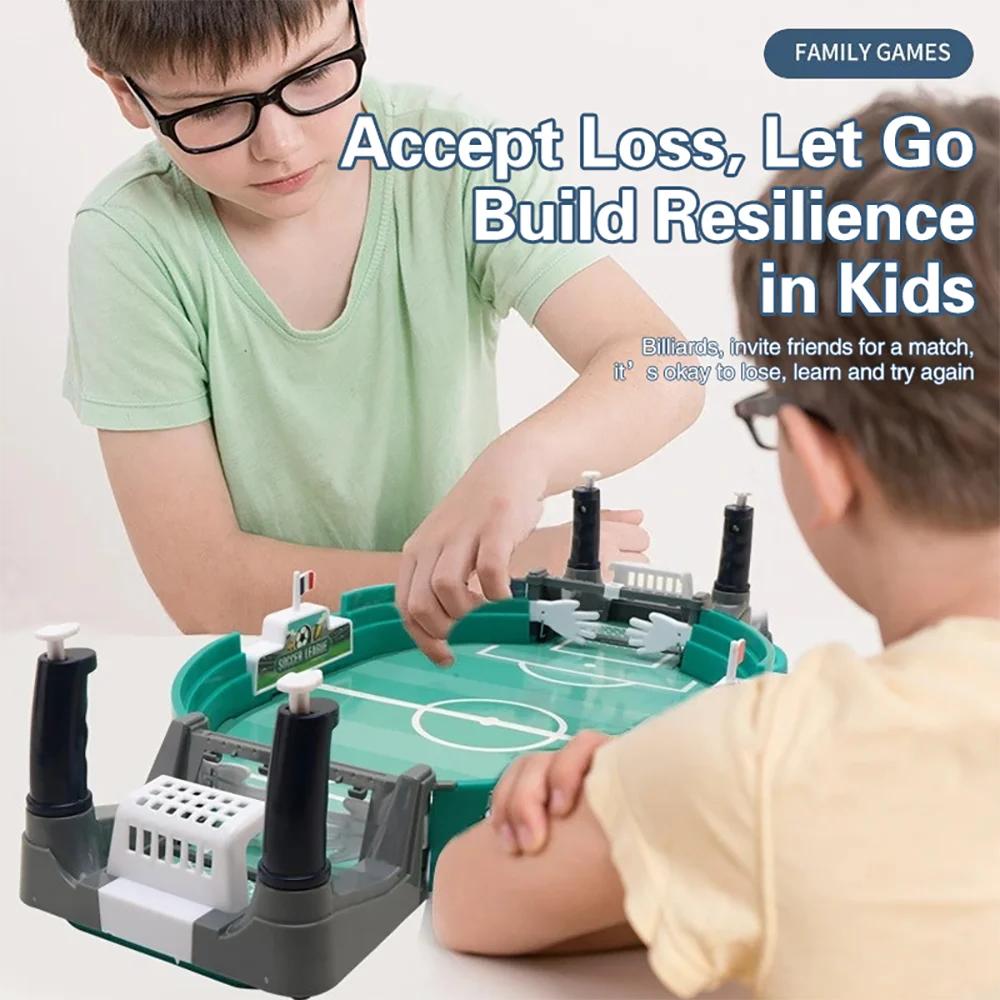
Mini soccer table supporting hand eye coordination training. See it in action.
Features That Help Maximize Learning Through Play
Responsive controls
Smooth rod movement allows children to practice accurate passes and shots while reducing unnecessary frustration during learning.
Stable playing surface
A sturdy table keeps gameplay consistent, helping players focus on developing technique instead of compensating for equipment movement.
Age-appropriate size
A compact design makes the game easier for younger players to reach comfortably while still providing an enjoyable challenge for older children and adults.
Durability for repeated practice
Durable construction supports regular family use, allowing skills to improve gradually through frequent practice sessions.
Soccer Tabletop Game vs Other Indoor Activities
| Activity | Coordination | Problem Solving | Social Interaction | Physical Movement |
|---|---|---|---|---|
| Soccer tabletop game | ⭐⭐⭐⭐⭐ | ⭐⭐⭐⭐ | ⭐⭐⭐⭐⭐ | Moderate |
| Board games | ⭐⭐ | ⭐⭐⭐⭐⭐ | ⭐⭐⭐⭐⭐ | Low |
| Building toys | ⭐⭐⭐⭐ | ⭐⭐⭐⭐ | ⭐⭐⭐ | Low |
| Video games | ⭐⭐⭐ | ⭐⭐⭐⭐ | Varies | Very Low |
| Outdoor sports | ⭐⭐⭐⭐⭐ | ⭐⭐⭐⭐ | ⭐⭐⭐⭐⭐ | High |
Rather than replacing other activities, tabletop soccer works best as part of a balanced routine that combines active indoor play with outdoor exercise, creative games, and family interaction.
Parents interested in holistic development often browse Mobility & Training to complement active play tools like this.
How Parents and Teachers Can Maximize the Benefits
Age-based play ideas
Younger children can practice simple passing drills, while older players can enjoy full matches that introduce more advanced strategy.
Solo and cooperative activities
Children can improve control independently through target practice before progressing to cooperative games that encourage teamwork.
Classroom applications
Teachers may incorporate tabletop soccer into reward periods, indoor recess, or small-group activities that encourage communication and problem-solving.
Healthy playtime habits
Short, consistent sessions with regular movement breaks often provide better long-term results than occasional marathon play sessions.
What Parents and Educators Notice Over Time
Motor improvements
Many families observe smoother hand movements, improved timing, and better confidence during other sports and physical activities after regular practice.
Social confidence
Children often become more comfortable communicating, cooperating, and participating in friendly competition with siblings and classmates.
Attention and persistence
Consistent play encourages players to stay focused longer, learn from mistakes, and continue practicing until skills improve. Individual progress varies, but regular participation is generally more important than lengthy sessions.
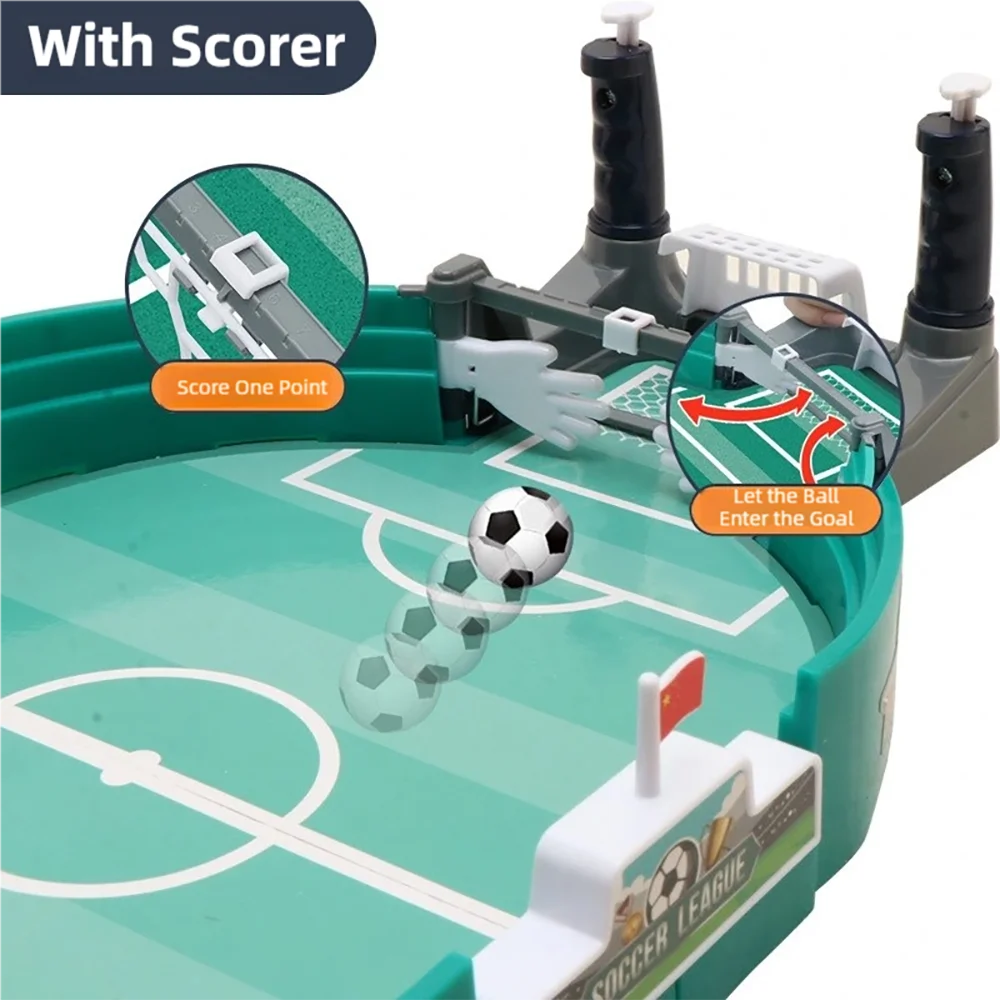
Soccer tabletop game enhancing reaction time and strategy. See it in action.
Frequently Asked Questions
Is a soccer tabletop game good for kids?
Yes. It promotes coordination, fine motor skills, strategic thinking, communication, and enjoyable screen-free play for many school-age children.
What age is appropriate for a mini soccer table?
Many mini soccer tables are suitable for children around six years and older, although age recommendations vary by manufacturer and adult supervision may be appropriate for younger players.
How long should kids play to see improvement?
Playing for 10 to 15 minutes several times each week provides regular practice without overwhelming younger children.
Can tabletop soccer improve fine motor skills?
Yes. Repeated rod control strengthens finger dexterity, wrist control, bilateral coordination, and precise hand movements.
Is a tabletop soccer game educational?
It can support learning by encouraging planning, concentration, problem-solving, spatial awareness, and positive social interaction alongside physical activity.
Can schools use tabletop soccer for learning?
Many schools and enrichment programs incorporate tabletop games into indoor activities because they encourage cooperation, communication, and skill development in an engaging format.
For families building a skill-focused play environment, combining tools from Baby Growth & Learning with active tabletop sports games creates a balanced path to confidence and long-term development.
Related Guide: Football Two Player Games: Features That Win





