

How to Teach Toddler Self Feeding Step by Step at Home
How to teach toddler self feeding works best when parents use short, daily practice sessions, offer soft finger foods, and choose easy-grip utensils. Start with simple textures, model the motion, and let your child explore at their own pace. This approach builds confidence, coordination, and healthy self feeding skills development without pressure.
How can I teach my toddler to self feed at home without stress?
How to Teach Toddler Self Feeding Step by Step at Home
⏱ 7 min read
How to teach toddler self feeding is one of the most common questions parents ask when mealtimes turn messy, slow, and emotional. You want your child to be independent, but you also worry about choking, wasted food, and whether you’re “doing it right.” This guide breaks everything into simple, doable steps that actually work—no pressure, no perfection, just real progress.
Building confidence with how to teach toddler self feeding — gentle steps that support self feeding skills development 💡 See it in action
Which approach fits your child’s personality best—structured practice or relaxed exploration? Keep reading to find out.
Why Self Feeding Matters More Than You Think
Self feeding isn’t just about getting food into your child’s mouth. It’s about confidence, coordination, decision-making, and trust. When toddlers learn to feed themselves, they also learn:
- How to control their hands and fingers
- How to judge food size and texture
- How to listen to hunger and fullness cues
- How to feel proud of small wins
Parents often focus on the mess. But behind that mess, real learning is happening.
When to Start: Month Old Self Feeding Milestones
Many parents ask about month old self feeding expectations. While every child is different, here’s a general guideline:
- 6–8 months: Grabbing soft finger foods, exploring textures
- 9–11 months: Bringing food to mouth more accurately
- 12–14 months: Trying spoons, some success with scooping
- 15+ months: Improving control, less spilling
If your toddler isn’t following this exactly, that’s okay. Progress matters more than timing.
How to Teach Toddler Self Feeding: Step-by-Step Plan
How to teach toddler self feeding works best when broken into small, manageable steps. Start with comfort, add structure, and let your child lead. This reduces power struggles and builds lasting habits.
- Start with finger foods: Soft banana slices, avocado, steamed veggies.
- Model the behavior: Eat with them so they can copy you.
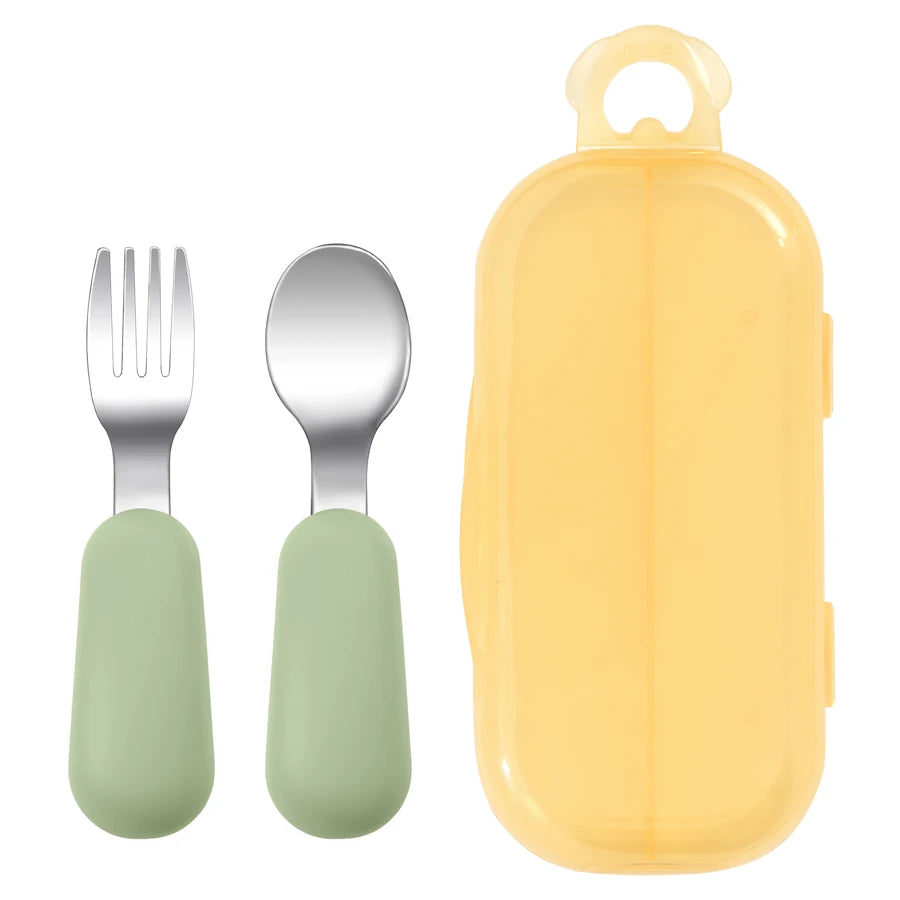
- Use toddler-friendly utensils: Lightweight, short handles, easy grip.
- Expect mess: Learning is messy by nature.
- Praise effort, not results: Celebrate trying, not finishing.
Parents who follow this structure report fewer mealtime meltdowns and more curiosity around food.
Tools That Make Self Feeding Easier
Choosing the right tools can speed up self feeding skills development dramatically. Toddlers struggle with adult-sized utensils. A well-designed infant spoon and fork set gives them control without frustration.
Helpful tools often include:
- Short, thick handles for better grip
- Soft silicone tips for gentle gums
- Non-slip bases
- Lightweight design
You can also explore helpful gear in Feeding & Nursing to make daily routines smoother.
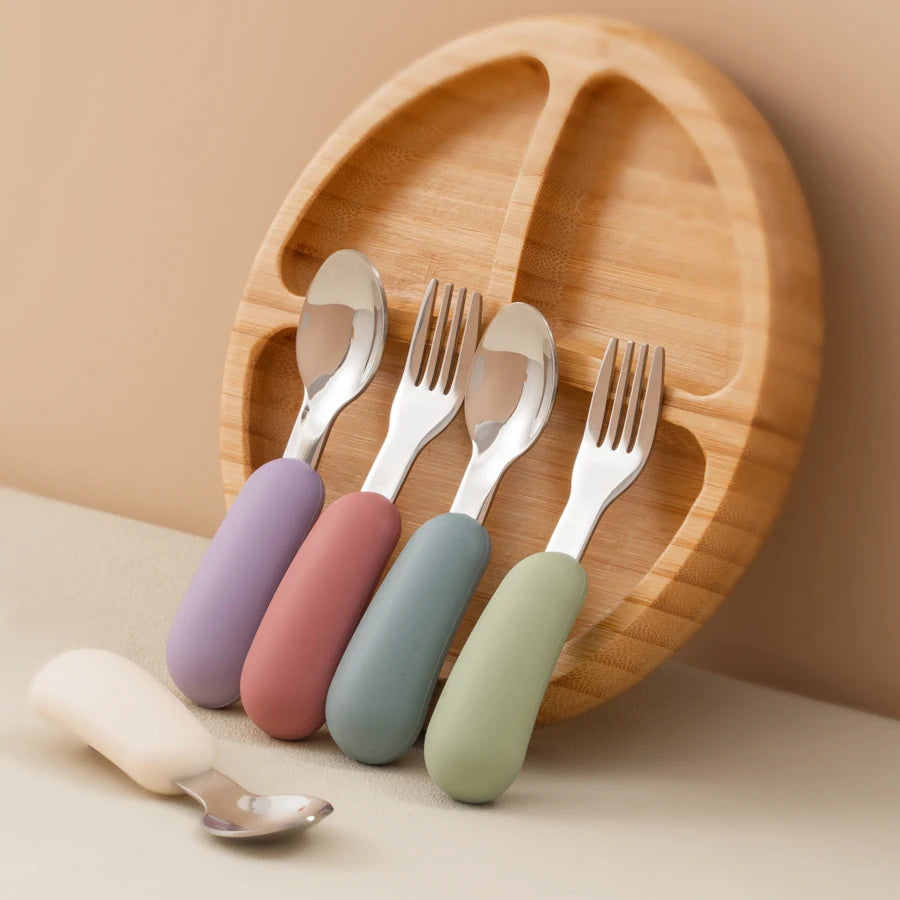
Simple tools + patience = stronger self feeding skills development 💡 See it in action
Common Mistakes That Slow Progress
Even loving, well-meaning parents can accidentally make self feeding harder. Watch out for these:
- Feeding them when they struggle instead of guiding
- Rushing meals
- Comparing your child to others
- Switching tools too often
Consistency builds confidence.
Safety Tips Every Parent Should Know
Safety matters just as much as independence. Keep these in mind:
- Always supervise meals
- Use soft, cut-up foods
- Seat your toddler upright
- Avoid distractions
For more peace of mind, browse helpful items in Health & Safety.
Real-Life Scenarios & Solutions
Scenario: “My toddler throws the spoon every time.”
Solution: Offer two spoons—one to hold, one to use.
Scenario: “My child won’t try new textures.”
Solution: Mix new foods with favorites.
Scenario: “Mealtime takes forever.”
Solution: Shorten meals and focus on practice, not volume.
Parents who stick with these techniques often see improvement within two weeks.
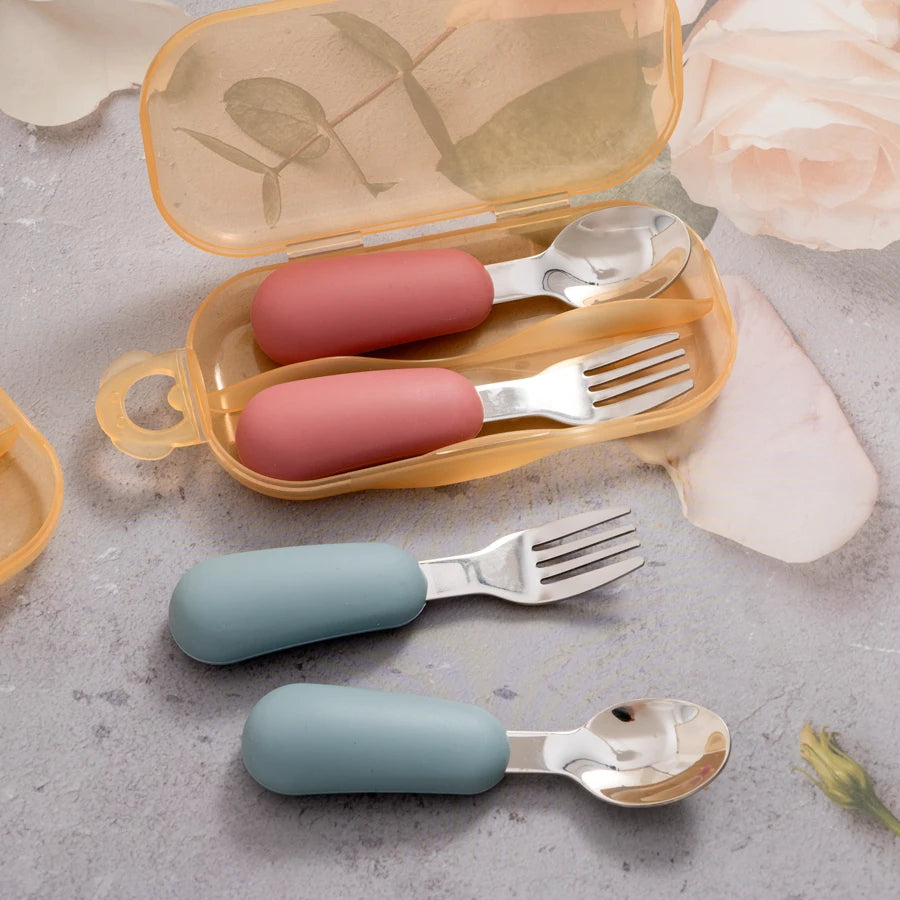
Confidence grows when toddlers feel in control — how to teach toddler self feeding made simple 💡 See it in action
Mini FAQ
When should I start teaching my toddler to self feed?
Most children show readiness between 6–9 months, but every child develops differently.
How long does it take for a toddler to learn self feeding?
Some children improve in weeks, others take months. Consistency matters more than speed.
Is mess a sign of failure?
No—mess means learning. It’s part of building coordination.
Do special utensils really help?
Yes. A toddler-friendly infant spoon and fork set can reduce frustration and boost confidence.
For more growth-focused tools, explore Baby Growth & Learning and supportive items in Feeding Tools.





