

Infant Sensory Stimulation: The Complete 0–12 Month Development Guide
Many parents worry when their baby seems fussy, bored, or not engaging with the world around them. What often goes unnoticed is that these moments are deeply connected to infant sensory stimulation—the foundation of how your baby learns, thinks, and interacts. In the first year of life, your baby’s brain forms millions of neural connections every second, and sensory experiences are what fuel that growth.
This guide will walk you through everything you need to know—from understanding how sensory development works, to practical at-home activities, to choosing the right toys safely and effectively. Whether you're a first-time parent or looking to improve your daily routine, this is your complete roadmap.
What Is Infant Sensory Stimulation? (And Why It Shapes Brain Development)

Definition of Sensory Stimulation in Infants
Infant sensory stimulation refers to the process of engaging a baby’s five senses—touch, sight, hearing, movement, and body awareness—through everyday interactions, play, and environmental experiences to support brain development.
How Sensory Input Builds Neural Pathways
Every time your baby hears your voice, feels a texture, or watches movement, their brain is forming connections. These experiences strengthen neural pathways, making future learning faster and more efficient. Repetition of sensory input helps reinforce these pathways, turning simple experiences into long-term developmental building blocks.
For example, when a baby repeatedly grasps objects, they are not just playing—they are building coordination between their sensory and motor systems.
Why the First 12 Months Are Critical
The first year is often referred to as a “sensitive period” for development. During this time, the brain is especially responsive to sensory input. Missing or limiting stimulation doesn’t mean permanent damage, but consistent engagement significantly enhances cognitive, emotional, and physical development.
To support this stage, many parents explore tools from the Baby Growth & Learning collection that align with developmental milestones.
The 5 Core Sensory Systems Every Parent Should Understand

Tactile Development (Touch)
Touch is the first sense to develop. Babies rely heavily on tactile input to understand safety, comfort, and exploration. Soft fabrics, textured surfaces, and skin-to-skin contact all contribute to tactile learning.
Visual Development in Infants
Newborns can only see high-contrast shapes, but by 6 months, their vision becomes clearer. Visual tracking, color recognition, and depth perception all develop rapidly during this period.
Auditory Development in Babies
Babies begin recognizing sounds even before birth. After birth, they start associating voices, tones, and rhythms with meaning. Talking, singing, and reading are powerful auditory stimulators.
Vestibular System (Movement & Balance)
This system helps babies understand movement and balance. Rocking, gentle bouncing, and tummy time all stimulate vestibular development, which later supports crawling and walking.
Proprioception (Body Awareness)
Proprioception helps babies understand where their body is in space. Activities like pushing, pulling, and grasping help strengthen this system and build coordination.
0–12 Month Sensory Development Milestones (Age-by-Age Guide)

| Age | Key Sensory Skills | Development Focus |
| 0–3 Months | Responds to touch, tracks light | Basic sensory awareness |
| 3–6 Months | Grasps objects, recognizes sounds | Exploration & engagement |
| 6–9 Months | Transfers objects, responds to name | Coordination & curiosity |
| 9–12 Months | Intentional play, problem-solving | Purposeful interaction |
0–3 Months: Awakening the Senses
At this stage, babies rely on reflexes. Gentle touch, soft sounds, and high-contrast visuals are most effective.
3–6 Months: Exploration & Engagement
Babies begin reaching and interacting. This is the ideal time to introduce simple sensory toys and guided play.
6–9 Months: Coordination & Curiosity
Movement becomes more intentional. Babies enjoy cause-and-effect play and exploring different textures.
9–12 Months: Intentional Sensory Learning
Babies start solving problems and using sensory input purposefully, such as stacking or transferring objects.
Best Sensory Play Activities for Infants (By Age & System)
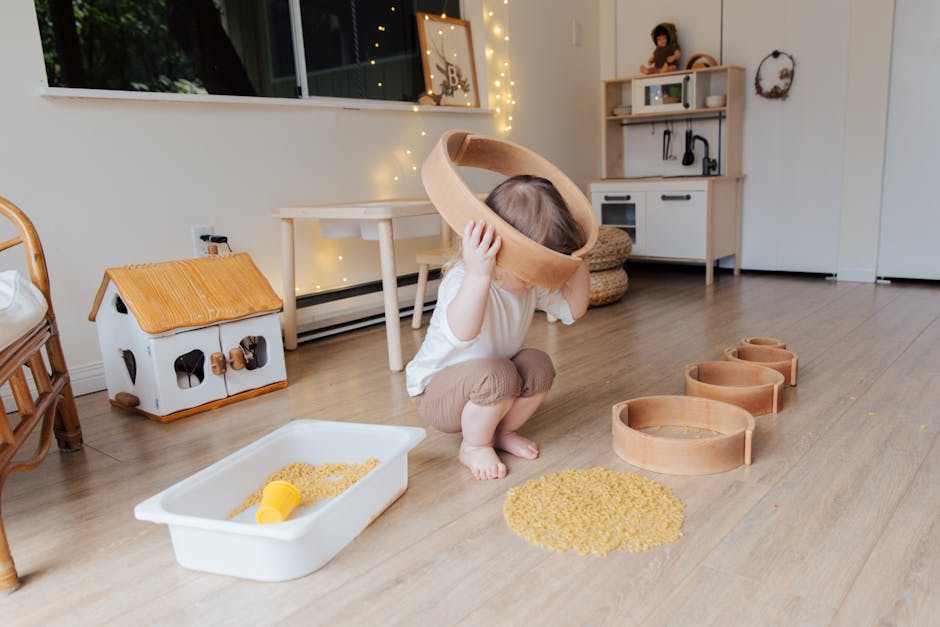
Daily Sensory Activities You Can Do at Home
- Tummy time with textured mats
- Mirror play for visual tracking
- Gentle massage for tactile input
- Sound games using your voice
- Grasping toys for motor development
Many parents combine these activities with items from the Sensory Toys collection to create a more engaging play environment.
Montessori-Inspired Sensory Play
Montessori focuses on simple, purposeful activities. Instead of overwhelming babies with too many stimuli, it encourages slow, intentional exploration.
- Offer one toy at a time
- Use natural materials and textures
- Allow self-directed exploration
Explore more structured routines in the Baby Growth & Learning Tips section.
Sensory Toys Guide: How to Choose the Right Toys for Your Baby

Sensory Toy Decision Tree (Age + Skill + Goal)
Choosing the right toy depends on your baby’s stage:
- 0–3 months: Soft plush, high-contrast visuals
- 3–6 months: Lightweight grasping toys
- 6–9 months: Textured objects, cause-effect toys
- 9–12 months: Interactive and problem-solving toys
For example, a tactile toy like the Textured Baby Sensory Balls – Soft Tactile Development Set helps babies explore different textures while improving hand coordination.

Best Sensory Toys by Category (Plush, Balls, Busy Cube)
Different toy types stimulate different senses:
- Plush toys: Comfort and tactile softness
- Sensory balls: Texture and grip strength
- Busy cubes: Multi-sensory engagement
You can explore a wide range of these in the Baby Growth & Learning collection.
What to Avoid When Choosing Sensory Toys
- Overly loud or overstimulating toys
- Small parts that pose choking risks
- Hard or sharp edges
- Toys not suitable for the baby’s age
For safety-focused selections, browse the Health & Safety collection.
Sensory Skills to Toys Mapping Table (Quick Reference)
| Sensory Skill | Recommended Toy Type | Purpose |
| Tactile | Textured balls, soft fabrics | Touch exploration |
| Visual | High-contrast cards | Tracking and focus |
| Auditory | Rattles, musical toys | Sound recognition |
| Vestibular | Rocking chairs, swings | Balance and movement |
| Proprioception | Push/pull toys | Body awareness |
Signs of Healthy vs Delayed Sensory Development in Infants
Normal Sensory Development Signs
- Responds to sounds and voices
- Tracks moving objects
- Explores objects with hands and mouth
- Shows curiosity
Warning Signs to Watch For
- No response to sound or visual stimuli
- Extreme sensitivity to touch
- Lack of interest in surroundings
- Delayed motor coordination
When to Consult a Pediatric Specialist
If you notice consistent delays or unusual behaviors, consult a pediatrician. Early intervention can make a significant difference.
How to Build a Daily Sensory Routine for Your Baby

Sample Sensory Schedule (Morning to Night)
- Morning: Tummy time + visual play
- Midday: Tactile exploration + feeding interaction
- Afternoon: Movement play
- Evening: Calm sensory activities (massage, soft music)
Parents often combine routines with essentials from the Massage & Relaxation collection for calming experiences.
Balancing Stimulation vs Overstimulation
Too much stimulation can overwhelm babies. Watch for signs like turning away, fussiness, or crying. Balance active play with quiet time.
Frequently Asked Questions
What is infant sensory stimulation and why is it important?
It is the process of engaging a baby’s senses to support brain development, learning, and emotional growth.
How can I improve my baby’s sensory development at home?
Use simple daily activities like talking, touching, and interactive play combined with safe sensory tools.
What are the best sensory toys for infant development?
Toys that encourage touch, movement, and exploration—like textured balls, soft plush toys, and simple interactive objects.
When should I start sensory activities for my baby?
From birth. Even simple interactions like holding and talking are forms of sensory stimulation.
What are signs of delayed sensory development in infants?
Lack of response to stimuli, delayed motor skills, or limited engagement may indicate developmental concerns.
Conclusion
Infant sensory stimulation is not about buying more toys—it’s about creating meaningful, everyday experiences that help your baby learn and grow. From simple touch and sound interactions to structured play routines, every moment contributes to development.
Explore more tools and ideas in the Sensory Toys collection or dive deeper into expert advice in the Baby Care Tips & Advice section.
Start small, stay consistent, and watch your baby’s world expand day by day.
Pillar Article: Sensory Development in Infants: Milestones, Activities & Toys Guide





