

Stability Ball Exercises Beginners Can Master Safely
Stability Ball Exercises for Beginners: Step-by-Step Guide
Yoga ball office chairs are transforming the way people sit, move, and feel at work, combining comfort with core engagement for effortless active sitting while doubling as versatile home fitness equipment for everything from posture training to a full-body workout. A stability ball can also be one of the easiest pieces of equipment for beginners, helping improve balance, posture, flexibility, and core strength with simple low-impact exercises that fit into almost any home fitness routine.
Do stability ball exercises for beginners really improve strength, balance, and posture?
Yes. Stability ball exercises for beginners improve core strength, balance, posture, and body awareness by forcing stabilizing muscles to work throughout each movement. Most beginners notice better sitting posture, improved balance, and increased confidence within 2 to 4 weeks when practicing two or three sessions each week.
Unlike traditional strength equipment, a stability ball introduces controlled instability. This encourages your abdominal muscles, hips, lower back, shoulders, and glutes to work together during even simple movements. The result is improved coordination while placing relatively little stress on the joints.
Stability ball exercises beginners often benefit from include:
- Improved posture during everyday activities
- Better balance and coordination
- Greater core endurance
- Gentle strength development without heavy weights
- Enhanced flexibility and mobility
- Low-impact workouts suitable for most fitness levels
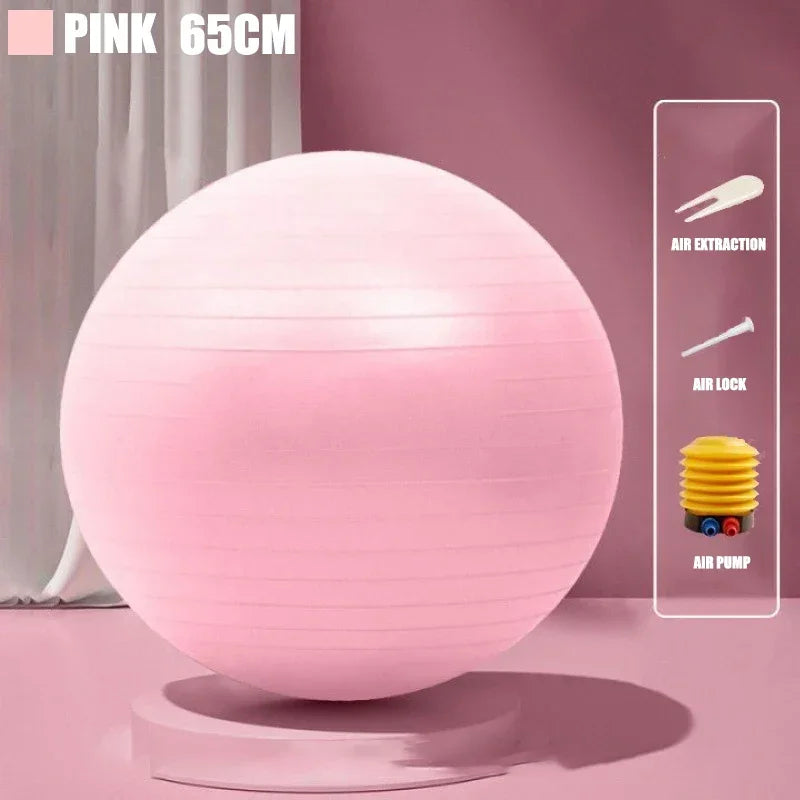
Stability ball exercises for beginners help improve posture, balance, and core strength.
Whether your goal is better posture, home fitness, Pilates, or active sitting at work, learning proper technique before increasing difficulty helps produce safer, more consistent results.
How to use a stability ball safely before you start
Choose the right ball size
Select a ball that allows your knees to rest at approximately a 90-degree angle while sitting with both feet flat on the floor.
- 45 cm: Under 5 ft (152 cm)
- 55 cm: 5 ft to 5 ft 5 in (152–165 cm)
- 65 cm: 5 ft 6 in to 6 ft (168–183 cm)
- 75 cm: Over 6 ft (183 cm)
Proper inflation and setup
A properly inflated stability ball should feel firm while allowing slight compression when sitting. Avoid overinflating, which reduces stability, or underinflating, which limits movement quality.
Safety tips for beginners
- Exercise on a flat, non-slip surface.
- Keep the workout area free of obstacles.
- Wear supportive athletic shoes if needed.
- Move slowly until your balance improves.
- Stop immediately if you experience dizziness or sharp pain.
Basic posture and breathing
Maintain a neutral spine, relax your shoulders, keep your feet shoulder-width apart, and breathe steadily throughout each exercise. Avoid holding your breath during effort.
Best beginner stability ball exercises with step-by-step instructions
These beginner stability ball exercises build confidence while improving balance, coordination, and total-body stability.
Seated balance hold
Starting position: Sit tall with feet flat.
Movement: Lift one foot slightly for 10–20 seconds, then switch sides.
Muscles worked: Core, hips, lower back.
Common mistake: Leaning excessively.
Easier option: Keep toes lightly touching the floor.
Pelvic tilt
While seated, gently rock your pelvis forward and backward without moving your shoulders. This improves spinal mobility and teaches proper core control.
Wall squat
Place the ball between your lower back and a wall. Slowly squat until your thighs approach parallel, then return to standing.
- Muscles worked: Quadriceps, glutes, core
- Tip: Keep knees aligned over your feet.
Bridge
Lie on your back with both heels resting on the ball. Lift your hips until your body forms a straight line, pause briefly, then lower slowly.
Dead bug
Lie on your back holding the ball between your hands and knees. Extend the opposite arm and leg while maintaining core tension, then alternate sides.
Bird dog
Place your hands on the stability ball and extend one leg behind you while reaching the opposite arm forward. This variation develops coordination and trunk stability.
Ball plank
Rest your forearms on the stability ball and hold a straight plank position for 15 to 30 seconds while keeping your hips level.
Hamstring curl
From the bridge position, pull the ball toward your hips using your heels before slowly extending your legs again.
30-minute stability ball workout for beginners
Warm-up (5 minutes)
- Seated pelvic tilts × 10
- Marching while seated × 1 minute
- Shoulder rolls × 10
- Gentle trunk rotations × 10 each side
Main workout (20 minutes)
| Exercise | Sets | Reps/Time |
|---|---|---|
| Wall squat | 2 | 10 reps |
| Bridge | 2 | 12 reps |
| Dead bug | 2 | 10 each side |
| Ball plank | 2 | 20–30 seconds |
| Hamstring curl | 2 | 10 reps |
Rest 45 to 60 seconds between exercises.
Cool-down (5 minutes)
- Gentle seated stretching
- Hip flexor stretch
- Hamstring stretch
- Deep breathing exercises
How to progress after your first few weeks
Week 1–2
Focus on learning technique using one or two sets with controlled movement.
Week 3–4
Increase repetitions, improve balance time, and gradually reduce support from your hands.
Increasing difficulty
- Add a third set.
- Increase plank holds.
- Perform slower repetitions.
- Introduce light resistance bands or dumbbells.
- Train 3 to 4 days each week with at least one recovery day.
Pilates stability ball workout for core strength
A Pilates stability ball workout emphasizes controlled movement, breathing, and deep core activation. These low-impact exercises are ideal for beginners looking to improve posture and trunk stability.
Beginner Pilates sequence
- Ball Roll-Ins: Improve abdominal control and hip mobility.
- Back Extension: Strengthen the muscles supporting the spine.
- Leg Circles: Develop hip stability while engaging the core.
- Side Leg Lifts: Build glute and oblique strength.
Core activation tips
- Exhale during the effort phase.
- Keep your ribs relaxed.
- Maintain a neutral spine.
- Move slowly with control rather than speed.
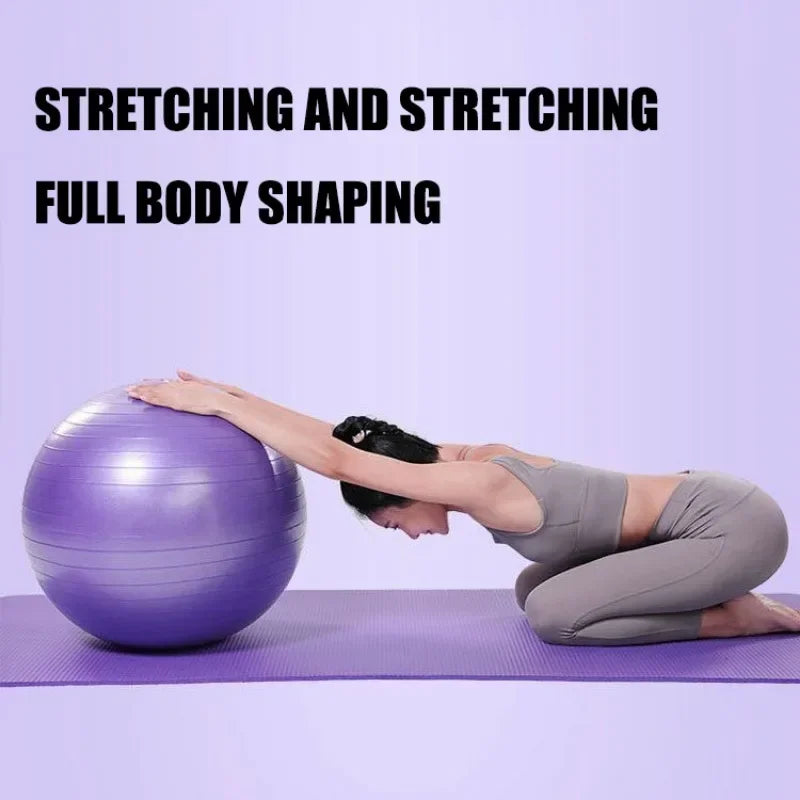
Pilates stability ball workouts improve core control, posture, and flexibility.
Balance and coordination exercises using a stability ball
Balance training improves body awareness, reaction time, and joint stability while reducing the likelihood of falls during everyday activities.
Single-leg balance
Sit on the ball and slowly lift one foot for 15 to 20 seconds before switching sides.
Wall-supported drills
Practice wall squats and seated marching near a wall for additional confidence while learning proper movement patterns.
Dynamic balance
- Alternating seated knee lifts
- Controlled weight shifts
- Ball plank holds
- Hands-on-ball push-ups from the knees
For additional support in your wellness routines, explore Beauty & Wellness tools that complement home fitness equipment and core stability exercises.
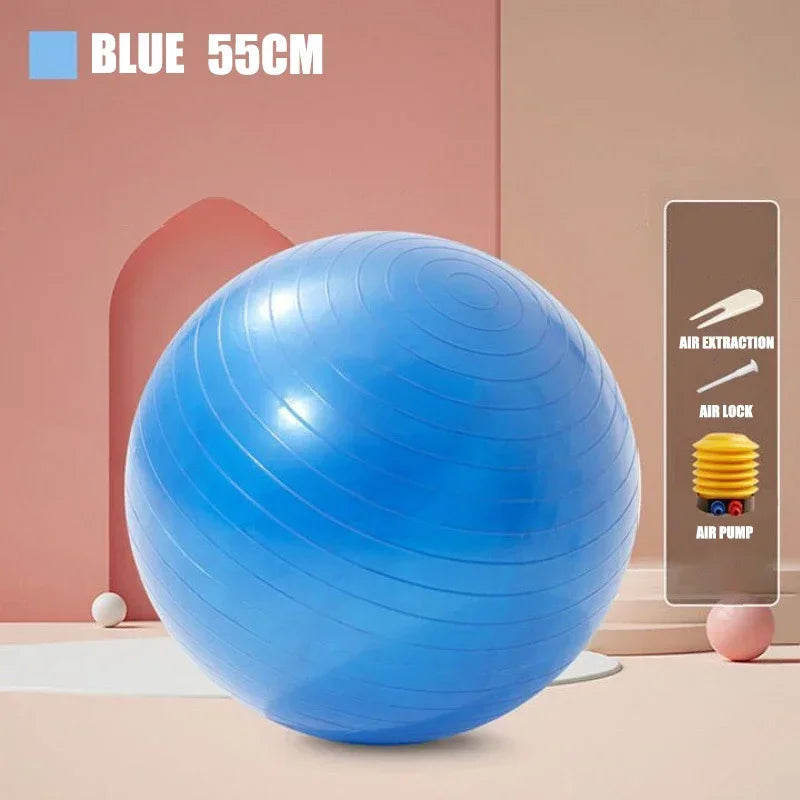
Balance training with a stability ball improves coordination, posture, and core endurance.
Common mistakes beginners should avoid
- Using the wrong ball size.
- Inflating the ball too much or too little.
- Holding your breath during exercises.
- Moving too quickly instead of maintaining control.
- Allowing the lower back to arch excessively.
- Skipping warm-up and cool-down routines.
- Progressing before mastering basic exercises.
Frequently asked questions about stability ball exercises for beginners
-
What size stability ball should beginners use?
Choose a ball that allows your knees to bend at approximately 90 degrees while sitting with your feet flat on the floor. Most adults use either a 55 cm or 65 cm ball.
-
How often should beginners do stability ball workouts?
Two or three sessions per week lasting 20 to 30 minutes is enough for most beginners to build strength and balance consistently.
-
Are stability ball exercises safe for seniors and overweight beginners?
Yes. When using the correct ball size and practicing near a wall or sturdy support, stability ball exercises are generally suitable for many beginners. Individuals with medical conditions should consult a healthcare professional before starting.
-
Can a stability ball help reduce back pain?
Gentle stability ball exercises can improve posture, strengthen supporting muscles, and reduce lower back discomfort when performed with proper technique.
-
How long does it take to improve balance with a stability ball?
Many beginners notice improvements in coordination and posture within 2 to 4 weeks of regular practice.
-
Should beginners inflate a stability ball fully?
No. Inflate the ball until it feels firm while still compressing slightly under your body weight for better stability and comfort.
-
Can I use a stability ball every day?
Light mobility work, stretching, or active sitting can be performed daily. More demanding strength sessions should be separated by recovery days.
-
Which stability ball exercises are best for core strength?
Wall squats, bridges, ball planks, dead bugs, hamstring curls, and seated balance holds are among the most effective stability ball core exercises for beginners.
Related Guide: Pregnancy Yoga Ball Stretches: Top Routines for Every Trimester





