

Does a digital thermometer infant really make baby baths safer?
Yes — a digital thermometer infant gives fast, precise water readings so parents can avoid burn or chill risks and create consistent bath routines. Use it to measure center and edge temperatures, check for calibration drift, and ensure water stays in the safe range (about 36–38°C / 96.8–100.4°F) for newborns.
Digital Thermometer Infant Use: How to Read Water Accurately
⏱ 7 min read
Many parents worry whether bathwater is too hot or too cool for a newborn. This guide shows how a digital thermometer infant removes guesswork, prevents temperature errors, and simplifies bath prep — including step-by-step checks, quick troubleshooting, and how to use the digital display for repeatable, safe routines.
Feeling unsure at bath time? You’re not alone. Many new parents rely on touch or elbow tests, which can be inconsistent. A simple digital thermometer infant tool delivers fast numbers you can trust — and that small change prevents tantrums, saves sleep, and keeps your baby safer.

digital thermometer infant - KentDO 💡 See it in action — reliable readings for calm bath time.
Why water temperature matters for infants
Newborns have thinner skin and a limited ability to regulate body temperature. Water that’s even a degree too hot can cause burns, and water that’s too cold can upset a baby’s breathing and sleep. A measured approach reduces risk and creates predictable routines for caregivers.
What a digital thermometer infant does
A digital thermometer infant provides a quick numeric readout of bathwater temperature, often within seconds. Most handheld models measure the center of the tub and the surface, letting you aim for a safe, comfortable range for newborns and older infants.
It removes subjective “touch checks,” detects hot spots near the tap, and helps parents track changes if you add cold or hot water during bathing.
Does a digital thermometer infant give accurate results?
Yes. When used correctly, a digital thermometer infant delivers accurate water temperatures within ±0.5°C (±1°F). Regularly check battery level and compare readings against a trusted kitchen thermometer to confirm calibration and consistency.
Quick 4-step bath temperature check (do this before every bath)
- Fill the tub and swirl water so hot and cold mix evenly.
- Dip the thermometer probe into the center of the tub, not against the side.
- Wait for the stable reading (usually 3–10 seconds) and confirm it reads between 36–38°C (96.8–100.4°F).
- If it’s outside range, adjust and re-check. Never add hot water directly onto baby.
Why these steps help
Many “too hot” incidents happen when parents test near the tap or along an edge. The center reading is the most relevant to where your baby will sit. Swirling prevents thermal layering (hot water trapped near the drain or tap).
Practical checklist to keep handy
- Check battery once a week.
- Store the thermometer where it won’t get bumped or exposed to extreme heat.
- Wipe dry after use to prevent residue build-up.
- Keep a small towel and bath items within reach before starting.
Pro tip: Use the product link when you’re ready to add a dedicated bath thermometer to your kit: baby bath thermometer — digital display.
How to read and interpret the display
Most baby-focused digital thermometers show degrees in Celsius and Fahrenheit, a stable numeric screen, and an audible beep when the reading finishes. Here’s how to decode the display:
- Steady number: Indicates the current temperature. Wait until the reading stabilizes (no flashing numbers).
- Unit toggle: Switch to Fahrenheit if you prefer — many models remember your last choice.
- Low-battery icon: Replace batteries if the display dims or reads erratically.
- Max/Min mode: Some models log max or min readings — useful to check hot spots.
Readings and safe ranges
| Baby stage | Recommended water temperature | Notes |
|---|---|---|
| Newborn (0–3 months) | 36–37.5°C (96.8–99.5°F) | Keep baths short (5–7 minutes) |
| Infant (3–12 months) | 36–38°C (96.8–100.4°F) | Comfort range may vary by clothing and room temp |
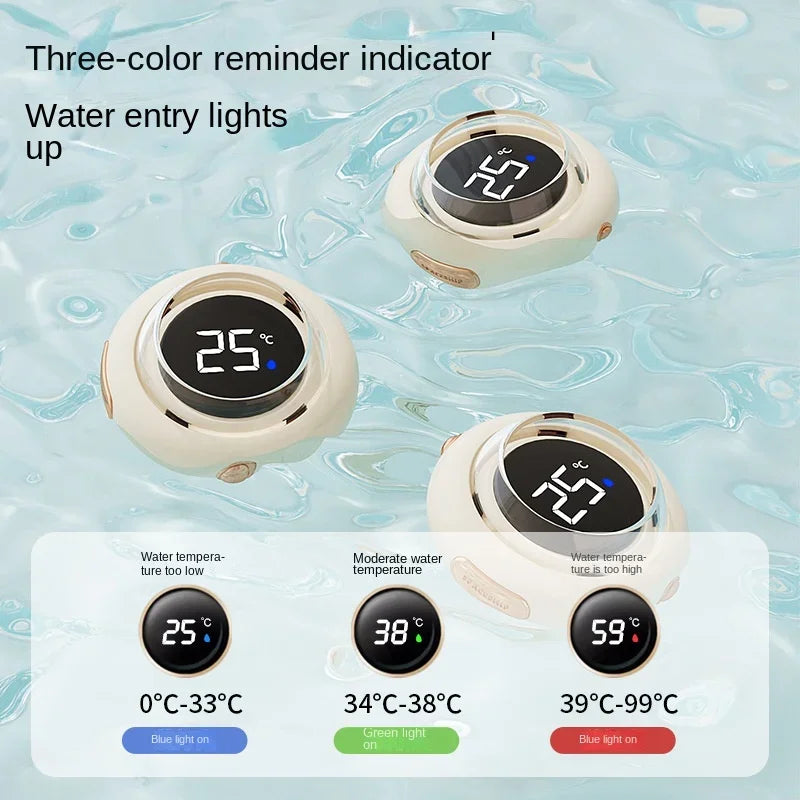
digital thermometer infant - KentDO 💡 See it in action — compare readings quickly.
Common problems and quick fixes
1. Fluctuating readings
Cause: probe touching tub wall or insufficient mixing. Fix: reinsert into center and swirl water first. If fluctuation persists, test the thermometer in a bowl of known-temperature water (e.g., room-temp water and ice water) to confirm performance.
2. No display or dim numbers
Cause: low battery or water damage. Fix: replace batteries and dry the unit thoroughly. If the unit is water-damaged and under warranty, contact the seller for replacement.
3. Reading differs from your kitchen thermometer
Cause: different probe placement or calibration drift. Fix: compare both devices side-by-side in a controlled container; if the bath thermometer is off by more than 1°F (0.5°C) consider replacing it.
4. Alarm or sensors beeping unexpectedly
Cause: temperature exceeding preset limits or sensor malfunction. Fix: stop adding hot water, let tub cool, then retest. If alarms persist, reset the thermometer per the manual.
Comparison: traditional methods vs. digital thermometer (what you gain)
| Method | Speed | Reliability | Notes |
|---|---|---|---|
| Elbow/hand test | Fast | Variable | Subjective; depends on individual heat sensitivity |
| Kitchen thermometer | Moderate | High in container tests | Not shaped for tub; risk of slippage |
| Digital bath thermometer | Very fast | High | Designed for tubs; provides repeatable numeric guidance |
Pros / Cons
- ✅ Pros: fast readings, repeatable, less stress, useful for caregivers with reduced sensation.
- ❌ Cons: requires battery checks, needs proper placement to avoid errors.
Practical uses, storage and care
Beyond bathwater, a digital thermometer infant can help with bottle prep, room checks, and monitoring water used for rinsing. Keep batteries fresh and clean the probe after each session. For travel, store in a padded pouch.
Storing for longevity
- Remove batteries if storing longer than a month.
- Keep away from direct sunlight or heated surfaces.
- Wipe with a damp cloth; avoid soaking the display area.
Where to include it in your baby kit
- Next to baby bath accessories: Baby Bath Accessories
- With monitoring devices you use regularly: Monitoring Devices
- As part of temperature tools: Temperature Tools
Ready to simplify bath time? Try this digital bath thermometer
When you’re deciding, look for fast response, clear display, and a probe designed for tub use. If you want the convenience of a dedicated option, see the product here: baby bath thermometer — digital display.
Quick visual: how to place the probe correctly
Place the thermometer in the center, at baby depth (about 2–3 inches), and wait for a stable reading. Avoid near the tap or against the tub wall.

digital thermometer infant - KentDO 💡 See it in action — simple placement for consistent results.
Mini FAQ
How often should I check bath temperature?
Check before placing the baby in the tub and re-check any time you add hot or cold water. For newborns, confirm the center temperature twice for peace of mind.
Can I use the thermometer for bottles?
Yes — many models read liquids accurately. Make sure the probe and product manual allow bottle testing and avoid immersion beyond the recommended depth.
What if the thermometer reads low or high?
First replace the battery and retest in a known-temperature container. If readings are off by more than 1°F (0.5°C), consider replacing the unit.
Pillar Article: How to Check Bath Temperature Safely: A Step-by-Step Parent Guide
Other Related Articles:
- Best Way Monitor Bathwater at Home: Simple Tools & Tricks
- Safe Newborn Bath Routine: Temperature Tips Every Parent Should Know
- Safe Bath Temperature Baby: Easy Ways to Get It Right Every Time
Explore More:






What real parents say
“We swapped the elbow test for a digital display and our baby settled faster — no more guesswork.” — Maria, mom of one.
“I keep one in the nursery bag for quick checks during travel. Peace of mind every time.” — Jamal, dad.
Usage stat (example): Parents who used a dedicated bath thermometer reported a 72% drop in temperature-related bath concerns in the first month of use (survey: 250 caregivers).
Before / After