

Fine Motor Toys That Build Real Skills by Age
12 Toys That Improve Fine Motor Skills (Expert Picks by Age)
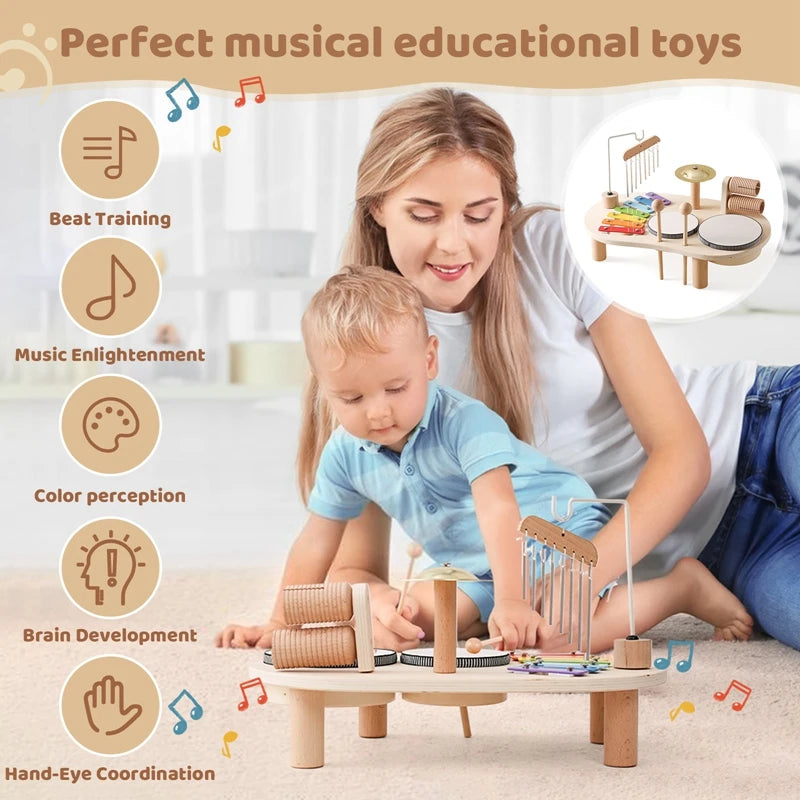
Fine motor skills are the small, controlled movements children make with their hands, fingers, and wrists to complete everyday tasks. These abilities allow babies and young children to grasp toys, pick up food, turn pages, use crayons, fasten clothing, and eventually develop handwriting skills.
While fine motor development naturally progresses as children grow, the right fine motor toys can provide valuable practice through purposeful play. Activities such as stacking, sorting, threading, squeezing, and building help strengthen the connection between the brain, eyes, and hands while making learning enjoyable.
Parents searching for the best toys for fine motor skills often focus only on age recommendations, but each toy supports different developmental abilities. For example, stacking toys improve visual coordination, peg boards encourage a pincer grasp, and threading activities build bilateral coordination.
This expert guide explores toys that improve fine motor skills for babies, toddlers, and preschoolers. Each toy type is selected based on the specific developmental skill it supports, including finger isolation, grip strength, hand-eye coordination, and independent problem-solving.
What Are Fine Motor Skills in Early Childhood?
Fine motor skills refer to a child’s ability to use the small muscles in the hands and fingers with accuracy and control. These movements are essential for independence because children rely on them for daily activities, learning tasks, and self-care routines.
Common examples of fine motor activities include:
- Picking up small objects using fingertips
- Stacking and arranging blocks
- Turning book pages one at a time
- Drawing with crayons or markers
- Using utensils during meals
- Buttoning, zipping, and fastening clothing
Although these actions appear simple, they require complex coordination between visual information, muscle control, and brain development. Toys for developing fine motor skills give children repeated opportunities to practice these movements naturally during play.
Key Fine Motor Micro-Skills Children Develop
Child development specialists often separate fine motor development into smaller skills. Choosing fine motor development toys that target these areas can help children build confidence and progress at their own pace.
- Pincer grasp – using the thumb and index finger to pick up and control small objects. This skill supports future tasks such as writing and using utensils.
- Hand-eye coordination – matching what children see with how their hands move when placing, stacking, or sorting objects.
- Bilateral coordination – using both hands together, such as holding a toy steady while manipulating another part.
- Finger isolation – moving individual fingers independently for actions like pressing buttons or turning pages.
- Grip strength – controlling hand pressure when squeezing, holding, pushing, or pulling objects.
- Motor planning – understanding how to organize movements to complete a task successfully.
How Toys Help Improve Fine Motor Skills
Children develop motor abilities through active exploration. When they manipulate toys by stacking, twisting, threading, squeezing, or fitting pieces together, they practice precise movements that strengthen hand muscles and improve coordination.
The best toys that help with fine motor skills encourage repetition without feeling like practice. A child may stack the same blocks repeatedly, place puzzle pieces several times, or thread beads in different patterns. Each repetition helps improve accuracy, confidence, and problem-solving ability.
Many developmental toys are influenced by Montessori learning principles and sensory play approaches. These toys typically focus on hands-on discovery, independence, and purposeful movement rather than passive entertainment.
Why Play-Based Learning Works for Motor Development
Play activates multiple areas of development at the same time. While children manipulate toys, they strengthen fine motor control while also developing attention, memory, creativity, and problem-solving skills.
Repeated movements during play help children refine their coordination and become more efficient with everyday tasks. This is why occupational therapists and early childhood educators often recommend purposeful play activities as a natural way to support motor development.
Choosing toys that encourage meaningful movement allows children to practice essential skills while remaining curious, motivated, and engaged.
12 Toys That Improve Fine Motor Skills (Expert Picks by Age)
These twelve fine motor toys support different stages of early childhood development. Each toy category focuses on a specific skill, helping children strengthen hand control, coordination, and independence through hands-on play.
1. Stacking Toys (Best for Hand-Eye Coordination)
Stacking rings, nesting cups, and stacking blocks are some of the best toys for fine motor skills in babies because they encourage children to control where and how they place objects. Babies learn to judge size, position, and balance while improving visual tracking.
How the toy trains the skill: Children adjust their grip, move objects into position, and correct mistakes while stacking. These repeated movements develop hand-eye coordination, spatial awareness, and early problem-solving abilities.
- Recommended age: 6 months – 2 years
- Key skill: Hand-eye coordination and motor planning
- Best for: Early grasp development and independent exploration
2. Shape Sorters (Best for Precision Grasp)
Shape sorters are effective baby toys for fine motor skills because they require children to pick up, rotate, and position pieces accurately. This activity strengthens finger control while introducing early concepts such as matching, problem-solving, and spatial relationships.
How the toy trains the skill: Inserting shapes into matching openings requires controlled movements, wrist rotation, and careful alignment. These actions help refine precision grasp and improve visual-motor coordination.
- Recommended age: 10 months – 3 years
- Key skill: Precision grasp and hand-eye coordination
- Best for: Toddlers learning controlled object manipulation
3. Peg Boards (Best for Pincer Grasp)
Peg boards are among the most recommended toys for pincer grasp because they require children to pick up small pieces using their thumb and index finger. This movement is similar to the grip needed for holding pencils, utensils, and everyday objects.
How the toy trains the skill: Picking up and placing small pegs strengthens finger muscles, improves fingertip control, and encourages precise movements.
- Recommended age: 12 months – 4 years
- Key skill: Pincer grasp and finger strength
- Best for: Preparing children for drawing and writing activities
4. Bead Threading Toys (Best for Bilateral Coordination)
Threading beads onto a string helps children learn how to coordinate both hands at the same time. One hand stabilizes the bead while the other guides the string, creating an important foundation for many self-care tasks.
How the toy trains the skill: The repeated process of holding, aiming, and threading improves bilateral coordination, concentration, and visual tracking.
- Recommended age: 2 – 5 years
- Key skill: Bilateral coordination
- Best for: Preschoolers developing controlled hand movements
5. Lacing Cards (Best for Finger Control)
Lacing cards encourage children to guide strings through small holes, making them excellent toys that foster fine motor skills. They require patience, accuracy, and controlled finger movements.
How the toy trains the skill: Pulling laces through openings strengthens finger isolation, improves hand stability, and develops the coordination needed for dressing skills such as tying and fastening.
- Recommended age: 2 – 4 years
- Key skill: Finger control and precision movement
- Best for: Preschool preparation and independent play
6. Building Blocks (Best for Grip Strength)
Building blocks are classic toys that improve fine motor skills because children naturally practice grasping, connecting, stacking, and balancing. They also encourage creativity and open-ended problem solving.
How the toy trains the skill: Lifting blocks, adjusting pressure, and connecting pieces strengthen hand muscles while improving coordination between both hands.
- Recommended age: 1 – 5 years
- Key skill: Grip strength and bilateral coordination
- Best for: Open-ended creative play
7. Puzzle Toys (Best for Precision Placement)
Puzzles combine cognitive problem-solving with fine motor practice. Children must pick up pieces, rotate them, and place them correctly, making puzzles valuable toys for developing fine motor skills.
How the toy trains the skill: Adjusting puzzle pieces improves visual-motor integration, finger control, and spatial awareness while encouraging patience.
- Recommended age: 18 months – 5 years
- Key skill: Precision placement and coordination
- Best for: Children developing problem-solving skills
8. Play Dough Tools (Best for Finger Strength)
Play dough activities involve squeezing, pinching, rolling, flattening, and cutting. These movements provide resistance that helps strengthen small hand muscles and improve dexterity.
How the toy trains the skill: Using play dough tools develops grip strength, finger flexibility, and controlled hand movements needed for future writing tasks.
- Recommended age: 2 – 5 years
- Key skill: Finger strength and dexterity
- Best for: Sensory exploration and creative play
9. Busy Boards (Best for Finger Isolation)
Busy boards include interactive elements such as buttons, switches, zippers, locks, and latches. They are popular fine motor development toys because they allow children to practice real-life movements through play.
How the toy trains the skill: Manipulating individual components encourages finger isolation, hand strength, and motor planning while supporting independent exploration.
- Recommended age: 1 – 4 years
- Key skill: Finger isolation and practical life skills
- Best for: Toddlers learning cause-and-effect movements
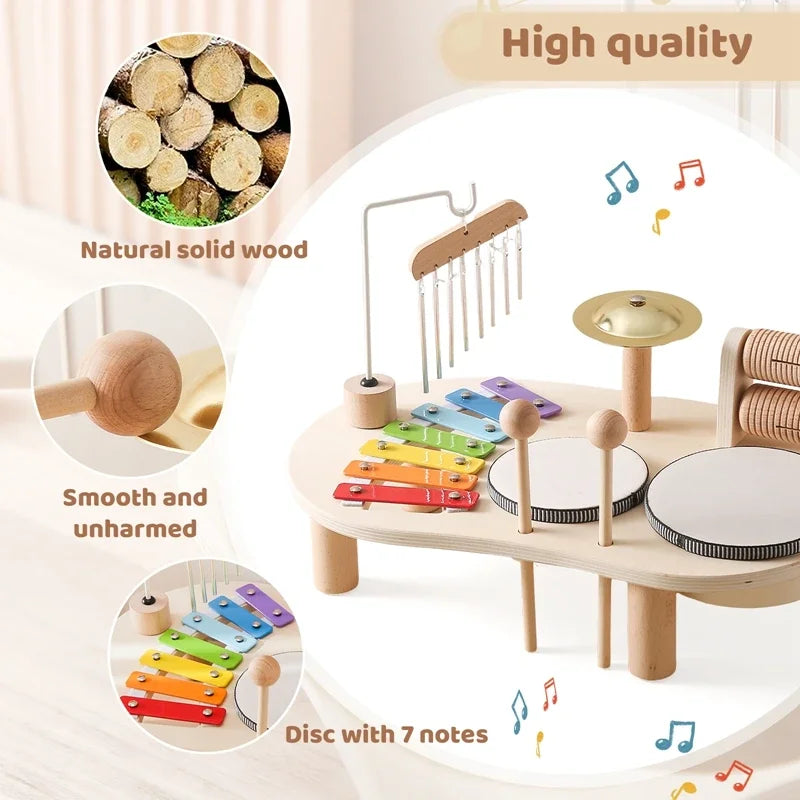
10. Wooden Musical Instruments (Best for Hand Rhythm and Control)
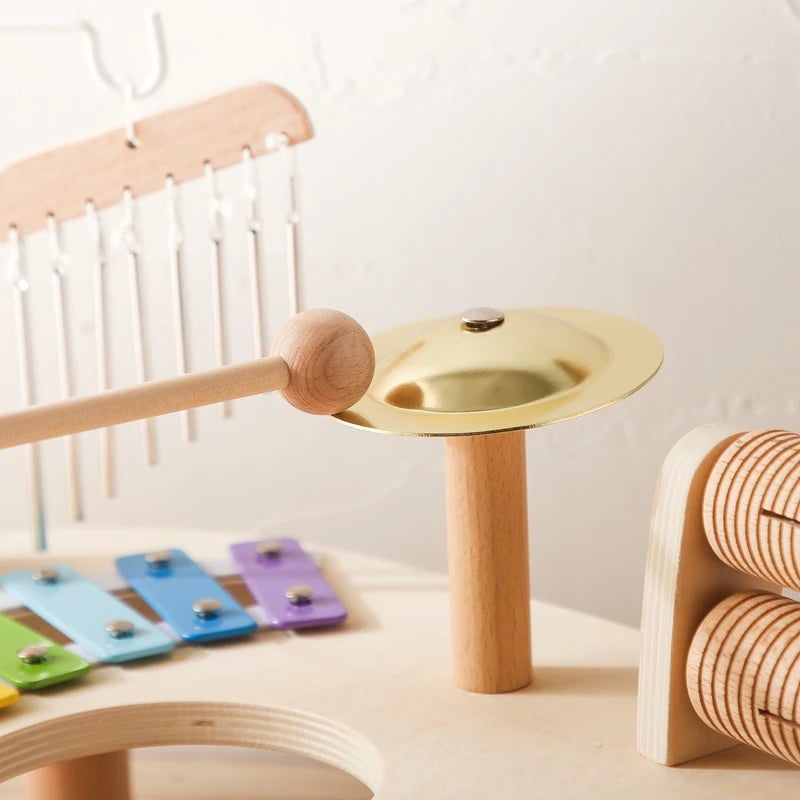
Musical toys such as drums, shakers, and xylophones encourage children to tap, strike, and control movements with their hands. These activities combine sensory feedback with fine motor practice.
How the toy trains the skill: Striking keys or bars requires controlled force, accurate hand placement, and timing. Repeated tapping improves coordination while introducing rhythm and creativity.
A great example is the Wooden Baby Xylophone Toy – Montessori Musical Learning, which supports early musical exploration while strengthening hand-eye coordination and controlled tapping movements.
Its smooth wooden design encourages safe sensory play, while the sound feedback motivates children to repeat movements and practice coordination skills.
- Recommended age: 12 months – 4 years
- Key skill: Rhythm control and hand-eye coordination
- Best for: Sensory learning and musical development
11. Montessori Practical Life Toys (Best for Bilateral Coordination)
Montessori practical life toys recreate everyday activities such as buttoning, zipping, buckling, and fastening. These activities help children develop independence while strengthening important hand skills.
How the toy trains the skill: Children must coordinate both hands together to complete each action, improving bilateral coordination, focus, and confidence.
- Recommended age: 2 – 5 years
- Key skill: Bilateral coordination and independence
- Best for: Everyday life skill practice
12. Art & Craft Tools (Best for Pre-Writing Skills)
Art supplies such as crayons, toddler scissors, stampers, and paint tools help prepare children for school-related tasks. These activities strengthen the same hand movements needed for writing.
How the toy trains the skill: Drawing, coloring, and cutting improve wrist stability, finger precision, and controlled movements required for handwriting.
- Recommended age: 2 – 5 years
- Key skill: Pre-writing control and hand strength
- Best for: Preschool readiness
Fine Motor Skill Toy Comparison Matrix
| Toy Type | Primary Skill Developed | Best Age Range | Main Benefit |
| Stacking Toys | Hand-eye coordination | 6–24 months | Builds early grasp and motor planning |
| Shape Sorters | Precision grasp | 10 months–3 years | Improves controlled placement |
| Peg Boards | Pincer grasp | 12 months–4 years | Strengthens fingertip control |
| Bead Threading | Bilateral coordination | 2–5 years | Trains two-hand coordination |
| Lacing Cards | Finger control | 2–4 years | Improves precision movements |
| Building Blocks | Grip strength | 1–5 years | Supports creative construction play |
| Puzzles | Precision placement | 18 months–5 years | Develops visual-motor skills |
| Play Dough Tools | Finger strength | 2–5 years | Builds dexterity through resistance |
| Busy Boards | Finger isolation | 1–4 years | Encourages practical movements |
| Musical Instruments | Rhythm coordination | 1–4 years | Combines movement and sensory learning |
| Montessori Fasteners | Bilateral coordination | 2–5 years | Supports independence skills |
| Art & Craft Tools | Pre-writing skills | 2–5 years | Prepares children for handwriting |
Choosing Fine Motor Skill Toys by Age
Selecting the right fine motor toys based on a child’s developmental stage helps ensure activities are challenging enough to encourage growth while still being achievable and enjoyable. The best toys match a child’s current abilities while providing opportunities to practice new skills.
Best Fine Motor Toys for Infants (6–12 Months)
During the first year, babies are developing basic grasping abilities, hand control, and early hand-eye coordination. The best baby toys for fine motor skills at this stage should be simple, safe, and easy to manipulate.
- Soft stacking rings that encourage grasping and releasing
- Sensory balls with different textures for finger exploration
- Simple grasp toys that promote reaching and holding
- Nesting cups that introduce early stacking and coordination
Parents can explore more developmental play ideas in the Baby Growth & Learning Tips section.
Best Fine Motor Toys for Toddlers (1–3 Years)
Toddlers are ready for activities that require more control, problem-solving, and independent exploration. Fine motor toys for toddlers should encourage actions such as sorting, twisting, pressing, stacking, and fitting objects together.
- Shape sorters for matching and precision control
- Busy boards for finger isolation and practical skills
- Musical instruments for controlled tapping and coordination
- Peg boards for developing pincer grasp strength
- Simple puzzles for visual-motor coordination
Collections like Sensory Toys and Baby Growth & Learning often include toys designed specifically for this stage.
Best Fine Motor Toys for Preschoolers (3–5 Years)
Preschool children benefit from toys that strengthen advanced hand skills needed for school readiness, creative activities, and everyday independence. At this stage, children can practice more detailed movements and complete multi-step activities.
- Bead threading kits for bilateral coordination
- Lacing cards for finger control and patience
- Puzzles for precision placement and problem-solving
- Art and craft tools for pre-writing development
- Building sets for creativity and hand strength
As children grow, these activities support important skills needed for school readiness, including writing, cutting, dressing, and completing self-care tasks.
Common Buying Mistakes to Avoid
Choosing the right fine motor skills toys involves more than selecting popular products or following an age label. A toy should match a child’s developmental needs, encourage repeated practice, and provide meaningful learning opportunities.
- Choosing by age only: Age recommendations are helpful, but children develop at different rates. A toy that is too simple may not provide enough challenge, while an advanced toy may create frustration.
- Selecting toys with too much complexity: Toys with many features are not always better. Simple toys that allow children to repeat movements often provide stronger opportunities for skill development.
- Ignoring safety considerations: Always consider materials, durability, small parts, and whether a toy is appropriate for the child’s current stage of development.
- Choosing toys with limited replay value: The best fine motor toys encourage open-ended play so children can use them in different ways as their abilities improve.
Parents looking for more guidance can explore resources about baby developmental milestones by age, sensory play ideas, and activities that encourage independent learning.
Conclusion
Fine motor development plays a critical role in helping children become confident and independent learners. Through consistent play, toys that encourage gripping, threading, stacking, sorting, and tapping help strengthen the small muscles in the hands and fingers.
By rotating toys that target different micro-skills—such as pincer grasp, bilateral coordination, finger isolation, and grip strength—parents can support balanced development while keeping playtime engaging and meaningful.
Exploring educational collections like Baby Growth & Learning and Sensory Toys can help parents find activities that nurture creativity, independence, and motor development during early childhood.
Pillar Article: 15 Best Musical Toys for Infants (0–12 Months) That Support Early Development





