

Toys That Improve Fine Motor Skills: 12 Proven Picks
12 Toys That Improve Fine Motor Skills (Expert Picks by Age)
Fine motor skills are the small muscle movements children use to grasp, pinch, rotate, and control objects with their hands and fingers. These abilities are essential for everyday tasks such as feeding, dressing, drawing, and eventually writing. While fine motor development happens naturally as children grow, the right toys can accelerate and strengthen these abilities through play.
Parents often search for toys that improve fine motor skills but may not realize that different toys train different micro-skills. For example, stacking toys strengthen hand-eye coordination, while peg boards encourage the pincer grasp used later for holding pencils.
This guide highlights 12 expert-recommended toys that help children develop specific fine motor micro-skills such as finger isolation, bilateral coordination, and grip strength. Each toy category includes examples and age recommendations so parents can choose the right activities for infants, toddlers, and preschoolers.
What Are Fine Motor Skills in Early Childhood?
Fine motor skills refer to the ability to control small muscles in the hands and fingers to perform precise movements. In early childhood development, these movements are closely connected with cognitive development, sensory processing, and hand-eye coordination.
Examples of fine motor tasks include:
- Picking up small objects
- Stacking blocks
- Turning pages in a book
- Using crayons or markers
- Buttoning clothing
These actions may seem simple, but they require coordination between the brain, eyes, and hands. Play-based activities allow children to practice these movements repeatedly, strengthening neural connections responsible for dexterity and coordination.
Key Fine Motor Micro-Skills Children Develop
Many occupational therapists break fine motor development into smaller components. Toys that target these micro-skills help children progress more effectively.
- Pincer grasp – using the thumb and index finger to pick up objects
- Hand-eye coordination – synchronizing visual input with hand movement
- Bilateral coordination – using both hands together
- Finger isolation – moving individual fingers independently
- Grip strength – controlling pressure when holding objects
How Toys Help Improve Fine Motor Skills
Children learn best through hands-on exploration. When they manipulate toys—stacking, twisting, squeezing, or threading objects—they activate muscles and neural pathways responsible for motor control.
Many developmental toys are inspired by educational philosophies such as Montessori learning and sensory play. These toys encourage repetition and problem-solving, which gradually improves coordination and precision.
Why Play-Based Learning Works for Motor Development
Play stimulates the brain's motor cortex and sensory systems simultaneously. As children repeat movements during play, neural connections become stronger, improving speed and accuracy. This is why occupational therapists often recommend play activities instead of structured drills.
Choosing toys that encourage purposeful movement helps children practice essential skills while staying engaged and curious.
12 Toys That Improve Fine Motor Skills (Expert Picks by Age)
Below are twelve types of toys that support fine motor development. Each category focuses on a specific micro-skill and includes examples suitable for different age groups.
1. Stacking Toys (Best for Hand-Eye Coordination)
Stacking rings and blocks require children to visually guide their hands to place objects precisely. This improves spatial awareness and coordination.
How the toy trains the skill: Children adjust their grip and align objects before stacking them, strengthening motor planning and visual tracking.
- Recommended age: 6 months – 2 years
- Key skill: hand-eye coordination
2. Shape Sorters (Best for Precision Grasp)
Shape sorting toys challenge children to rotate pieces and align them with the correct slot. This encourages wrist rotation and controlled finger movements.
How the toy trains the skill: Inserting shapes into matching holes requires careful alignment and grip refinement.
- Recommended age: 10 months – 3 years
- Key skill: precision grasp
3. Peg Boards (Best for Pincer Grasp)
Peg boards encourage children to pick up small pegs using the thumb and index finger. This motion closely mimics the grip required for holding pencils and utensils later in life.
How the toy trains the skill: Small pegs naturally trigger the pincer grasp and strengthen finger control.
- Recommended age: 12 months – 4 years
- Key skill: pincer grasp
4. Bead Threading Toys (Best for Bilateral Coordination)
Threading beads onto a string requires children to use both hands simultaneously—one holding the bead and the other guiding the string.
How the toy trains the skill: This activity improves bilateral coordination and visual focus.
- Recommended age: 2 – 5 years
- Key skill: bilateral coordination
5. Lacing Cards (Best for Finger Control)
Lacing cards feature holes around a shape where children thread a lace. This activity requires patience and precise finger movement.
How the toy trains the skill: Repeated threading strengthens finger isolation and hand stability.
- Recommended age: 2 – 4 years
- Key skill: finger control
6. Building Blocks (Best for Grip Strength)
Blocks encourage stacking, connecting, and balancing. These actions require children to adjust their grip strength and coordinate finger movements.
How the toy trains the skill: Lifting and positioning blocks builds hand strength and coordination.
- Recommended age: 1 – 5 years
- Key skill: grip strength
7. Puzzle Toys (Best for Precision Placement)
Puzzle toys challenge children to rotate pieces and fit them into specific spaces.
How the toy trains the skill: Small adjustments train visual-motor coordination and spatial awareness.
- Recommended age: 18 months – 5 years
- Key skill: precision placement
8. Play Dough Tools (Best for Finger Strength)
Play dough activities involve squeezing, pinching, rolling, and cutting—motions that strengthen hand muscles.
How the toy trains the skill: Resistance from dough helps develop grip strength and finger dexterity.
- Recommended age: 2 – 5 years
- Key skill: finger strength
9. Busy Boards (Best for Finger Isolation)
Busy boards contain buttons, switches, locks, and latches that children manipulate individually.
How the toy trains the skill: Turning knobs and pressing buttons encourages finger isolation and motor planning.
- Recommended age: 1 – 4 years
- Key skill: finger isolation
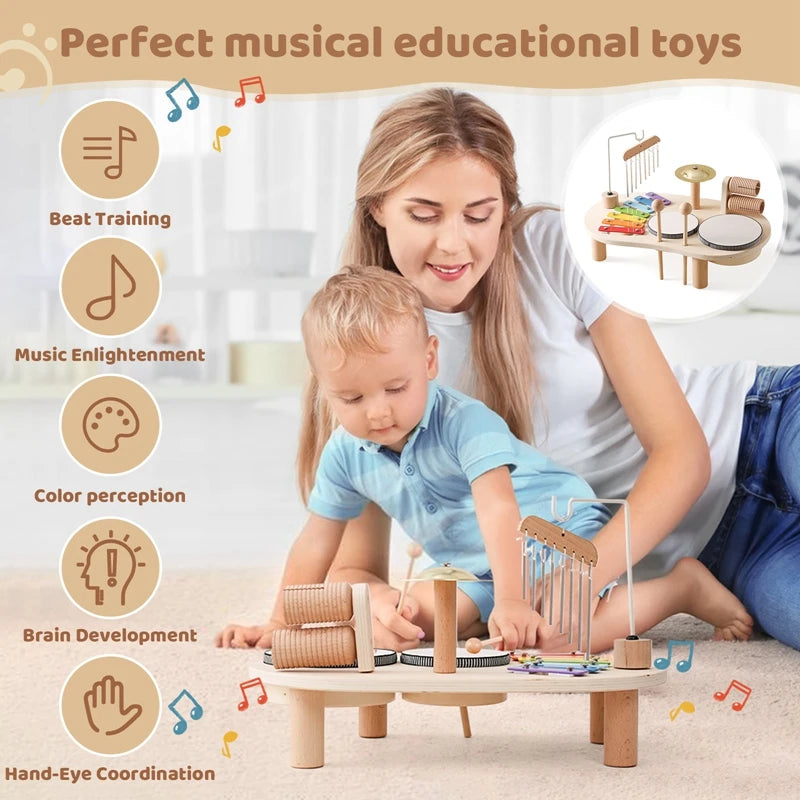
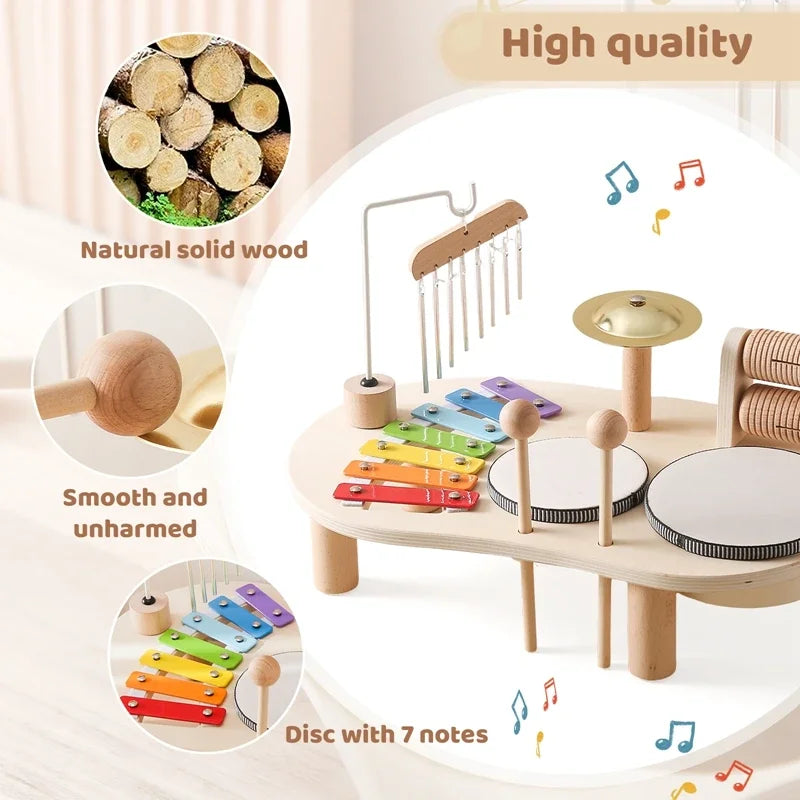
10. Wooden Musical Instruments (Best for Hand Rhythm and Control)
Musical toys such as drums and xylophones encourage tapping, shaking, and striking movements. These rhythmic motions help children coordinate both hands and develop timing.
How the toy trains the skill: Striking keys or bars requires controlled arm movement and precise hand placement.
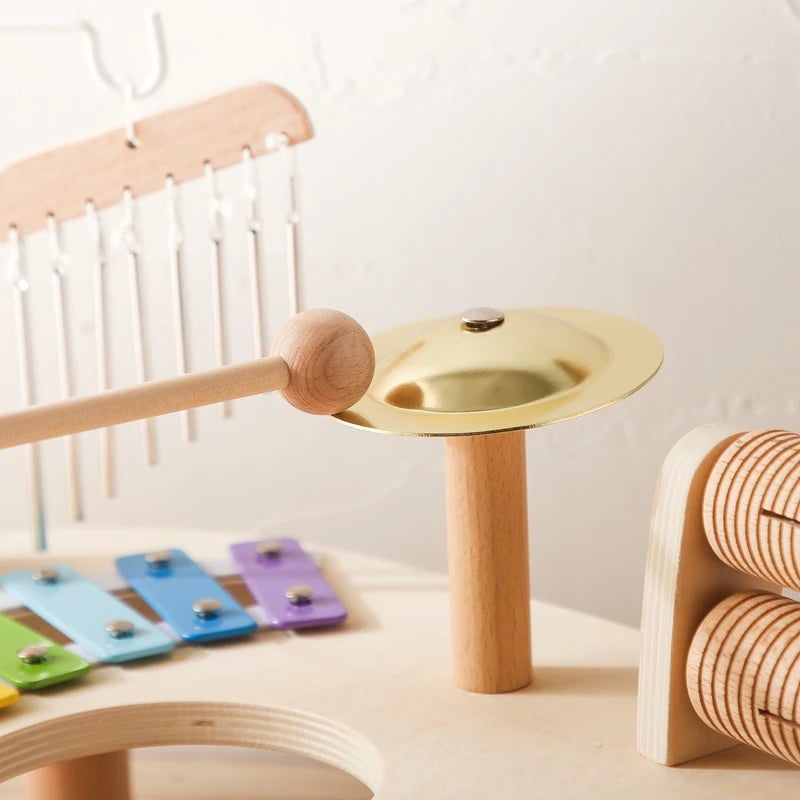
A great example is the Wooden Baby Xylophone Toy – Montessori Musical Learning, which introduces rhythm while strengthening hand-eye coordination and motor control through gentle tapping.
Its natural wooden design and smooth edges make it suitable for early sensory exploration, while the musical feedback encourages repeated movement—an important part of skill development.
- Recommended age: 12 months – 4 years
- Key skill: rhythm control and coordination
11. Montessori Practical Life Toys (Best for Bilateral Coordination)
Montessori practical life toys mimic everyday tasks like buttoning, zipping, and buckling.
How the toy trains the skill: Children must coordinate both hands to manipulate fasteners, improving independence and coordination.
- Recommended age: 2 – 5 years
- Key skill: bilateral coordination
12. Art & Craft Tools (Best for Pre-Writing Skills)
Crayons, toddler scissors, and stampers encourage controlled finger movements similar to writing.
How the toy trains the skill: Drawing and cutting develop wrist stability and finger precision needed for handwriting.
- Recommended age: 2 – 5 years
- Key skill: pre-writing control
Fine Motor Skill Toy Comparison Matrix
| Toy Type | Primary Skill Developed | Best Age Range |
| Stacking Toys | Hand-eye coordination | 6–24 months |
| Shape Sorters | Precision grasp | 10 months–3 years |
| Peg Boards | Pincer grasp | 12 months–4 years |
| Bead Threading | Bilateral coordination | 2–5 years |
| Lacing Cards | Finger control | 2–4 years |
| Building Blocks | Grip strength | 1–5 years |
| Puzzles | Precision placement | 18 months–5 years |
| Play Dough Tools | Finger strength | 2–5 years |
| Busy Boards | Finger isolation | 1–4 years |
| Musical Instruments | Rhythm coordination | 1–4 years |
| Montessori Fasteners | Bilateral coordination | 2–5 years |
| Art & Craft Tools | Pre-writing skills | 2–5 years |
Choosing Fine Motor Skill Toys by Age
Selecting the right toys for your child's developmental stage helps ensure activities remain challenging but achievable.
Best Fine Motor Toys for Infants (6–12 Months)
- Soft stacking rings
- Sensory balls
- Simple grasp toys
Parents can explore more developmental play ideas in the Baby Growth & Learning Tips section.
Best Fine Motor Toys for Toddlers (1–3 Years)
- Shape sorters
- Busy boards
- Musical instruments
- Peg boards
Collections like Sensory Toys and Baby Growth & Learning often include toys designed specifically for this stage.
Best Fine Motor Toys for Preschoolers (3–5 Years)
- Bead threading kits
- Lacing cards
- Puzzles
- Art and craft tools
As children grow, these activities support skills needed for school readiness such as writing and self-care tasks.
Conclusion
Fine motor development plays a critical role in helping children become independent learners. Through consistent play, toys that encourage gripping, threading, stacking, and tapping help strengthen the small muscles in the hands and fingers.
By rotating toys that target different micro-skills—such as pincer grasp, bilateral coordination, and finger isolation—parents can support balanced development while keeping playtime engaging.
Exploring educational collections like Baby Growth & Learning and Sensory Toys can help parents find activities that nurture both creativity and motor development during early childhood.
Pillar Article: 15 Best Musical Toys for Infants (0–12 Months) That Support Early Development





