

30 Hands-On Early Childhood Activities by Age and Skill
30 Early Childhood Activities That Build Skills Through Hands-On Learning
Children learn best through play. Research in early childhood development consistently shows that hands-on learning experiences help young children build critical brain connections while strengthening motor, cognitive, and social skills.
Simple early childhood activities—like sorting objects, building structures, or exploring textures—can support foundational skills such as language development, problem-solving, early math, and creativity. The best part is that many of these activities require minimal materials and can be done at home, in preschool classrooms, or even outdoors.
This guide includes 30 engaging early childhood learning activities organized by developmental stages: toddlers, ages 3–4, ages 4–5, and kindergarten readiness. Each activity includes materials, instructions, skill benefits, and quick adaptation tips for parents and educators.
What Are Early Childhood Activities and Why Hands-On Learning Works
Early childhood activities are play-based experiences designed to help young children explore, discover, and build foundational skills during the critical developmental years from infancy to age six.
Rather than passive learning, these activities encourage children to interact with objects, experiment with ideas, and practice real-world skills.
How Hands-On Activities Support Early Development
Play-based learning supports several developmental domains simultaneously:
- Fine motor development through grasping, stacking, threading, and manipulating objects
- Cognitive development through exploration, cause-and-effect discovery, and problem solving
- Language development through storytelling, describing actions, and naming objects
- Executive function through planning, sequencing, and attention control
- Social-emotional growth through cooperative play and communication
Key Skills These Activities Help Build
- Fine motor coordination
- Early literacy and phonological awareness
- Numeracy and counting skills
- Creativity and imagination
- Executive functioning
- Spatial reasoning
- Problem-solving abilities
How to Choose the Right Activity by Age
Children develop rapidly in the early years, so choosing activities that match developmental readiness helps maintain engagement and prevents frustration.
| Age Group | Learning Focus | Typical Activities |
| Toddlers (18–36 months) | Sensory exploration and basic motor skills | Sorting, stacking, simple puzzles |
| Ages 3–4 | Early problem solving and imaginative play | Counting games, nature exploration, playdough activities |
| Ages 4–5 | Creativity, patterns, and structured learning | STEM challenges, rhyming games, pattern building |
| Kindergarten readiness (5–6) | Early literacy, numeracy, and independence | Letter hunts, addition games, storytelling |
Toddlers (18–36 Months)
Toddlers learn primarily through sensory exploration and repetition. Activities should emphasize movement, texture, and simple cause-and-effect relationships.
Ages 3–4 Years
Preschoolers begin to understand simple rules and patterns. Activities can introduce counting, basic sorting, and imaginative storytelling.
Ages 4–5 Years
Children in this stage benefit from structured creative challenges that build early literacy, logic, and problem-solving skills.
Kindergarten Readiness (5–6 Years)
Activities at this stage prepare children for school routines, early academic skills, and independent thinking.
10 Early Childhood Activities for Toddlers (18–36 Months)
Stack and Knock Block Towers
Materials: Wooden blocks or soft stacking blocks
Time: 5–10 minutes
Invite your child to stack blocks into a tower and then knock them down. This activity helps toddlers explore cause-and-effect relationships while improving hand-eye coordination.
Skills developed: Fine motor control, spatial awareness
Color Sorting Cups
Materials: Colored cups and matching objects
Place colored cups on a table and ask children to sort items by color.
Skills developed: Categorization, color recognition
Sensory Bin Exploration
Materials: Rice, beans, scoops, and small toys
Fill a bin with textured materials and let toddlers scoop, pour, and explore.
Skills developed: Sensory processing, motor coordination
Sticker Peeling Practice
Materials: Stickers and paper
Peeling and placing stickers strengthens the small muscles in children's hands that are needed for writing later.
Simple Shape Puzzle Play
Materials: Wooden shape puzzle
Encourage toddlers to match shapes with puzzle slots.
Skills developed: Problem solving, visual perception
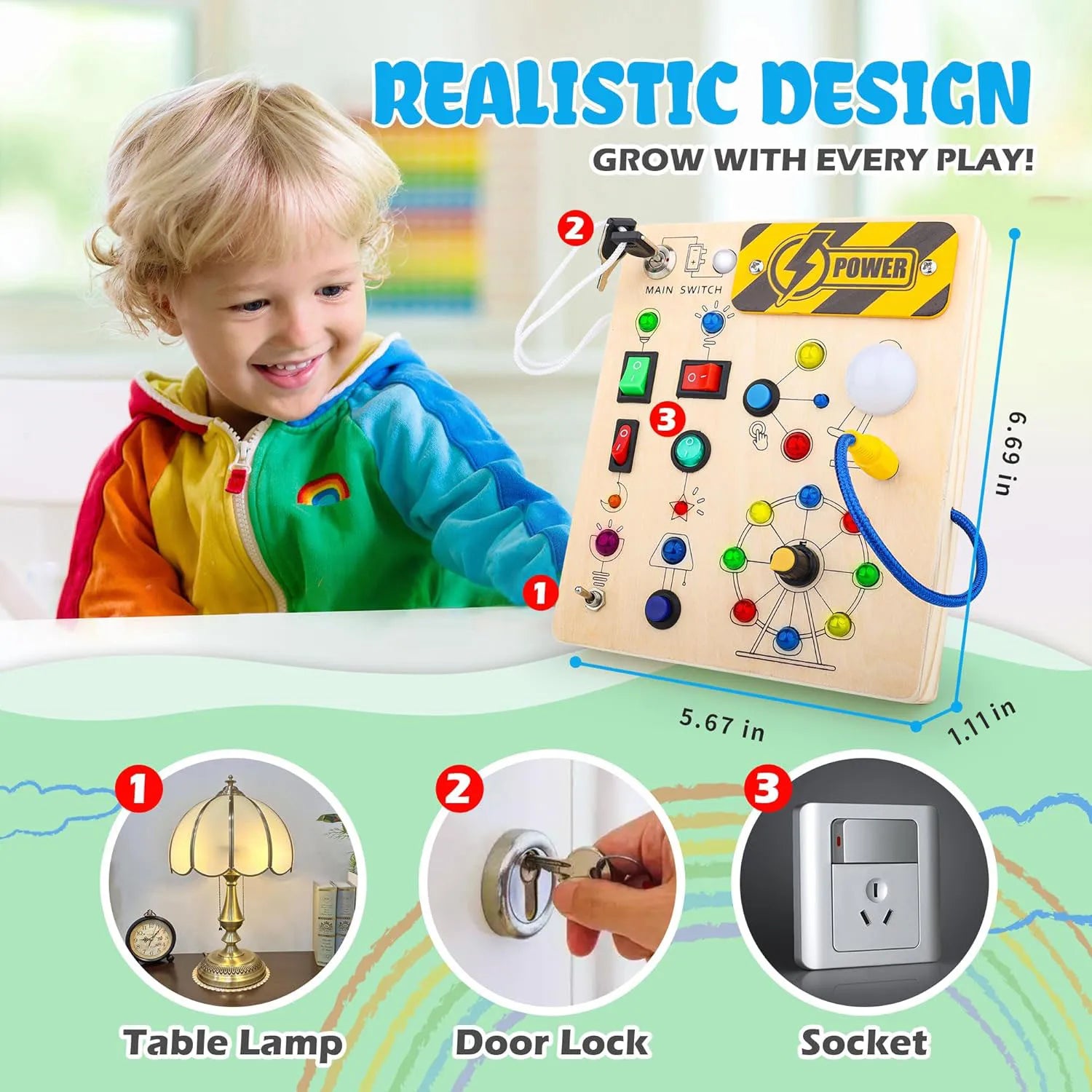
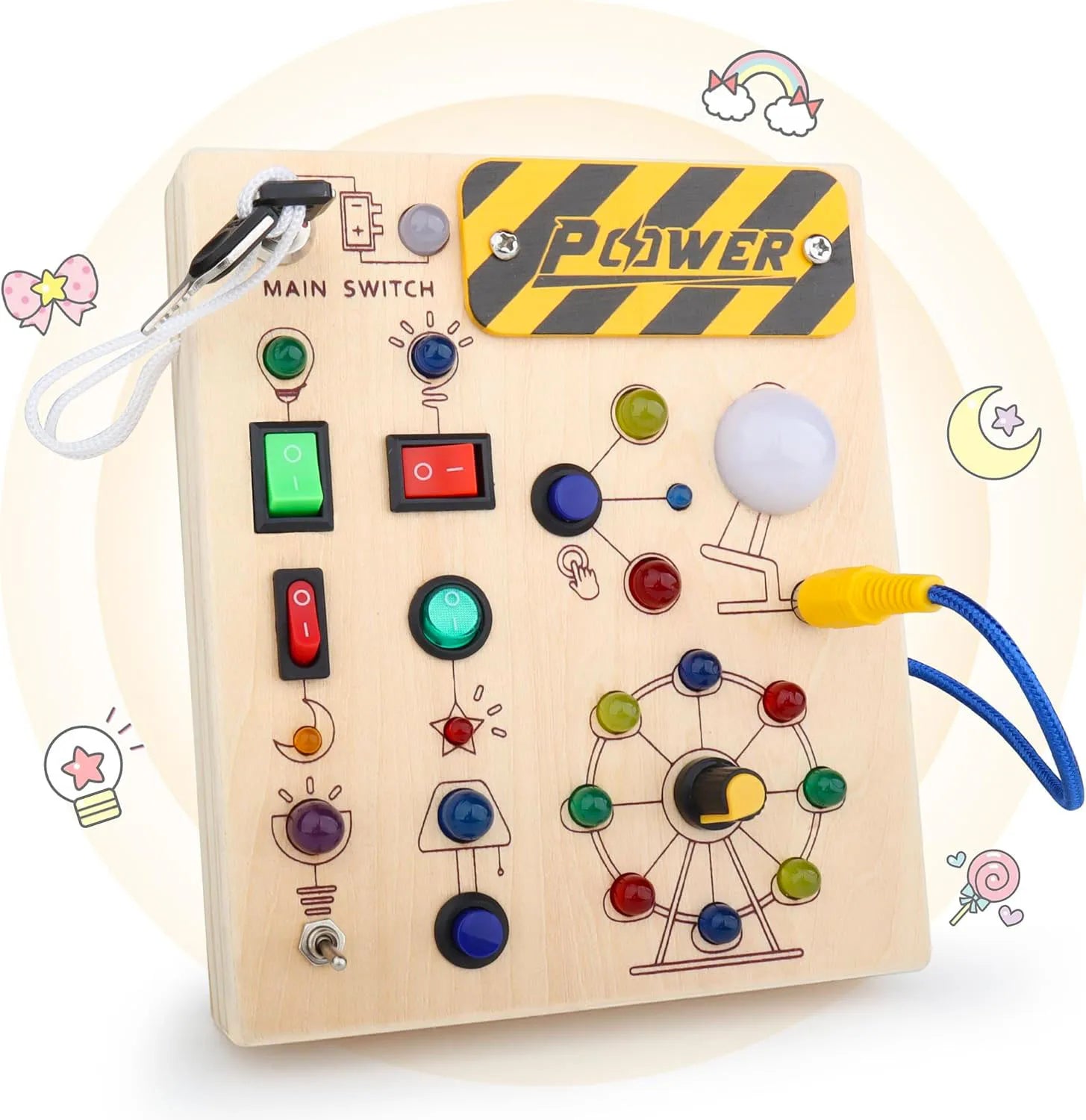
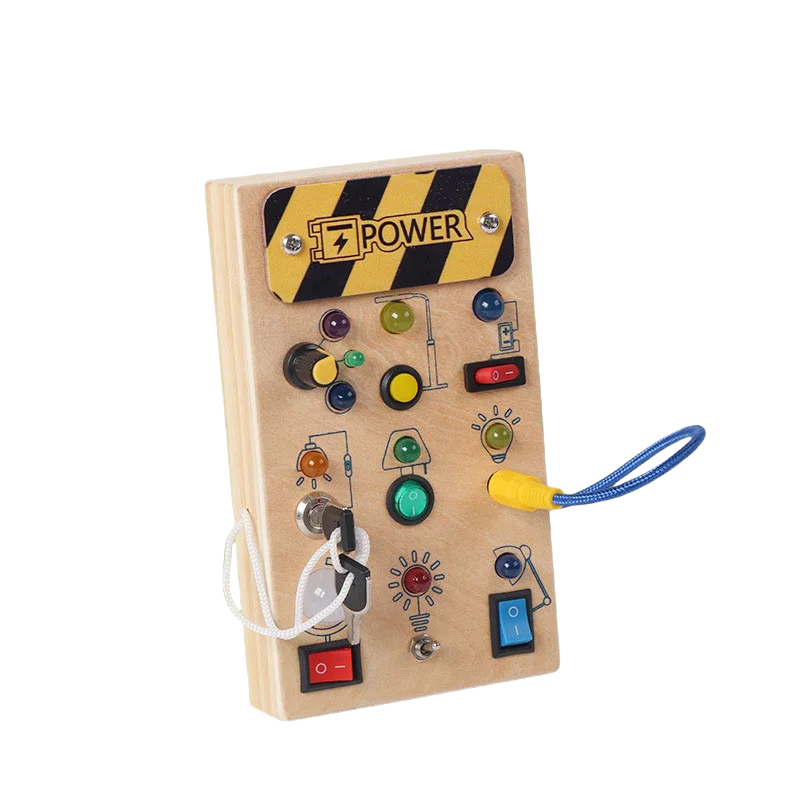
Interactive toys like a Montessori Busy Board with LED Lights for Fun Learning can also support toddler exploration by encouraging children to flip switches, press buttons, and experiment with cause-and-effect interactions during independent play.
8 Hands-On Activities for Ages 3–4
Playdough Letter Shapes
Materials: Playdough and alphabet cards
Children roll playdough into snake shapes and form letters.
Skills developed: Early literacy, hand strength
Nature Scavenger Hunt
Materials: Printable checklist
Ask children to find items such as leaves, rocks, or flowers during a short walk.
Skills developed: Observation, vocabulary building
Counting with Everyday Objects
Materials: Buttons, pasta, or small toys
Ask children to count objects into groups.
Skills developed: Early numeracy
Story Basket Play
Materials: Small toys representing story characters
Children create their own stories using the objects.
Skills developed: Language development and imagination
For more learning ideas, explore additional guides in the Baby Growth & Learning Tips section.
7 Creative Learning Activities for Ages 4–5
Build a Bridge STEM Challenge
Materials: Paper rolls, blocks, or cardboard
Ask children to build a bridge strong enough to hold a toy car.
Skills developed: Early engineering thinking
Rhyming Word Sorting Game
Materials: Picture cards
Children group pictures that rhyme together.
Skills developed: Phonological awareness
Pattern Bead Necklaces
Materials: Large beads and string
Children create repeating patterns like red–blue–red–blue.
Skills developed: Pattern recognition and fine motor skills
Picture Story Sequencing Cards
Materials: Illustrated sequence cards
Kids arrange cards in logical order to tell a story.
Skills developed: Narrative structure and sequencing
Structured activities combined with hands-on learning toys—like those found in the Baby Growth & Learning collection—can help maintain engagement while reinforcing new concepts.
5 Activities That Prepare Children for Kindergarten
Letter Sound Treasure Hunt
Materials: Alphabet cards
Hide letter cards around a room and ask children to find objects that start with the same sound.
Skills developed: Phonics awareness
Simple Addition with Counters
Materials: Small counters or blocks
Children practice combining groups of objects.
Skills developed: Early math concepts
Build and Describe Structures
Materials: Building blocks
Children build structures and explain how they made them.
Skills developed: Vocabulary, spatial reasoning
Hands-on toys like sensory boards or interactive puzzles can reinforce these concepts while keeping children engaged during quiet learning periods.
Printable Activity Cards and Weekly Learning Planner
To make implementation easier for parents and teachers, create a simple weekly learning planner:
- Monday – sensory exploration
- Tuesday – early math
- Wednesday – creative arts
- Thursday – language development
- Friday – STEM exploration
Printable activity cards can help rotate new ideas each week while maintaining a balanced learning routine.
You can also explore more tools and developmental resources in the Sensory Toys section.
Tips for Making Early Childhood Activities More Effective
Follow the Child's Curiosity
Children learn best when they are interested. If a child becomes fascinated with building or sorting, extend the activity rather than moving on too quickly.
Keep Materials Simple and Accessible
Many effective early childhood activities use everyday materials such as cardboard, cups, blocks, or natural objects.
Balance Guided Play and Free Exploration
Structured activities build specific skills, while free play encourages creativity and independent thinking.
Conclusion
Hands-on early childhood activities provide powerful opportunities for young children to build foundational skills through play. From simple sensory exploration to early STEM challenges, these activities support cognitive development, creativity, and school readiness.
Whether you are a parent, caregiver, or educator, incorporating just a few interactive activities each week can significantly support a child’s learning journey.
For more developmental tools and play-based learning ideas, explore resources in the Baby Care Tips & Advice and Smart Baby Gadgets collections.
Pillar Article: Best Preschool Educational Toys by Skill: Motor, Cognitive, Language & STEM (Ages 3–5)





