

Best Preschool Educational Toys by Skill: Motor, Cognitive, Language & STEM (Ages 3–5)
15 Best Preschool Educational Toys for Ages 3–5 (Chosen by Developmental Skills)
Many “best toy” lists overwhelm parents with endless options—but the most effective preschool educational toys are those aligned with how young children actually develop. Between ages 3 and 5, kids rapidly build fine motor control, early language skills, curiosity about science, and problem-solving abilities.
Instead of generic toy rankings, this guide organizes the best preschool learning toys by developmental outcomes. That means you can quickly choose toys that support specific skills like hand-eye coordination, cognitive development, storytelling, or early STEM thinking.
Each recommendation includes quick benefits, ideal age guidance, and practical buying insights to help parents choose faster—while supporting meaningful play-based learning.
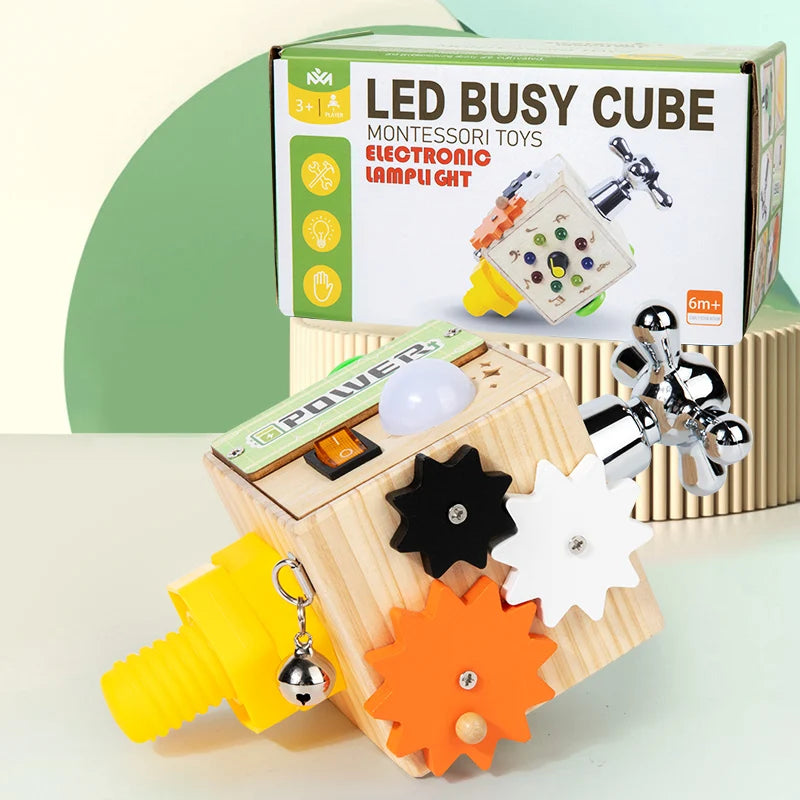
How Preschool Educational Toys Support Early Childhood Development
Key Developmental Skills Built Through Play
High-quality preschool toys stimulate several core learning domains:
- Fine motor skills – hand strength and finger coordination needed for writing.
- Cognitive development – memory, logic, and problem-solving.
- Language development – vocabulary, storytelling, and communication.
- STEM thinking – early curiosity about science, technology, engineering, and math.
- Sensory exploration – learning through textures, lights, movement, and sound.
Why Play-Based Learning Is Critical for Ages 3–5
Research in early childhood education consistently shows that children learn best through active play. When kids manipulate objects, test ideas, and experiment through toys, their brains form stronger neural connections. Play-based learning encourages creativity while strengthening attention span and independent problem solving.
How Montessori and STEM Principles Influence Educational Toy Design
Many modern preschool toys incorporate elements from the Montessori method and early STEM learning frameworks. Montessori toys emphasize independence and hands-on exploration, while STEM toys introduce experimentation, pattern recognition, and logical reasoning.
Many parents discover helpful resources and learning ideas in guides such as Baby Growth & Learning Tips when choosing toys that support these developmental approaches.
Quick Comparison: Best Preschool Educational Toys by Skill Development
| Toy | Skill Focus | Recommended Age | Learning Benefit |
| Montessori Busy Board | Fine Motor | 3–5 | Hand-eye coordination |
| Wooden Shape Sorter | Cognitive | 3+ | Pattern recognition |
| Magnetic Building Tiles | STEM | 4+ | Engineering thinking |
| Storytelling Puppet Set | Language | 3–5 | Vocabulary building |
| Balance Stepping Stones | Gross Motor | 3+ | Coordination & movement |
Best Toys for Fine Motor Skills and Hand-Eye Coordination
Why Fine Motor Skills Matter for Preschool Readiness
Fine motor development prepares children for important academic milestones such as writing, drawing, and manipulating classroom tools. Toys that involve switches, buttons, stacking, and puzzles strengthen finger muscles and coordination.
Top Toy Picks for Fine Motor Development
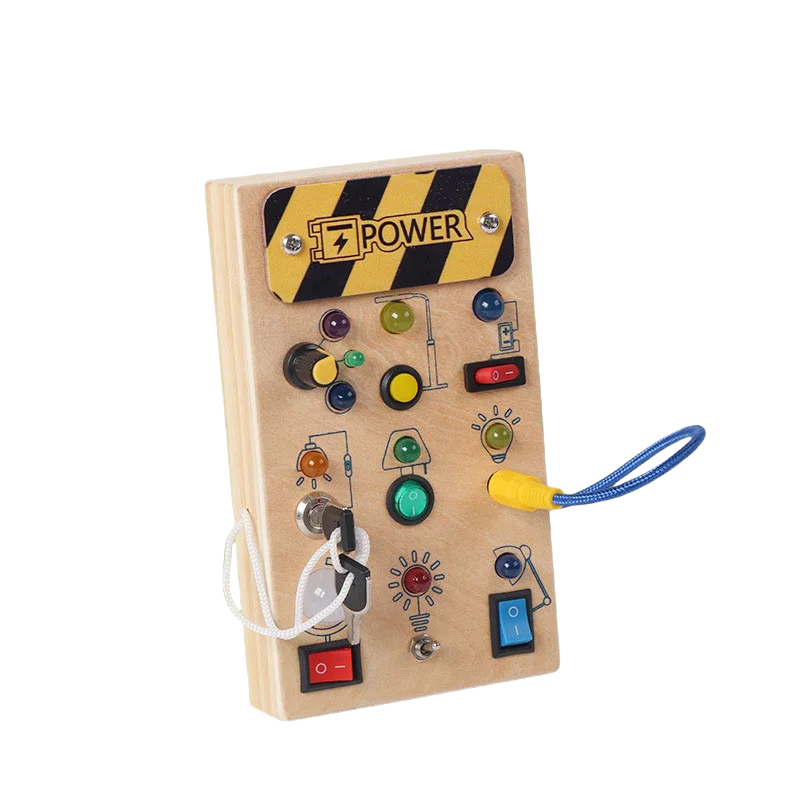
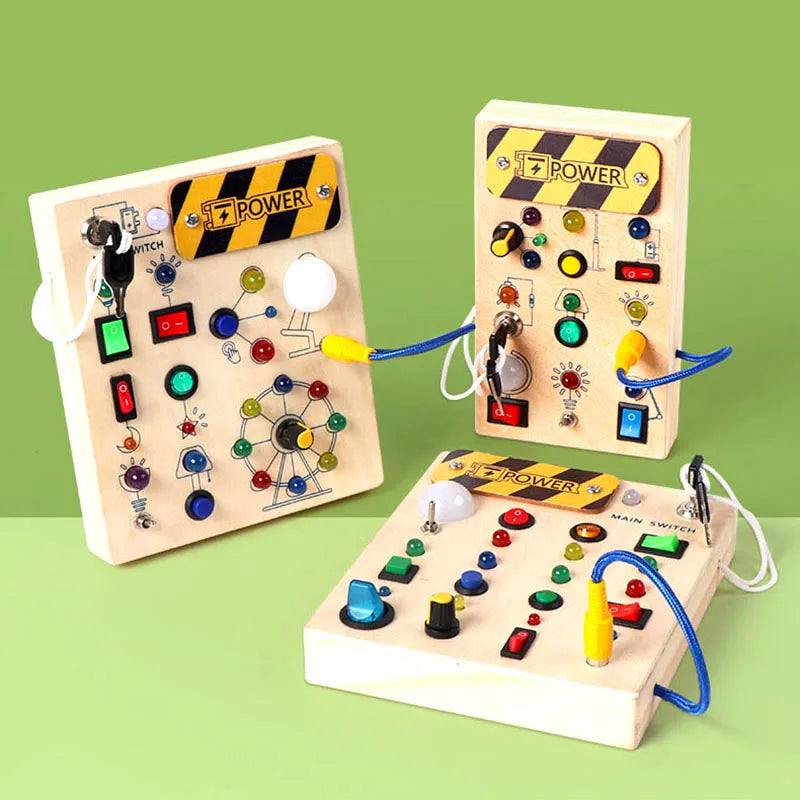
1. Montessori Busy Board with LED Lights
This interactive sensory board encourages children to experiment with switches, buttons, and lights while improving dexterity.
- Age: 3–6 years
- Skill Focus: Fine motor control and sensory exploration
- Material: Eco-friendly wood
Pros
- Encourages independent hands-on play
- Builds hand-eye coordination
- Portable for travel and quiet time
Cons
- Limited cooperative play
- Requires batteries for LED features
Parents often prefer Montessori-style toys like this because they keep children engaged without screens. You can explore the product here:
Montessori Busy Board with LED Lights for Fun Learning
2. Pegboard Pattern Set
Children recreate colorful designs using small pegs, improving finger precision and spatial awareness.
3. Lacing Beads Kit
Threading beads onto strings strengthens finger control and concentration.
Best Preschool Toys for Cognitive Development and Problem Solving
How Toys Build Cognitive Development in Early Childhood
Puzzles, sorting games, and memory toys challenge children to analyze patterns and test solutions. These activities help strengthen early logic and problem-solving abilities.
Recommended Thinking and Logic Toys for Ages 3–5
4. Wooden Shape Sorter
Classic Montessori toy encouraging spatial reasoning and pattern recognition.
Pros
- Promotes independent thinking
- Durable wooden construction
Cons
- Limited difficulty progression
5. Preschool Puzzle Board
Large puzzle pieces help children practice visual problem solving.
6. Memory Matching Game
Improves attention span and recall ability.
If you're building a home learning environment, the Baby Growth & Learning collection includes several development-focused toys and tools.
Quick tip: cognitive toys work best when children experiment freely rather than follow strict instructions.
Best Language Development Toys for Preschool Learning
How Play Encourages Language Development in Preschoolers
Interactive toys that inspire storytelling, role play, and conversation help children expand vocabulary and improve communication skills.
Top Communication and Storytelling Toys
7. Storytelling Puppet Set
Puppets encourage imaginative dialogue and emotional expression.
Pros
- Boosts storytelling creativity
- Supports social play
Cons
- Requires adult participation for younger kids
8. Alphabet Learning Cards
Helps introduce phonics and early reading skills.
9. Magnetic Word Builder
Great for experimenting with letter combinations and simple words.
Best STEM Toys for Preschool Curiosity and Discovery
Why STEM Learning Should Start in Preschool
Early STEM play encourages children to explore how things work. Activities like building, experimenting, and counting help develop logical reasoning skills long before formal schooling.
Best Beginner STEM Toys for Ages 3–5
10. Magnetic Building Tiles
Children create 3D shapes while learning engineering concepts.
Pros
- Encourages creative construction
- Develops spatial reasoning
Cons
- Pieces may be easy to misplace
11. Beginner Coding Robot
Simple directional commands introduce early programming logic.
12. Counting Bears Math Set
Teaches early counting and sorting skills.
Parents looking for screen-free STEM toys often explore curated learning collections such as Sensory Toys to combine play and developmental growth.
Best Sensory and Gross Motor Development Toys
The Role of Sensory Play in Early Childhood Learning
Sensory play stimulates multiple senses simultaneously. Lights, textures, sounds, and movement encourage neural connections that support brain development.
Toys That Support Gross Motor Development
13. Balance Stepping Stones
Improves balance, coordination, and body awareness.
Pros
- Encourages physical activity
- Builds coordination
Cons
- Requires floor space
14. Indoor Mini Trampoline
Promotes movement and energy release during indoor play.
15. Sensory Texture Play Mat
Helps children explore different textures while strengthening balance.
How to Choose the Right Educational Toy for Ages 3, 4, and 5
Best Toy Types for 3-Year-Olds
Three-year-olds benefit from toys that focus on sensory exploration and basic coordination. Shape sorters, busy boards, and stacking toys are ideal.
Best Toy Types for 4-Year-Olds
At four, children begin developing stronger curiosity and problem-solving skills. Building sets and puzzles become increasingly engaging.
Best Toy Types for 5-Year-Olds
Five-year-olds often enjoy toys that challenge them intellectually. Early STEM kits, storytelling games, and complex building toys prepare them for kindergarten learning.
Parents creating structured play routines may also find helpful guidance in Baby Care Tips & Advice.
Conclusion: Choosing the Best Preschool Educational Toys
The best preschool educational toys are not necessarily the most expensive or trendy. Instead, they support meaningful developmental milestones such as fine motor control, language development, problem solving, and curiosity about the world.
Toys inspired by Montessori and STEM learning principles encourage hands-on discovery and independent thinking. By selecting toys aligned with these skills, parents can turn everyday playtime into powerful learning experiences.
If you're searching for a simple yet engaging learning toy, the Montessori Busy Board with LED Lights offers a screen-free way to strengthen coordination, focus, and sensory exploration.
Related Articles:
- 30 Hands-On Early Childhood Activities by Age and Skill
- 15 Easy Sensory Play for 3 Year Olds (Fun Activities by Sense)
- 80+ Quiet Time Activities for Preschoolers (0-Prep, Printable & Mess-Free Ideas)
- 50 Preschool Sensory Activity Ideas Organized by Sense (Low-Prep & Fun)
- Montessori Materials Sensorial: Complete Guide to the Sensorial Curriculum





