

50 Preschool Sensory Activity Ideas Organized by Sense (Low-Prep & Fun)
50 Preschool Sensory Activity Ideas Organized by Touch, Sight, Sound, Smell & Taste
Sensory play is one of the most powerful ways young children explore and understand the world. Through simple activities that stimulate touch, sight, sound, smell, and taste, preschoolers build essential developmental skills while having fun.
These preschool sensory activity ideas help children strengthen fine motor skills, improve focus, develop language, and build confidence in hands-on learning environments. Whether you're a parent planning activities at home or a teacher creating preschool learning centers, sensory play supports curiosity and kindergarten readiness.
This guide includes 50 easy sensory activities organized by the five senses. Each idea includes quick setup guidance, materials, and variations so you can implement them in minutes.
What Are Preschool Sensory Activities?
Preschool sensory activities are play-based experiences designed to stimulate one or more of the five senses. Children interact with textures, colors, sounds, scents, and flavors to explore their environment through direct experience.
In early childhood education approaches such as Montessori activities, Reggio Emilia learning, and nature-based education, sensory play is considered foundational to cognitive development.
Why Sensory Play Matters for Preschool Development
- Strengthens fine motor skills and hand-eye coordination
- Encourages language development through describing textures and sensations
- Improves focus and attention
- Supports emotional regulation through calming tactile play
- Develops early problem-solving and creativity
Common Materials Used for Preschool Sensory Activities
- Rice, beans, or pasta sensory bins
- Playdough and clay
- Water trays and cups
- Sand and kinetic sand
- Textured fabrics and sponges
- Natural materials like leaves and rocks
- Musical instruments or sound objects
Quick Setup Guide: How to Run Sensory Activities Successfully
Quick Activity Labels Used in This Guide
Each activity uses simple labels to make planning easier:
- Setup Time: 1–5 minutes
- Mess Level: Low, Medium, High
- Skill Tags: Fine motor, language, calming, creativity, coordination
Teacher Tip: Managing Sensory Play with Preschool Groups
When using sensory centers in preschool classrooms, set up 3–5 rotating activity stations. Children rotate every 10–15 minutes, which keeps attention high and prevents overcrowding at a single station.
Touch-Based Sensory Activities (Tactile Exploration)
10 Tactile Sensory Activity Ideas
- Rice Sensory Bin — Hide small toys inside rice for digging and discovery.
- Playdough Sculpting — Shape animals or letters with soft dough.
- Shaving Cream Trays — Finger paint shapes and patterns.
- Sand Writing — Trace letters or numbers in a tray of sand.
- Texture Matching Game — Match rough, smooth, and fuzzy fabrics.
- Pasta Scoop Station — Transfer dry pasta between cups.
- Sponge Water Transfer — Squeeze sponges to move water.
- Kinetic Sand Construction — Build towers and shapes.
- Bubble Wrap Stomp Path — Walk on bubble wrap for tactile fun.
- Nature Texture Table — Explore leaves, bark, and stones.
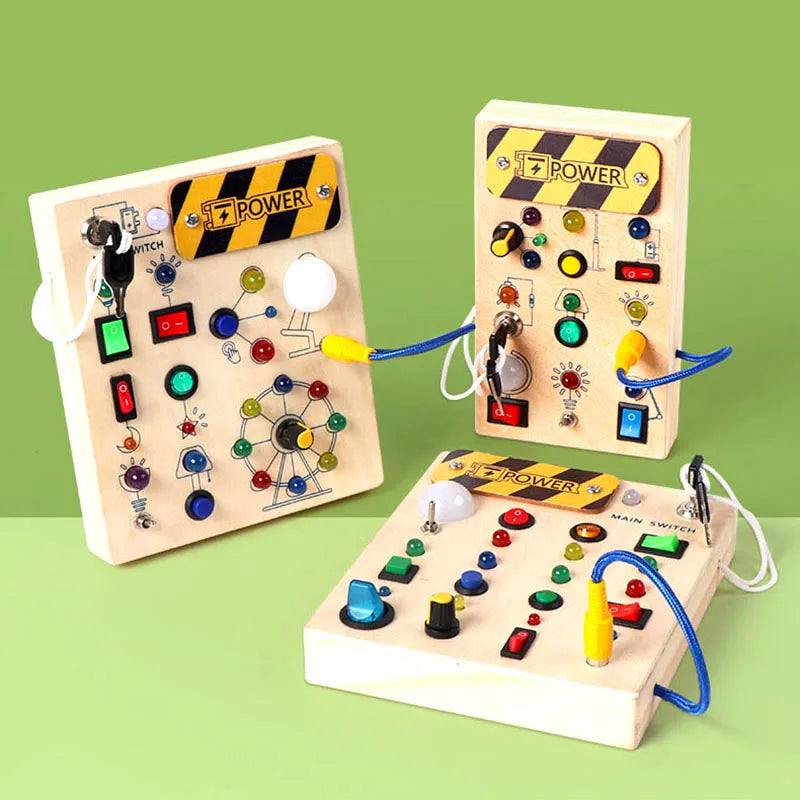
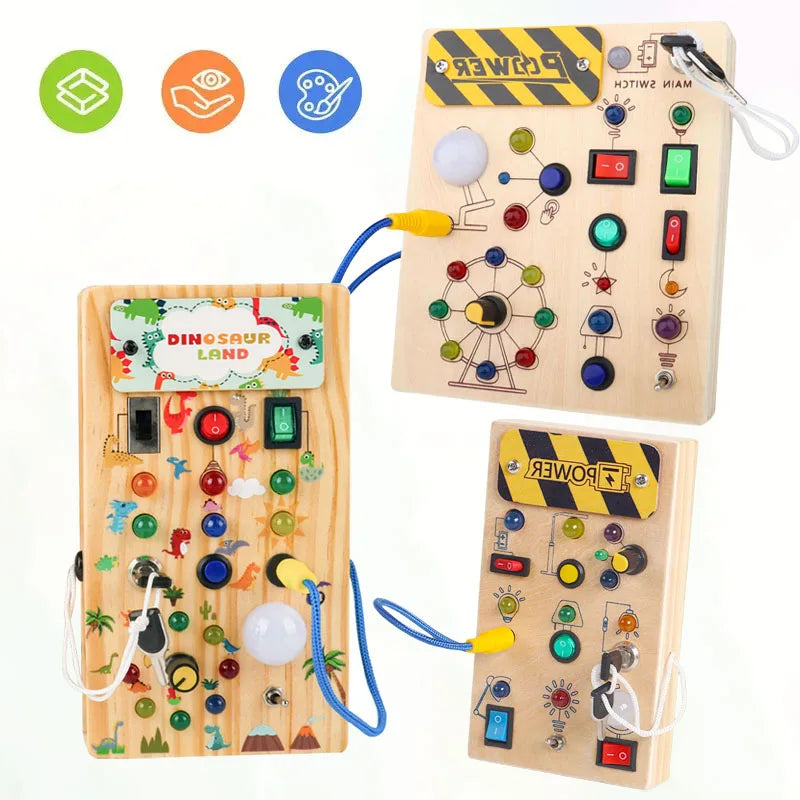
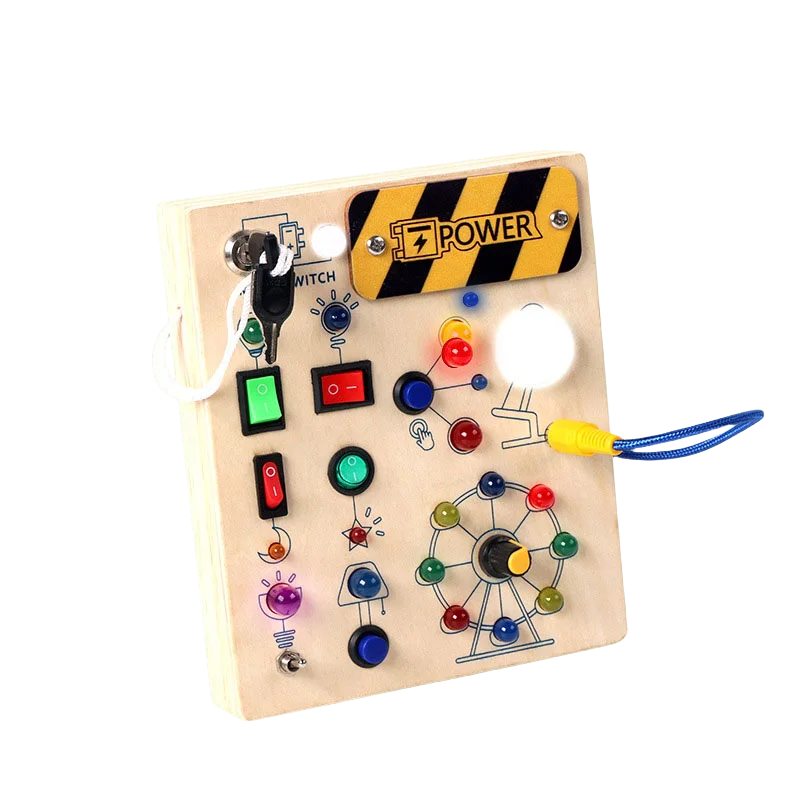
Interactive sensory toys can also support tactile learning. For example, the Montessori Busy Board with LED Lights for Fun Learning provides switches, buttons, and lights that encourage hands-on exploration while strengthening coordination and fine motor control. Tools like these work well for quiet sensory corners or travel play.
You can explore more developmental toys in the Sensory Toys collection designed to encourage independent exploration and screen-free learning.
Sight-Based Sensory Activities (Visual Exploration)
10 Visual Sensory Activity Ideas
- Rainbow Sorting Trays — Sort colored objects.
- Water Color Mixing — Mix primary colors in cups.
- Light Table Exploration — Explore transparent shapes.
- Shadow Puppet Play — Create animal shadows.
- Kaleidoscope Viewing — Observe changing patterns.
- Glow Stick Sensory Bottles — Shake glowing bottles.
- Colored Ice Painting — Melt ice cubes with paint.
- Pattern Block Creations — Build geometric designs.
- Mirror Drawing — Trace reflections.
- Nature Color Hunt — Find objects matching color cards.
Sound-Based Sensory Activities (Listening & Rhythm)
10 Sound Sensory Activity Ideas
- DIY Sound Shakers — Fill containers with rice or beans.
- Guess the Sound Game — Identify hidden noises.
- Rhythm Copying — Clap patterns for children to repeat.
- Instrument Exploration — Use drums or tambourines.
- Nature Listening Walk — Identify outdoor sounds.
- Sound Matching Eggs — Pair identical shaker sounds.
- Music Freeze Dance — Stop when music pauses.
- Water Bottle Drums — Tap bottles for different tones.
- Animal Sound Guessing — Match sound to animal.
- Echo Game — Repeat simple sound patterns.
Smell-Based Sensory Activities (Scent Exploration)
10 Smell Sensory Activity Ideas
- Spice Jar Guessing — Smell cinnamon, vanilla, or cloves.
- Scented Playdough — Add essential oils or herbs.
- Herb Garden Exploration — Smell basil or mint leaves.
- Citrus Peel Sorting — Compare orange and lemon scents.
- Flower Smell Station — Identify floral scents.
- Tea Bag Scent Matching — Pair identical smells.
- Fruit Basket Smell Game — Guess hidden fruits.
- Nature Leaf Smelling — Compare plant scents.
- Smell Memory Game — Match scent containers.
- Soap Bubble Scent Test — Compare scented bubbles.
Taste-Based Sensory Activities (Safe Food Exploration)
10 Taste Sensory Activity Ideas
- Fruit Taste Test — Compare apples, bananas, berries.
- Sweet vs Sour Sorting — Identify flavors.
- Yogurt Color Mixing — Add natural fruit coloring.
- Snack Texture Tray — Crunchy vs soft foods.
- Blindfold Taste Game — Guess hidden foods.
- Smoothie Flavor Mixing — Blend fruits together.
- Vegetable Crunch Test — Compare carrots and cucumbers.
- Flavor Vocabulary Game — Describe tastes.
- Cracker Dip Station — Try hummus or yogurt dips.
- Fruit Skewer Building — Create colorful snacks.
Quick Comparison: Sensory Activities by Skill Focus
| Sensory Type | Main Skills Developed | Best Materials |
| Touch | Fine motor, coordination | Rice bins, playdough, sand |
| Sight | Color recognition, pattern awareness | Light tables, paints, mirrors |
| Sound | Listening, rhythm, language | Instruments, shakers |
| Smell | Memory, nature exploration | Herbs, spices, flowers |
| Taste | Vocabulary, food awareness | Fruits, snacks, yogurt |
Printable Preschool Sensory Activity Cards
Many teachers and parents find it helpful to convert sensory ideas into printable activity cards. Each card can include:
- Activity name
- Materials needed
- Setup instructions
- Skill tags
How to Use Sensory Activity Cards in Learning Centers
Place activity cards in a small box or binder and rotate them weekly in your preschool learning centers. This keeps activities fresh and ensures children experience a wide variety of sensory exploration opportunities.
For more child development resources and play ideas, visit the Baby Growth & Learning Tips section.
Tips for Creating Low-Mess Sensory Activities
Sensory play doesn’t have to mean huge cleanup. With a few simple strategies, you can keep activities manageable while still providing rich learning experiences.
- Use trays or shallow bins to contain materials
- Choose dry materials like rice or beans
- Set clear play boundaries
- Use washable mats or tablecloths
- Store activity kits in labeled containers
Low-Mess Sensory Ideas for Small Spaces
- Sealed sensory bags filled with gel or beads
- Small tabletop bins
- Sticker texture boards
- Magnetic pattern play
- Portable sensory kits
If you're building a learning corner at home, sensory toys and activity boards from the Baby Growth & Learning collection can help create structured hands-on play experiences.
Conclusion
Sensory play helps preschool children explore their world while developing essential cognitive and motor skills. Simple materials like rice bins, water trays, music instruments, or nature items can create powerful learning experiences.
By rotating different preschool sensory activity ideas across touch, sight, sound, smell, and taste, parents and teachers can keep children engaged while supporting curiosity, creativity, and kindergarten readiness.
To expand your child’s hands-on learning environment, explore engaging sensory tools and developmental toys designed to encourage independent discovery and playful exploration.
Pillar Article: Best Preschool Educational Toys by Skill: Motor, Cognitive, Language & STEM (Ages 3–5)





