

Best Baby Walker Activity Center for Safe Play & Growth
Prevent Toddler Slipping on Hardwood Floors When Walking
Toddler slipping on hardwood floors is a common concern for parents of new walkers. Hardwood, laminate, and other smooth indoor surfaces offer less traction than carpet, making it harder for toddlers to maintain balance as they develop coordination and leg strength. Fortunately, a few practical changes—such as choosing a stable wooden push walker, prioritizing rubber trimmed wheels safety, and creating a clear practice area—can significantly reduce slips while encouraging confident, independent steps.
⏱ 6 min read
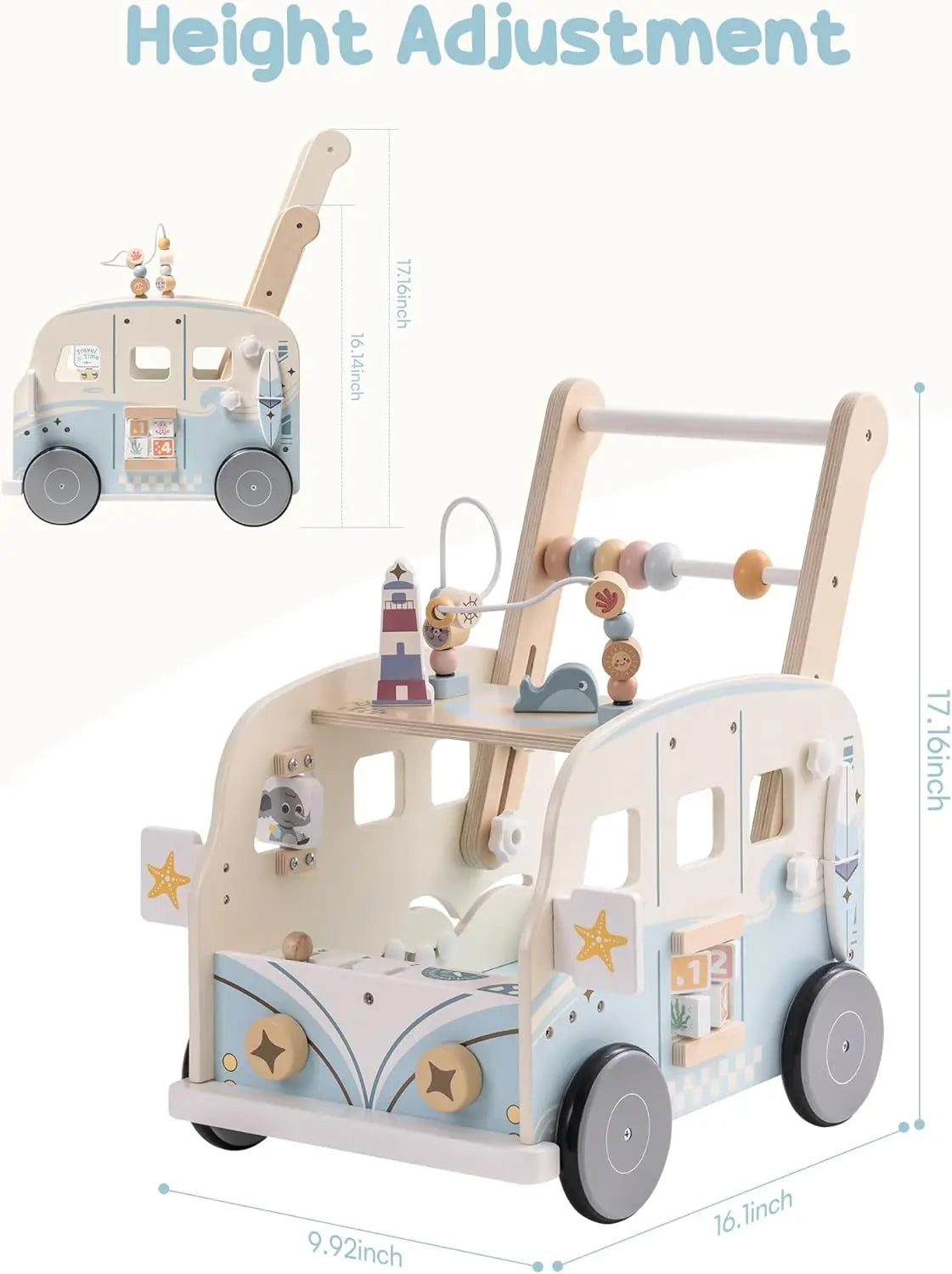
A wooden push walker with rubber trimmed wheels safety helps reduce toddler slipping on hardwood floors. See it in action.
Why Toddlers Slip More on Hardwood Floors
Toddler slipping on hardwood floors happens because early walkers are still developing balance, muscle strength, and coordination. Every step requires constant adjustments to their center of gravity, and smooth flooring provides less friction than carpet or textured surfaces. Even small changes in speed or direction can lead to a loss of footing.
Several everyday factors can increase the chance of slipping:
- Socks or smooth-soled footwear that reduce grip.
- Lightweight walkers that roll forward too easily.
- Weak core and leg muscles that are still developing.
- Cluttered walkways that force sudden changes in direction.
- Fast-moving wheels without adequate traction or resistance.
While occasional tumbles are a normal part of learning to walk, repeated slipping can make some toddlers hesitant to practice. Creating a safer walking environment and selecting equipment designed for stability can help children build confidence while supporting healthy movement patterns.
Quick Fixes That Immediately Improve Stability
Toddler slipping on hardwood floors can often be reduced with a few practical adjustments that improve traction and give children more control while they practice walking. These changes are inexpensive, easy to implement, and suitable for most homes.
- Encourage barefoot walking indoors whenever it is safe, as bare feet generally provide better grip than socks.
- Remove loose rugs, electrical cords, and other obstacles that could cause trips or sudden changes in direction.
- Choose an indoor baby walking toy that moves smoothly without rolling too quickly across hardwood floors.
- Select push toys with enough weight to provide gentle resistance instead of lightweight models that can shoot forward unexpectedly.
- Practice in short sessions to prevent fatigue, which can increase the likelihood of slips.
Combining these simple habits helps toddlers develop balance, confidence, and a more natural walking pattern while reducing unnecessary falls.
How a Wooden Push Walker Improves Balance
A well-designed wooden push walker supports natural walking development by encouraging toddlers to remain upright while taking controlled steps. Unlike seated walkers that allow children to move before they have developed adequate balance, push walkers require active participation from the child.
The additional weight of a sturdy wooden frame creates gentle resistance, helping toddlers regulate their speed instead of rushing forward. This encourages better foot placement, stronger leg muscles, improved coordination, and a more stable gait as walking skills mature.
Many parents exploring Baby Growth & Learning resources appreciate wooden push walkers because they combine durability with developmental benefits. Their solid construction often makes them feel more stable than lightweight plastic alternatives, especially on smooth flooring.
For the best results, look for a model that combines a stable frame with wheels designed to provide consistent traction rather than unrestricted rolling. This combination helps toddlers practice confidently while maintaining better control over every step.
Why Rubber Trimmed Wheels Safety Matters
Wheel design plays a major role in preventing toddler slipping on hardwood floors. While many parents focus on the frame or appearance of a push walker, the wheels determine how easily the toy moves and how much control a child has while learning to walk.
Hard plastic wheels can roll quickly across smooth flooring with very little resistance. By comparison, rubber trimmed wheels increase traction, allowing the walker to move only when your toddler applies steady, intentional pressure. This creates a slower, more predictable walking experience that supports developing balance.
- Helps reduce sudden forward acceleration.
- Provides better grip during turns and direction changes.
- Encourages controlled, confident steps.
- Supports a smoother and more natural walking rhythm.
- Helps protect hardwood floors from excessive scuffing compared with hard plastic wheels.
Parents exploring Health & Safety resources often discover that wheel traction is one of the most important features to consider when choosing a push walker for hardwood flooring.
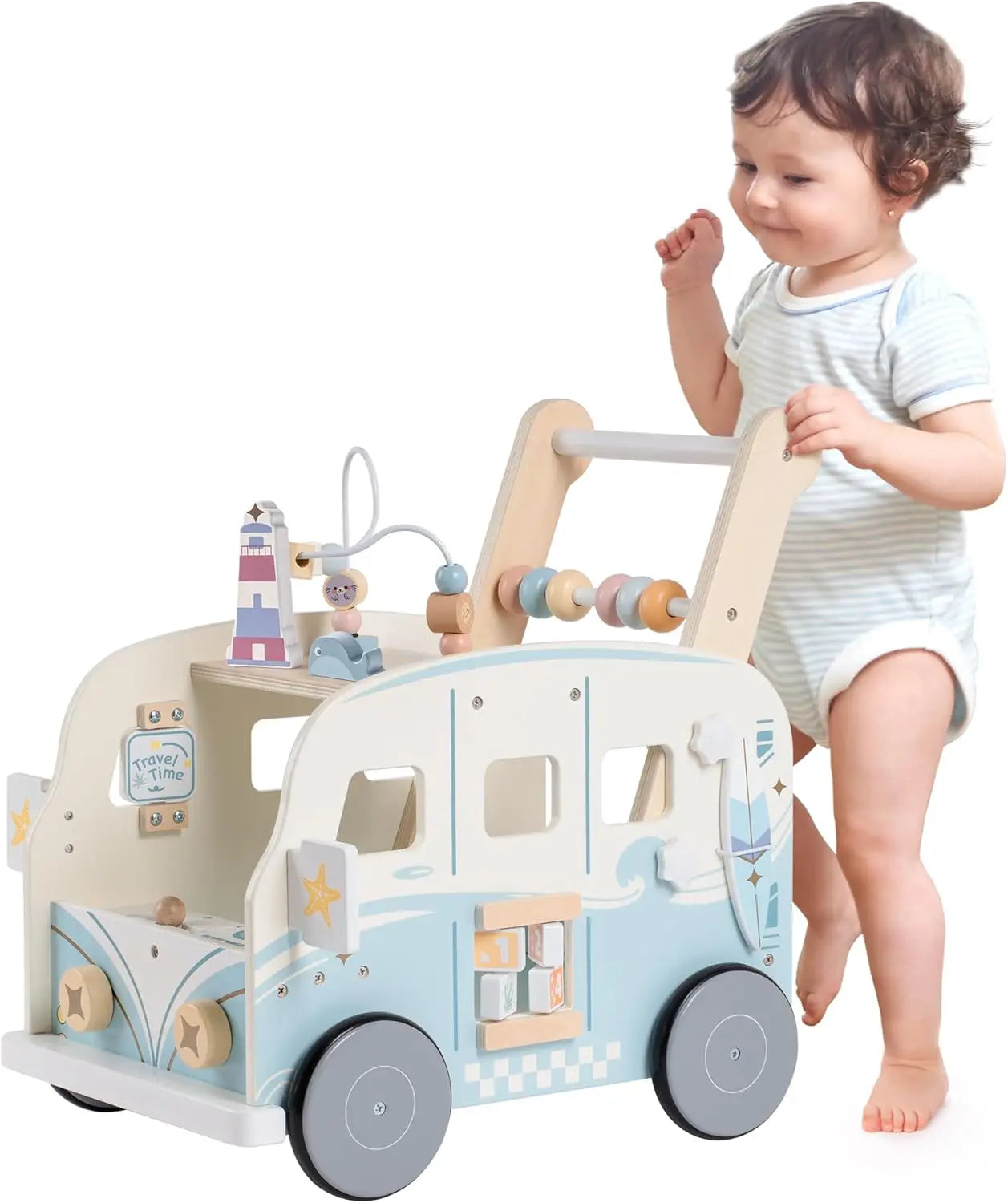
Rubber trimmed wheels safety adds reliable traction to indoor baby walking toys for smoother, more controlled movement. See it in action.
Step-by-Step Setup for Safer Indoor Walking
Creating a safe practice area gives toddlers the opportunity to strengthen their walking skills with fewer unnecessary slips. A consistent routine also helps build confidence as children become more comfortable moving across hardwood floors.
- Select a sturdy wooden push walker equipped with rubber trimmed wheels safety for improved traction.
- If the walker includes adjustable wheel resistance, begin with a slower setting and increase mobility as your child gains confidence.
- Clear the walking area of loose rugs, toys, cords, and other obstacles that could create trip hazards.
- Practice on straight, open pathways before introducing turns or longer distances.
- Keep walking sessions brief and enjoyable, allowing time for rest between practice periods.
Families using Mobility & Training products often find that regular, supervised practice combined with a stable walking aid helps toddlers develop balance and coordination more consistently over time.
Choosing the Right Indoor Baby Walking Toy
The best indoor baby walking toy should promote balance rather than speed. When comparing options, look beyond appearance and consider wheel traction, stability, and how well the toy supports natural walking development on smooth flooring.
| Feature | Basic Plastic Walker | Wooden Push Walker |
|---|---|---|
| Wheel Grip | Low | High with rubber trims |
| Speed Control | Limited | Controlled and stable |
| Balance Support | Minimal | Excellent |
| Durability | Moderate | Long-lasting wooden construction |
| Best For | Light indoor play | Developing balance and independent walking |
For many families, a wooden push walker offers the best combination of stability, durability, and controlled movement, making it a practical choice for toddlers practicing on hardwood floors.
Explore trusted walking supports in Baby Care Essentials to compare products designed for different ages and developmental stages.
What Real Parents Notice After Switching
Parents who replace lightweight walkers with sturdier push walkers commonly report improvements in both confidence and movement quality after consistent supervised practice.
- Fewer slips on smooth indoor flooring.
- Greater confidence during independent walking.
- Improved posture while pushing the walker.
- More controlled walking speed.
- Longer practice sessions with fewer frustrations.
While every child develops at their own pace, many caregivers notice that a stable walker encourages toddlers to focus on balance rather than chasing a fast-moving toy. Combined with a safe environment, this can make daily walking practice more enjoyable for both children and parents.
Many families also combine walking practice with activities from Sensory Toys to encourage movement, exploration, and longer periods of active play.

A stable wooden push walker helps toddlers build confidence and improve balance on hardwood floors. See it in action.
If you're ready to support safer first steps, explore the recommended wooden baby walker , designed to provide dependable balance support and controlled movement for indoor walking practice.
Frequently Asked Questions
What are the differences between various types of baby walkers and activity centers?
Traditional seated walkers allow babies to move while sitting, push walkers support independent walking practice behind the toy, and stationary activity centers provide entertainment without allowing mobility. Push walkers are generally better suited for toddlers who are already pulling to stand and beginning to take supported steps.
Are push walkers safer than seated walkers?
When used on a flat surface under close adult supervision, push walkers typically encourage a more natural upright posture and active balance. Seated walkers have been associated with a higher risk of accidents around stairs and other household hazards, which is why many pediatric safety organizations recommend alternatives such as push walkers or stationary activity centers.
What age is best for a baby walker activity center?
Most activity centers are designed for babies who can hold their heads up independently, while push walkers are generally most appropriate once a child can pull to stand and cruise along furniture. Always follow the manufacturer's recommended age, height, and weight guidelines.
How long should babies use an activity center each day?
Short, supervised sessions of around 15 to 20 minutes at a time are usually sufficient. Babies also benefit from plenty of floor play, crawling, and free movement to develop strength, coordination, and motor skills.
Can babies use activity centers before walking?
Yes. Many stationary activity centers are intended for babies before they begin walking, providing opportunities for sensory exploration and play. Push walkers, however, should be introduced only after a child demonstrates the strength and coordination needed to stand with support.
Which baby walker works best on hardwood floors?
A sturdy wooden push walker with rubber-trimmed wheels is often one of the best choices for hardwood floors because it offers improved traction, controlled movement, and better balance support than lightweight models with hard plastic wheels.
How do I choose the right baby walker activity center?
Look for a product that matches your child's developmental stage, offers a wide and stable base, includes high-grip wheels if it is a push walker, and is easy to clean. Adjustable features, durable materials, and compliance with current safety standards are also important considerations.
Related Guide: Choosing Safe Baby Walker: Best Options Compared





