

Arch Support for Toddlers: Do They Really Need It?
Does the best arch support for kids really make a difference?
The best arch support for kids can improve comfort, reduce foot fatigue, and provide gentle support for growing feet when it is used appropriately. While not every child needs an orthotic insert, children with persistent discomfort, flexible flat feet that cause symptoms, or high activity levels may benefit from properly fitted arch support recommended by a healthcare professional.
Best Arch Support for Kids: A Parent's Guide to Healthy Growing Feet
⏱ 8 min read — Growing feet change rapidly throughout childhood, and it's common for parents to wonder whether their child needs extra support. From toddlers with naturally flat-looking feet to active school-age children who complain of tired legs after sports, understanding when arch support helps—and when it doesn't—can make choosing footwear much easier.
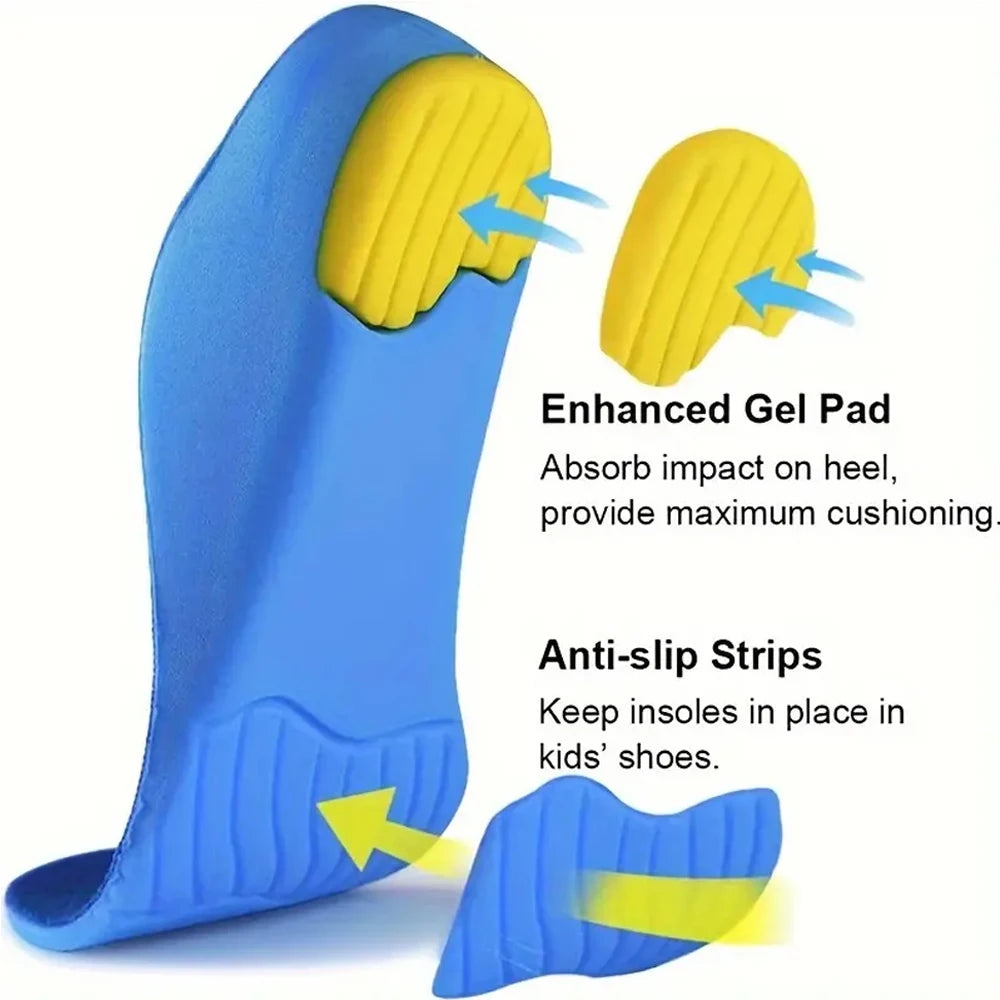
Best arch support for kids tested in everyday school and playground routines.
Do Toddlers Need Arch Support?
One of the most common questions parents ask is, " Do toddlers need arch support? " In most cases, the answer is not immediately . Many toddlers naturally appear to have flat feet because a soft fat pad covers the developing arch during the early years.
For healthy toddlers who walk comfortably and play without pain, special arch support for toddlers is often unnecessary. As muscles strengthen and bones mature, arches gradually become more visible throughout childhood.
When arch support may help
- Persistent foot pain during everyday activities
- Frequent fatigue after short periods of walking
- Flexible flat feet that cause discomfort
- High-impact sports participation with recurring soreness
- Recommendations from a pediatrician or pediatric podiatrist
When it is usually unnecessary
- Pain-free toddlers with normally developing feet
- Children meeting walking and running milestones
- Flat-looking feet without symptoms
A common myth is that every flat foot requires treatment. In reality, many children develop healthy arches naturally as they grow.
Why Parents Consider Arch Support for Toddlers
Parents usually begin researching arch support for toddlers after noticing subtle changes rather than obvious injuries. The goal is often improving comfort—not correcting normal development.
- Complaints of tired feet after daycare or school
- Frequent tripping or awkward walking
- Uneven shoe wear patterns
- Flat feet concerns during growth
- Advice from pediatric healthcare providers
Many families first explore supportive footwear before considering inserts. Those already browsing supportive products in Health & Safety or activity aids from Mobility & Training often discover that selecting appropriate footwear is an important part of healthy foot development.
When Do Toddler Arches Develop?
Foot arches do not appear overnight. They gradually form as muscles, ligaments, and bones mature throughout childhood.
| Age | Typical Foot Development |
|---|---|
| 1–2 years | Feet often appear flat because of natural fat padding. |
| 3–5 years | Arches begin developing in many children. |
| 6–10 years | Most children show clearer arch formation. |
| School age | Persistent pain or rigid flat feet should be evaluated professionally. |
Flexible flat feet—which flatten while standing but form an arch when sitting or standing on tiptoes—are common and often normal. Rigid flat feet, limited movement, or persistent pain deserve medical assessment.
How to Choose the Best Arch Support for Kids
The best arch support for kids balances comfort, flexibility, and stability without interfering with normal movement. A well-designed insert should support growing feet while fitting comfortably inside everyday shoes.
Key features parents should look for
- Flexible youth arch support insoles that move naturally with growing feet
- Breathable insoles that help reduce heat and moisture
- Shock-absorbing cushioning for playgrounds and sports
- Secure heel support to improve stability
- Age-appropriate sizing with trim-to-fit options
- Durable materials that maintain shape over time
Supportive shoes vs insoles
Supportive shoes provide the foundation for healthy walking by offering a stable heel, flexible forefoot, and proper fit. Insoles are most useful when additional support is needed because of discomfort, sports participation, or guidance from a healthcare professional.
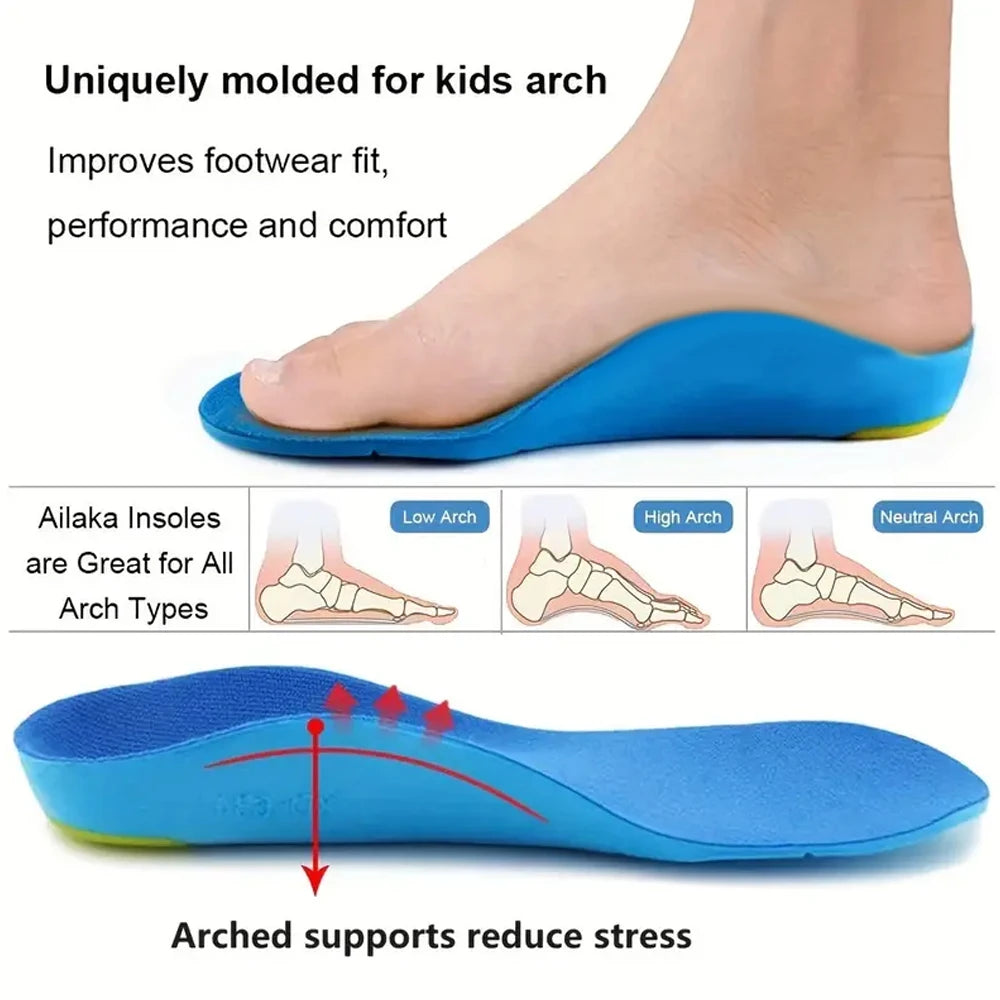
Youth arch support insoles with breathable materials designed for active children.
Arch Support Shoes vs Insoles for Toddlers
Parents often wonder whether supportive shoes alone are enough or whether insoles provide additional value.
| Option | Best For | Limitations |
|---|---|---|
| Supportive shoes | Everyday wear and healthy foot development | Support level cannot easily be adjusted |
| Youth arch support insoles | Children needing additional comfort or mild support | Require proper sizing and fit |
For toddlers without symptoms, well-fitting supportive shoes are usually sufficient. If additional support is recommended, removable insoles offer flexibility because they can be transferred between compatible shoes.
Compared with generic foam inserts, quality youth arch support insoles typically provide better durability, more consistent cushioning, and improved breathability for growing feet.
How to Fit Arch Support Safely
- Remove the original shoe insole if it is removable.
- Compare sizes and trim only along the provided guidelines if necessary.
- Place the insert firmly with the heel seated correctly.
- Have your child walk indoors for several minutes before extended wear.
- Gradually increase wear time over the first few days if recommended.
Monitor for pressure points, rubbing, or discomfort during the break-in period. Children's feet grow quickly, so replace insoles whenever shoe size changes or the materials become compressed.
Product tested: Kids Orthotic Insoles for Flat Feet Support

Breathable insoles with shock-absorbing support for everyday comfort.
When to See a Pediatric Foot Specialist
Most children with flexible flat feet do not require treatment. However, professional evaluation is recommended if your child experiences:
- Persistent foot or leg pain
- Rigid flat feet with limited movement
- Frequent limping or uneven walking
- Pain that interferes with sports or school activities
- Rapidly worsening symptoms despite supportive footwear
A pediatric foot specialist can determine whether arch support, exercises, different footwear, or additional evaluation is appropriate.
Frequently Asked Questions
Can toddlers wear arch support every day?
If arch support has been recommended and fits correctly, many children can wear it daily. Comfort should be monitored regularly, especially as feet grow.
At what age do toddlers develop arches?
Most children gradually develop visible arches between ages 3 and 10, although timing varies considerably from child to child.
Are breathable insoles better for toddlers?
Breathable insoles help improve airflow inside shoes, which may reduce moisture buildup and improve comfort during active play.
Can arch support correct flat feet?
Arch support does not permanently change foot structure. Instead, it helps improve comfort and support during everyday activities when symptoms are present.
How do I know my toddler needs arch support?
Persistent pain, unusual fatigue, recurring complaints after walking, or recommendations from a healthcare professional are stronger indicators than flat-looking feet alone.
Should toddlers use supportive shoes or insoles?
Supportive, properly fitted shoes are the starting point for most children. Insoles are generally considered when additional comfort or support is needed.
Related Guide: Children Orthopedic Shoe Insoles: Honest Review After Real Use





