

Educational Toys for Infants That Match Every 0–12 Month Milestone
Educational Toys for Infants: The Complete Milestone Toy Guide (0–12 Months)
The first year of life is a period of remarkable brain growth. During these months, babies build millions of neural connections as they learn through seeing, hearing, touching, reaching, and moving. Choosing the right educational toys for infants helps support sensory exploration, motor development, early communication, and cognitive skills while making everyday play both enjoyable and meaningful.
Rather than choosing toys based only on age labels, experts recommend selecting toys that match a baby's current developmental milestones. A toy that encourages a newborn's visual tracking may not provide enough challenge for a crawling infant, while a more advanced toy can overwhelm babies who are still developing basic sensory skills.
This milestone-based guide explains how to choose the best educational toys for infants from birth through 12 months. You'll find age-specific recommendations, developmental goals, practical buying advice, and evidence-informed explanations showing how different toy types support learning through play.
Quick Answer: Best Educational Toys for Infants by Age
If you're looking for the best educational toys for babies without reading the entire guide, the comparison below highlights the most suitable toy categories for each stage of infant development.
Comparison Table: Best Educational Toys for Infants (0–12 Months)
| Age Range | Best Toy Types | Primary Development Goals |
| 0–3 months | High-contrast toys, sensory mats, soft rattles | Visual tracking, sensory awareness, early attention |
| 3–6 months | Teething toys, activity gyms, textured balls | Grasping, hand-eye coordination, sensory exploration |
| 6–9 months | Soft blocks, stacking toys, musical toys | Cause-and-effect learning, fine motor control, exploration |
| 9–12 months | Shape sorters, push toys, interactive books | Problem solving, mobility, early language development |
Toy Recommendations by Development Stage
The best infant educational toys encourage babies to practice the skills they are naturally developing at each stage. During the first few months, visual stimulation and gentle sounds are most valuable. As babies begin reaching and grasping, textured toys and rattles become more engaging. Older infants benefit from toys that encourage crawling, stacking, problem solving, and simple pretend play.
Best Picks by Budget and Learning Goal
- Best for visual development: High-contrast black-and-white cards and soft books
- Best for sensory exploration: Textured balls, sensory mats, and soft rattles
- Best for fine motor skills: Grasp-friendly teethers and stacking toys
- Best for cognitive development: Shape sorters, nesting cups, and interactive books
- Best value: Simple open-ended toys that grow with multiple developmental stages
Why Educational Toys Matter During the First Year
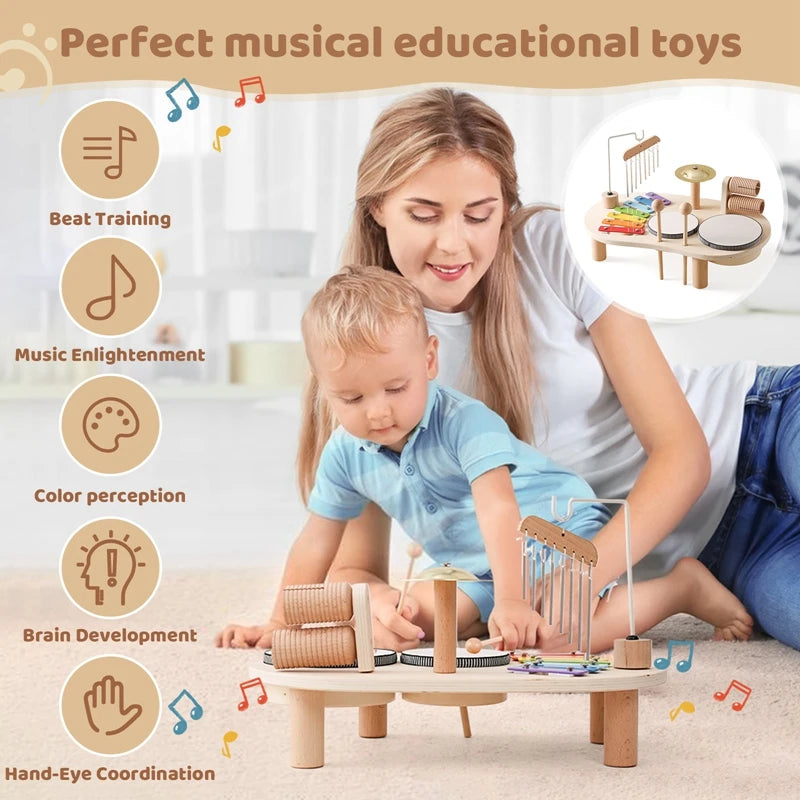
Play is how infants learn about their environment. During the first year, babies progress through the sensorimotor stage , where every movement and interaction helps strengthen brain connections. Well-designed infant learning toys encourage exploration while supporting healthy physical, sensory, and cognitive development.
The Sensorimotor Stage and How Babies Learn Through Play
During the sensorimotor stage, babies investigate the world by looking, listening, grasping, mouthing, shaking, dropping, and repeating actions. Repetition helps build neural pathways responsible for memory, coordination, and early problem solving.
Developmentally appropriate educational toys provide safe opportunities for this exploration. For example:
- Rattles introduce cause-and-effect learning by connecting movement with sound.
- Textured toys strengthen tactile awareness and sensory processing.
- Musical toys encourage listening skills, rhythm recognition, and auditory development.
Key Developmental Skills Toys Can Support
- Sensory development – exploring different textures, sounds, colors, and visual patterns.
- Fine motor skills – grasping, transferring, holding, and manipulating objects.
- Gross motor development – reaching, rolling, tummy time, crawling, and coordinated movement.
- Cognitive development – curiosity, memory, attention, problem solving, and understanding cause and effect.
How Pediatric Development Guidelines Inform Toy Selection
Development experts and organizations such as the American Academy of Pediatrics recommend toys that encourage active exploration rather than passive entertainment. Simple, open-ended toys often provide greater learning opportunities because babies control how they interact with them instead of simply watching lights or sounds.
Parents looking for development-focused toys often browse curated collections like Baby Growth & Learning to find products designed to support infant milestones while encouraging age-appropriate exploration.
Educational Toys for Newborns (0–3 Months)
Key Developmental Milestones
During the first three months, newborns are adapting to the outside world. Vision is still developing, and babies typically focus best on objects about 8–12 inches away. They gradually begin tracking movement, recognizing familiar faces, responding to voices, and spending longer periods alert during wake windows.
Important milestones during this stage include:
- Tracking moving objects with their eyes
- Recognizing caregivers' faces
- Responding to voices and gentle sounds
- Developing early reflexes and controlled movements
Best Educational Toys for Newborns
- High-contrast black-and-white cards and books
- Soft rattles designed for tiny hands
- Sensory play mats for supervised tummy time
- Gentle crib mobiles with slow-moving visual patterns
Play Activities to Maximize Learning
Short, interactive play sessions are more beneficial than extended stimulation. Hold high-contrast toys within your baby's focus range, slowly move rattles from side to side to encourage visual tracking, and combine tummy time with sensory mats to build neck and shoulder strength. Talking, singing, and making eye contact during play also support early language development and social bonding.
High-contrast patterns stimulate the developing visual system, while gentle sounds activate auditory pathways. Even simple actions such as shaking a rattle begin teaching babies that their movements can create predictable outcomes, laying the foundation for future learning.
Educational Toys for Infants (3–6 Months)
Key Developmental Milestones at 3–6 Months
Between 3 and 6 months, babies become much more intentional with their movements. They begin reaching for objects, transferring toys between their hands, bringing items to their mouths for exploration, and showing increasing curiosity about different textures, colors, and sounds.
Common milestones during this stage include:
- Improved hand-eye coordination
- Purposeful reaching and grasping
- Greater interest in sensory exploration
- Beginning to roll and strengthen core muscles
Best Educational Toy Types for 3–6 Months
- Teething toys made from baby-safe materials
- Textured sensory balls
- Activity gyms with hanging toys
- Easy-to-grip rattles
How Cause-and-Effect Play Begins
During this period, babies start realizing that their actions produce predictable results. Shaking a rattle creates sound, squeezing a soft toy changes its shape, and batting a hanging toy makes it move. These repeated experiences build the foundations for memory, problem solving, and logical thinking.
Toys that encourage grasping, shaking, and reaching also strengthen fine motor control while keeping babies actively engaged. Simple sensory toys available in collections such as Sensory Toys are often ideal because they provide varied textures and sounds without excessive stimulation.
Educational Toys for Infants (6–9 Months)
Key Developmental Milestones at 6–9 Months
Between 6 and 9 months, babies typically learn to sit independently, improve their balance, and begin crawling or preparing to crawl. Their curiosity grows rapidly as they intentionally explore objects, pass toys from one hand to the other, and investigate how different items behave.
Best Educational Toy Types for 6–9 Months
- Stacking toys
- Soft building blocks
- Peekaboo toys
- Interactive musical toys
Object Permanence and Cognitive Development
A major developmental milestone during this stage is object permanence —the understanding that people and objects continue to exist even when hidden from view. Games such as peekaboo and toys that conceal objects help reinforce this concept while encouraging memory and problem-solving skills.
Stacking toys, nesting cups, and soft blocks also introduce simple trial-and-error learning as babies experiment with balance, size, and spatial relationships.
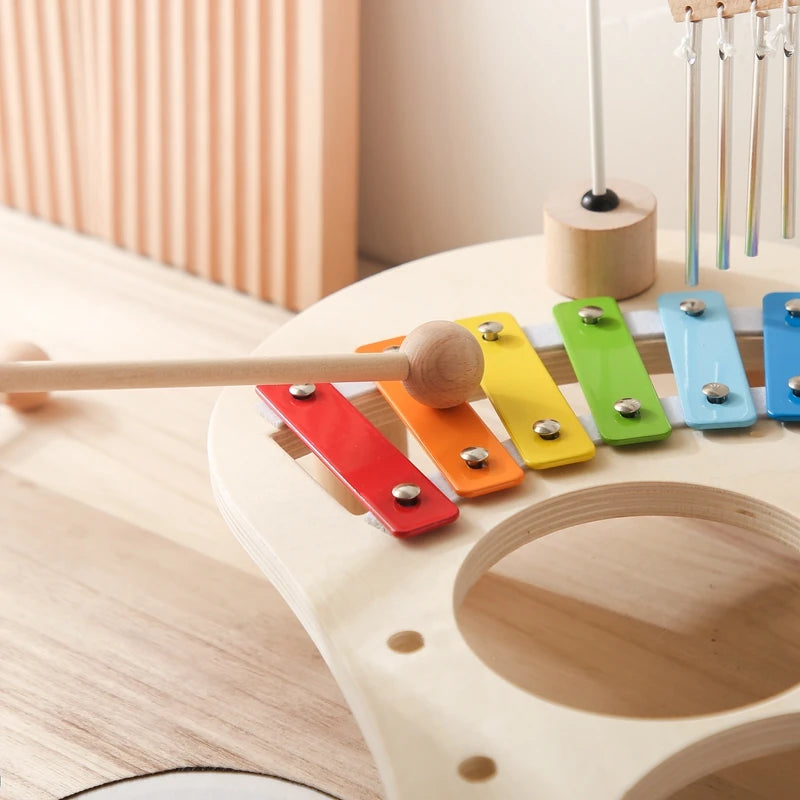
Musical play becomes increasingly engaging during this stage. The Wooden Baby Xylophone Toy – Montessori Musical Learning encourages babies to explore rhythm, sound, and movement while strengthening hand-eye coordination through hands-on interaction.
Its Montessori-inspired design emphasizes simple, self-directed exploration rather than overstimulating lights or electronics, making it suitable for sensory discovery as babies become more confident sitting and reaching.
Pros
- Encourages early musical exploration
- Supports sensory and auditory development
- Smooth natural wood construction
- Promotes hand-eye coordination and purposeful movement
Cons
- Adult supervision is recommended during play
- Most suitable once babies can sit steadily and grasp objects confidently
Parents exploring development-focused toys may also find helpful ideas in the Baby Growth & Learning Tips blog section.
Explore more developmental toys in the Baby Growth & Learning collection.
Educational Toys for Infants (9–12 Months)
Key Developmental Milestones at 9–12 Months
During the final months of the first year, babies become increasingly mobile. Many begin crawling confidently, pulling themselves to stand, cruising along furniture, pointing at objects, and imitating gestures, facial expressions, and simple words.
Best Educational Toy Types for 9–12 Months
- Push toys
- Stacking rings
- Shape sorters
- Interactive board books
Encouraging Problem Solving and Early Language
At this stage, toys that require simple decisions help strengthen early reasoning skills. Shape sorters encourage babies to match objects by size and shape, stacking rings develop coordination and sequencing, while interactive board books expose children to new vocabulary, pictures, and sounds.
As mobility increases, push toys can support balance practice while encouraging independent movement. Reading aloud, naming objects during play, and singing simple songs alongside educational toys further support early language development.
For babies becoming more mobile, parents often explore supportive tools in collections like Mobility & Training .
Tip: Musical toys such as xylophones continue to encourage creativity, auditory learning, hand-eye coordination, and cause-and-effect exploration throughout the second half of the first year.
Montessori-Inspired Infant Toys: Do They Help Development?
Principles Behind Montessori Infant Toys
Montessori-inspired toys are designed to encourage independent exploration through simple, purposeful play. Rather than relying on flashing lights or automated sounds, these toys invite babies to investigate with their hands, eyes, and ears, helping them build concentration and confidence while progressing through the sensorimotor stage.
Many parents choose Montessori-style toys because they:
- Encourage active rather than passive play.
- Use natural materials and realistic textures.
- Allow babies to repeat actions and strengthen new skills.
- Support development without excessive stimulation.
Best Montessori-Style Toys for Babies
- Wooden rattles for grasping and sound exploration.
- Stacking rings that develop hand-eye coordination.
- Object permanence boxes for early cognitive learning.
- Musical toys such as wooden xylophones that encourage sensory exploration and rhythm recognition.
While Montessori toys can be an excellent choice, they are not the only developmentally appropriate toys for infants. The most important factor is selecting age-appropriate toys that match your baby's current abilities and encourage safe, hands-on learning.
How to Choose Safe Educational Toys for Infants
Toy Safety Standards Parents Should Know
Every educational toy should be selected with safety as the first priority. Before purchasing a toy, verify that it is labeled for your baby's age and complies with recognized toy safety requirements.
- ASTM toy safety standards
- CPSC toy safety guidelines
- Age-appropriate manufacturer labeling
Always inspect toys regularly for loose parts, cracked surfaces, or damaged materials that could create choking or injury hazards.
Material Certifications and Non-Toxic Options
Infants naturally explore by putting objects in their mouths, making material quality especially important. Look for toys made from BPA-free plastics, food-grade silicone, untreated natural wood, or wood finished with non-toxic, child-safe coatings.
Whenever possible, avoid products containing harmful chemicals such as BPA, phthalates, lead, or poorly applied paints that may chip during normal use.
Choosing Toys by Development Instead of Age Alone
Age recommendations provide a helpful starting point, but every baby develops at a different pace. The best educational toys for infants match developmental milestones rather than calendar age alone.
- If your baby has started reaching and grasping, introduce lightweight rattles and textured toys.
- Once independent sitting develops, stacking toys and soft blocks become more appropriate.
- As crawling and standing emerge, toys that encourage movement and simple problem solving become increasingly valuable.
Avoiding Choking Hazards and Overstimulation
Choose toys with parts that are too large to fit through a standard small-parts safety cylinder, avoid long cords or strings, and supervise play whenever new toys are introduced.
Equally important is avoiding overstimulation. A few carefully selected toys often support deeper learning than a room filled with electronic gadgets. Rotating a small collection every week helps maintain curiosity while preventing sensory overload.
Development Skill Matrix: Which Toys Support Which Skills?
Toy-to-Skill Comparison Table
| Toy Type | Sensory | Motor Skills | Cognitive | Language |
| High-contrast toys | High | Low | Medium | Low |
| Rattles | High | Medium | Medium | Low |
| Stacking toys | Medium | High | High | Low |
| Musical toys | High | Medium | Medium | Medium |
| Shape sorters | Medium | High | High | Medium |
Recommended Age, Materials, Durability and Price Comparison
| Toy Type | Typical Age | Common Materials | Durability | Typical Price |
| High-contrast cards and toys | 0–3 months | Fabric, laminated board | Medium | $ |
| Rattles and teething toys | 3–6 months | Silicone, wood, BPA-free plastic | High | $ |
| Soft blocks and stacking toys | 6–9 months | Foam, fabric, wood | High | $$ |
| Musical toys | 6–12 months | Wood, plastic | High | $$ |
| Shape sorters and push toys | 9–12 months | Wood, BPA-free plastic | High | $$–$$$ |
Comparing toys by the skills they encourage, the materials they're made from, and the stage they're designed for makes it easier to build a balanced collection that supports sensory exploration, motor development, early cognitive growth, and language exposure throughout the first year.
Explore development-focused toys in the Sensory Toys collection .
Frequently Asked Questions
What are the best educational toys for infants by age?
The best educational toys for infants match your baby's developmental stage rather than simply their age. Newborns benefit most from high-contrast cards, soft rattles, and sensory mats. Between 3 and 6 months, grasp-friendly rattles, teething toys, and activity gyms encourage reaching and hand-eye coordination. From 6 to 9 months, stacking toys, soft blocks, and musical toys help develop cause-and-effect understanding, while shape sorters, push toys, and interactive board books become excellent choices between 9 and 12 months.
Do infants really benefit from educational toys?
Yes. Developmentally appropriate educational toys encourage babies to actively explore their environment through touching, grasping, listening, reaching, and moving. This type of play supports sensory processing, fine and gross motor development, early cognitive skills, and language exposure while strengthening parent-child interaction.
What toys help infant brain development the most?
The most effective toys are those that encourage babies to participate rather than simply watch. High-contrast visual toys, rattles, textured sensory toys, stacking blocks, musical instruments, and simple shape sorters all promote neural development by teaching cause and effect, improving coordination, and encouraging repeated exploration.
Are Montessori toys good for infants?
Montessori-inspired toys can be an excellent option because they emphasize simple, hands-on learning instead of electronic entertainment. Wooden rattles, stacking rings, object permanence boxes, and other open-ended toys encourage concentration, independent exploration, and natural sensory experiences. However, any well-designed, developmentally appropriate toy can support healthy learning when matched to a baby's current abilities.
How many toys should an infant have for healthy development?
Most child development specialists recommend offering a small collection of high-quality toys rather than dozens of options at once. Rotating toys every week or two keeps babies interested, encourages deeper engagement, and helps prevent overstimulation while making the most of each developmental stage.
How do I choose age-appropriate toys for infants?
Start by considering your baby's current milestones instead of focusing only on the age listed on the package. Choose toys that provide a gentle challenge without causing frustration, are made from non-toxic materials, and contain no small detachable parts. As your baby's skills improve, gradually introduce toys that encourage new movements, problem solving, and exploration.
What educational toys are best for babies under 12 months?
For the first year, the best choices include high-contrast toys, sensory mats, soft rattles, teething toys, textured balls, stacking toys, musical toys, shape sorters, push toys, and interactive board books. Together, these toy categories support visual development, motor coordination, sensory learning, early language, and cognitive growth.
Which toys best support infant brain development?
Toys that encourage repeated interaction provide the greatest developmental value. Babies learn by experimenting, repeating actions, and observing results, making rattles, stacking toys, musical instruments, peekaboo toys, and sensory toys especially effective for strengthening neural connections during the first year.
Are Montessori toys better than traditional baby toys?
Neither category is universally better. Montessori toys emphasize simplicity and self-directed exploration, while many traditional toys also provide valuable developmental experiences. The most important factor is selecting safe, age-appropriate toys that encourage active play instead of passive entertainment.
When should I replace toys as my baby grows?
Replace or rotate toys whenever your baby has clearly mastered the skills a toy is designed to support or loses interest despite repeated opportunities to play. Introducing slightly more challenging toys alongside familiar favorites helps maintain engagement while encouraging steady developmental progress.
What safety certifications should baby toys have?
Look for toys that comply with ASTM safety standards, follow CPSC toy safety guidelines, and include clear age recommendations. Products made from BPA-free plastics, food-grade silicone, or natural wood with non-toxic finishes provide additional reassurance for babies who frequently mouth their toys.
Conclusion
The best educational toys for infants are those that match your baby's developmental stage, encourage active exploration, and provide safe opportunities to practice new skills every day. Expensive or highly electronic toys are not necessarily more beneficial than simple, thoughtfully designed options.
From high-contrast toys that stimulate newborn vision to stacking toys, musical instruments, and shape sorters that encourage problem solving later in the first year, each stage of infancy benefits from different kinds of play. Choosing toys based on milestones instead of age alone helps babies build confidence while supporting healthy cognitive, sensory, and motor development.
Creating a balanced play environment doesn't require a large collection of toys. A carefully selected rotation of developmentally appropriate toys, combined with regular caregiver interaction, reading, talking, singing, and tummy time, provides a strong foundation for lifelong learning.
Explore more baby learning tools in the Baby Growth & Learning collection and discover toys designed to support your baby's first year of development.
Pillar Article: 15 Best Musical Toys for Infants (0–12 Months) That Support Early Development





