

Best Educational Toys for Infants by Age (0–12 Months): A Developmental Toy Guide
Educational Toys for Infants: The Complete Milestone Toy Guide (0–12 Months)
The first year of a baby’s life is one of the most important periods for brain development. During these early months, infants form millions of neural connections every second as they explore the world through touch, sound, movement, and visual stimulation. The right educational toys for infants can help support this rapid growth by encouraging sensory exploration, motor coordination, and early cognitive development.
However, not all toys support development in the same way. Pediatric development guidelines emphasize that the most beneficial toys are those that match a baby’s developmental stage. A toy that is perfect for a 9-month-old may be overwhelming for a newborn.
This guide takes a developmental-stage-first approach, helping parents choose toys based on the key milestones babies experience between 0 and 12 months. You’ll also find expert-backed explanations of how toys support important skills such as sensory processing, motor coordination, cause-and-effect understanding, and early problem-solving.
Quick Answer: Best Educational Toys for Infants by Age
If you’re looking for the best developmental toys quickly, this summary shows which types of toys match each stage of infant growth.
Infant Educational Toy Guide by Development Stage
| Age Range | Best Toy Types | Development Skills Supported |
| 0–3 months | High-contrast toys, sensory mats, soft rattles | Visual tracking, early sensory awareness |
| 3–6 months | Teething toys, activity gyms, textured balls | Grasping, hand-eye coordination |
| 6–9 months | Soft blocks, stacking toys, musical toys | Cause-and-effect play, motor control |
| 9–12 months | Shape sorters, push toys, interactive books | Problem solving, mobility, language exposure |
Why Educational Toys Matter During the First Year
Infants learn primarily through play. According to developmental frameworks widely referenced in pediatric guidance, babies in their first year experience the sensorimotor stage of development. This stage focuses on understanding the world through physical interaction.
The Sensorimotor Stage and How Babies Learn Through Play
During the sensorimotor stage, infants explore objects through actions such as shaking, banging, mouthing, and dropping. Each of these actions strengthens neural pathways in the brain.
Educational toys provide safe opportunities for this exploration. For example:
- Rattles introduce cause-and-effect learning.
- Textured toys stimulate sensory development.
- Musical toys encourage auditory processing and rhythm recognition.
Key Developmental Skills Toys Can Support
- Sensory development – exploring textures, colors, and sounds.
- Fine motor skills – grasping, holding, and manipulating objects.
- Gross motor development – reaching, rolling, crawling.
- Cognitive development – curiosity, memory, problem solving.
How Pediatric Development Guidelines Inform Toy Selection
Organizations such as the American Academy of Pediatrics emphasize that toys should support exploration without overstimulating infants. Simple toys often encourage deeper learning because they allow babies to focus on cause-and-effect interactions.
Parents looking for development-focused toys often browse curated collections like Baby Growth & Learning to find items designed specifically to support infant milestones.
Educational Toys for Newborns (0–3 Months)
Key Developmental Milestones at 0–3 Months
During the first three months, babies are adjusting to the outside world. Vision is still developing, and infants can only see clearly about 8–12 inches away.
Major milestones include:
- Tracking moving objects
- Recognizing faces
- Responding to sound
- Early reflex movements
Best Toy Types for This Stage
- High-contrast black-and-white toys
- Soft rattles
- Sensory play mats
- Gentle crib mobiles
Why These Toys Support Early Brain Development
High-contrast patterns stimulate the visual cortex, while gentle sounds activate auditory processing centers. Even simple actions like shaking a rattle begin to teach babies that their movements can influence the environment.
Educational Toys for Infants (3–6 Months)
Key Developmental Milestones at 3–6 Months
By this stage, infants begin to gain better control over their hands and arms. They start reaching intentionally and exploring objects by grabbing and bringing them to their mouths.
Best Educational Toy Types for 3–6 Months
- Teething toys
- Textured sensory balls
- Activity gyms
- Grasp-friendly rattles
How Cause-and-Effect Play Begins
When a baby shakes a toy and hears a sound, they begin to understand cause and effect. This early discovery forms the foundation for later problem-solving and logical thinking.
Simple sensory toys available in collections such as Sensory Toys often work best during this stage because they provide rich textures and sounds without overwhelming infants.
Educational Toys for Infants (6–9 Months)
Key Developmental Milestones at 6–9 Months
At this age, babies typically learn to sit independently and begin preparing for crawling. Their curiosity increases dramatically as they reach for objects and explore their surroundings.
Best Educational Toy Types for 6–9 Months
- Stacking toys
- Soft building blocks
- Peekaboo toys
- Interactive musical toys
Object Permanence and Cognitive Development
A major cognitive milestone during this stage is the development of object permanence—the understanding that objects still exist even when hidden.
Toys like stacking blocks or peekaboo toys help reinforce this concept, encouraging babies to search for hidden objects.
Recommended Development Toy: Wooden Baby Xylophone
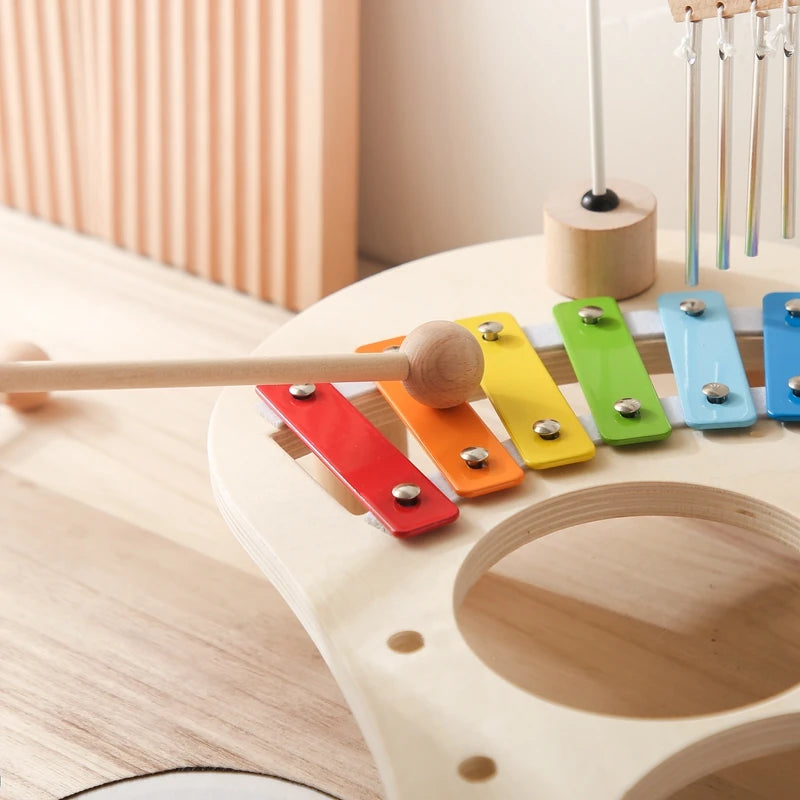
Musical toys introduce babies to rhythm and sound exploration. A great example is the Wooden Baby Xylophone Toy – Montessori Musical Learning, designed to support sensory discovery and early creativity.
This Montessori-inspired toy encourages babies to explore sounds while developing hand-eye coordination.
Pros
- Supports early musical awareness
- Encourages sensory exploration
- Made from natural wood with smooth edges
- Promotes hand-eye coordination
Cons
- Requires supervision for younger infants
- Best suited once babies can grasp objects confidently
Parents exploring development-focused toys may also find helpful ideas in the Baby Growth & Learning Tips blog section.
Explore more developmental toys in the Baby Growth & Learning collection.
Educational Toys for Infants (9–12 Months)
Key Developmental Milestones at 9–12 Months
During the final months of the first year, babies typically begin crawling, pulling themselves up to stand, and imitating sounds or gestures.
Best Educational Toy Types for 9–12 Months
- Push toys
- Stacking rings
- Shape sorters
- Interactive board books
Encouraging Problem Solving and Early Language
Shape sorters and stacking toys introduce problem solving, while interactive books expose babies to new sounds and words.
Toys that require simple actions—like placing shapes into holes or stacking rings—help strengthen cognitive pathways associated with logical reasoning.
For babies becoming more mobile, parents often explore supportive tools in collections like Mobility & Training.
Tip: Musical toys like xylophones continue to support sensory exploration and creativity at this stage.
Montessori-Inspired Infant Toys: Do They Help Development?
Principles Behind Montessori Infant Toys
Montessori learning emphasizes simplicity, independence, and hands-on discovery. Many Montessori toys avoid lights and electronic sounds so that babies can focus on real-world interactions.
Best Montessori-Style Toys for Babies
- Wooden rattles
- Stacking rings
- Object permanence boxes
- Musical toys such as wooden xylophones
These toys encourage curiosity while supporting sensory and motor development.
How to Choose Safe Educational Toys for Infants
Toy Safety Standards Parents Should Know
Safety is critical when choosing toys for babies. Look for products that comply with:
- ASTM toy safety standards
- CPSC toy safety guidelines
- Age-appropriate labeling
Choosing BPA-Free and Non-Toxic Baby Toys
Materials should be free from harmful chemicals such as BPA, phthalates, and lead. Natural wood toys with non-toxic finishes are often considered safer choices.
Avoiding Overstimulation: Finding the Right Balance
Babies benefit most from simple toys that encourage focused exploration rather than toys with excessive lights and sounds.
Rotating a small number of toys can keep playtime engaging without overwhelming infants.
Development Skill Matrix: Which Toys Support Which Skills?
Toy-to-Skill Comparison Table
| Toy Type | Sensory | Motor Skills | Cognitive | Language |
| High contrast toys | High | Low | Medium | Low |
| Rattles | High | Medium | Medium | Low |
| Stacking toys | Medium | High | High | Low |
| Musical toys | High | Medium | Medium | Medium |
| Shape sorters | Medium | High | High | Medium |
Understanding which toys support which skills helps parents create a balanced play environment that encourages healthy development.
Explore development-focused toys in the Sensory Toys collection.
Frequently Asked Questions
What are the best educational toys for infants by age?
The best toys vary by developmental stage. Newborns benefit from high-contrast toys, while older infants enjoy stacking toys, musical toys, and shape sorters that encourage problem-solving.
Do infants really benefit from educational toys?
Yes. Developmentally appropriate toys support sensory exploration, motor skill development, and early cognitive learning.
What toys help infant brain development the most?
Toys that encourage active interaction—such as rattles, stacking toys, and musical instruments—are particularly beneficial because they promote cause-and-effect learning.
Are Montessori toys good for infants?
Montessori-style toys are often ideal for infants because they focus on simple, hands-on exploration that encourages independent learning.
How many toys should an infant have for healthy development?
Experts recommend a small rotation of toys rather than large collections. Rotating toys helps maintain curiosity while avoiding overstimulation.
Conclusion
The best educational toys for infants aren’t necessarily the most expensive or technologically advanced. Instead, they are the toys that match a baby’s developmental stage and encourage exploration.
From high-contrast toys for newborns to musical toys and shape sorters for older infants, each stage of development benefits from different types of play.
If you're building a development-friendly play environment, start by choosing toys that support sensory discovery, motor skills, and early curiosity.
Explore more baby learning tools in the Baby Growth & Learning collection and discover toys designed to support your baby's first year of development.
Pillar Article: 15 Best Musical Toys for Infants (0–12 Months) That Support Early Development





