

Infant Toys for Sensory Development by Age: What to Buy
15 Best Infant Learning Toys for Sensory Development (0–12 Months)
The first year of life is a critical period for sensory exploration and early learning. The right infant learning toys help babies develop visual tracking, grasping ability, coordination, problem-solving skills, and curiosity through age-appropriate play experiences.
From newborn sensory cards and tummy time activity mats to textured toys and musical instruments, the best baby learning toys encourage healthy development without overwhelming young minds. This guide explores the best infant toys for sensory development by age, developmental goal, and play style.
Quick Answer: Best Infant Toys for Sensory Development
The best infant toys for sensory development combine safe materials, simple designs, and opportunities for babies to actively explore. Here are the top picks by learning goal:
- Best overall: Tummy time activity mats for movement and visual stimulation
- Best for newborns: High-contrast sensory cards for early vision development
- Best for grasping: Soft rattles and textured sensory balls
- Best for sound exploration: Musical toys and wooden instruments
- Best for problem-solving: Stacking rings and nesting cups
- Best Montessori option: Simple wooden sensory toys
- Best travel-friendly choice: Crinkle books and compact fabric toys
These best baby learning toys support different developmental areas including sight, touch, hearing, movement, fine motor control, and early cognitive skills.
Explore more developmental products in our Baby Growth & Learning collection where you can find toys designed to support early learning.
Why Sensory Development Toys Matter During the First Year
How Sensory Development Supports Cognitive Growth
Babies learn by interacting with their environment. Every new texture, sound, movement, and visual pattern provides information that helps build connections between the brain and body.
Baby toys sensory development experiences can support:
- Visual attention and tracking skills
- Hand-eye coordination
- Cause-and-effect understanding
- Memory and early problem-solving
- Communication and social interaction
Well-designed cognitive development toys for infants encourage active exploration instead of passive entertainment, allowing babies to learn through repetition and discovery.
Sensory Milestones From Birth to 12 Months
Each baby develops at a different pace, but many infants follow similar sensory milestones during their first year:
- 0–3 months: Developing visual focus, recognizing familiar sounds, and responding to touch
- 3–6 months: Reaching for objects, grasping toys, and exploring textures
- 6–9 months: Transferring objects between hands and understanding simple cause-and-effect
- 9–12 months: Practicing problem-solving, stacking, sorting, and independent play
How Play Builds Vision, Touch, Hearing and Motor Skills
Sensory toys provide targeted opportunities for babies to practice essential skills:
- Vision: High-contrast patterns and colorful objects encourage tracking
- Touch: Different textures improve tactile awareness
- Hearing: Musical toys introduce rhythm and sound recognition
- Movement: Reaching, rolling, and grasping strengthen coordination
How to Choose the Right Sensory Toy
Choose by Developmental Milestone Instead of Age
The best developmental toys for infants match what babies are ready to practice. Age recommendations are helpful, but parents should also consider movement ability, interest level, and current skills.
- Newborns benefit from visual and sound-based stimulation
- Young infants need toys that encourage reaching and grasping
- Older infants enjoy toys involving movement, stacking, and problem-solving
Safety Checklist for Infant Toys
Safety should always come first when choosing age appropriate toys for infants. Look for:
- Non-toxic, baby-safe materials
- Securely attached components
- No small detachable pieces
- Smooth edges and safe finishes
- Easy cleaning and maintenance
Materials, Washability and Durability
Infants frequently touch and mouth their toys, making material quality important. Soft fabrics should be washable, wooden toys should have child-safe finishes, and plastic toys should be durable enough for repeated handling.
Natural wooden toys and soft sensory toys remain popular because they provide meaningful textures while supporting safe exploration.
Best Infant Toys for Sensory Development by Age
Newborn to 3 Months
Newborns are beginning to understand the world through sight, sound, and touch. The best toys at this stage provide simple sensory experiences.
Recommended toys:
- High-contrast visual cards
- Soft rattles
- Tummy time mats
- Hanging activity gym toys
Development benefits:
- Encourages visual tracking
- Supports early sensory awareness
- Strengthens neck and upper-body muscles during tummy time
Considerations:
- Short play sessions are usually best
- Adult interaction helps babies engage with toys
3 to 6 Months
At this stage, babies become more active explorers. They begin reaching, grabbing, shaking, and investigating objects with their hands.
Recommended toys:
- Textured sensory balls
- Soft crinkle books
- Grasping rings
- Musical toys
Example sensory toy:
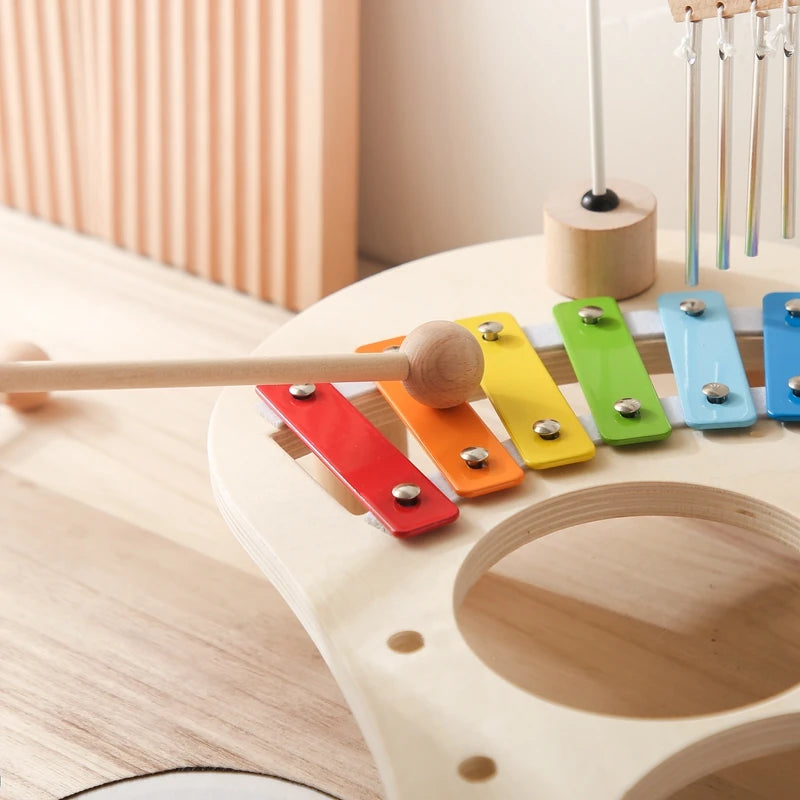
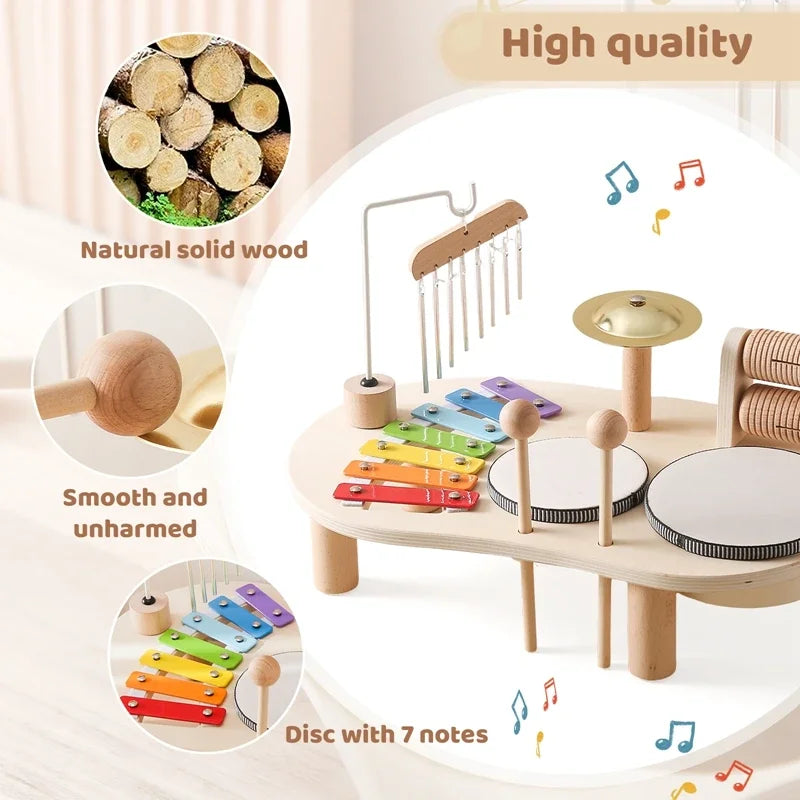
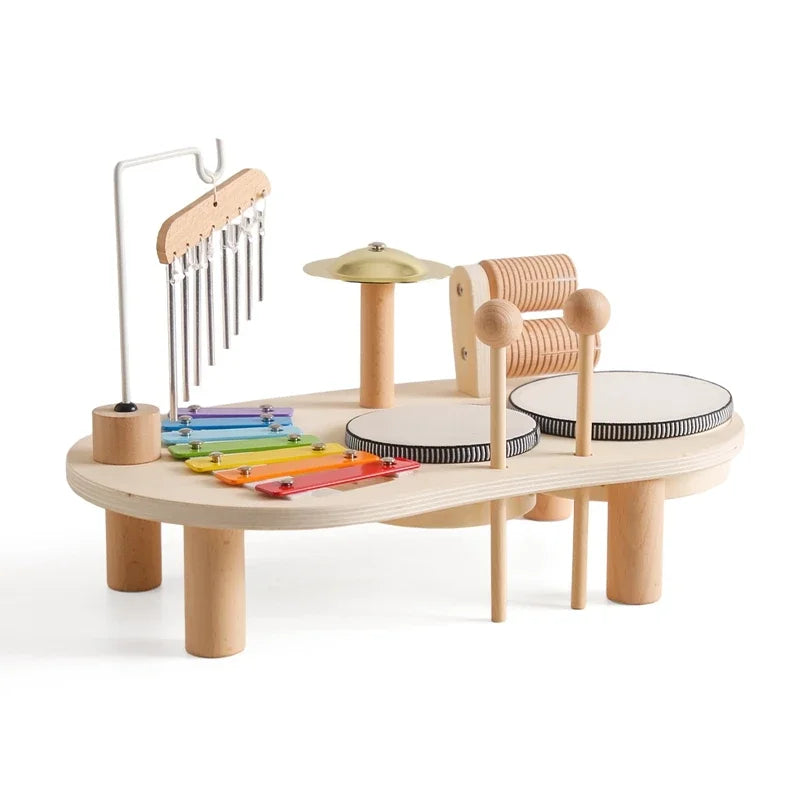
The Wooden Baby Xylophone Toy introduces babies to rhythm and sound through simple tapping movements. Musical toys like this support hand-eye coordination while encouraging auditory exploration and creative play.
Development benefits:
- Improves reaching and grasping skills
- Introduces cause-and-effect learning
- Supports auditory recognition
6 to 9 Months
Babies between six and nine months often enjoy active exploration. They begin moving objects between hands, dropping toys intentionally, and discovering how objects work.
Recommended toys:
- Stacking cups
- Sensory blocks
- Interactive musical toys
- Rolling balls
Development benefits:
- Supports coordination
- Encourages crawling and movement
- Builds early problem-solving skills
9 to 12 Months
Older infants enjoy toys that challenge planning, coordination, and independent exploration.
Recommended toys:
- Stacking rings
- Nesting cups
- Shape sorters
- Montessori wooden toys
Development benefits:
- Improves fine motor control
- Encourages independent play
- Develops planning and problem-solving
Best Sensory Toys by Developmental Purpose
Visual Stimulation Toys
High-contrast cards, activity gyms, and colorful toys help infants practice focusing, tracking movement, and recognizing patterns.
Tactile and Texture Toys
Textured balls, fabric books, and sensory blocks allow babies to explore different surfaces while strengthening touch awareness and grasping ability.
Auditory Toys
Rattles, crinkle toys, and musical instruments introduce babies to sounds, rhythm, and cause-and-effect learning.
Vestibular and Movement Toys
Activity mats, rolling toys, and movement-based play encourage body awareness, balance, and early mobility.
Fine Motor and Problem-Solving Toys
Stacking toys, nesting cups, and shape sorters challenge babies to manipulate objects and understand simple concepts.
Comparison Table: Best Infant Sensory Toys
| Toy Type | Age Range | Developmental Benefits | Key Features |
| Tummy Time Mats | 0–6 months | Gross motor development and visual tracking | Encourages reaching, lifting, and movement |
| Sensory Balls | 3–9 months | Tactile exploration and grasping | Multiple textures and easy handling |
| Crinkle Toys | 3–8 months | Auditory learning and cause-and-effect | Interactive sounds and soft materials |
| Stacking Toys | 6–12 months | Coordination and problem-solving | Builds manipulation skills |
| Musical Toys | 3–12 months | Sound recognition and creativity | Introduces rhythm and interaction |
How Pediatric and Occupational Therapy Principles Guide Toy Selection
Avoiding Overstimulation
More features do not always mean better learning. Toys with excessive lights, sounds, or complicated functions may distract babies from active exploration.
Simple toys often encourage deeper engagement because babies can repeat actions, observe results, and build confidence.
Toy Rotation Strategies
Parents do not need dozens of toys available at once. Rotating a small selection every few days can make familiar toys feel new while encouraging curiosity.
How to Use Sensory Toys for Everyday Learning
Simple Activities by Age
- 0–3 months: Use high-contrast toys during tummy time
- 3–6 months: Encourage reaching with rattles and textured toys
- 6–9 months: Roll sensory balls and practice object transfer
- 9–12 months: Play stacking and sorting games
Encouraging Independent Exploration
Babies learn through repetition. Allowing them time to experiment with toys helps develop confidence, attention, and problem-solving abilities.
Travel and On-the-Go Sensory Play
Portable sensory toys such as soft books, small rattles, and compact activity toys can support learning during travel while keeping babies engaged in unfamiliar environments.
Are Montessori Toys Good for Infant Learning?
Montessori toys focus on simple, purposeful play. Many parents choose these developmental toys for babies because they encourage hands-on learning and independent exploration.
Montessori vs Traditional Sensory Toys
Montessori toys typically use natural materials and simple designs, while traditional sensory toys may include more colors, sounds, or interactive features.
- Montessori advantages: Encourages focus, repetition, and independent discovery
- Traditional sensory toy advantages: Can provide stronger visual or auditory stimulation
- Best approach: A balanced mix based on the baby's developmental needs
Frequently Asked Questions
What are the best infant toys for sensory development?
The best options include tummy time mats, sensory balls, crinkle toys, musical toys, stacking toys, and Montessori-style learning toys that encourage active exploration.
Which sensory toys are best for newborns?
Newborns benefit most from high-contrast cards, soft rattles, simple fabric toys, and activity mats that support early visual and sensory development.
How do sensory toys support infant cognitive development?
Sensory toys help babies learn by connecting actions with results, improving attention, memory, coordination, and early problem-solving skills.
How many sensory toys does a baby need?
A small collection of well-chosen toys is usually enough. Rotating toys regularly can keep babies interested while supporting different developmental skills.
Are Montessori toys better than traditional sensory toys?
Neither option is universally better. Montessori toys encourage focused exploration, while traditional sensory toys may provide additional sounds, colors, and interactive experiences.
What safety features should parents look for in infant sensory toys?
Parents should choose toys made from safe materials with smooth edges, secure parts, washable surfaces, and designs appropriate for the baby's developmental stage.
How often should parents rotate infant toys?
Many parents rotate toys every few days or weekly depending on their baby's interest level and available play options.
What are the best travel-friendly sensory toys for babies?
Soft books, small rattles, sensory balls, and compact fabric toys are convenient choices for learning and entertainment while traveling.
Explore more developmental products in our Sensory Toys collection to discover more developmental play options.
Pillar Article: 15 Best Musical Toys for Infants (0–12 Months) That Support Early Development





