

Climbing Rope Benefits: Strength, Grip Power, Fat Loss & Real-World Performance
Climbing Rope Benefits: Strength, Grip, Core & Real-World Power
Most people build strength using predictable movements—machines, barbells, or even standard pull-ups. But rope climbing challenges the body in a very different way. It demands full-body coordination, relentless grip strength, and vertical pulling power under unstable conditions. That’s why interest in climbing rope benefits continues to grow among athletes, functional fitness enthusiasts, and home gym users.
In this comprehensive guide, we break down rope climbing into four key benefit categories: muscular, neurological, metabolic, and real-world transfer. We’ll also compare rope climbs to pull-ups, explain beginner progression strategies like the J-hook and S-hook techniques, and show how you can safely integrate rope training at home.
What Makes Rope Climbing Different From Traditional Upper Body Exercises?
Rope climbing is a vertical bodyweight pulling movement performed on a flexible rope rather than a fixed bar. Unlike machine rows or lat pulldowns, the rope moves, rotates, and challenges your grip independently. This instability dramatically increases muscle recruitment and coordination demand.
Unstable Vertical Pulling vs. Fixed-Bar Pull-Ups
Pull-ups target the lats and upper back effectively—but the bar doesn’t move. In rope climbing, your hands work independently in a hand-over-hand pattern. This forces constant stabilization through the shoulders and core while the forearms resist rotation and slipping.
With rope climbs:
- Each arm alternates pulling force
- Grip endurance becomes a limiting factor
- Core tension must prevent swinging
- Lower body coordination assists upward drive
This makes rope climbing neurologically and mechanically more complex than traditional pull-ups.
Bodyweight Training With Integrated Core and Leg Involvement
Rope climbing is not just an upper body workout. Using techniques like the J-hook or S-hook, the legs pinch and step on the rope to assist upward drive. That creates full-body tension and teaches coordinated force transfer from legs to arms—something isolated machines cannot replicate.
Muscular Benefits of Climbing Rope Training
One of the most searched questions is: “What muscles does rope climbing work?” The answer: nearly your entire upper body, plus deep core stabilizers and lower body support muscles.
Upper Back & Lats (Latissimus Dorsi Engagement)
The latissimus dorsi drives vertical pulling power. Every hand-over-hand pull activates the lats, rhomboids, trapezius, and rear deltoids. Because your body hangs freely, these muscles must generate force without assistance from stable platforms.
Forearms & Grip Strength Development
Grip strength is often the weakest link in upper body training. Rope climbing heavily activates the forearm flexors, brachioradialis, and intrinsic hand muscles. Unlike barbell training where the grip is static, rope climbing demands dynamic squeezing under bodyweight load.
This improves:
- Grip endurance
- Crushing grip strength
- Finger flexor durability
- Transfer to sports like climbing and obstacle racing
Core Activation and Anti-Rotation Stability
Is climbing rope good for abs? Yes—because your core must resist swinging and twisting while you climb. This creates strong anti-rotation engagement through the obliques and transverse abdominis. The rectus abdominis assists by maintaining a hollow body position during ascent.
Leg Drive With J-Hook and S-Hook Techniques
The J-hook technique involves wrapping the rope under one foot and pinning it with the other. The S-hook technique loops the rope around one leg in an “S” pattern for added security. Both techniques allow powerful leg drive, reducing arm fatigue and increasing total climbing efficiency.
Neurological & Coordination Benefits
Beyond muscle building, rope climbing significantly improves neuromuscular coordination.
Hand-Over-Hand Coordination & Timing
Each movement requires synchronized pulling, gripping, and stepping. This mirrors the coordination pattern used when climbing up a ladder, improving timing and proprioception.
Improved Motor Control and Functional Fitness
Rope climbing develops functional fitness by training real-world movement patterns rather than isolated muscle contractions. It improves body awareness in vertical space and teaches efficient force sequencing from lower to upper body.
Metabolic & Fat Loss Benefits: Does Rope Climbing Burn Fat?
Yes—rope climbing can support fat loss when integrated into high-intensity circuits.
High Time-Under-Tension and Heart Rate Elevation
Climbing engages large muscle groups simultaneously. This elevates heart rate quickly and creates high time-under-tension, increasing caloric demand per minute compared to isolated movements.
Full-Body Recruitment vs. Isolated Cardio Machines
Unlike steady-state cardio machines that focus primarily on the lower body, rope climbing activates upper body pulling muscles, core stabilizers, and legs together—creating a powerful conditioning stimulus.
Real-World Transfer: From Gym Rope Climbs to Outdoor Scenarios

Carryover to Ladder Climbing and Vertical Work
The motor pattern of rope climbing closely resembles climbing up a ladder. Improved grip strength and vertical pulling coordination can transfer to occupational tasks or adventure activities.
Outdoor Applications and Tree Climbing With Rope
In outdoor settings, rope climbing skills enhance control and grip reliability. Whether navigating obstacles or practicing controlled tree climbing with rope systems, trained forearms and coordinated movement reduce fatigue and improve safety.
Is Rope Climbing Harder Than Pull-Ups?
Grip Limitation vs. Back Strength Limitation
Pull-ups are often limited by back strength. Rope climbing is usually limited by grip endurance first. Because the rope rotates, maintaining hand pressure becomes a major performance factor.
Energy Demand and Coordination Complexity
Rope climbing is metabolically more demanding due to full-body involvement and continuous repositioning of hands and feet. Most beginners find it harder than pull-ups initially—but highly scalable with proper progression.
Climbing Rope vs. Pull-Ups vs. Ladder Climbing (Comparison Matrix)
| Factor | Rope Climbing | Pull-Ups | Ladder Climbing |
| Grip Demand | Very High (dynamic) | Moderate (static) | Low to Moderate |
| Core Activation | High (anti-rotation) | Moderate | Low |
| Leg Involvement | Yes (J-hook/S-hook) | No | Yes |
| Coordination Requirement | High | Moderate | Moderate |
| Fat Loss Potential | High (HIIT-friendly) | Moderate | Low |
Beginner Progression: How to Start Rope Climbing Safely
Step 1: Seated Rope Pulls and Partial Climbs
Start seated on the floor. Pull yourself upright hand-over-hand without lifting your legs. This builds grip endurance and pulling strength safely.
Step 2: Mastering the J-Hook Technique
Practice stepping on the rope and standing up with leg assistance. This conserves energy and makes climbing accessible for beginners and youth athletes.
Step 3: Advancing to the S-Hook Technique and Minimal-Leg Climbs
Once confident, progress to S-hook technique or minimal-leg climbs to emphasize upper body strength.
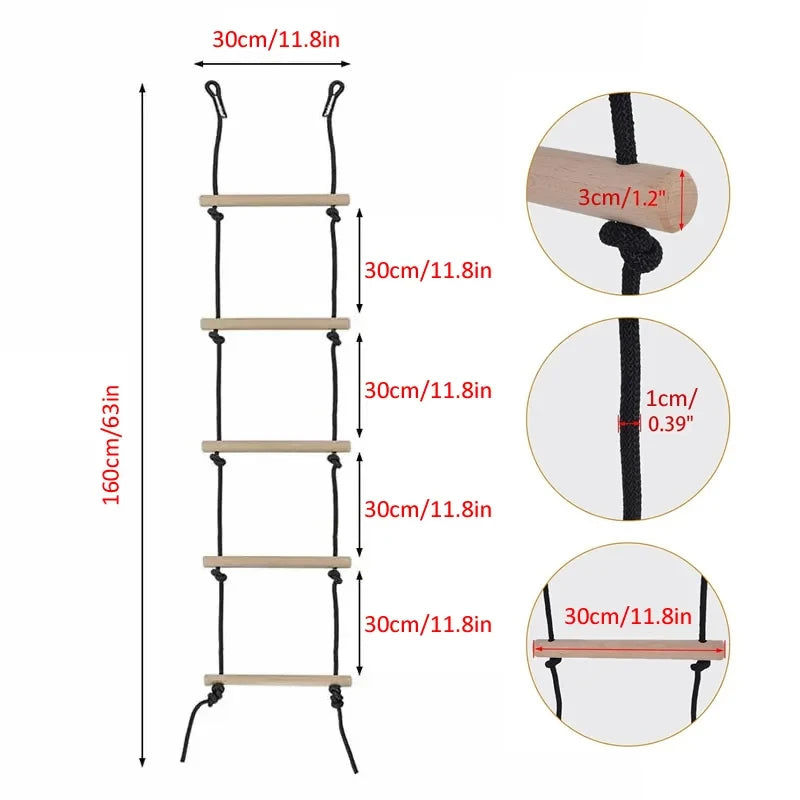
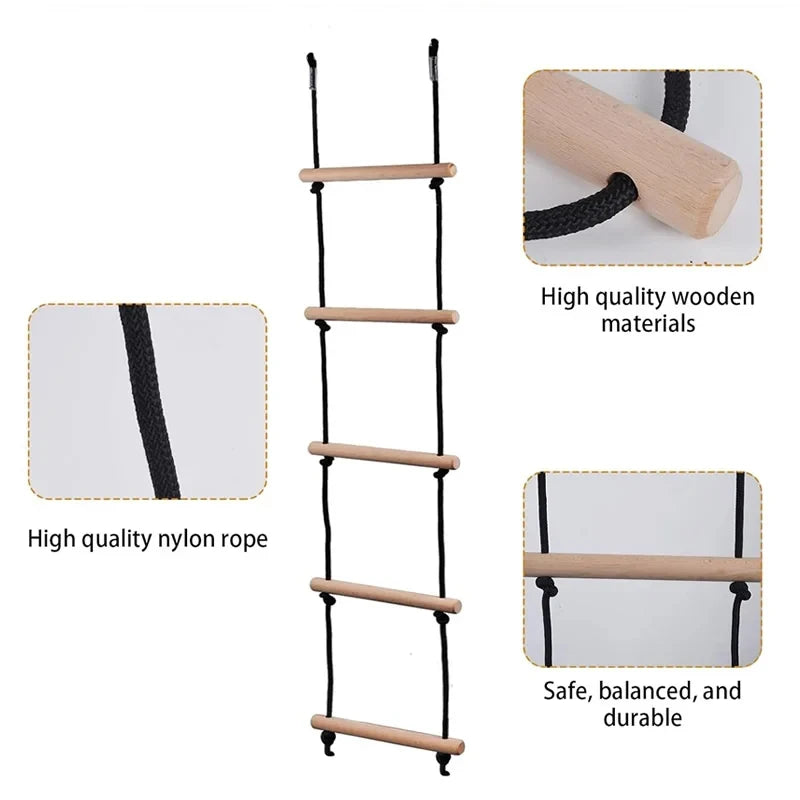
For younger athletes or home users building coordination, a rope ladder variation like the Children Climbing Rope Ladder – Indoor Outdoor Fun offers a scalable introduction. Its beech wood steps and reinforced polyester rope allow indoor or backyard use while developing grip, balance, and confidence through structured vertical play.
Choosing the Right Rope: Thickness, Material & Home Gym Setup
Rope Diameter and Grip Challenge
Thicker ropes increase grip difficulty. Beginners often start with moderate diameters before progressing to thicker ropes for advanced grip development.
Ceiling Height, Anchoring & Safety Basics
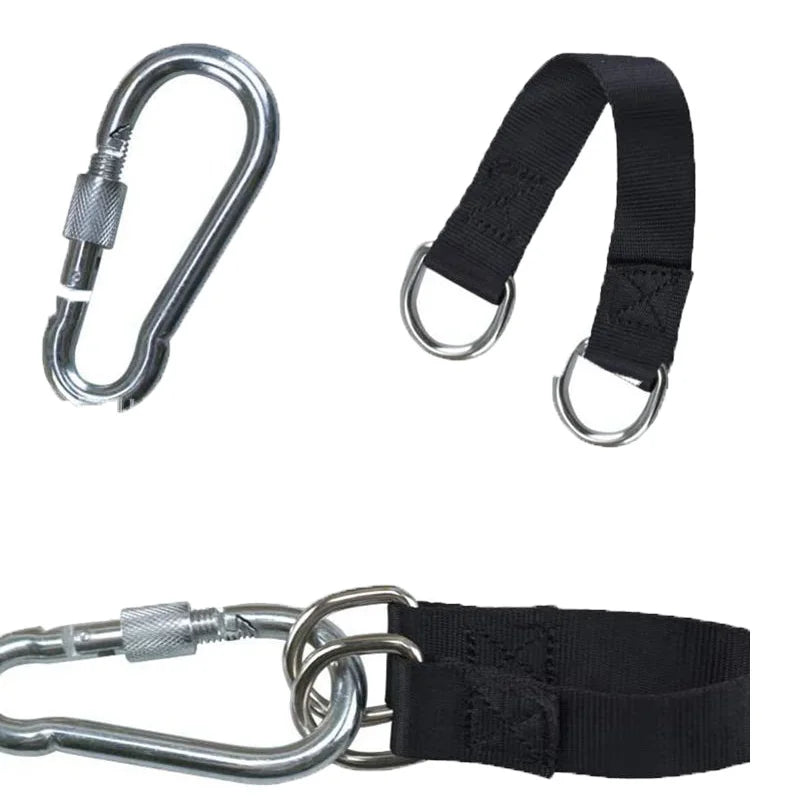
Ensure secure anchoring to beams or sturdy outdoor structures. Maintain adequate fall space and use appropriate flooring underneath. For families integrating rope elements into play areas, exploring options within a mobility-focused setup can complement coordination training safely.
Conclusion: Why Climbing Rope Training Is Worth It
Climbing rope benefits extend far beyond upper body strength. They include grip development, deep core activation, neurological coordination, fat-burning potential, and real-world movement carryover. Unlike fixed machines, rope climbing trains your body as an integrated system.
Whether you’re an athlete seeking functional power or a parent introducing vertical play in a home setup, rope-based training is scalable and effective. Start with foundational drills, master efficient foot techniques, and progress gradually for long-term gains.
Pillar Article: Playground Equipment at Home: The 2026 Fit-Based Buying Guide by Size, Age & Budget





