

Playground Equipment at Home: The 2026 Fit-Based Buying Guide by Size, Age & Budget
Playground Equipment at Home: How to Choose the Right Set for Your Backyard (2026 Guide)
Most families choose playground equipment at home based on photos, price tags, or what looks fun in a catalog. But long-term satisfaction depends on something deeper: space fit, age alignment, safety surfacing, HOA compliance, material durability, and installation complexity. This 2026 guide is built as a decision engine — not a generic listicle — to help you confidently select the right backyard setup for your space, budget, and child’s development stage.
Instead of ranking random swing sets, we’ll segment your options by backyard size, child age range, material type, installation pathway, and budget tier. By the end, you’ll know exactly which direction makes sense for your property — and which mistakes to avoid.
Step 1: Measure Your Backyard the Right Way (Space Planning Blueprint)
The most common buying mistake? Underestimating clearance and fall zones. Even compact sets require more space than most homeowners expect.
Minimum Clearance Zones & Use Zones Explained
According to the ASTM F1487 standard and the CPSC Public Playground Safety Handbook, every elevated play component requires a surrounding use zone. For residential setups, follow these practical rules:
- Minimum 6 ft clearance around stationary equipment
- At least 2x the swing beam height in front and back of swings
- No hard surfaces (concrete, stone, decking) inside fall zones
- Clear vertical space above slides and climbers
These zones are not optional — they directly reduce injury risk from falls.
Backyard Size Planner: Small, Medium, Large Lot Configurations
- Under 1,500 sq ft yard: Compact play towers, single-beam swings, wall-mounted climbers, modular add-ons.
- 1,500–3,000 sq ft yard: Multi-feature mid-range systems with slides, rock walls, and climbing ladders.
- 3,000+ sq ft yard: Multi-tower builds, monkey bars, rope bridges, future expansion zones.
Tip: Always map the footprint with spray paint or stakes before ordering.
Surfacing Requirements & Fall Height Calculations
Impact-attenuating surfacing dramatically reduces injury risk. Recommended options include:
- Engineered wood fiber (9–12 inches for 8 ft fall height)
- Rubber mulch (6–8 inches depending on manufacturer spec)
- Poured-in-place rubber (professional install)
Loose-fill materials compress over time, so budget for replenishment every 1–2 years.
Step 2: Match Playground Equipment to Your Child’s Age & Development Stage
Buying too advanced leads to injuries. Buying too basic leads to boredom within a year. Developmental fit matters.
Toddlers (2–4 Years): Low Platforms & Enclosed Slides
Focus on:
- Deck heights under 4 ft
- Wide steps or enclosed ladders
- Short, gentle slides
- Interactive panels
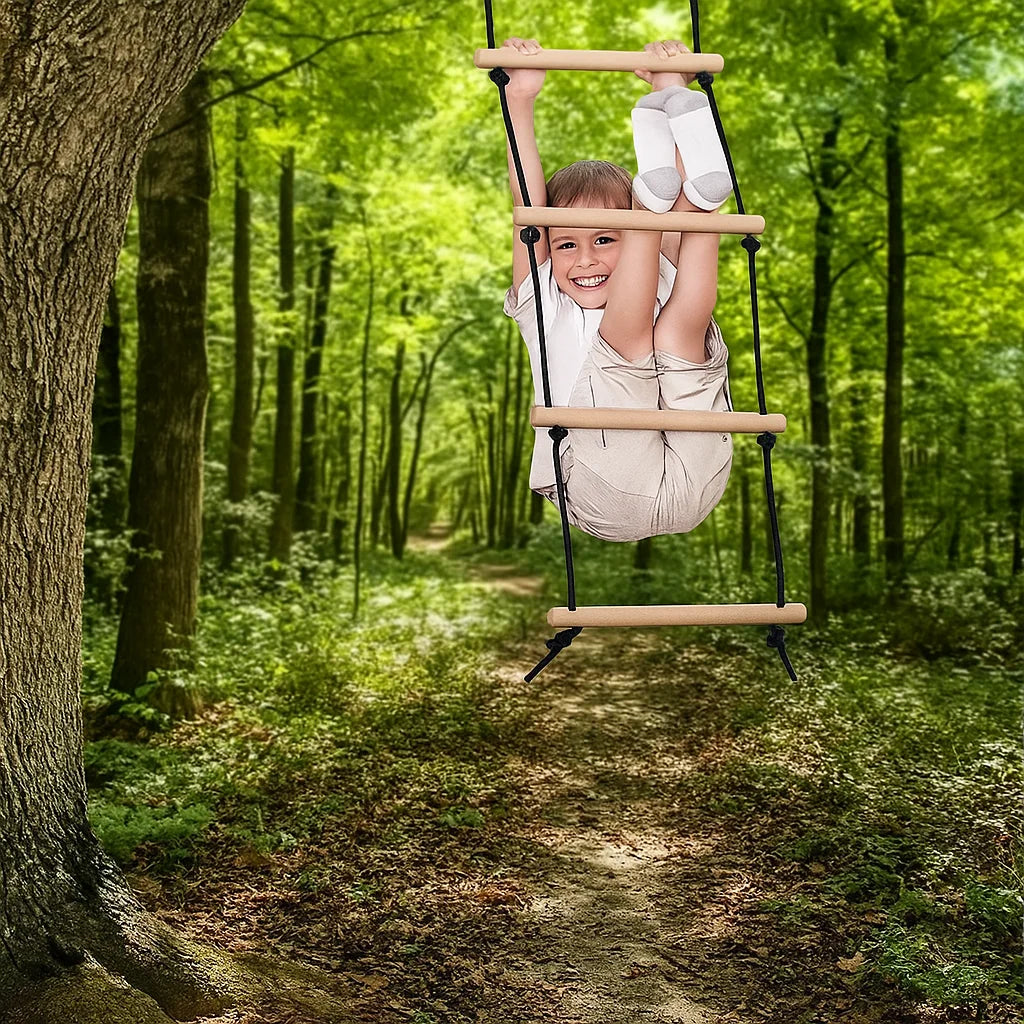
Accessories like a children climbing rope ladder (with adult supervision) help build coordination and grip strength at ground-level heights.
Early Elementary (5–8 Years): Climbing & Imaginative Play Expansion
This age group thrives on:
- Rock walls
- Rope ladders
- Monkey bars
- Fort-style towers
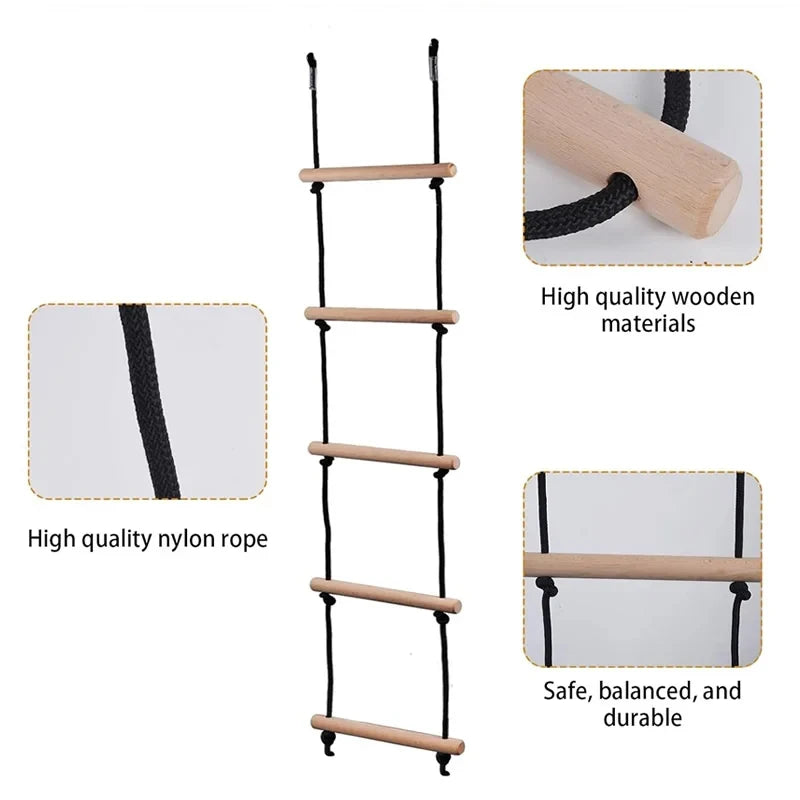
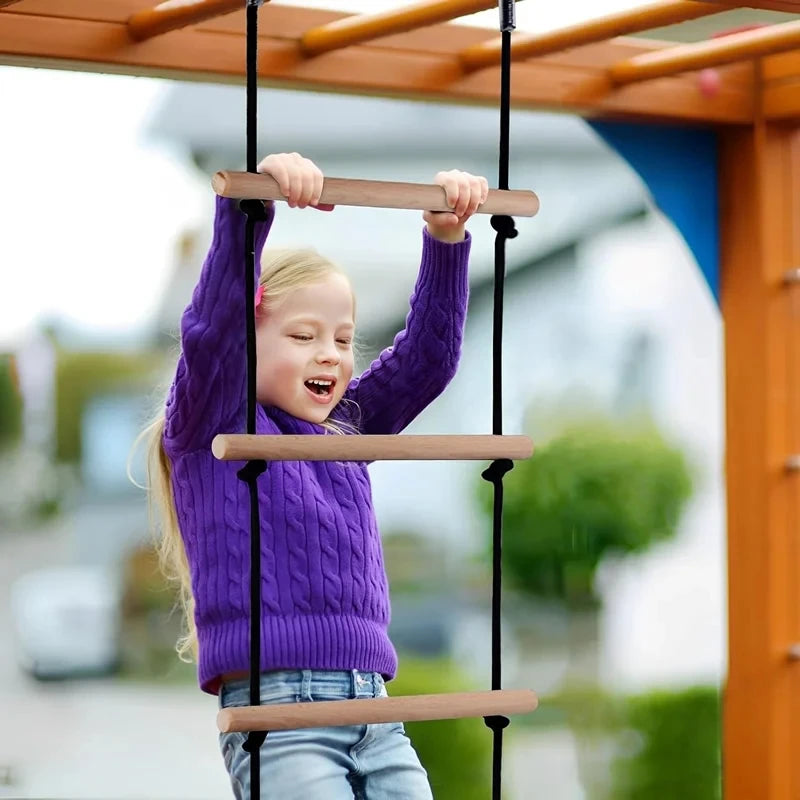
The Children Climbing Rope Ladder – Indoor Outdoor Fun integrates easily with swing beams, existing play towers, or sturdy tree branches. Made from natural beech wood and reinforced polyester rope, it supports up to 100KG and encourages full-body coordination, grip strength, and climbing confidence — without requiring a full structure upgrade.
Multi-Age Households: Modular & Expandable Systems
If you have multiple age groups, prioritize:
- Adjustable swing heights
- Modular beam extensions
- Add-on climbing accessories
- High weight capacity frames
Expandable systems retain resale value and reduce replacement costs.
Age-to-Equipment Compatibility Matrix (Comparison Table)
| Age Group | Deck Height | Best Features | Upgrade Potential |
| 2–4 | <4 ft | Enclosed slides, bucket swings | Limited |
| 5–8 | 4–6 ft | Climbing walls, rope ladders | Moderate |
| 8+ | 6+ ft | Monkey bars, multi-tower bridges | High |
Step 3: Material Comparison — Wood vs Metal vs Plastic
Material affects durability, maintenance, and climate performance.
Wooden Backyard Playset (Pressure-Treated Lumber)
Pros:
- Natural aesthetic
- High structural strength
- Expandable
Cons:
- Requires sealing/staining
- Possible splintering
- Higher maintenance in humid climates
Metal Frame Sets (Powder-Coated Steel)
Pros:
- Strong frame integrity
- Low maintenance
- Resistant to pests
Cons:
- Heat retention in hot climates
- Less customizable
Heavy-Duty Plastic Systems
Pros:
- Low maintenance
- Good UV resistance
- Ideal for toddlers
Cons:
- Limited expansion
- Lower weight capacity
Lifecycle Cost Breakdown (5-Year & 10-Year Projection)
Wood may require resealing every 2–3 years. Metal requires bolt checks annually. Plastic may need panel replacement after prolonged UV exposure. Over 10 years, maintenance can equal 20–40% of original purchase cost.
Step 4: Installation Pathways — DIY vs Professional Setup
True DIY Cost Breakdown (Tools, Time, Anchoring)
- Concrete or ground anchors
- Post level and framing square
- 2–3 adults, 8–16 hours assembly
DIY saves labor cost but requires accurate leveling and anchoring.
Professional Installation: What You’re Paying For
- Ground leveling
- Anchoring systems
- Compliance check
- Reduced error risk
Professional setup typically ranges $300–$1,200 depending on size.
Common Installation Mistakes to Avoid
- Skipping anchors
- Installing on uneven ground
- Underestimating clearance zones
- Using inadequate surfacing depth
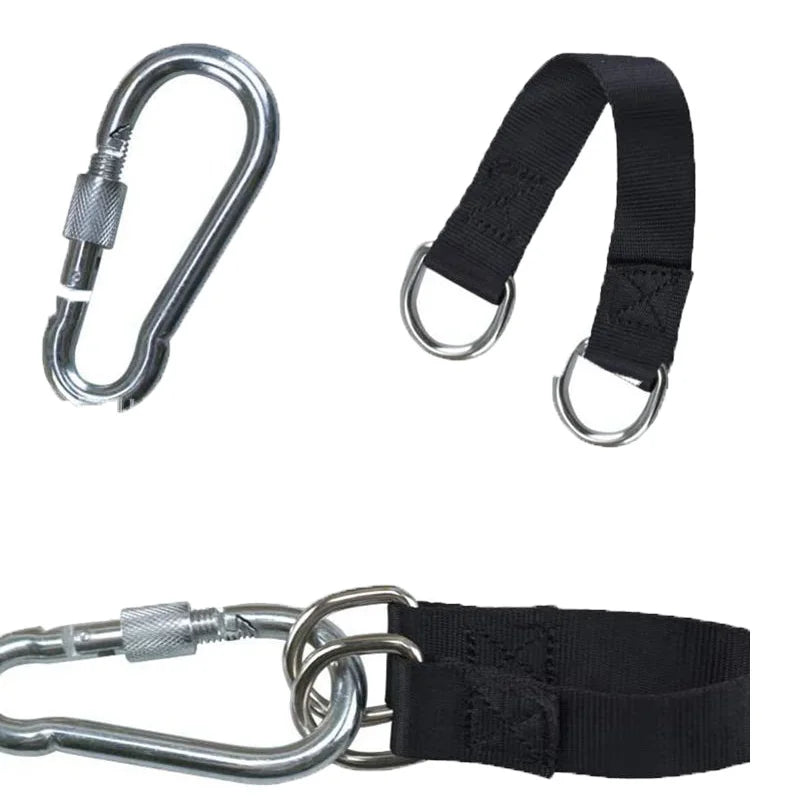
If you’re adding modular components like rope ladders, ensure attachment points are rated for dynamic weight loads.
If you're expanding gradually rather than committing to a full tower build, modular accessories like a climbing rope ladder allow phased upgrades with minimal installation complexity while still delivering meaningful physical engagement.
Step 5: Safety, Compliance & HOA Considerations
ASTM & CPSC Compliance Explained
Look for manufacturers referencing ASTM F1487 design principles and CPSC guidelines for spacing and entrapment prevention.
Backyard Zoning Regulations & Permit Triggers
Some municipalities treat large play structures as accessory structures. Check:
- Setback distance requirements
- Height restrictions
- Property line clearances
Homeowners Association Approval Checklist
- Submit structure height and color
- Provide site layout
- Confirm noise policies
Budget Tiers: What You Get at Every Price Point (2026)
$500–$1,500: Compact Starter Sets
Best for small yards and toddlers. Limited expansion.
$1,500–$3,500: Expandable Mid-Range Systems
Most popular tier. Balance between durability and growth potential.
$3,500+: Premium Multi-Tower Builds
Long-term investment. Strong resale value. Suitable for large families.
Swing Set Warranty Comparison (What Actually Matters)
- Frame warranty (5–15 years typical)
- Accessory warranty (1–3 years)
- Rust-through coverage for metal
Instead of jumping directly to premium-tier pricing, consider pairing a mid-range system with high-quality modular add-ons like this expandable climbing rope ladder to extend play value while keeping total investment controlled.
Pre-Purchase Checklist: Before You Buy Playground Equipment at Home
- Measured total yard and clearance zones
- Confirmed surfacing plan and depth
- Matched deck height to child age
- Compared material maintenance needs
- Decided DIY vs professional install
- Checked HOA and zoning rules
- Reviewed warranty coverage
For families building gradually, starting with versatile climbing accessories like this beech wood climbing rope ladder can extend play value immediately while you plan a larger backyard structure over time.
Frequently Asked Questions
How much space do I need for playground equipment at home?
Most sets require at least 6 ft clearance around the structure, plus extended swing zones.
Are small backyard playground sets safe for toddlers?
Yes, if deck heights are under 4 ft and proper surfacing is installed.
Is a DIY backyard playset cheaper than professional installation?
DIY saves labor costs but increases time commitment and risk of improper anchoring.
What is better: a wooden backyard playset or metal frame set?
Wood offers expandability and aesthetics; metal provides lower maintenance and durability.
Do I need permits or HOA approval for a playground at home?
It depends on height and location. Always confirm local zoning and HOA guidelines.
Conclusion: Choose Fit Over Flash
The best playground equipment at home isn’t the biggest or most expensive — it’s the one that fits your yard size, matches your child’s developmental stage, aligns with your climate, and stays within your long-term maintenance comfort zone.
By evaluating space, age compatibility, materials, installation pathway, and lifecycle cost — you’ll make a confident investment that supports years of active play.
Whether you’re installing a full backyard structure or starting small, beginning with adaptable components like the Children Climbing Rope Ladder gives families flexibility to scale over time while prioritizing durability, safety compliance, and long-term play value.
Related Articles:
- Playground Equipment Safety: A Field-Ready Inspection & Compliance Guide (2026)
- Gross Motor Skills: Milestones, Activities, and Parent-Friendly Development Guide
- Climbing Rope Benefits: Strength, Grip Power, Fat Loss & Real-World Performance
- How to Improve Balance and Coordination: A Science-Backed Step-by-Step Training Plan





