

Are ear nose tweezers kids safe for earwax removal?
Ear nose tweezers kids can offer precise control for visible wax near the outer ear, but they also carry risks if used too deeply or on a moving child. For many families, combining careful technique with safe earwax removal methods reduces discomfort and helps ease a child’s fear of ears being touched.
Ear Nose Tweezers for Kids Compared: Precision or Risk
⏱ 7 min read
Parents often notice wax buildup at the worst moments—right before school photos, bedtime stories, or a doctor visit. Ear nose tweezers kids promise quick, precise cleanup, but are they truly safe? This guide compares options honestly, highlights risks and benefits, and shows when alternatives may better protect little ears.
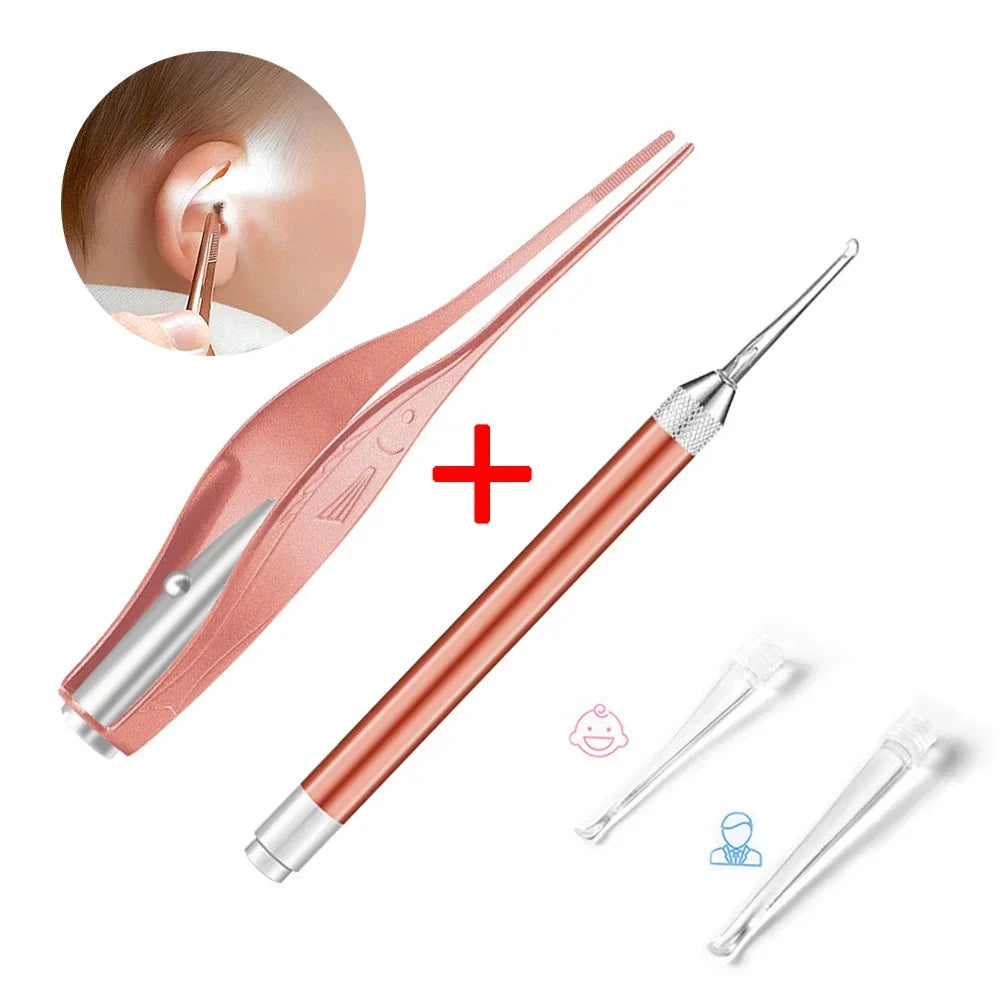
ear nose tweezers kids and safe earwax removal methods in daily care 💡 See it in action
Why Parents Consider Ear Nose Tweezers for Kids
Wax buildup is common in children, especially toddlers with narrow ear canals. Ear nose tweezers kids appeal because they:
- Offer visible control for surface-level wax
- Seem quicker than drops or rinses
- Are familiar tools many parents already own
- Reduce the urge to use cotton swabs
For families juggling busy routines, that promise of speed is tempting.
Precision vs. Risk: What Matters Most for Small Ears?
Ear nose tweezers kids provide precision, but children move unpredictably. A sudden flinch can turn a helpful tool into a hazard. Safety depends on rounded tips, shallow use, and calm conditions—factors not always guaranteed during real-life parenting moments.
Pros parents appreciate
- Targeted grip for visible debris
- Less mess compared to liquids
- Immediate results
Cons that raise concern
- Risk of pushing wax deeper
- Potential discomfort or scratches
- Increased fear of ears being touched
Side-by-Side Comparison of Common Earwax Tools
| Tool Type | Best For | Main Risk |
|---|---|---|
| Ear Nose Tweezers | Visible outer-ear wax | Scratches if inserted too far |
| Visual Ear Pickers | Parents wanting visibility | Requires steady hand |
| Ear Drops | Softening buildup | Messy, slower results |
| Professional Cleaning | Severe blockage | Cost, scheduling |
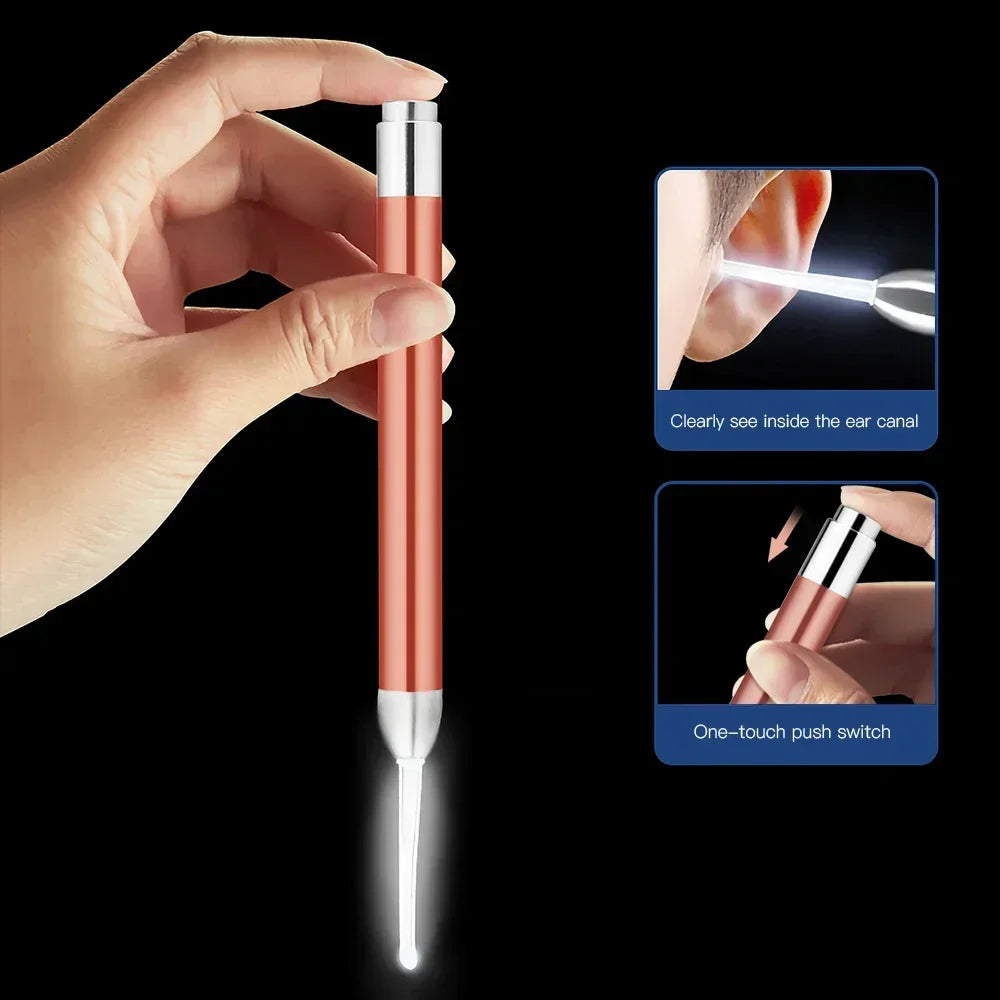
safe earwax removal methods that lower fear of ears being touched 💡 See it in action
Safe Earwax Removal Methods That Reduce Stress
Many pediatric specialists suggest starting with gentler approaches before tweezers. Popular safe earwax removal methods include:
- Warm compresses during bath time
- Saline or oil-based drops
- Visual tools that limit depth
- Routine checks without touching
Parents browsing Health & Safety often prefer tools designed to prevent over-insertion.
Helping Kids Overcome Fear of Ears Being Touched
Fear of ears being touched is common, especially after uncomfortable experiences. To rebuild trust:
- Explain each step in simple words
- Let kids hold the tool first
- Use mirrors or screens for visibility
- Stop immediately if discomfort appears
Parents exploring Baby Care Tips & Advice often report calmer routines when children feel involved.
When to Avoid Ear Nose Tweezers for Kids
Skip tweezers if wax is deep, hardened, or causing pain. In these cases, alternatives like visual ear tools or professional care are safer. Many families transition to tools such as the visual ear wax picker for kids to improve confidence and control.
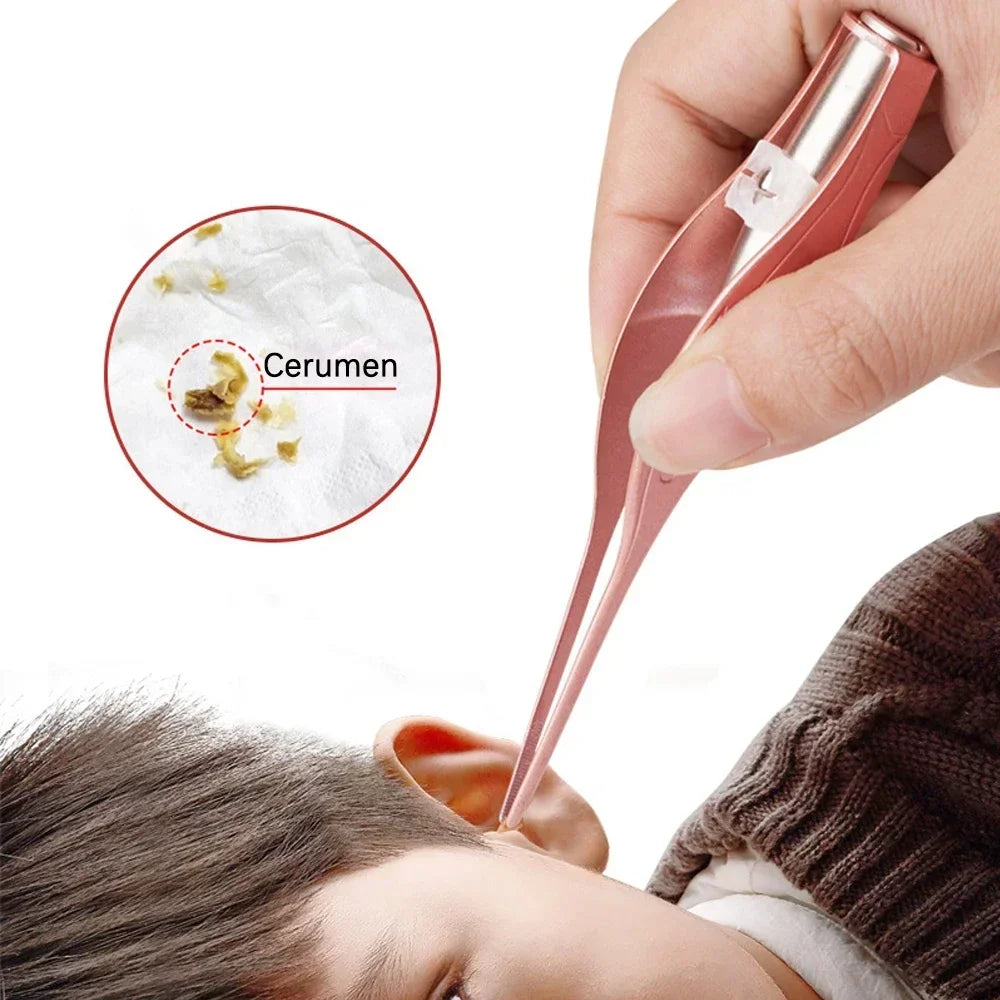
ear nose tweezers kids compared with safer alternatives 💡 See it in action
Parent Tips for Safer Ear Care Routines
- Limit checks to once a week
- Never clean during tantrums
- Choose rounded, child-sized tools
- Store tools out of reach
Exploring Baby Hygiene Gadgets can help parents find designs that prioritize comfort.
Quick FAQs Parents Ask
Can ear nose tweezers kids damage hearing?
Used shallowly on visible wax, risk is low. Damage occurs when tools go too deep or children move suddenly.
What age is appropriate for tweezers?
They’re generally safer for older children who can stay still. Toddlers benefit more from visual or drop-based methods.
How often should ears be cleaned?
Most children need minimal cleaning. Once every one to two weeks is enough unless advised otherwise.
Related Guide: Earwax Removal Methods Compared for Kids: Pros, Cons, Safety





