

Early Childhood Music Education: How Music Shapes Brain Development in Kids
Early Childhood Music Education: Proven Brain Benefits for Kids (0–5)
From the very first months of life, a child’s brain is wired to respond to rhythm, melody, and sound patterns. Neuroscience shows that musical experiences activate multiple brain regions simultaneously—far beyond what passive listening alone can achieve. This is why early childhood music education is increasingly recognized as a powerful tool for whole-child development.
But not all musical exposure is equal. There’s a meaningful difference between background music and active participation—like clapping, singing, or playing instruments. In this guide, we break down the science, benefits, and practical ways parents can start today.
What Is Early Childhood Music Education?
Simple Definition (Snippet Optimized)
Early childhood music education is the use of music—through singing, rhythm, movement, and instruments—to support cognitive, emotional, language, and social development in children from birth to age five. It emphasizes active participation rather than passive listening.
Key Components of Music-Based Learning
- Rhythm: Clapping, tapping, and movement patterns
- Melody: Singing and pitch recognition
- Movement: Dancing and coordinated physical response
- Interaction: Parent-child or group musical play
Why Music Matters for Brain Development (Science Explained)
Brain Plasticity and Early Learning Windows
During the first five years, the brain undergoes rapid growth known as neuroplasticity. Neural connections form based on repeated experiences. Music—especially interactive music—strengthens these connections by combining auditory, motor, and emotional input.
How Music Activates Multiple Brain Regions
Unlike single-domain activities, music engages:
- Language centers (for rhythm and phonetics)
- Motor cortex (for movement and coordination)
- Memory systems (for repetition and recall)
- Emotional processing areas (for expression and bonding)
Key Research Findings from Pediatric and Neuroscience Studies
Research from early childhood education and neuroscience fields consistently shows:
- Children exposed to structured musical activities demonstrate stronger language development
- Rhythmic training improves executive function and attention control
- Musical play enhances emotional bonding and stress regulation
Organizations focused on child development emphasize that active engagement—singing, moving, and playing—is key to these benefits.
Core Benefits of Music Education for Kids
Cognitive Development and Problem-Solving Skills
Music introduces patterns, sequences, and structure. These strengthen memory, attention span, and problem-solving abilities.
Apply today: Play simple rhythm imitation games (clap and repeat patterns).
Language Acquisition and Communication Skills
Music mirrors speech patterns. Rhythm helps children understand syllables, while melody supports tone and pronunciation.
Apply today: Sing repetitive nursery rhymes with exaggerated sounds.
Emotional Regulation and Expression
Music gives children a safe way to express feelings and manage emotions through tempo, tone, and movement.
Apply today: Use calm songs during transitions like bedtime.
Social Skills and Cooperation
Group music activities teach turn-taking, listening, and shared participation.
Apply today: Engage in call-and-response songs.
Motor Skills and Coordination
Playing instruments and dancing develop fine and gross motor skills through coordinated movement.
Apply today: Encourage tapping, shaking, or pressing keys in rhythm.
Music Development by Age: What to Expect (0–5 Years)
0–12 Months: Sensory Exploration and Sound Recognition
Babies respond to pitch, rhythm, and repetition. Music supports auditory processing and bonding.
- Recognize familiar songs
- Respond with movement or vocal sounds
- Develop early listening skills
Try this: Sing lullabies and use gentle rhythmic rocking.
Soft, simple sound toys or sensory instruments can support this stage. Explore options in Sensory Toys to enhance early experiences.
1–3 Years: Language Growth and Rhythm Awareness
Toddlers begin to imitate sounds and develop rhythm awareness.
- Start singing simple songs
- Move rhythmically to music
- Experiment with basic instruments
Try this: Play “copy the rhythm” games using claps or taps.
Interactive tools that respond to touch and sound help maintain engagement during this stage.
3–5 Years: Creativity, Memory, and Structured Learning
Preschoolers can follow musical patterns and express creativity more intentionally.
- Memorize songs and sequences
- Coordinate singing and playing
- Explore imaginative musical play
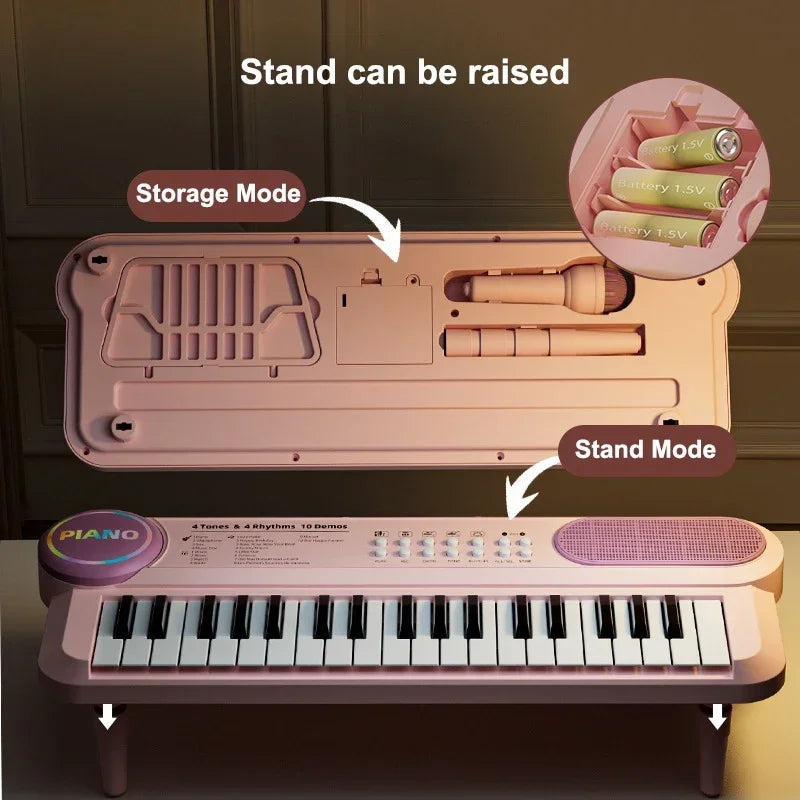
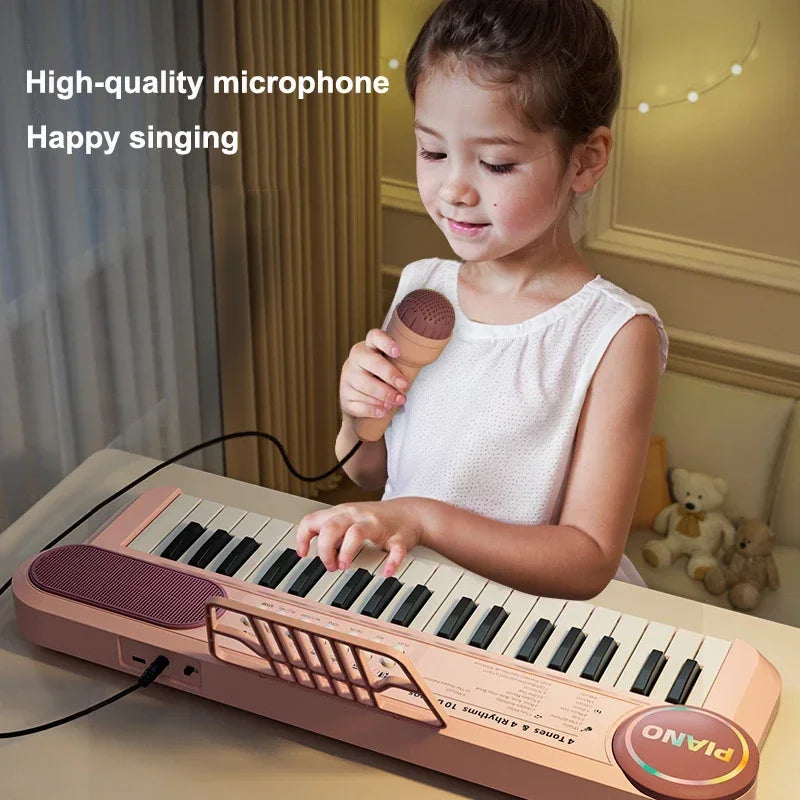
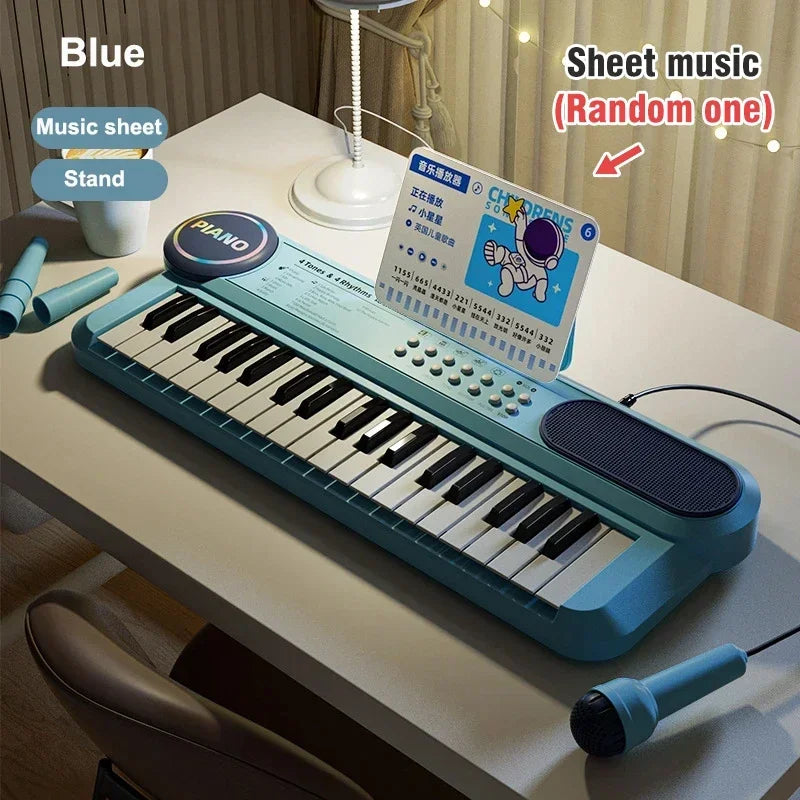
At this stage, structured instruments like beginner keyboards can be highly effective. For example, a 37-key kids piano with microphone allows children to combine playing and singing—encouraging creativity, coordination, and confidence.
Soft suggestion: Look for beginner-friendly instruments in Baby Growth & Learning collections to match your child’s developmental stage.
Active Participation vs Passive Listening: What Works Better?
Passive Music Exposure (Listening Only)
- Provides background stimulation
- Limited cognitive engagement
- Minimal motor or social interaction
Active Music Engagement (Singing, Playing, Moving)
- Strengthens neural connections
- Improves coordination and memory
- Encourages emotional and social growth
Quick Comparison Matrix
| Factor | Passive Listening | Active Engagement |
| Brain Activation | Low | High (multi-region) |
| Language Development | Limited | Strong support |
| Motor Skills | None | Developed through movement |
| Emotional Growth | Minimal | Significant |
How to Start Music Education at Home (Actionable Guide)
Daily Music Routines (5–15 Minutes)
- Morning: upbeat songs for energy
- Afternoon: rhythm play or instrument time
- Evening: calming music for relaxation
Best Music Activities by Age
- Infants: Lullabies and gentle tapping
- Toddlers: Singing and movement games
- Preschoolers: Instrument play and role-play performances
Choosing the Right Music Toys
When selecting music tools, look for:
- Age-appropriate design
- Interactive features (sound response, keys, rhythm)
- Safe materials meeting ASTM/CPSC guidelines
Interactive keyboards with microphones can be especially beneficial for combining multiple skills—playing, singing, and listening.
Browse curated learning tools in Smart Baby Gadgets or Baby Growth & Learning Tips for more ideas.
Expert Insights: What Pediatricians and Educators Say
Early Learning Organizations and Recommendations
Child development experts consistently recommend integrating music into daily routines. Music is not treated as an extracurricular activity—but as a foundational learning tool supporting brain development.
Common Myths About Music Education
-
Myth: Music is only for talented children
Reality: All children benefit from music exposure -
Myth: Passive listening is enough
Reality: Active engagement is essential -
Myth: Formal lessons are required early
Reality: Play-based learning is most effective
Developmental Framework: How Music Supports Whole-Child Growth
Cognitive + Emotional + Social Integration Map
- Cognitive: Memory, attention, pattern recognition
- Language: Phonetics, vocabulary, communication
- Emotional: Expression, regulation, confidence
- Social: Cooperation, bonding, interaction
- Motor: Coordination, timing, movement control
Conclusion
Early childhood music education is far more than entertainment—it is a scientifically supported pathway to stronger cognitive, emotional, and social development. From infancy through preschool years, music shapes how children think, feel, and interact with the world.
The best part? You don’t need formal lessons to start. Simple daily routines, interactive play, and age-appropriate tools can make a lasting impact.
Soft next step: Explore engaging learning tools in Baby Growth & Learning to bring music into your child’s daily life in a fun and meaningful way.
Pillar Article: Beginner Music Instruments for Kids: Best Picks by Age, Budget & Learning Goals (2026 Guide)





