

Educational Pretend Play Toys That Build Real-Life Skills
What is a montessori inspired kitchen toy and how does it support independent play?
A montessori inspired kitchen toy is a child-sized, hands-on wooden playset kitchen designed to encourage independence, focus, and real-life skill practice. By using simple layouts, natural materials, and accessible tools, this type of toy helps children explore pretend cooking, clean-up, and organization on their own.
Montessori Inspired Kitchen Toy for Independent Little Learners
⏱ 6 min read
Organizing kids play spaces can instantly turn chaotic pretend meals into calm, creative playtime. With the right layout, a wooden toy kitchen and accessories stop clutter from taking over, while a wooden playset kitchen feels easier to reset between games. Parents are often surprised how small storage tweaks boost focus, reduce mess, and encourage longer independent play — but which setup change actually makes the biggest difference?
Explore simple, child-led play ideas that fit real family routines.
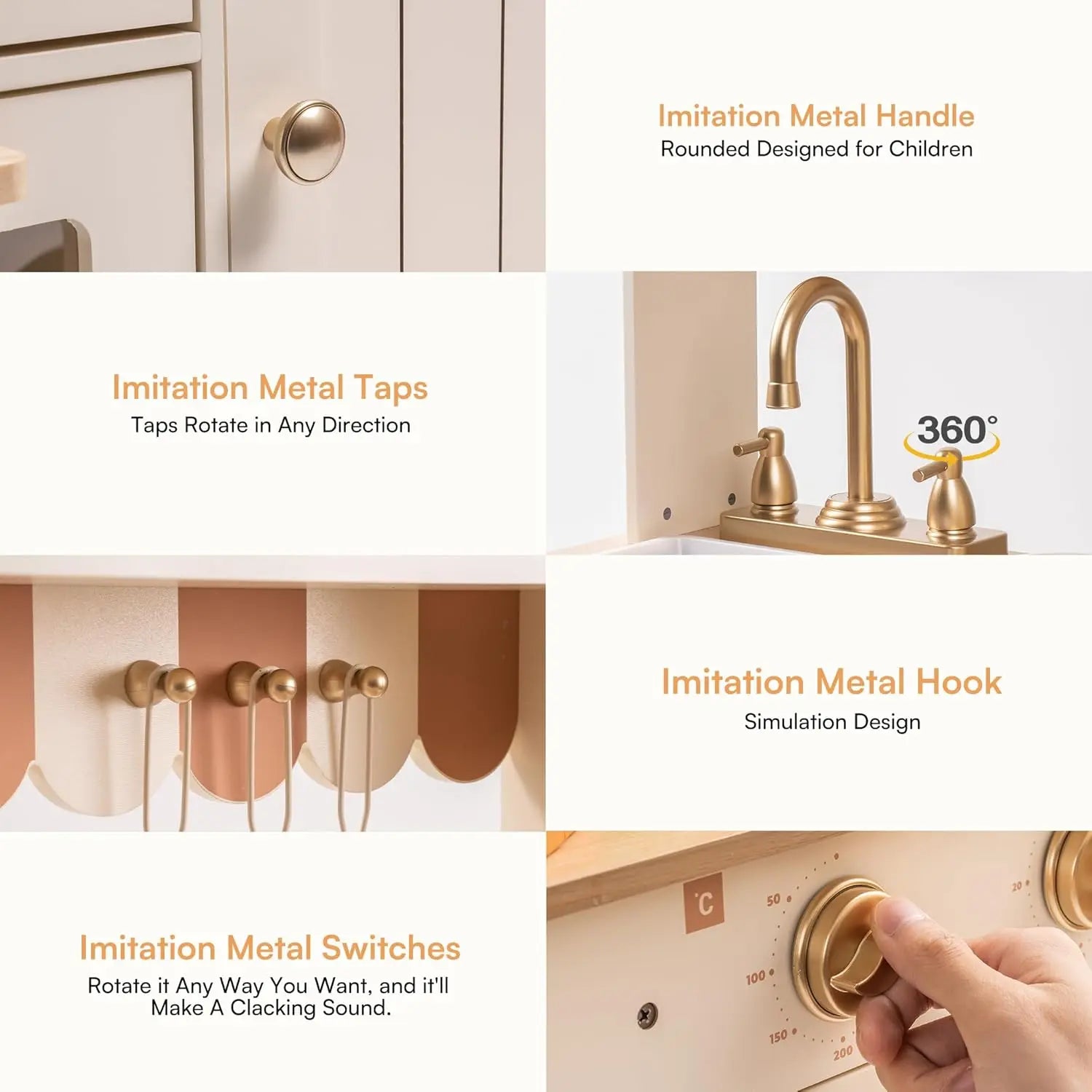
Montessori inspired kitchen toy with wooden toy kitchen and accessories — 💡 See it in action
Why Independent Play Matters in Early Childhood
Many parents worry their child won’t play alone or loses interest quickly. Independent play isn’t about leaving kids unsupported — it’s about creating an environment that invites them to explore confidently.
A well-designed wooden playset kitchen gives children a sense of control. Everything is visible, reachable, and sized just for them. That alone reduces frustration and boosts focus.
- Children practice decision-making without constant guidance
- Play sessions naturally last longer
- Less mess because items have clear “homes”
- Parents gain breathing room during the day
What Makes a Montessori Inspired Kitchen Toy Different?
A montessori inspired kitchen toy focuses on simplicity, function, and real-world relevance rather than flashy buttons or noise. It mirrors an actual kitchen in a child-safe, approachable way.
Unlike plastic sets with dozens of random pieces, a wooden toy kitchen and accessories emphasize quality over quantity. Each item has a purpose, helping kids understand sequences like cooking, serving, and cleaning.
Key design principles you’ll notice
- Neutral colors that don’t overstimulate
- Open shelves instead of closed bins
- Realistic tools sized for small hands
- Durable wood that feels solid and safe
These elements support calm play — something many families crave in busy homes.
How Organizing Zones Transform Play Kitchens
One of the biggest breakthroughs parents report isn’t the toy itself — it’s how it’s arranged. Organizing kids play spaces into clear zones makes a surprising difference.
- Prep zone: wooden fruits, vegetables, and cutting boards
- Cooking zone: stove, pots, and pans
- Serving zone: plates, cups, and utensils
- Cleaning zone: sink, cloths, and storage hooks
When everything has a visible place, children reset the space naturally after play — no nagging required.
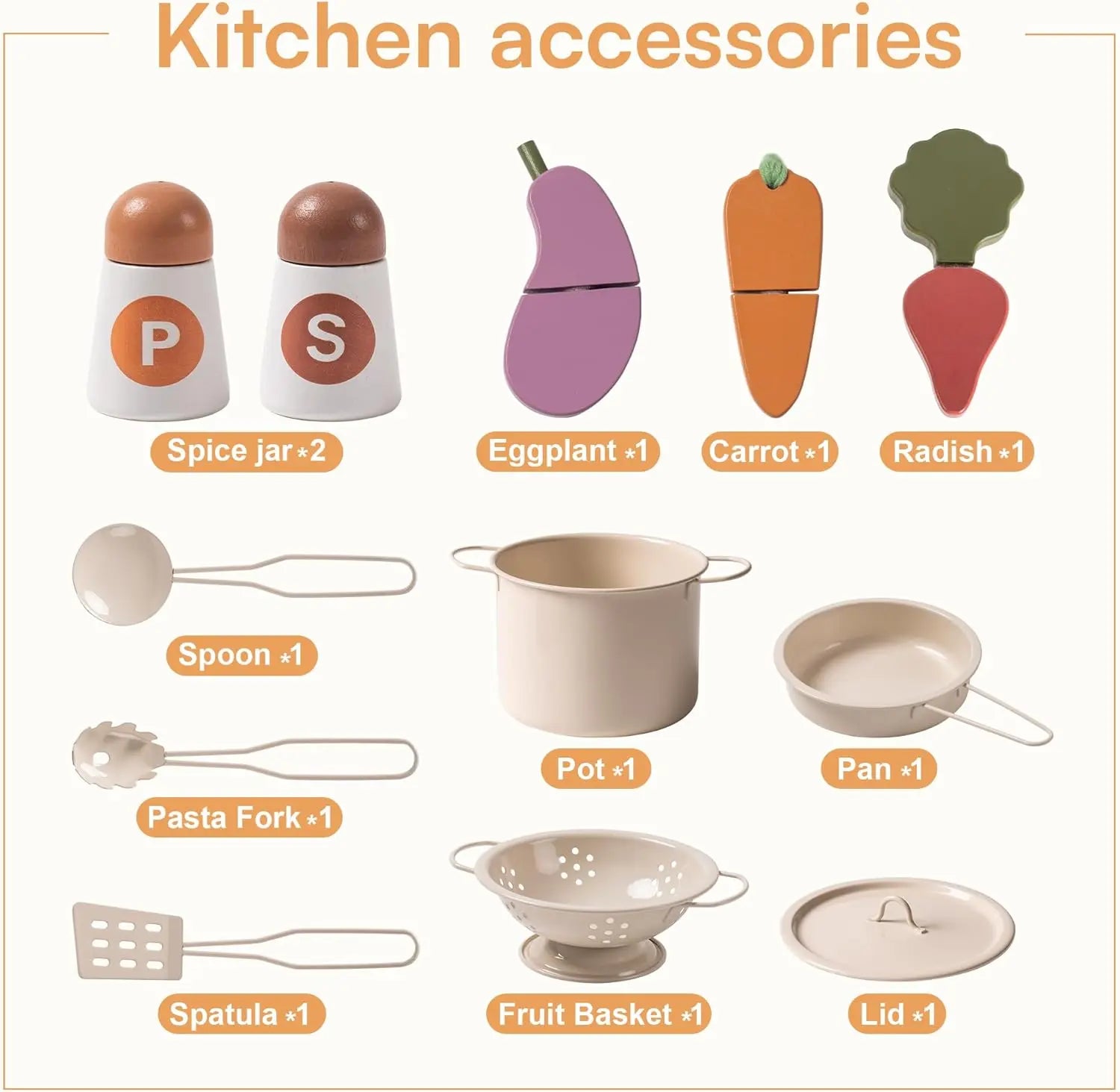
Wooden playset kitchen organized for independent play — 💡 See it in action
Learn how small layout changes can reduce mess and boost focus.
Building Real-Life Skills Through Pretend Cooking
Pretend kitchens aren’t just about play — they’re rehearsal spaces for life skills. A montessori inspired kitchen toy allows kids to practice routines they see every day.
- Sequencing tasks (wash → cut → cook → serve)
- Hand-eye coordination with safe tools
- Language development through role-play
- Responsibility by cleaning up afterward
Many parents notice children becoming more interested in helping during real meal prep after consistent kitchen play.
Pairing kitchen play with hands-on learning toys from Baby Growth & Learning can further support problem-solving and independence.
What Parents Notice After Switching Setups
Families who transition from cluttered toy bins to a wooden toy kitchen and accessories setup often share similar feedback.
“My 3-year-old used to dump everything out and walk away. Now she cooks ‘dinner’ for 30 minutes and puts things back on her own.” — Amanda, CA
“The calm factor surprised me. Fewer toys, better layout, and suddenly playtime feels peaceful.” — Jason, NY
These changes aren’t about perfection — they’re about supporting how children naturally learn.
How to Choose the Right Wooden Playset Kitchen
Not all play kitchens support independent learning equally. When evaluating options, focus on usability rather than extras.
| Feature | Why It Matters |
|---|---|
| Open shelving | Encourages self-selection and easy cleanup |
| Solid wood | Durable, stable, and sensory-friendly |
| Minimal accessories | Reduces overwhelm and clutter |
| Child-height design | Supports confidence and independence |
For families building a long-term play space, a thoughtfully designed kitchen like the wooden kids kitchen playset becomes a daily-use tool rather than a short-lived toy.
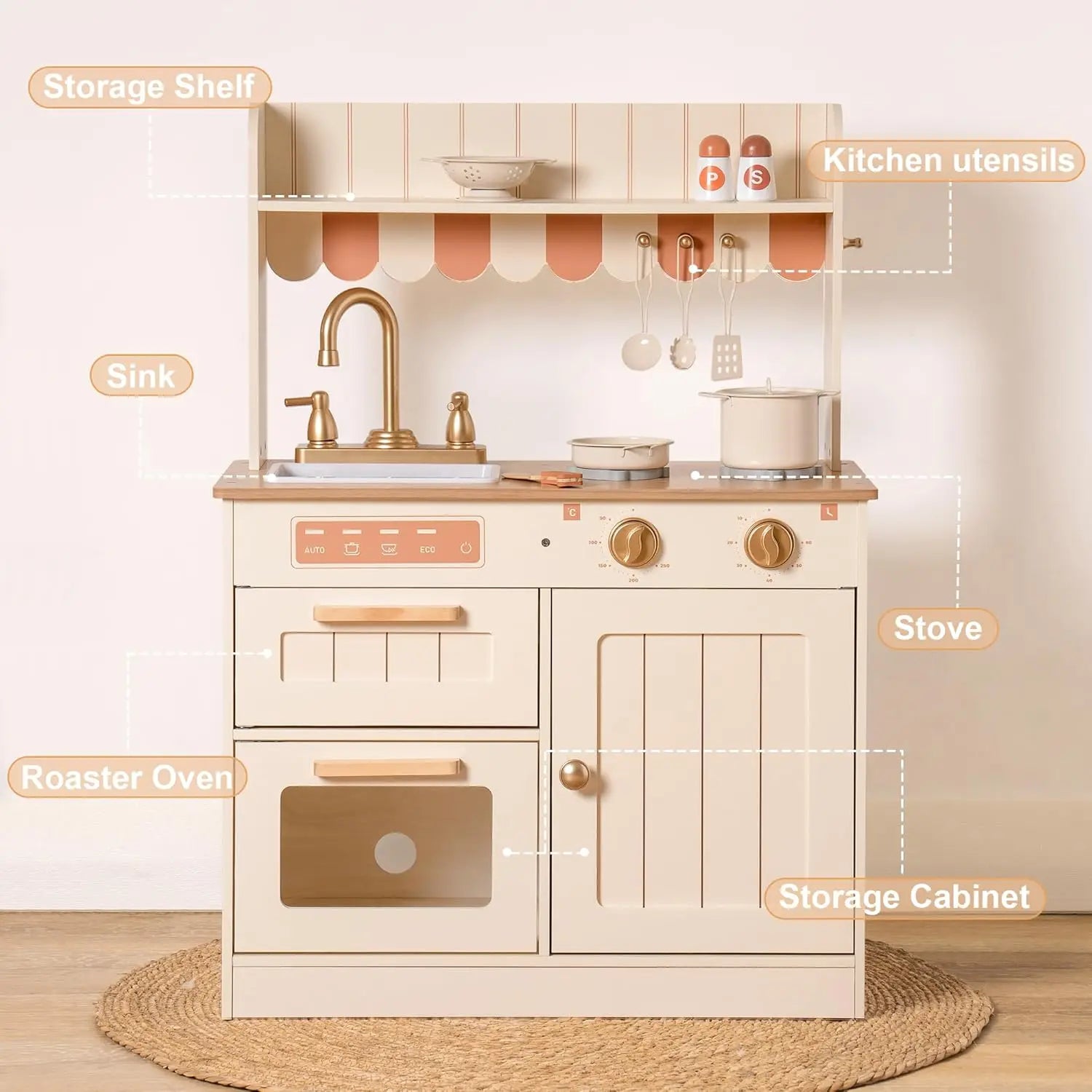
Montessori inspired kitchen toy with wooden playset kitchen — 💡 See it in action
Explore a wooden kitchen setup designed for calm, focused play.
Mini FAQ
At what age is a montessori inspired kitchen toy suitable?
Most children benefit from a montessori inspired kitchen toy between ages 2–6. The open-ended design allows the play to grow with the child, from simple imitation to complex role-play.
Does a wooden toy kitchen really reduce mess?
Yes, especially when accessories are limited and organized. Open shelving and clear zones help children understand where items belong, making cleanup part of play.
How does this type of kitchen support learning?
It supports fine motor skills, sequencing, language development, and independence — all through hands-on, child-led exploration.
Related Guide: Kids Role Play Kitchen for Every Age and Play Style





