

Educational Toys for 3 Year Olds for Every Learning Style
15 Best Educational Toys for 3 Year Olds (2026): Sorted by Development Milestones
Finding the best educational toys for 3 year olds is about more than choosing something entertaining. At this age, every puzzle solved, tower stacked, song sung, or pretend adventure helps strengthen essential developmental skills that prepare children for preschool and everyday life.
Three-year-olds are naturally curious learners. Their vocabulary grows quickly, imaginative play becomes more detailed, and they begin solving simple problems independently. Choosing toys that match these milestones can support learning while keeping play enjoyable and age-appropriate.
This guide uses a development-first approach , helping you select toys based on the skills they encourage—from language and fine motor development to creativity, STEM thinking, and social-emotional growth.
Quick tip: If you're looking for engaging toys that encourage creativity, music, and early learning, explore our Baby Growth & Learning collection.
Quick Picks: Best Educational Toys for 3 Year Olds by Need
Best for Speech & Language Development
- Storytelling puppets for imaginative conversations
- Picture-based flashcard sets for vocabulary building
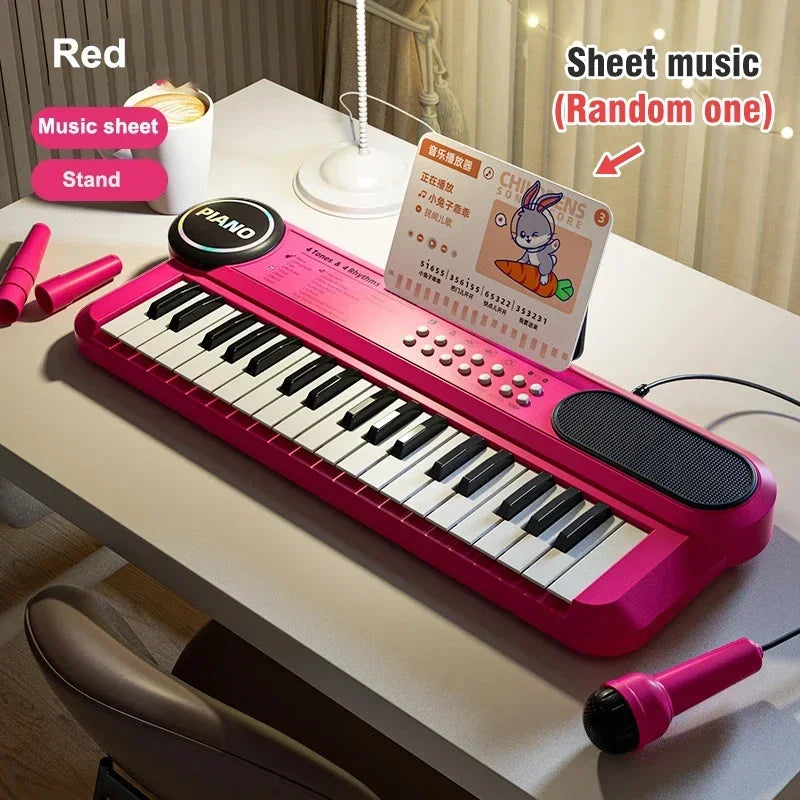
- Kids Electric Piano with Microphone for singing, listening, and verbal expression
Best for Quiet & Independent Play
- Wooden puzzles that develop logical thinking
- Stacking toys that strengthen coordination
- Magnetic drawing boards for creative, mess-free play
Best Montessori-Style Toys
- Shape sorters that build early problem-solving skills
- Practical life activity kits that encourage independence
- Wooden counting toys for hands-on number recognition
Best STEM Toys for Preschoolers
- Building blocks for engineering and spatial awareness
- Simple coding toys that introduce sequencing concepts
- Cause-and-effect toys that encourage scientific exploration
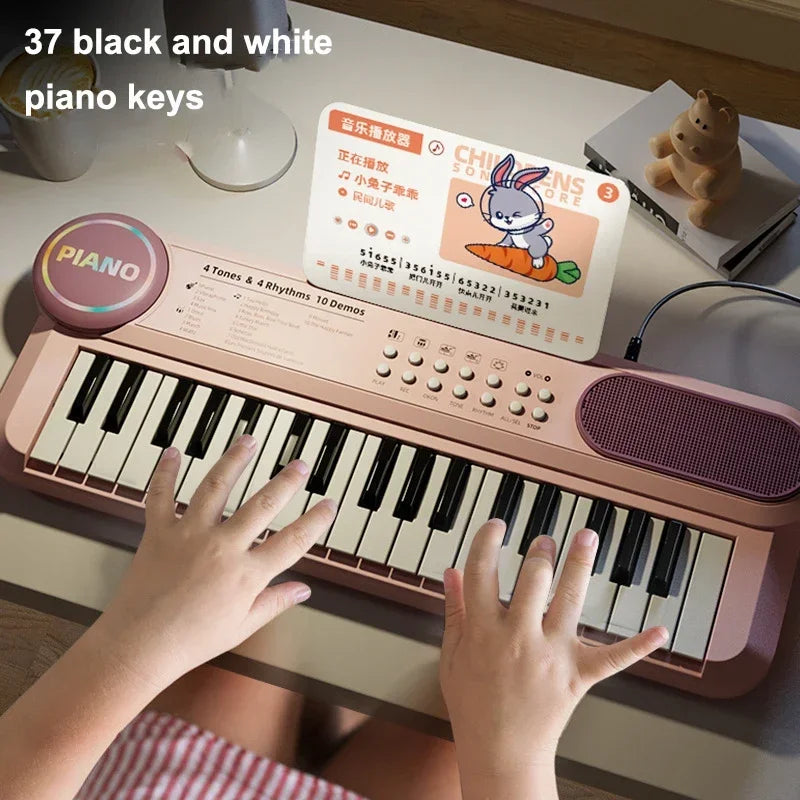
Editor's pick: A 37-key kids piano with microphone offers exceptional long-term value by combining music, language development, creativity, listening skills, and fine motor practice in one engaging activity.
What Skills Should a 3 Year Old Develop Through Play?
Understanding what types of toys are best for 3-year-olds' development starts with knowing the milestones children typically reach during this stage. The most effective developmental toys for 3 year olds encourage multiple skills at once, allowing children to learn naturally through play.
Cognitive Growth & Problem Solving
Three-year-olds begin developing stronger memory, attention, and reasoning skills. Toys that involve sorting, matching, sequencing, building, or completing simple challenges strengthen executive function while encouraging independent thinking and confidence when solving problems.
Fine Motor Skills & Bilateral Coordination
Activities requiring both hands—such as stacking blocks, threading beads, fitting puzzle pieces, or pressing piano keys—improve bilateral coordination, finger strength, and hand control. These foundational abilities later support writing, drawing, and everyday self-care tasks.
Language & Communication Milestones
Vocabulary expands rapidly around age three. Storytelling games, pretend play, songs, books, and musical toys encourage children to express ideas, ask questions, follow directions, and build conversational confidence through enjoyable interactions.
Social-Emotional Learning
Pretend play helps children recognize emotions, practice empathy, share with others, and understand different perspectives. Role-playing everyday situations also supports confidence, cooperation, and emotional regulation in social settings.
Creativity & Early STEM
Open-ended building toys, art activities, simple science exploration, and musical instruments encourage experimentation without requiring a single correct answer. These experiences nurture creativity while introducing early STEM concepts such as patterns, balance, cause and effect, measurement, and basic engineering.
Choosing toys that support several of these developmental areas at once gives children more opportunities to build school-ready skills while enjoying meaningful, screen-free play.
How We Selected the Best Educational Toys (2026)
Developmental Criteria & Skill Mapping
Every recommendation was evaluated according to the developmental skills it encourages rather than entertainment value alone. We prioritized educational toys for 3 year olds that support one or more core learning areas, including cognitive development, fine motor coordination, language growth, creativity, early STEM thinking, and social-emotional learning. Preference was given to toys that remain engaging as children gain new abilities.
Safety Standards & Materials
Safety is essential for preschool learning. We prioritized toys made from durable, child-friendly materials that meet recognized ASTM and CPSC safety standards whenever applicable. Smooth finishes, rounded edges, secure construction, and non-toxic materials help ensure toys remain safe through everyday play.
Durability & Long-Term Value
The best educational toys continue providing new learning opportunities instead of being outgrown within weeks. We favored open-ended toys that can be used in multiple ways, withstand daily use, and adapt as children progress from age 3 toward preschool readiness. Long-lasting construction and versatile play experiences provide better overall value for families.
Real Parent Testing & Play Scenarios
We also considered how toys perform in everyday family life. Our evaluation focused on ease of use, independent play potential, engagement over repeated play sessions, cleanup, storage, and whether children naturally returned to the toy after initial excitement faded.
Best Educational Toys by Development Milestone
Cognitive & Problem-Solving Toys
Top Picks + Mini Reviews
-
Wooden Shape Sorter
Best for: Early logic, shape recognition, and independent problem-solving.
Pros:- Develops visual discrimination and matching skills.
- Encourages persistence through trial and error.
- Simple enough for independent exploration.
- Offers fewer challenges once basic shapes are mastered.
-
Building Blocks Set
Best for: Creativity, spatial awareness, and early STEM learning.
Pros:- Promotes imaginative construction and open-ended play.
- Strengthens planning and problem-solving skills.
- Supports cooperative play with siblings or parents.
- Some children benefit from guidance during early building activities.
CTA: Explore more cognitive toys in Sensory Toys .
Fine Motor Skill Development Toys
Top Picks + Mini Reviews
-
Bead Threading Set
Best for: Finger strength, hand-eye coordination, and concentration.
Pros:- Improves precision and grip control.
- Supports pre-writing hand movements.
- Encourages patience and sequencing.
- Contains small pieces that require adult supervision.
-
Stacking Rings
Best for: Coordination and size recognition.
Pros:- Builds bilateral coordination.
- Introduces color and size concepts.
- Easy for independent practice.
- May become less challenging for advanced learners.
CTA: Find more tools in Mobility & Training .
Language & Communication Toys
Top Picks + Mini Reviews
-
Storytelling Cards
Best for: Vocabulary expansion, storytelling, and imagination.
Pros:- Encourages expressive language.
- Builds listening and sequencing skills.
- Creates opportunities for interactive parent-child conversations.
- Younger children may benefit from guided storytelling at first.
-
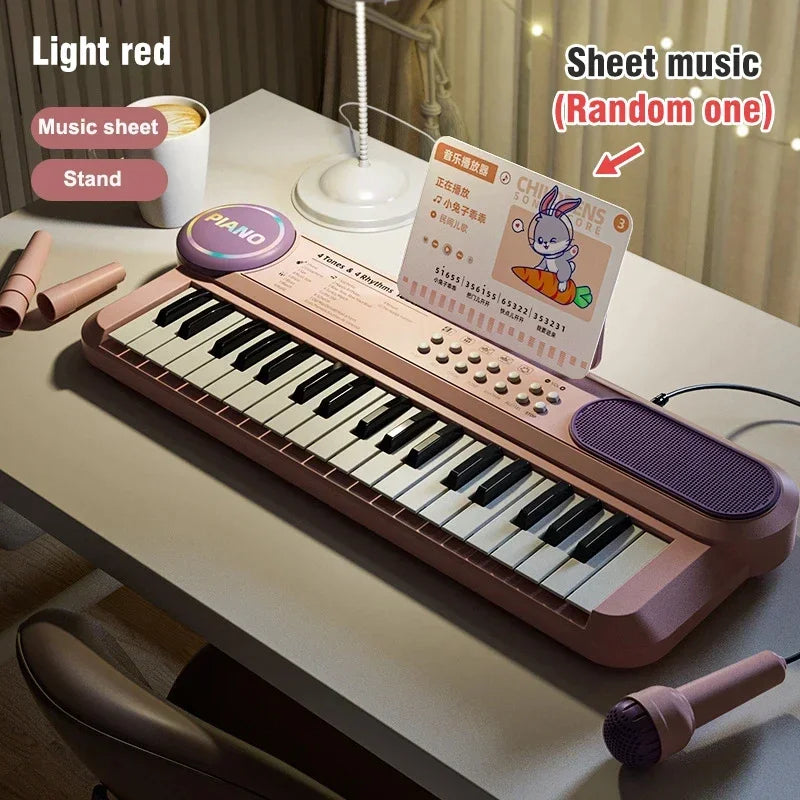
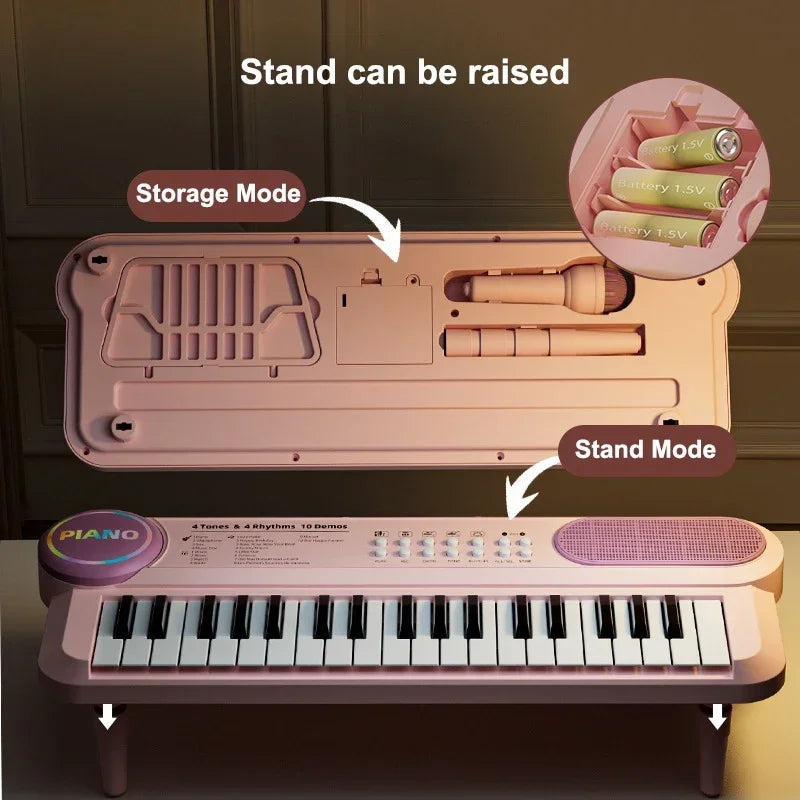
Kids Electric Piano 37-Key with Microphone
Best for: Language development, creativity, and musical exploration.
Pros:- Encourages singing and verbal expression.
- Develops rhythm, listening, and memory skills.
- Builds confidence through music and pretend performances.
- Supports fine motor coordination while playing the keyboard.
- Requires batteries or USB power.
The interactive piano combines music, movement, and imaginative play, making it an excellent choice for children who enjoy expressing themselves through songs while strengthening communication and coordination.
Social-Emotional & Role Play Toys
Top Picks + Mini Reviews
-
Pretend Kitchen Set
Best for: Imaginative play and everyday life skills.
Pros:- Encourages role-playing and cooperation.
- Builds communication during shared play.
- Helps children practice everyday routines.
- Requires dedicated play space.
-
Dollhouse Playset
Best for: Emotional understanding and storytelling.
Pros:- Supports empathy and perspective-taking.
- Encourages creative narratives.
- Promotes social interaction with family or friends.
- Some sets include small accessories that require supervision.
CTA: Browse calming toys in Sleep & Comfort .
Comparison Table: Skills, Difficulty & Play Style
| Toy | Primary Skills | Age Suitability | Difficulty | Play Style | Best For |
|---|---|---|---|---|---|
| Shape Sorter | Cognitive, Fine Motor | 3+ | Easy | Independent | Problem-solving beginners |
| Building Blocks | STEM, Creativity, Spatial Awareness | 3+ | Medium | Independent or Guided | Open-ended learning |
| Kids Piano | Language, Fine Motor, Music | 3+ | Easy | Interactive | Speech and creative expression |
| Pretend Kitchen | Social-Emotional, Communication | 3+ | Medium | Guided or Cooperative | Role play and imagination |
The best educational toy for a 3 year old often supports multiple developmental areas rather than focusing on just one skill. Choosing toys with open-ended play opportunities gives children room to learn as their confidence and abilities grow.
CTA: Discover more options in Baby Growth & Learning .
How to Choose the Right Educational Toy for Your 3 Year Old
Match Toys to Developmental Milestones
Instead of shopping by age label alone, choose educational toys for 3 year olds that match your child's current interests and abilities. A child who enjoys storytelling may benefit from musical or pretend-play toys, while another who loves building may spend more time exploring blocks, puzzles, or construction sets. Selecting toys that align with existing skills while introducing a gentle challenge encourages continued learning without frustration.
The best development toys for 3 year olds can be used in different ways over time. Building sets, pretend play accessories, art materials, and musical instruments allow children to create, experiment, and solve problems instead of following a single fixed outcome. Open-ended toys typically remain engaging much longer than toys designed for one specific activity.
Consider Safety & Materials
Look for sturdy construction, smooth edges, and child-safe finishes that can withstand frequent use. Quality materials improve both durability and safety, especially for preschoolers who play actively every day. Always check recommended age ranges and supervise activities involving small components when appropriate.
Balance Challenge With Confidence
A toy should feel achievable while still encouraging children to learn something new. If a toy is too simple, interest may fade quickly; if it's too difficult, frustration can replace curiosity. The ideal educational toy gradually becomes more versatile as children develop stronger language, motor, creative, and problem-solving skills, providing lasting value throughout ages three and four.
How to Use These Toys for Maximum Learning
Guided vs Independent Play
Developmental toys for 3 year olds are most effective when parents participate during the early stages of play. Demonstrate how a toy works, ask simple open-ended questions, and encourage your child to explore different ways to use it. As confidence grows, gradually step back and allow independent play to build problem-solving skills, creativity, and self-confidence.
Toy Rotation Tips
Instead of leaving every toy available at once, rotate a small selection every one to two weeks. Limiting choices reduces overstimulation while making familiar toys feel new again. A balanced rotation might include a building toy, a creative activity, a language-based toy, and a pretend play option so different developmental skills are practiced throughout the week.
Simple Daily Learning Routines
Short, consistent play sessions are often more effective than long periods of unstructured play. Aim for 15 to 30 minutes of focused, screen-free activities each day. Reading stories, building together, singing songs, solving simple puzzles, or engaging in imaginative role-play all reinforce learning through enjoyable everyday experiences.
Age Progression: Toys That Grow from 3 to 4 Years Old
The best 3 year old educational toys continue supporting new challenges as children become more confident learners. Open-ended toys naturally evolve with your child's abilities, providing better long-term value than products designed for a single developmental stage.
For example, a kids piano may begin as a way to explore sounds and simple melodies. As children approach age four, they can practice rhythm patterns, recognize musical sequences, sing complete songs, and even create their own performances. Likewise, building blocks can progress from simple towers to imaginative structures, while pretend play sets develop into more detailed storytelling and cooperative games.
When choosing educational toys, consider whether they can introduce new skills over time. Toys that adapt to growing abilities help maintain interest, encourage continued learning, and support preschool readiness without needing frequent replacement.
FAQs
What are the best educational toys for 3 year olds?
The best educational toys for 3 year olds support several areas of development at the same time. Building blocks, shape sorters, storytelling cards, musical instruments, pretend play sets, and simple puzzles encourage cognitive growth, language development, creativity, fine motor skills, and social-emotional learning while keeping play engaging.
What types of toys are best for 3-year-olds' development?
Open-ended toys provide the greatest long-term learning value because they encourage children to explore, experiment, and create in different ways. Construction toys, Montessori-inspired learning materials, pretend play sets, art supplies, and age-appropriate STEM toys all help develop skills that support preschool readiness.
Are Montessori toys worth buying for 3 year olds?
Yes. Montessori toys encourage independent learning through hands-on exploration and practical problem-solving. While they are an excellent choice, they work best when combined with creative activities, music, role play, and other toys that support imagination and communication.
How many educational toys does a 3 year old need?
Quality matters more than quantity. A thoughtfully chosen collection of 8 to 15 toys covering different developmental areas is often enough. Rotating toys every week or two helps maintain interest while preventing children from becoming overwhelmed by too many choices.
How do I choose safe educational toys?
Select toys designed for children aged 3 and older that are made from durable, non-toxic materials with smooth edges and secure construction. Follow manufacturer age recommendations, inspect toys regularly for wear or damage, and supervise activities involving small parts whenever appropriate.
Pillar Article: Beginner Music Instruments for Kids: Best Picks by Age, Budget & Learning Goals (2026 Guide)





