

Encouraging Imaginative Role Play With Simple Kitchen Setups
Does encouraging imaginative role play really help children learn and grow?
Encouraging imaginative role play helps children develop language, problem-solving, and social skills through everyday pretend experiences. With a simple toy cooking set and wooden playset kitchen, kids naturally act out real-life routines, build confidence, and stay engaged longer, making playtime both meaningful and fun.
Encouraging Imaginative Role Play With Simple Kitchen Setups
Encouraging imaginative role play doesn’t require a fancy playroom or endless toys. With a thoughtfully arranged toy cooking set and a simple wooden playset kitchen, children naturally invent stories, practice social skills, and build confidence through everyday pretend play. These minimalist setups reduce overwhelm while boosting creativity, independence, and longer engagement time than many high-tech toys.
⏱ 6 min read
Have you ever watched your child lose interest in a noisy, complicated toy after just a few minutes? Many parents feel frustrated by cluttered play spaces that don’t actually inspire lasting play. The good news: simple kitchen setups often spark deeper focus, richer stories, and calmer play routines.
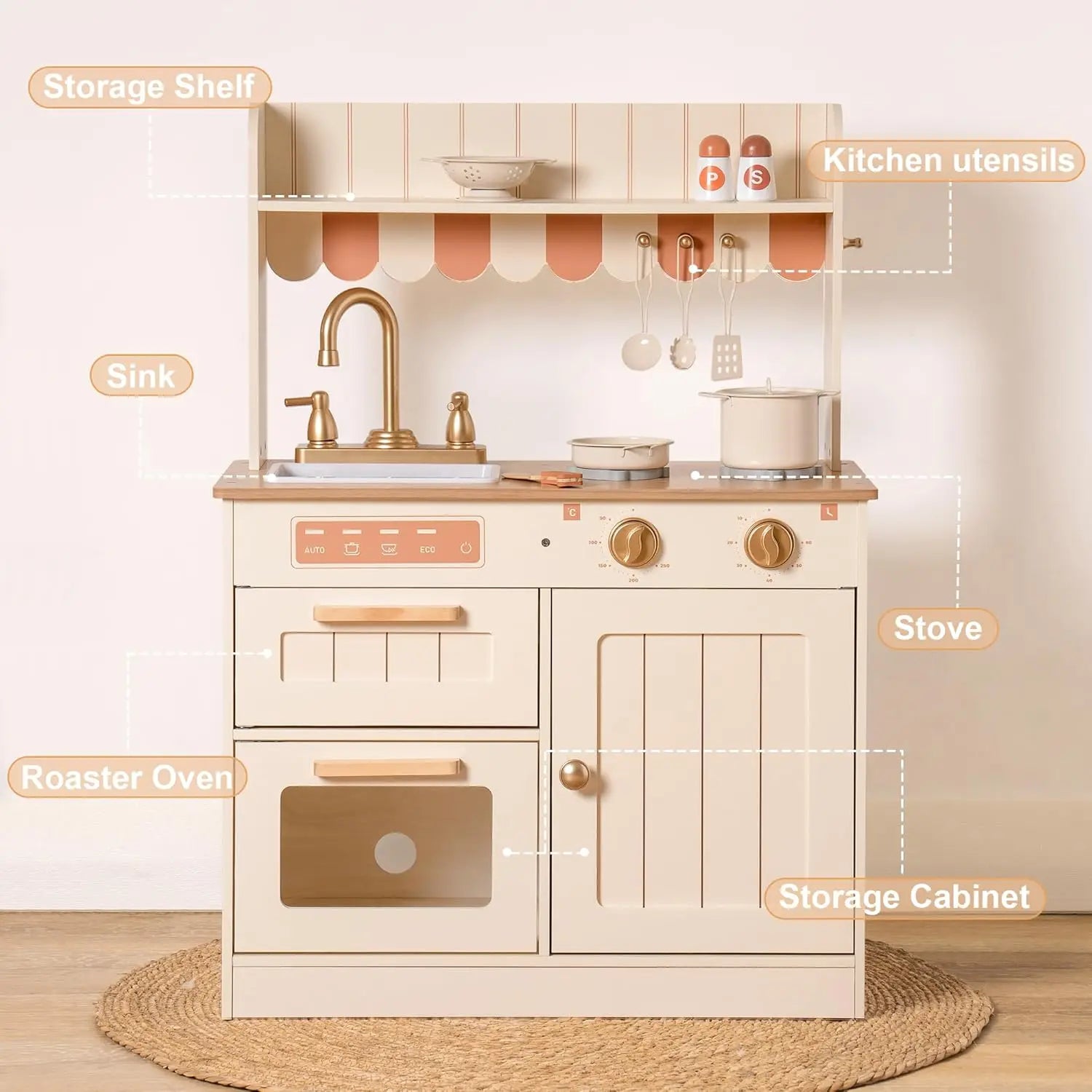
A simple toy cooking set encourages imaginative role play and longer focus. 💡 See it in action
Why Encouraging Imaginative Role Play Matters
Encouraging imaginative role play gives children a safe way to explore the world they see every day. Cooking, serving, cleaning, and sharing meals are familiar routines, which makes kitchen play especially powerful for young minds.
- Builds language through storytelling and conversation
- Strengthens emotional skills like empathy and patience
- Encourages problem-solving and decision-making
- Supports independence and confidence
Parents often notice that children return to pretend kitchen play again and again, adding new details as they grow.
How Simple Kitchen Play Builds Real-Life Skills
Encouraging imaginative role play through kitchen setups helps children connect play with daily life. A toy cooking set mirrors what kids see adults do, making play feel meaningful rather than random.
Simple kitchen play supports fine motor skills, sequencing, and cooperation as children stir, pour, and “serve” meals to others.
| Skill Area | How Kitchen Play Helps |
|---|---|
| Language | Role conversations, naming foods, storytelling |
| Social Skills | Turn-taking, sharing, polite requests |
| Motor Skills | Grasping utensils, opening doors, stacking items |
| Confidence | Completing “tasks” independently |
Step-by-Step: Creating a Simple Kitchen Setup
Encouraging imaginative role play works best when the setup feels calm and accessible. You don’t need many pieces—just the right ones.
- Choose a quiet corner with enough floor space.
- Add a wooden playset kitchen at child height.
- Include a small toy cooking set with basic utensils.
- Limit items to avoid visual overload.
- Rotate accessories every few weeks to refresh interest.
Many families pair kitchen play with items from Sensory Toys to extend creativity and focus.
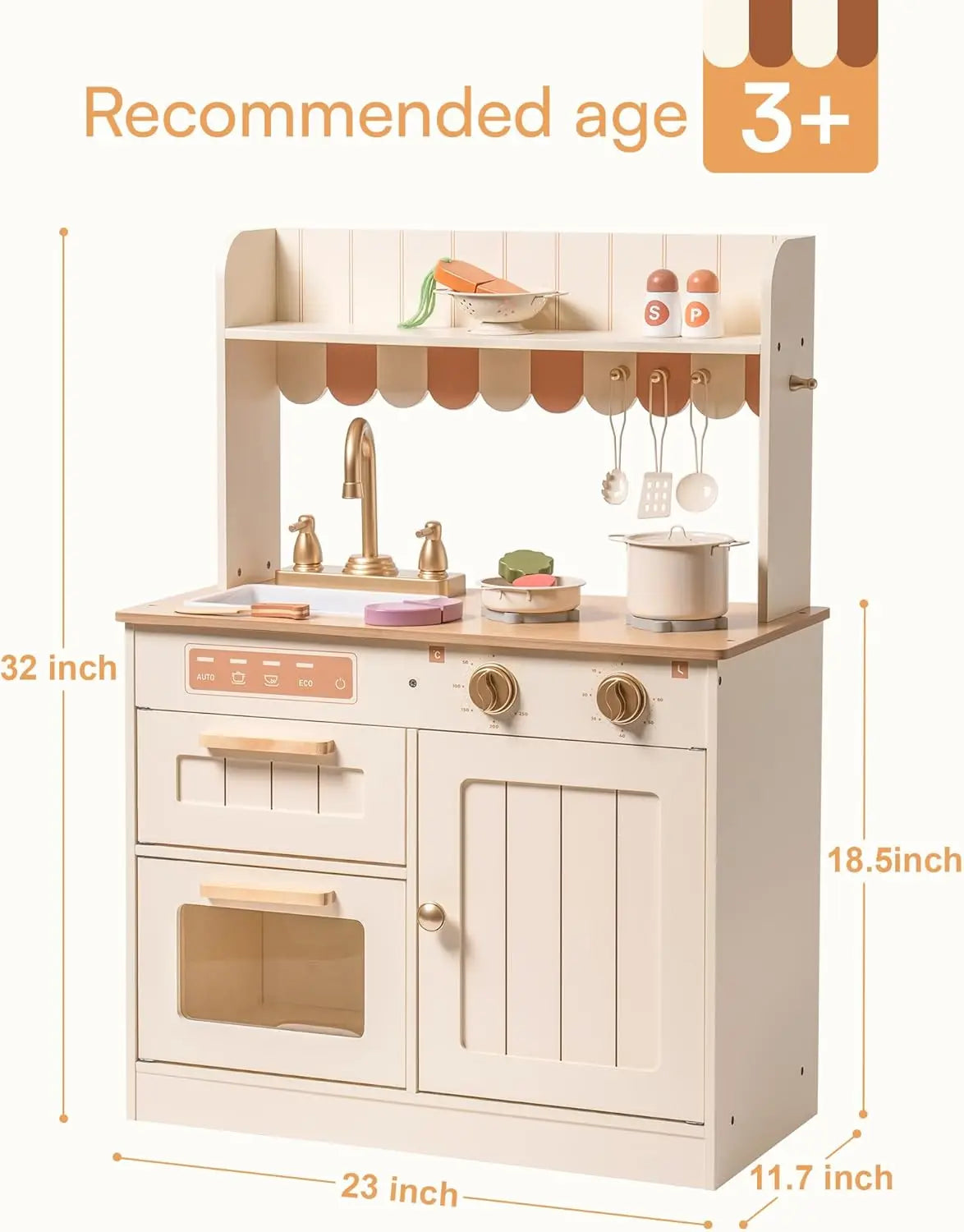
A wooden playset kitchen supports encouraging imaginative role play every day. 💡 See it in action
Choosing the Right Toy Cooking Set
Encouraging imaginative role play starts with choosing pieces that feel real but remain safe. Look for simple shapes, smooth edges, and neutral colors that invite open-ended use.
- Lightweight pots and pans for easy handling
- Wooden or durable materials for long-term use
- Minimal sound or lights to avoid distraction
- Storage-friendly sizes for small homes
Parents often prefer sets that pair naturally with a wooden playset kitchen for a cohesive look and feel.
Why a Wooden Playset Kitchen Works Better
Encouraging imaginative role play is easier with a wooden playset kitchen because it feels stable, quiet, and timeless. Children focus on storytelling instead of buttons or screens.
Wooden designs also blend seamlessly into living spaces, reducing the sense of toy clutter.
Families interested in balanced play often explore complementary tools from Mobility & Training to support physical development alongside pretend play.
Everyday Pretend Kitchen Play Ideas
Encouraging imaginative role play doesn’t need constant supervision. Simple prompts can spark hours of self-directed fun.
- “Cook” breakfast for stuffed animals
- Run a pretend café with menus
- Practice cleaning and organizing after meals
- Role-play grocery shopping and meal prep
Parents often notice calmer afternoons and longer independent play sessions after introducing kitchen role play.
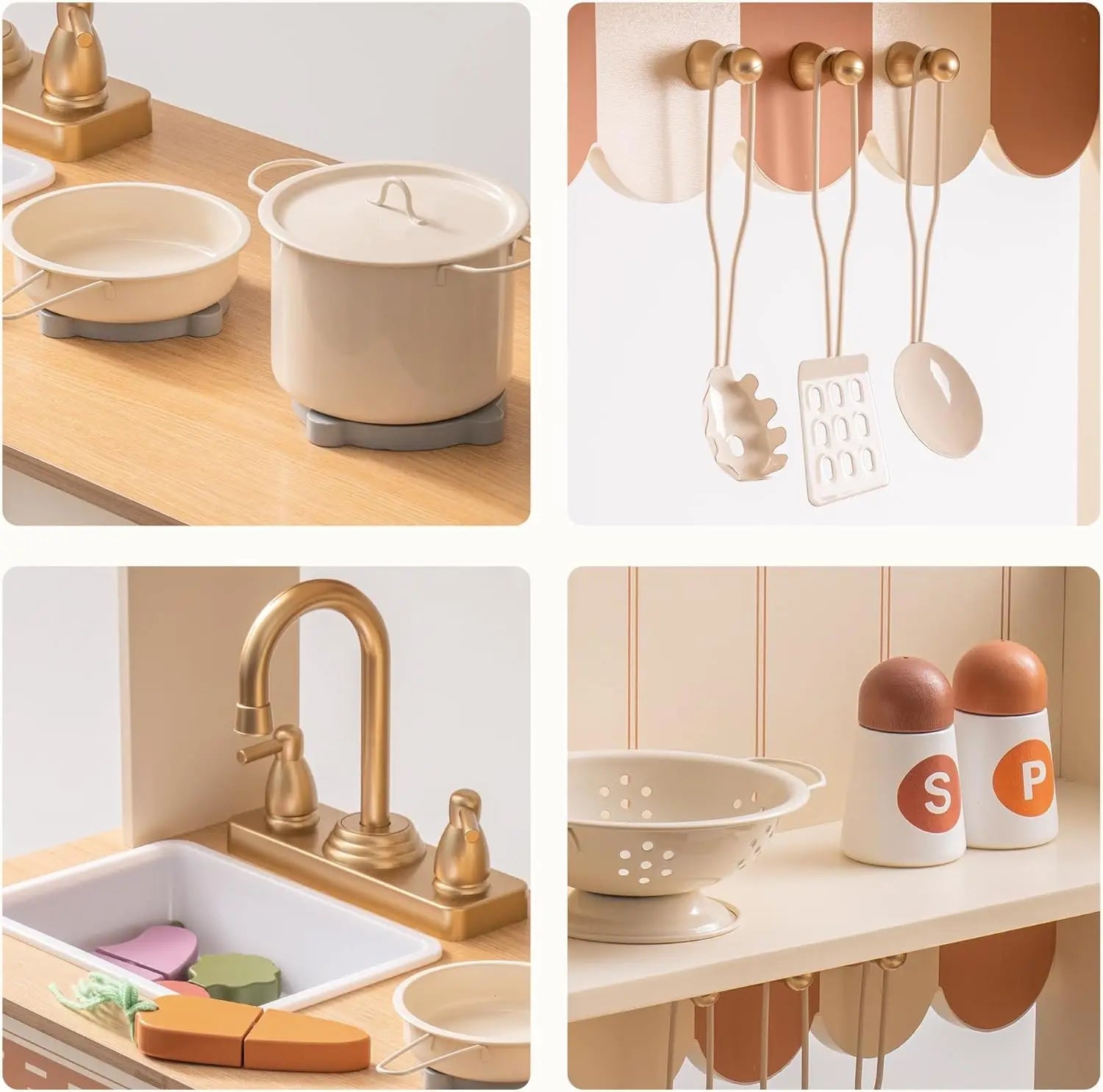
Encouraging imaginative role play with a toy cooking set kids love. 💡 See it in action
Safety, Calm, and Peace of Mind for Parents
Encouraging imaginative role play should feel reassuring, not stressful. Simple kitchen setups reduce noise, limit small parts, and encourage gentle play.
Many parents pair playtime routines with resources from Health & Safety to feel confident about their child’s environment.
Real parent feedback often highlights fewer tantrums, longer focus, and more cooperative behavior during shared play.
Mini FAQ
What age is best for a toy cooking set?
Most children enjoy kitchen role play from around 18 months through early elementary years, with play evolving as skills grow.
How many pieces should a beginner set include?
Fewer pieces work best. A small pot, pan, spoon, and pretend food items encourage creativity without overwhelm.
Can kitchen role play support learning routines?
Yes. Children often mimic meal prep, cleaning, and sharing, which reinforces daily habits in a playful way.
Is a wooden playset kitchen worth it for small homes?
Compact wooden designs fit well in shared spaces and often replace multiple noisy toys with one versatile setup.
Related Guide: How Pretend Kitchens Help Kids Learn Through Play





