

Fix Toddler Balance and Coordination Issues at Home
Does fixing toddler balance and coordination issues at home really work?
Toddler balance and coordination issues can improve at home when daily play targets core strength, timing, and confidence. Simple routines using motor development toys encourage safe movement, while supportive tools like an activity walker wood or wooden activity center help toddlers practice standing, stepping, and turning with less fear and more control.
Fix Toddler Balance and Coordination Issues at Home
⏱ 7 min read
Toddler balance and coordination issues can catch even attentive parents off guard. One day your child is cruising happily, the next they’re tripping, wobbling, or refusing to try new movements. Is this normal—or a sign you should step in? The good news: small, playful changes at home can build steadiness fast, without pressure or drills.
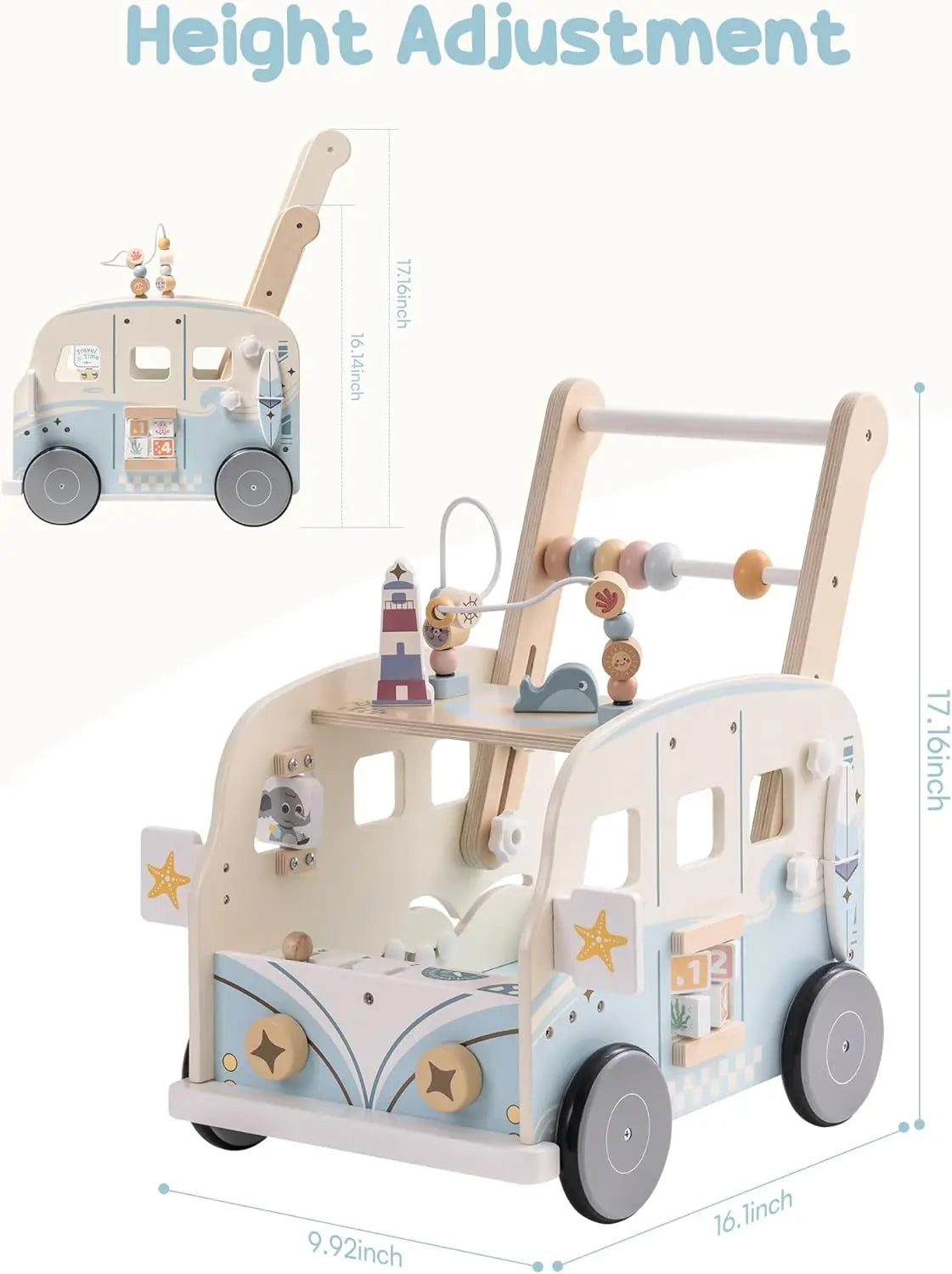
Motor development toys that gently address toddler balance and coordination issues 💡 See it in action
Why Balance and Coordination Struggles Happen
Toddler balance and coordination issues often appear during growth spurts. Bones lengthen quickly, but muscles and brain timing need time to catch up. Add slippery floors, new shoes, or excitement, and falls happen more often.
Balance isn’t just about legs—it’s a full-body system involving vision, core strength, and confidence. When one part lags, movement looks clumsy even in active children.
Early Signs Parents Often Miss
- Frequent sitting down after a few steps
- Wide-legged walking or stiff arms held out
- Avoiding uneven surfaces like rugs or mats
- Frustration or tears during movement play
These signs don’t mean something is “wrong.” They simply signal that your child needs more guided practice in a safe space.
How Play Improves Balance at Home
Toddler balance and coordination issues respond best to playful repetition. Structured play builds muscle memory without stress. When toddlers feel safe, they try again—and that’s where growth happens.
Items found in Baby Growth & Learning are designed to encourage reaching, pushing, and turning—key movements for stability.
Why simple play works better than correction
- Encourages natural posture adjustments
- Strengthens core muscles gradually
- Builds confidence through success
- Reduces fear of falling
A Simple Step-by-Step Home Plan
Toddler balance and coordination issues improve fastest with short, consistent sessions. Ten minutes, twice a day, is often enough.
- Warm up: Gentle floor play, crawling, or rolling.
- Supported standing: Let your child hold onto stable furniture.
- Guided walking: Encourage pushing a stable object forward.
- Cool down: Sit and stack blocks or turn pages.
For added safety during these sessions, many parents pair movement play with items from Health & Safety to reduce slips and bumps.
Choosing the Right Tools for Support
The right tools don’t force movement—they invite it. Motor development toys should feel sturdy, slow, and predictable.
| Tool Type | Best For | Why It Helps |
|---|---|---|
| Wooden activity center | Standing practice | Encourages weight shifting |
| Activity walker wood | Early steps | Provides steady resistance |
| Sensory push toys | Coordination | Improves timing and focus |
You’ll find complementary options in Sensory Toys that pair well with balance-focused play.
Using a Wooden Baby Walker Safely
Toddler balance and coordination issues often improve faster when children can practice controlled forward motion. A wooden baby walker offers resistance that slows movement, helping toddlers adjust posture and foot placement without rushing.
Parents using the wooden baby walker often notice steadier steps within weeks, especially when used on flat, open floors.
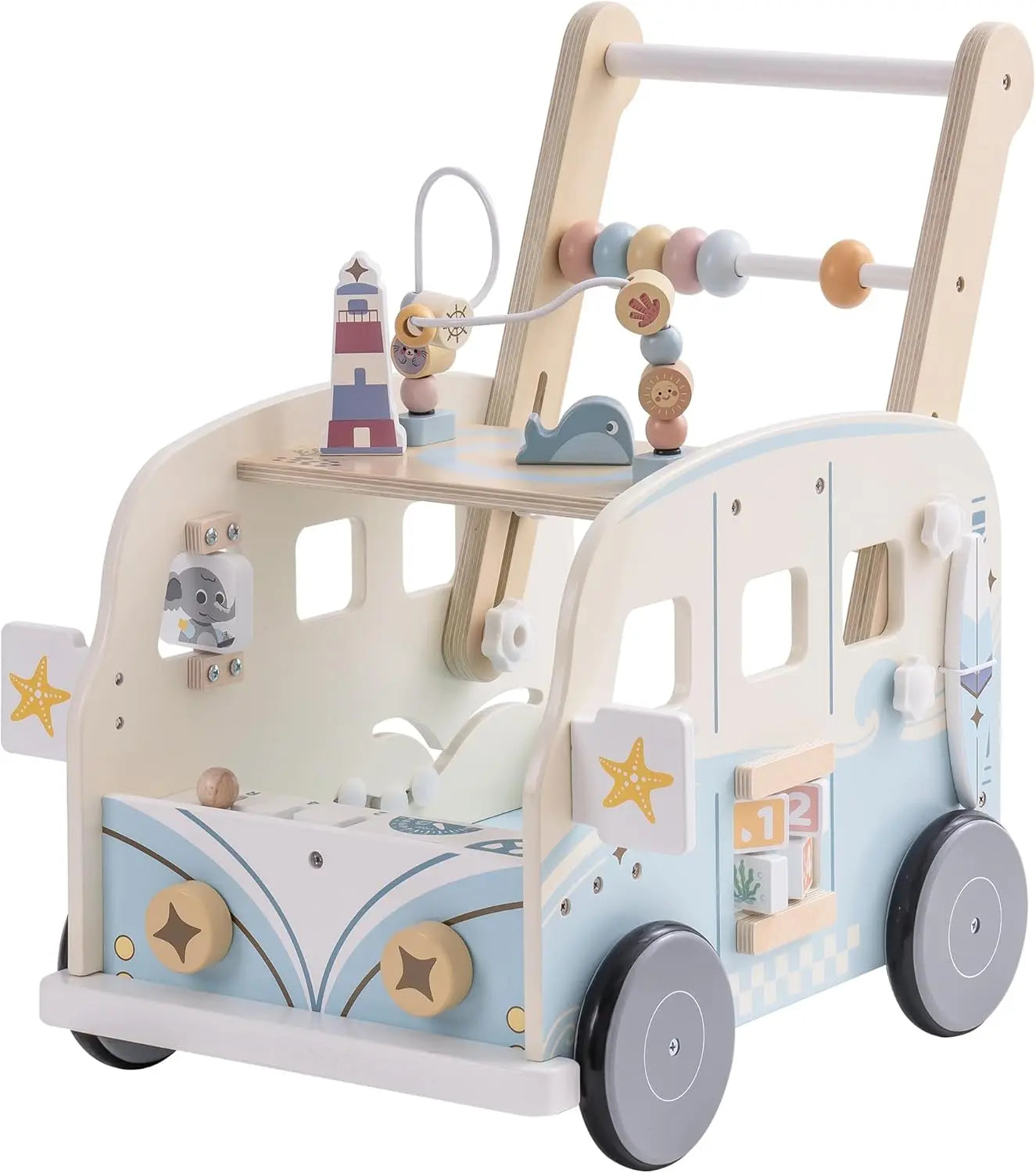
An activity walker wood supporting toddler balance and coordination issues 💡 See it in action
Safety tips for daily use
- Use on non-slip surfaces only
- Limit sessions to 10–15 minutes
- Stay within arm’s reach
- Remove obstacles from the path
Building a Daily Balance Routine
Consistency beats intensity. Choose the same times each day—after breakfast and before dinner work well. Toddlers thrive on predictability.
Keep routines playful. Sing, count steps, or let a favorite toy “ride along.” Over time, you’ll notice fewer falls and smoother turns.
Many families combine movement play with calming breaks using items from Sleep & Comfort to help toddlers reset between active moments.
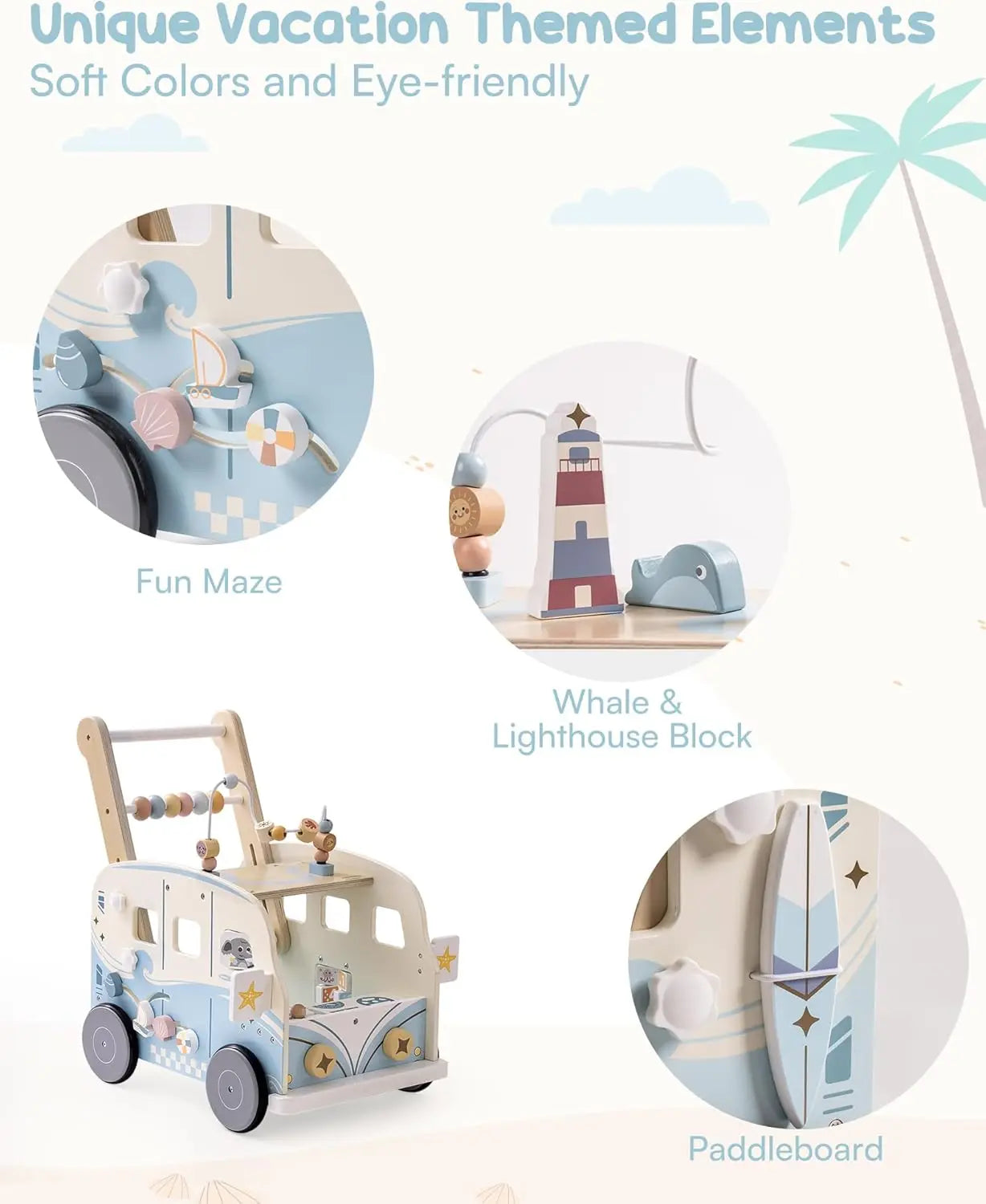
A wooden activity center helping resolve toddler balance and coordination issues 💡 See it in action
Common Mistakes to Avoid
- Rushing milestones instead of following readiness
- Overcorrecting posture during play
- Using overly fast plastic walkers
- Skipping rest between sessions
Progress looks uneven at first—that’s normal. Trust the process and celebrate small wins.
Quick Parent FAQs
How long do toddler balance and coordination issues last?
Most improve within a few months when children get daily practice. Growth spurts may temporarily bring setbacks, but steady play helps skills return stronger.
Should I worry if my toddler falls a lot?
Occasional falls are part of learning. If your child avoids movement completely or seems unusually stiff, gentle support tools can help rebuild confidence.
Can indoor play really replace outdoor practice?
Yes. Controlled indoor environments let toddlers focus on balance without distractions, making early practice safer and more effective.
Related Guide: How to Teach Infant to Walk Step by Step at Home





