

Gross Motor Skills: Milestones, Activities, and Parent-Friendly Development Guide
Gross Motor Skills: Age-by-Age Milestones and 100+ Activity Ideas
Your baby’s first roll. The wobbly first steps. The fearless leap off the playground platform. These moments are more than milestones—they’re signs of growing gross motor skills, the foundation of strength, coordination, balance, and lifelong physical confidence.
Quick Definition: Gross motor skills are the abilities that involve large muscle groups in the arms, legs, and core to perform movements such as sitting, crawling, walking, running, jumping, and climbing. They form the physical base for independence, play, sports, and even classroom success.
What Are Gross Motor Skills?
Quick Definition (Snippet-Optimized)
Gross motor skills are physical abilities that use large muscle groups to control body movement, balance, posture, and coordination. Examples include rolling, sitting, standing, walking, running, jumping, and climbing.
How Gross Motor Skills Differ From Fine Motor Skills
Parents often hear about both gross and fine motor development. While they work together, they involve different muscle groups and types of control.
| Gross Motor Skills | Fine Motor Skills |
| Use large muscle groups (legs, arms, torso) | Use small muscles (hands, fingers, wrists) |
| Examples: walking, running, jumping, climbing | Examples: writing, buttoning, cutting, drawing |
| Develop balance and coordination | Develop hand-eye coordination and dexterity |
| Support posture and core stability | Support academic tasks like handwriting |
For a deeper look at hand-based skills, explore more resources in our Baby Growth & Learning Tips section.
Why Gross Motor Skills Matter for Brain Development
Gross motor development is closely connected to neurological growth. Movement stimulates the motor cortex, strengthens neural pathways between brain hemispheres, and enhances the vestibular system (balance) and proprioception (body awareness). When children climb, crawl, and balance, they are not just building muscles—they’re building brain connections that support focus, spatial awareness, and problem-solving.
Gross Motor Development Milestones (Birth to 8 Years)
Infants (0–12 Months)
- 0–3 months: Lifts head during tummy time
- 4–6 months: Rolls over, pushes up on arms
- 6–9 months: Sits without support, begins crawling
- 9–12 months: Pulls to stand, cruises along furniture
Toddlers (1–3 Years)
- Walks independently
- Climbs onto furniture
- Kicks a ball
- Begins jumping with two feet
- Walks up stairs with support
Preschoolers (3–5 Years)
- Runs with coordination
- Hops on one foot
- Rides a tricycle
- Catches and throws a ball
- Improves balance and agility
Early Elementary (5–8 Years)
- Skips smoothly
- Rides a bicycle
- Participates in organized sports
- Performs cross-body movements
- Improves motor planning and endurance
Milestone Comparison Chart (Gross vs Fine Motor)
| Age | Gross Motor Focus | Fine Motor Focus |
| Infant | Rolling, sitting, crawling | Grasping objects |
| Toddler | Walking, climbing | Scribbling, stacking blocks |
| Preschool | Running, hopping | Cutting with scissors |
| 5–8 Years | Skipping, sports skills | Handwriting refinement |
100+ Gross Motor Activity Ideas (Categorized by Age & Setting)
No-Equipment Activities (Home-Friendly)
- Animal walks (bear, crab, frog)
- Jumping contests
- Pillow stepping stones
- Simon Says with movement
- Dance freeze games
- Wall push-ups
- Marching parades
- Balance on one foot
- Hopscotch with tape
- Follow-the-leader obstacle paths
Indoor Gross Motor Activities
- Living room obstacle course
- Balloon volleyball
- Mini trampoline jumps (with supervision)
- Yoga for kids
- Tunnel crawling
- Stair climbing practice
- Balance beam made from tape
- Movement songs
- Indoor scavenger hunts
- Core strengthening plank challenges
Outdoor Gross Motor Activities
- Playground climbing
- Riding scooters
- Nature hikes
- Tag games
- Jump rope
- Soccer drills
- Bike riding
- Tree climbing (safely supervised)
- Water balloon toss
- Backyard obstacle races
Classroom & Group Activities
- Movement-based learning games
- Relay races
- Parachute play
- Balance stations
- Bean bag toss
- Group yoga sequences
- Musical chairs
- Cross-body rhythm exercises
- Large motor story reenactments
- Partner ball passing drills
Age-Segmented Activity Guide
Infants: Tummy time, assisted sitting, supported standing, reaching games.
Toddlers: Push toys, low climbing structures, ball rolling, safe stair practice.
Preschoolers: Tricycle riding, hopping games, simple obstacle courses, beginner sports.
5–8 Years: Skipping drills, agility ladders, team sports, jump rope patterns.
How to Strengthen Core Skills Behind Gross Motor Development
Building Core Strength in Children
Core strength supports posture, balance, and endurance. Encourage:
- Planks and side planks
- Climbing activities
- Bear crawls
- Wheelbarrow walks
- Hanging from bars
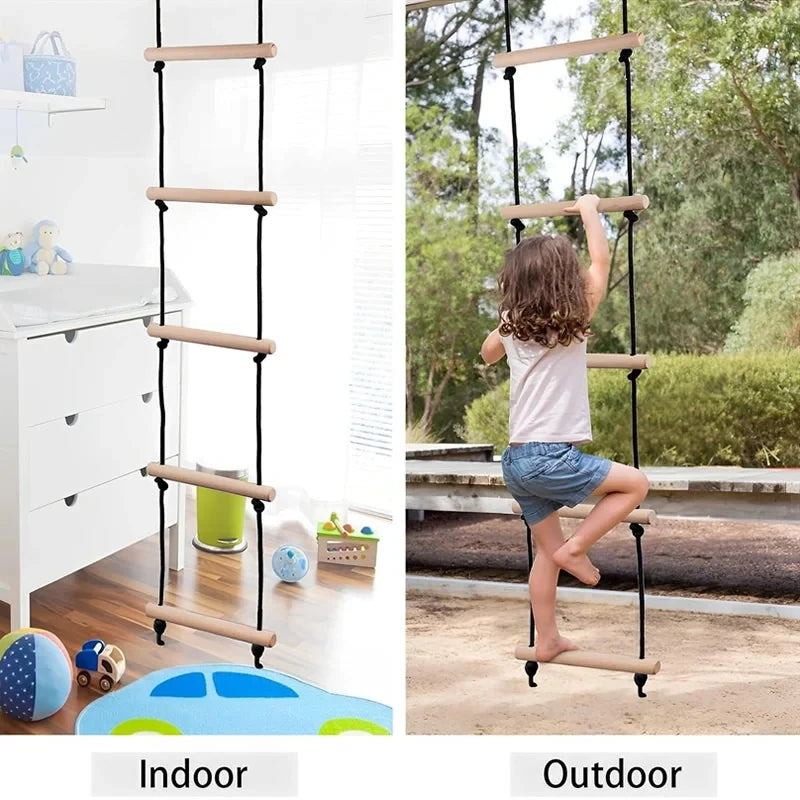
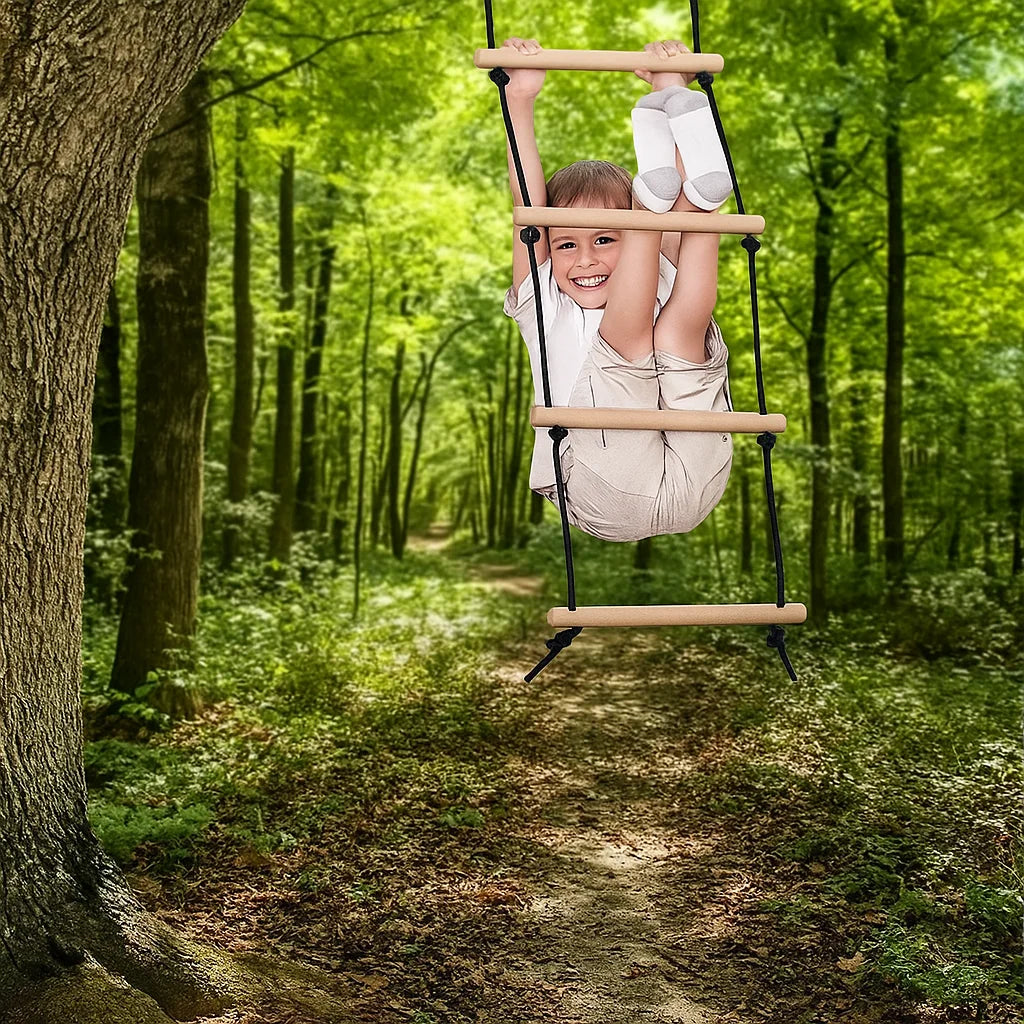
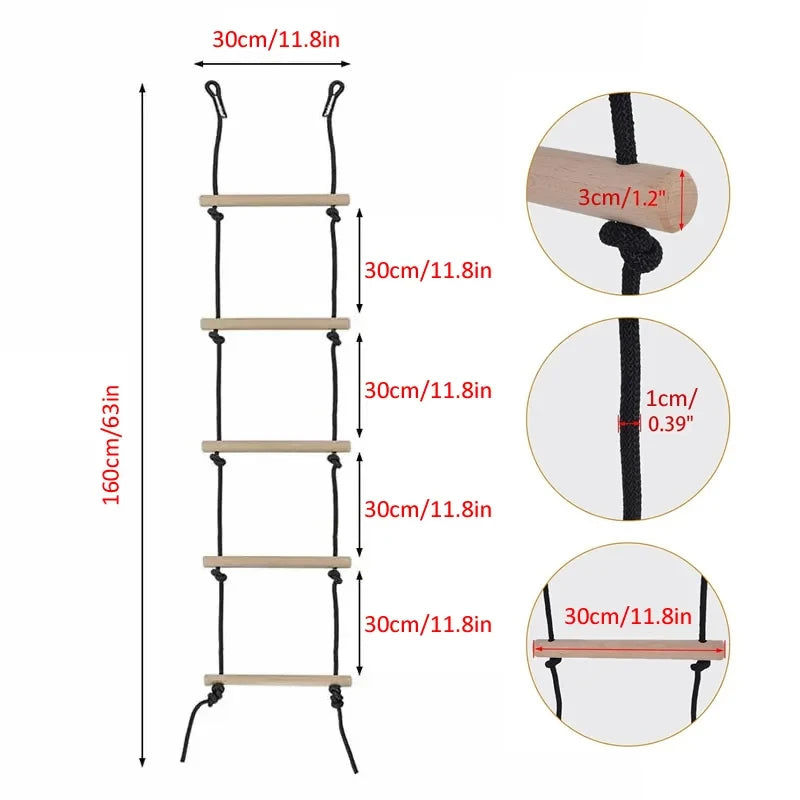
Structured climbing tools can add safe challenge. The Children Climbing Rope Ladder – Indoor Outdoor Fun supports full-body coordination, grip strength, and core activation. It attaches securely to play structures and encourages adventurous, movement-based play without screens.
You can find more active play solutions inside our Mobility & Training collection.
Improving Balance & Proprioception
- Balance beam walks
- Standing on unstable surfaces
- Slow-motion marching
- Yoga tree pose
- Heel-to-toe walking
Supporting Bilateral Coordination & Cross-Body Movements
Cross-body exercises (touching right elbow to left knee) strengthen communication between brain hemispheres. Try:
- Cross crawls
- Throwing and catching
- Clapping patterns
- Alternating jumping jacks
- Ball dribbling drills
Signs of Gross Motor Delay (When to Seek Support)
Red Flags by Age Group
- Not rolling by 6 months
- Not walking by 18 months
- Frequent falls beyond toddler stage
- Difficulty jumping by age 4
- Poor balance compared to peers
If you notice persistent delays, consult your pediatrician. Early intervention and pediatric physical therapy can provide assessments and tailored movement plans. For additional child wellness resources, visit our Health & Safety Tips hub.
Printable Gross Motor Activity Checklist
Create a weekly rotation of:
- 2 balance activities
- 2 core-strength activities
- 2 coordination drills
- 1 outdoor adventure activity
Keep it visible on your fridge and track new skills monthly. For more developmental play inspiration, explore our Baby Growth & Learning collection.
Conclusion: Building Strong Bodies and Confident Kids
Gross motor skills are the physical foundation for independence, academic readiness, and lifelong health. From tummy time to team sports, intentional daily movement builds coordination, balance, strength, and confidence.
Start small. Stay consistent. Make movement playful. Your child’s brain and body grow stronger with every climb, jump, and skip.
Pillar Article: Playground Equipment at Home: The 2026 Fit-Based Buying Guide by Size, Age & Budget





