

Help Unstable First Steps Toddler Gain Confidence Fast
Why does an unstable first steps toddler wobble so much?
Unstable first steps toddler stages are common and usually temporary. Balance muscles, coordination, and confidence are still developing, not failing. With daily movement practice and steady support—like an activity wooden walker or wooden push walker—most toddlers gain stronger posture and steadier steps within weeks.
Help Unstable First Steps Toddler Gain Confidence Fast
⏱ 7 min read
Watching your child take their first steps should feel joyful, yet when those steps look shaky, fear and doubt can creep in fast. Is something wrong? Are they falling behind? The truth is reassuring: most wobbly walkers simply need the right support at the right time. With safe routines, confidence-building play, and the right tools, steadier walking can arrive sooner than you expect.
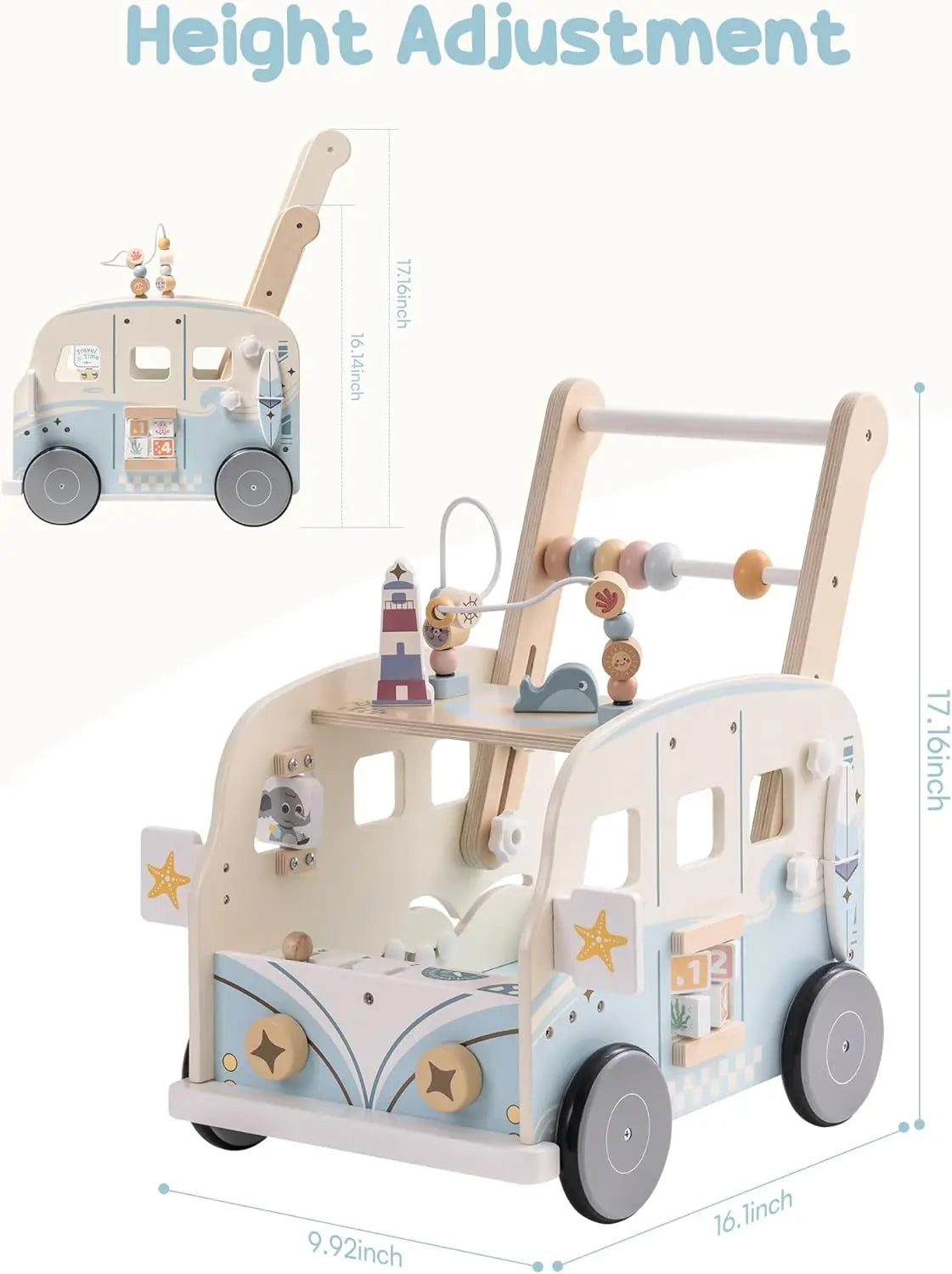
Unstable first steps toddler support using a wooden push walker for balance 💡 See it in action
Why First Steps Often Look Unstable
An unstable first steps toddler isn’t failing—they’re learning. Walking requires dozens of muscles, joint coordination, and spatial awareness working together. At first, the brain sends mixed signals, causing wide stances, stiff arms, and sudden tumbles.
Common reasons steps look shaky include:
- Weak core and leg muscles
- Limited balance experience
- Fear after a recent fall
- Growth spurts changing center of gravity
These factors are normal, especially between 9–15 months.
How to Recognize Motor Skills Delay in Infants
Motor skills delay in infants doesn’t always mean a long-term issue. Many children simply progress at different speeds. Still, awareness helps parents act early and calmly.
Signs worth watching
- Difficulty standing without support after 12 months
- Very stiff legs or tiptoe-only walking
- Little interest in moving or exploring
- Frequent falling without recovery attempts
If concerns persist, gentle at-home practice paired with guidance from Baby Growth & Learning tools can support healthy development.
Confidence-Building Tools That Encourage Safe Movement
Confidence grows through success. Tools that offer stability without restricting movement help toddlers practice safely.
- Activity wooden walker: Encourages upright posture and interactive play
- Wooden push walker: Provides steady resistance to prevent rushing
- Soft grip handles: Reduce hand fatigue
- Wide base design: Improves balance feedback
Many parents explore supportive options within Mobility & Training collections to find what fits their child best.
How a Wooden Push Walker Improves Balance
Unstable first steps toddler improvement often comes from controlled forward motion. A wooden push walker offers gentle resistance, allowing toddlers to shift weight correctly while feeling secure.
Unlike lightweight plastic models, wooden designs:
- Prevent tipping forward
- Encourage heel-to-toe steps
- Promote longer independent standing
- Build confidence through control
Parents often choose an activity wooden walker that combines balance support with engaging play elements.
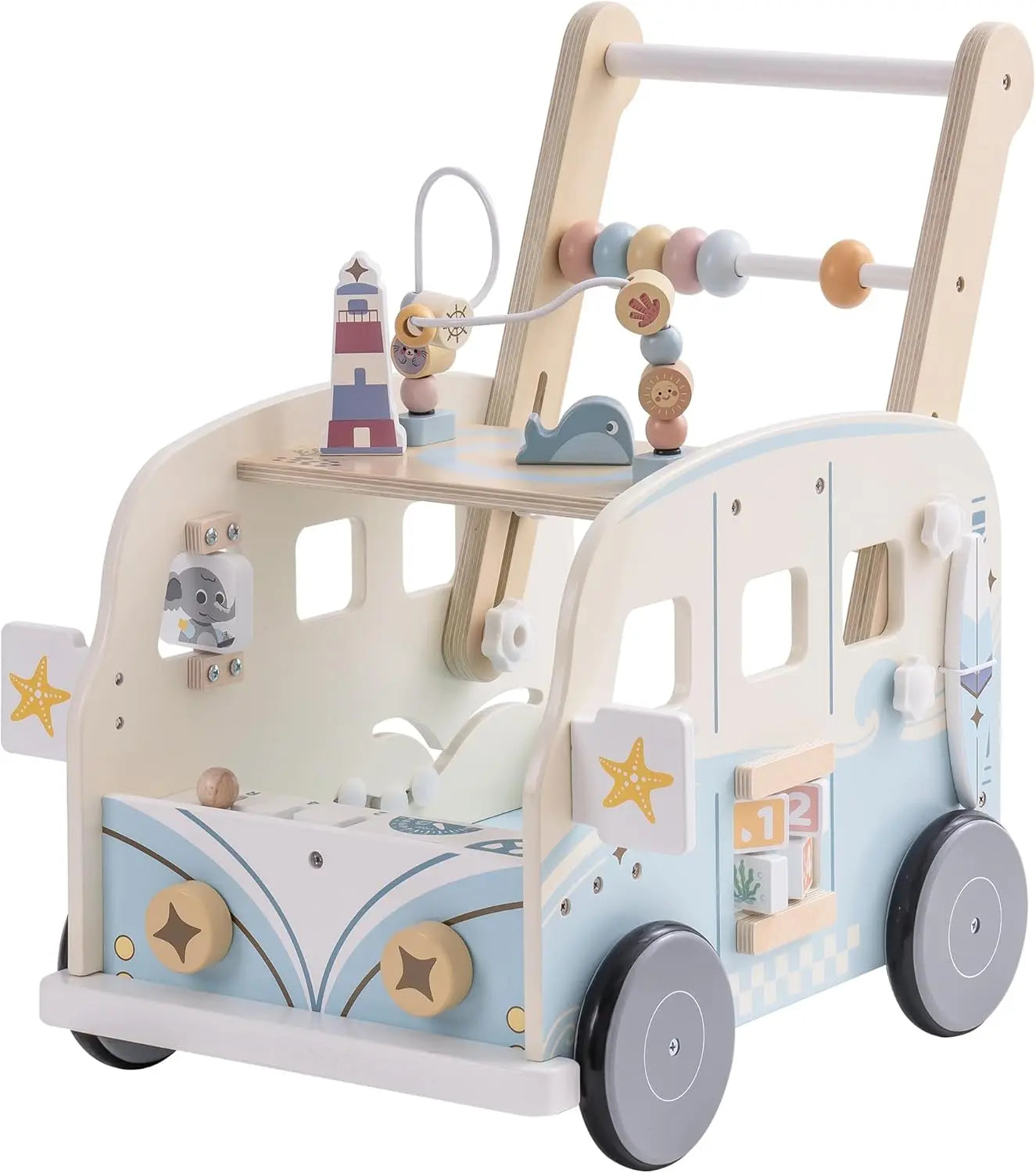
Activity wooden walker supporting motor skills delay in infants 💡 See it in action
A Simple Daily Routine to Strengthen Balance
Consistency matters more than intensity. This gentle routine fits easily into daily playtime.
- Warm-up cruising: Let your toddler move along furniture
- Push practice: Use a wooden push walker for short distances
- Interactive breaks: Encourage squatting to pick up toys
- Independent tries: Step back and let them attempt solo steps
Ten minutes, twice a day, often leads to visible improvement within weeks.
Keeping Early Walkers Safe While Learning
Safety builds confidence for both parent and child.
- Clear floors of loose rugs
- Use non-slip socks or barefoot time
- Supervise walker use on flat surfaces only
- Choose stable toys from Health & Safety collections
Secure environments reduce fear-based hesitation.
What Real Parents Are Noticing
Parents often report quick changes once the right support is introduced.
- “My toddler stopped rushing and started balancing.”
- “Fewer falls after just two weeks of daily practice.”
- “She stands longer without holding onto furniture.”
Small wins add up fast.
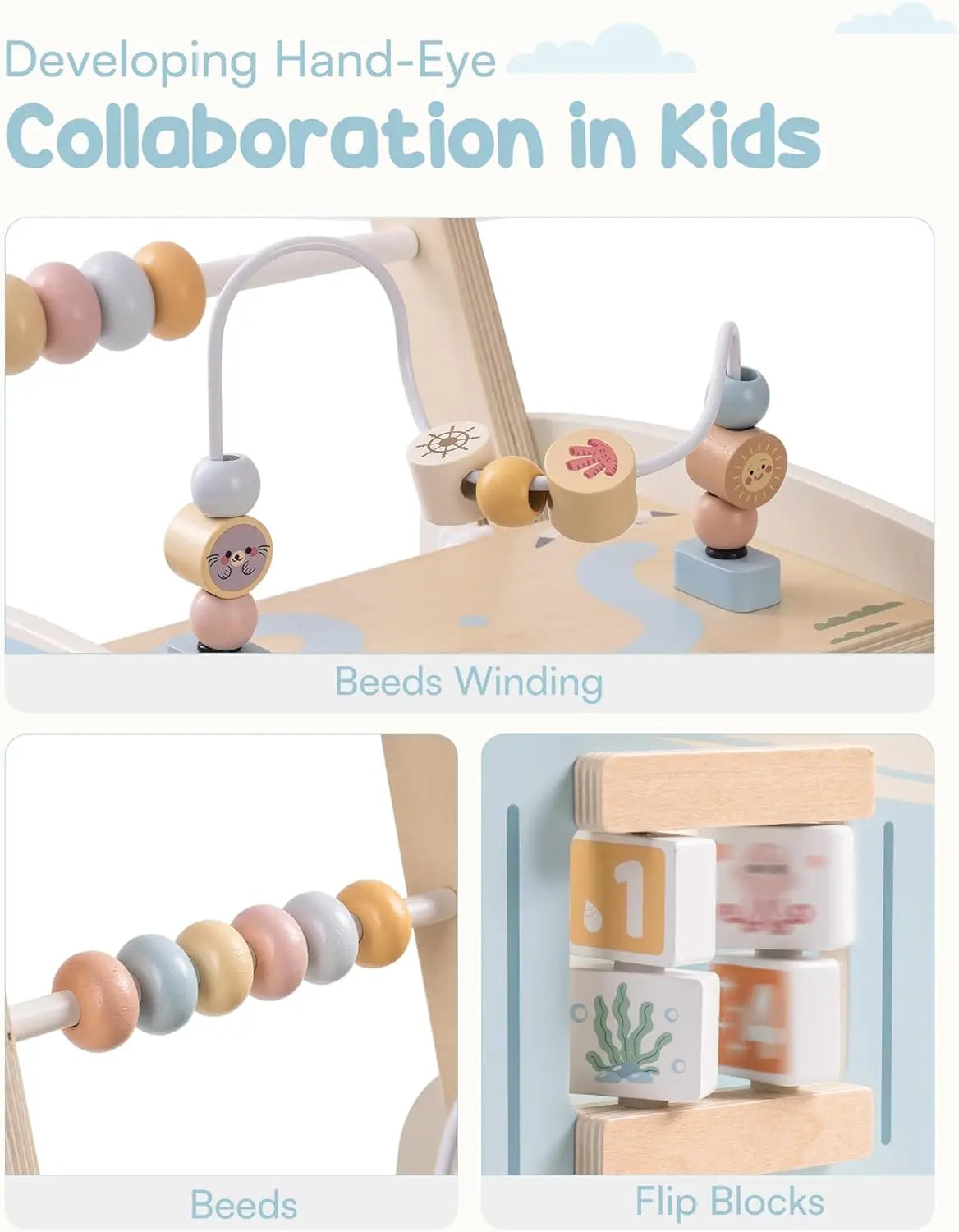
Wooden push walker boosting first steps confidence 💡 See it in action
Quick Answers Parents Ask
Is it normal for toddlers to fall a lot when learning to walk?
Yes. Frequent falls are part of balance learning. With safe practice and steady support, coordination improves naturally.
Can a walker slow independent walking?
Properly designed wooden push walkers encourage correct posture and balance rather than replacing independent movement.
When should I worry about walking delays?
If independent standing or attempts aren’t improving after consistent practice past 15–18 months, professional guidance may help.
Related Guide: How to Teach Infant to Walk Step by Step at Home





